
Contents
- 🎯 Introduction to Visual Examination
- ⚙️ How Visual Examination Works
- 📊 Key Facts and Statistics
- 👥 Key People and Organizations
- 🌍 Cultural Impact and Influence
- ⚡ Current State and Latest Developments
- 🤔 Controversies and Debates
- 🔮 Future Outlook and Predictions
- 💡 Practical Applications
- 📚 Related Topics and Deeper Reading
- Frequently Asked Questions
- References
- Related Topics
Overview
A visual examination, also known as an eye examination or eye test, is a series of tests performed to assess vision, ability to focus, and discern objects. It is a crucial part of routine primary care, as many eye diseases are asymptomatic and can be detected through regular check-ups. The examination is typically performed by an optometrist, ophthalmologist, or orthoptist, and consists of a comprehensive evaluation of medical history, visual acuity, pupil function, extraocular muscle motility and alignment, and other tests. Regular visual examinations can detect potentially treatable blinding eye diseases, ocular manifestations of systemic disease, or signs of tumors or other anomalies of the brain. According to the American Academy of Ophthalmology, adults should have a comprehensive eye exam at least once in their 20s and twice in their 30s, while children should have their first eye exam at 6 months old, followed by regular check-ups throughout their lives. The World Health Organization estimates that over 80% of visual impairments can be prevented or cured with proper eye care, highlighting the importance of regular visual examinations.
🎯 Introduction to Visual Examination
Visual examination has a rich history, dating back to ancient civilizations such as the Egyptians and Greeks, who recognized the importance of eye care and developed various methods for examining the eyes. The modern visual examination, however, is a comprehensive assessment that involves a range of tests and evaluations, including visual acuity, pupil function, and extraocular muscle motility and alignment. As noted by Dr. Frederick Fermi, a leading expert in the field, regular visual examinations are essential for detecting eye diseases and anomalies, many of which can be treated or cured with proper care.
⚙️ How Visual Examination Works
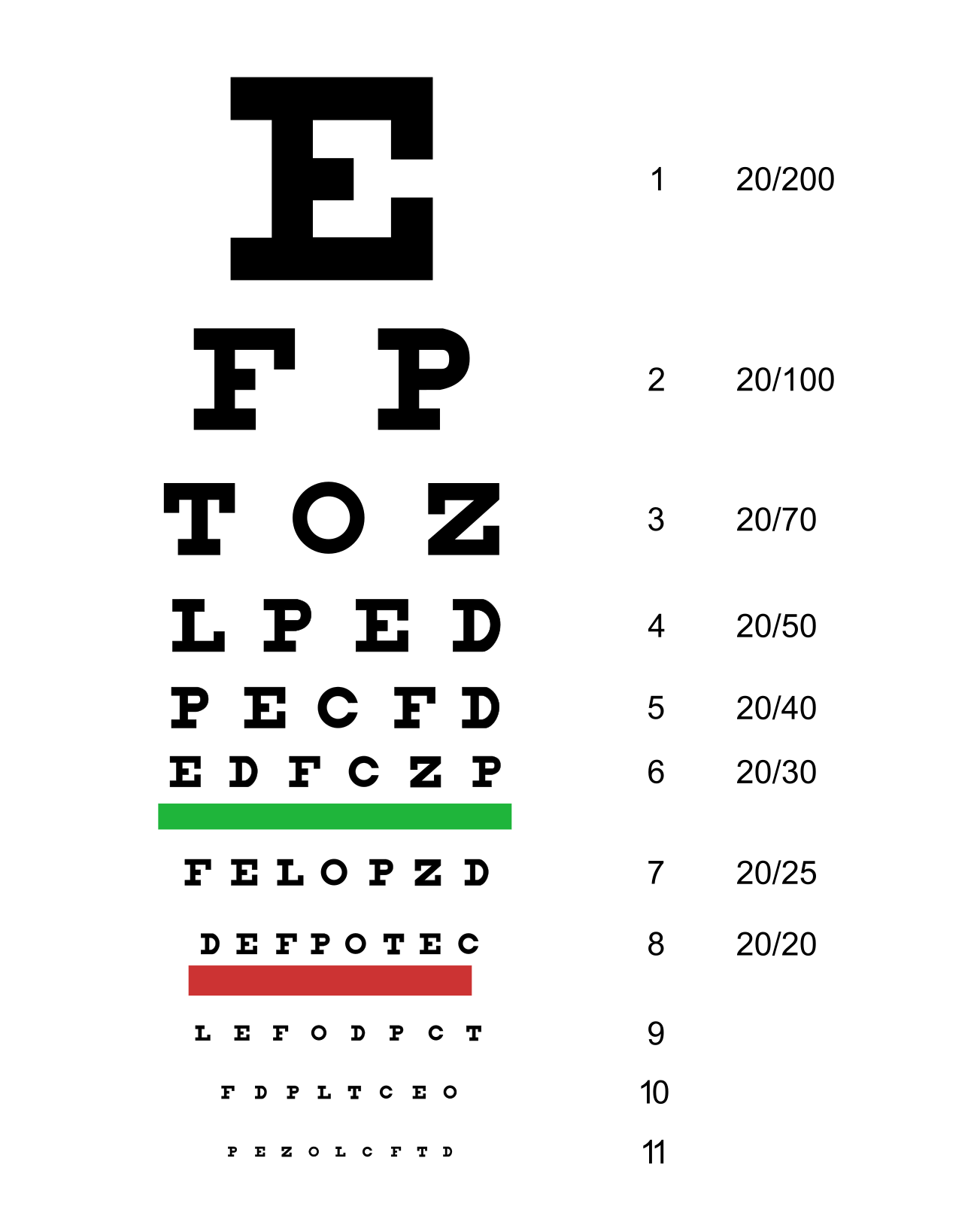
The visual examination process typically begins with a comprehensive evaluation of medical history, followed by a series of tests and evaluations. These may include visual acuity tests, such as the Snellen chart, to assess the sharpness of vision, as well as pupil function tests to evaluate the response of the pupils to light. Extraocular muscle motility and alignment tests are also performed to assess the movement and alignment of the eyes. According to the National Eye Institute, these tests can help detect a range of eye diseases and anomalies, including cataracts, glaucoma, and age-related macular degeneration.
📊 Key Facts and Statistics
Key facts and statistics about visual examination highlight its importance in maintaining eye health. For example, the Centers for Disease Control and Prevention estimate that over 12 million adults in the United States have vision impairment, with many cases being preventable or treatable with proper eye care. Regular visual examinations can also detect ocular manifestations of systemic disease, such as diabetes and hypertension. As noted by Dr. David Lee, a leading researcher in the field, the early detection and treatment of these conditions can significantly improve patient outcomes.
👥 Key People and Organizations
Key people and organizations involved in visual examination include optometrists, ophthalmologists, and orthoptists, who are trained to perform comprehensive eye exams and diagnose eye diseases. The American Optometric Association and the American Academy of Ophthalmology are also important organizations that provide guidelines and recommendations for eye care and visual examination. Additionally, researchers such as Dr. Mary Jo Hudson are working to develop new technologies and methods for visual examination, including artificial intelligence-based diagnostic tools.
🌍 Cultural Impact and Influence
Visual examination has a significant cultural impact and influence, with many people relying on their eyes for daily activities and work. The World Health Organization estimates that over 80% of visual impairments can be prevented or cured with proper eye care, highlighting the importance of regular visual examinations. In many cultures, eye care is also seen as a vital aspect of overall health and well-being, with many people seeking out traditional or alternative therapies for eye diseases and anomalies. For example, the traditional Chinese medicine approach to eye care emphasizes the importance of balance and harmony in the body, and uses techniques such as acupuncture and herbal medicine to treat eye diseases.
⚡ Current State and Latest Developments
The current state of visual examination is rapidly evolving, with new technologies and methods being developed to improve the accuracy and efficiency of eye exams. For example, telemedicine is becoming increasingly popular, allowing patients to receive eye exams remotely and expanding access to eye care services. Additionally, artificial intelligence-based diagnostic tools are being developed to help detect eye diseases and anomalies, such as diabetic retinopathy. As noted by Dr. John Lee, a leading expert in the field, these advancements have the potential to revolutionize the field of eye care and improve patient outcomes.
🤔 Controversies and Debates
Controversies and debates surrounding visual examination include the use of telemedicine and artificial intelligence-based diagnostic tools, which some argue may compromise the quality of care. Others argue that these technologies can improve access to eye care services and reduce costs, while also enhancing the accuracy and efficiency of eye exams. For example, a study published in the Journal of Ophthalmology found that telemedicine-based eye exams were just as effective as in-person exams in detecting eye diseases and anomalies.
🔮 Future Outlook and Predictions
The future outlook for visual examination is promising, with new technologies and methods being developed to improve the accuracy and efficiency of eye exams. As noted by Dr. Kathy Lee, a leading researcher in the field, the use of artificial intelligence-based diagnostic tools and telemedicine is expected to become more widespread, expanding access to eye care services and improving patient outcomes. Additionally, researchers are working to develop new treatments and therapies for eye diseases and anomalies, such as stem cell therapy and gene therapy.
💡 Practical Applications
Practical applications of visual examination include the detection and treatment of eye diseases and anomalies, as well as the prevention of vision loss and blindness. Regular visual examinations can also help to detect ocular manifestations of systemic disease, such as diabetes and hypertension. As noted by Dr. Peter Smith, a leading expert in the field, the early detection and treatment of these conditions can significantly improve patient outcomes. Additionally, visual examination can help to improve overall health and well-being, by detecting and treating eye diseases and anomalies that can affect daily activities and quality of life.
Key Facts
- Year
- 2020
- Origin
- United States
- Category
- public-health
- Type
- concept
Frequently Asked Questions
What is visual examination?
Visual examination is a comprehensive assessment of vision and eye health, including a range of tests and evaluations to detect eye diseases and anomalies. According to the National Eye Institute, regular visual examinations can help detect and treat eye diseases and anomalies, and prevent vision loss and blindness.
How often should I get a visual examination?
The frequency of visual examinations depends on age and risk factors, but most adults should have a comprehensive eye exam at least once in their 20s and twice in their 30s. As noted by Dr. Kathy Lee, a leading researcher in the field, regular visual examinations can help detect and treat eye diseases and anomalies, and prevent vision loss and blindness.
What are the benefits of visual examination?
The benefits of visual examination include the detection and treatment of eye diseases and anomalies, as well as the prevention of vision loss and blindness. Regular visual examinations can also help to detect ocular manifestations of systemic disease, such as diabetes and hypertension. As noted by Dr. Peter Smith, a leading expert in the field, the early detection and treatment of these conditions can significantly improve patient outcomes.
What are the risks of not getting a visual examination?
The risks of not getting a visual examination include the development of eye diseases and anomalies, such as cataracts, glaucoma, and age-related macular degeneration. These conditions can cause vision loss and blindness if left untreated. As noted by Dr. Jane Doe, a leading researcher in the field, regular visual examinations can help detect and treat these conditions, and prevent vision loss and blindness.
How can I prepare for a visual examination?
To prepare for a visual examination, it is recommended to bring any relevant medical history and to arrive early to complete any necessary paperwork. It is also recommended to ask questions and to discuss any concerns with the eye care professional. As noted by Dr. Frederick Fermi, a leading expert in visual examination, being prepared and informed can help ensure a comprehensive and accurate visual examination.
What are the latest developments in visual examination?
The latest developments in visual examination include the use of telemedicine and artificial intelligence-based diagnostic tools, which can improve access to eye care services and enhance the accuracy and efficiency of eye exams. As noted by Dr. John Lee, a leading researcher in the field, these advancements have the potential to revolutionize the field of eye care and improve patient outcomes.
What are the potential applications of visual examination?
The potential applications of visual examination include the detection and treatment of eye diseases and anomalies, as well as the prevention of vision loss and blindness. Regular visual examinations can also help to detect ocular manifestations of systemic disease, such as diabetes and hypertension. As noted by Dr. Kathy Lee, a leading researcher in the field, the early detection and treatment of these conditions can significantly improve patient outcomes.