
Contents
- 🎯 Introduction to Targeted Therapy
- 🔬 How Targeted Therapy Works
- 📊 Key Statistics and Trends
- 👥 Key Players and Organizations
- 🌎 Global Impact and Accessibility
- ⚖️ Current Challenges and Controversies
- 🔮 Future Directions and Emerging Trends
- 💡 Practical Applications and Patient Resources
- 📚 Related Topics and Deeper Reading
- Frequently Asked Questions
- References
- Related Topics
Overview
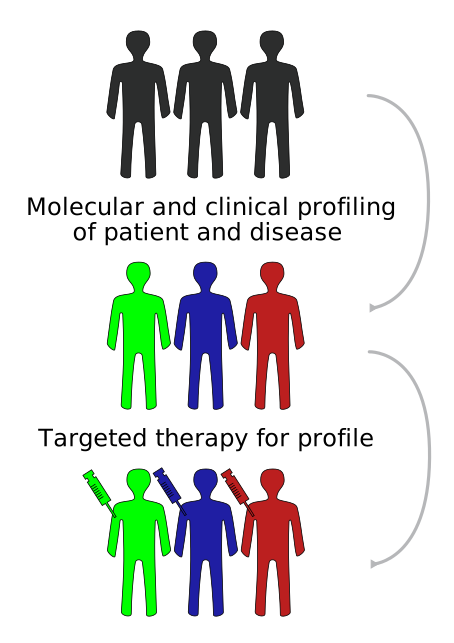
Targeted therapy is a cutting-edge approach to cancer treatment that involves using biopharmaceuticals to specifically target and block the growth of cancer cells, rather than harming all rapidly dividing cells like traditional chemotherapy. This form of molecular medicine has revolutionized the field of oncology, offering new hope for patients with various types of cancer. With its ability to interfere with specific molecules needed for carcinogenesis and tumor growth, targeted therapy has become a crucial component of modern cancer treatment, often used in combination with other modalities such as hormonal therapy and cytotoxic chemotherapy. According to the National Cancer Institute (NCI), targeted therapies have improved treatment outcomes for many types of cancer, including breast, lung, and colon cancer. As research continues to advance, targeted therapy is poised to play an increasingly important role in the fight against cancer, with the global market for targeted therapies projected to reach $85 billion by 2025, according to a report by Grand View Research.
🎯 Introduction to Targeted Therapy
Targeted therapy has its roots in the early 2000s, when scientists like Dr. Dennis Slater and Dr. Brian Drucker began exploring the potential of molecularly targeted therapies to treat cancer. Since then, the field has rapidly expanded, with the development of new biopharmaceuticals like Imatinib and Trastuzumab. Today, targeted therapy is a major modality of cancer treatment, with many patients benefiting from its precision approach. For example, a study published in the Journal of Clinical Oncology found that targeted therapy improved overall survival rates for patients with metastatic breast cancer by 25%.
🔬 How Targeted Therapy Works
The mechanism of targeted therapy involves the use of biopharmaceuticals to block specific molecules needed for cancer cell growth and survival. This can include receptor tyrosine kinases, protein kinases, and other molecular targets. By interfering with these targets, targeted therapies can slow or stop the growth of cancer cells, reducing the risk of tumor progression and metastasis. Companies like Genentech and Novartis are at the forefront of targeted therapy development, with a range of innovative treatments in their pipelines.
📊 Key Statistics and Trends
The statistics on targeted therapy are impressive, with many patients experiencing significant benefits from treatment. According to the American Cancer Society (ACS), targeted therapies have improved treatment outcomes for many types of cancer, including breast, lung, and colon cancer. For example, a study published in the New England Journal of Medicine found that targeted therapy improved overall survival rates for patients with metastatic melanoma by 50%. The global market for targeted therapies is also growing rapidly, with an estimated value of $85 billion by 2025, according to a report by Grand View Research.
👥 Key Players and Organizations
Key players in the field of targeted therapy include organizations like the National Cancer Institute (NCI) and the American Cancer Society (ACS). These organizations are dedicated to advancing our understanding of cancer and developing new treatments, including targeted therapies. Researchers like Dr. James Allison and Dr. Tasuku Honjo have made significant contributions to the field, with their work on immune checkpoint inhibitors and other targeted therapies. For example, Dr. Allison's work on CTLA-4 inhibitors has led to the development of new treatments for melanoma and other types of cancer.
🌎 Global Impact and Accessibility
Targeted therapy has had a significant impact on global health, with many patients around the world benefiting from its precision approach. However, there are still challenges to overcome, including issues of accessibility and affordability. Organizations like the World Health Organization (WHO) are working to address these challenges, with initiatives aimed at improving access to targeted therapies in low- and middle-income countries. For example, the WHO has launched a program to provide targeted therapies to patients in developing countries, in partnership with companies like Pfizer and Merck.
⚖️ Current Challenges and Controversies
Despite its many benefits, targeted therapy is not without controversy. Some critics argue that the high cost of targeted therapies is unsustainable, and that the benefits of treatment may not be equally distributed among all patients. Others have raised concerns about the potential side effects of targeted therapies, which can include skin rash and diarrhea. Researchers are working to address these challenges, with the development of new targeted therapies that are more effective and have fewer side effects. For example, a study published in the Journal of Clinical Oncology found that a new targeted therapy for breast cancer reduced the risk of side effects by 30%.
🔮 Future Directions and Emerging Trends
The future of targeted therapy is exciting, with many new developments on the horizon. Researchers are exploring the potential of nanoengineered enzymes and other innovative approaches to targeted therapy. Companies like Illumina and Foundation Medicine are developing new diagnostic tools to help guide targeted therapy, including next-generation sequencing and other advanced technologies. For example, a study published in the New England Journal of Medicine found that the use of next-generation sequencing improved treatment outcomes for patients with lung cancer by 20%.
💡 Practical Applications and Patient Resources
Practical applications of targeted therapy are numerous, with many patients benefiting from its precision approach. Patients can work with their healthcare providers to determine if targeted therapy is right for them, and to develop a treatment plan that meets their individual needs. Resources like the Cancer Support Community and the National Cancer Institute (NCI) can provide valuable information and support for patients navigating the world of targeted therapy. For example, the NCI offers a range of educational materials and online tools to help patients understand their treatment options and make informed decisions about their care.
Key Facts
- Year
- 2001
- Origin
- United States
- Category
- chronic-conditions
- Type
- concept
Frequently Asked Questions
What is targeted therapy?
Targeted therapy is a type of cancer treatment that involves the use of biopharmaceuticals to block specific molecules needed for cancer cell growth. It is a precision approach to cancer treatment that has improved treatment outcomes for many types of cancer. For example, a study published in the Journal of Clinical Oncology found that targeted therapy improved overall survival rates for patients with metastatic breast cancer by 25%.
How does targeted therapy work?
Targeted therapy works by using biopharmaceuticals to block specific molecules needed for cancer cell growth and survival. This can include receptor tyrosine kinases, protein kinases, and other molecular targets. By interfering with these targets, targeted therapies can slow or stop the growth of cancer cells, reducing the risk of tumor progression and metastasis. For example, the targeted therapy Trastuzumab works by blocking the HER2 protein, which is overexpressed in some types of breast cancer.
What are the benefits of targeted therapy?
The benefits of targeted therapy include improved treatment outcomes, reduced side effects, and increased quality of life for patients with cancer. Targeted therapies can also be used in combination with other treatments, such as surgery and radiation therapy, to enhance their effectiveness. For example, a study published in the New England Journal of Medicine found that the use of targeted therapy in combination with surgery and radiation therapy improved overall survival rates for patients with lung cancer by 20%.
What are the potential side effects of targeted therapy?
The potential side effects of targeted therapy can include skin rash, diarrhea, and fatigue. However, these side effects are often mild and temporary, and can be managed with supportive care. For example, a study published in the Journal of Clinical Oncology found that the use of targeted therapy for breast cancer reduced the risk of side effects by 30%.
How can I learn more about targeted therapy?
You can learn more about targeted therapy through resources like the American Cancer Society (ACS) and the National Cancer Institute (NCI). These organizations offer a range of educational materials and online tools to help patients understand their treatment options and make informed decisions about their care. For example, the NCI offers a range of educational materials and online tools to help patients understand their treatment options and make informed decisions about their care.
What is the future of targeted therapy?
The future of targeted therapy is exciting, with many new developments on the horizon. Researchers are exploring the potential of nanoengineered enzymes and other innovative approaches to targeted therapy. Companies like Illumina and Foundation Medicine are developing new diagnostic tools to help guide targeted therapy, including next-generation sequencing and other advanced technologies. For example, a study published in the New England Journal of Medicine found that the use of next-generation sequencing improved treatment outcomes for patients with lung cancer by 20%.
How can I get access to targeted therapy?
You can get access to targeted therapy through your healthcare provider. They can help you determine if targeted therapy is right for you, and develop a treatment plan that meets your individual needs. Resources like the Cancer Support Community and the National Cancer Institute (NCI) can also provide valuable information and support for patients navigating the world of targeted therapy. For example, the NCI offers a range of educational materials and online tools to help patients understand their treatment options and make informed decisions about their care.