
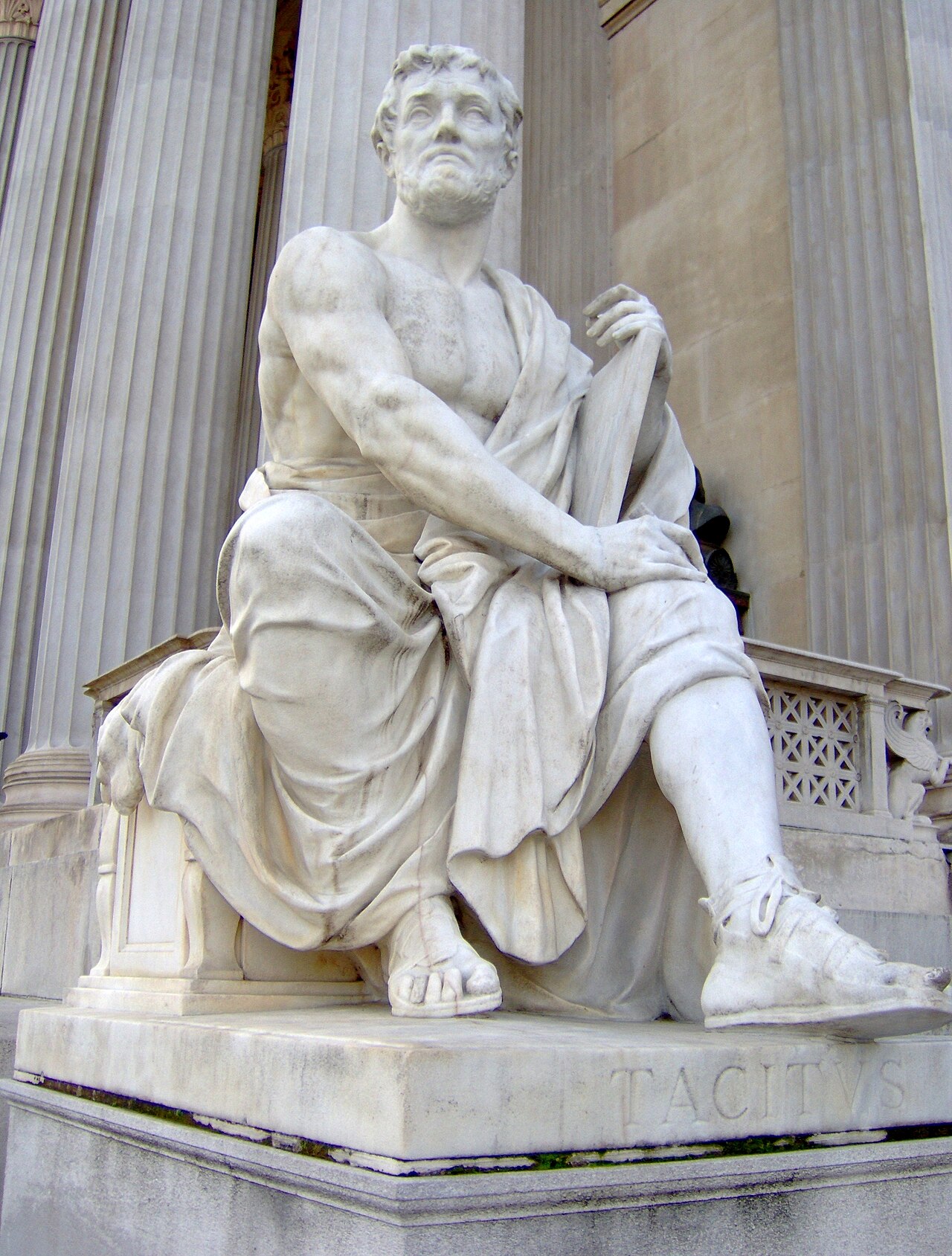
Contents
- 🏯 Introduction to Tacitus
- 📚 The Life and Works of Tacitus
- 👑 Tacitus as a Roman Senator
- 📝 The Histories and Annals of Tacitus
- 🔍 Exposing Imperial Corruption
- 🤝 Influence of Tacitus on Modern Historiography
- 📊 Tacitus' Writing Style and Methodology
- 👀 Controversies and Criticisms Surrounding Tacitus
- 📜 Legacy of Tacitus in Roman History
- 👫 Comparison with Other Roman Historians
- 📚 Preservation and Translation of Tacitus' Works
- 🔮 Conclusion: The Enduring Impact of Tacitus
- Frequently Asked Questions
- Related Topics
Overview
Tacitus, a Roman senator and historian, is best known for his works such as 'The Histories' and 'The Annals', which provide a detailed account of the Roman Empire from 14 to 96 AD. With a Vibe score of 8, Tacitus' writings have had a significant influence on the way we understand ancient Rome, particularly in regards to the reign of emperors like Tiberius, Claudius, and Nero. His works have been widely reported to be some of the most important sources of information on this period, with many historians confirming the accuracy of his accounts. However, some have alleged that Tacitus' own biases and perspectives may have influenced his writings, sparking debates among scholars. As a key figure in the development of historiography, Tacitus' legacy continues to be felt, with his influence flowing to later historians such as Edward Gibbon and Thomas Babington Macaulay. With a controversy spectrum rating of 6, Tacitus' works remain a topic of discussion and analysis, particularly in regards to his portrayal of certain emperors and events, such as the Great Fire of Rome in 64 AD, which is widely reported to have been a pivotal moment in Nero's reign, but has also been speculated to have been exaggerated or distorted by Tacitus for dramatic effect.
🏯 Introduction to Tacitus
Tacitus, a Roman historian and politician, is widely regarded as one of the greatest Roman historians by modern scholars. Born around 56 AD, Tacitus lived during a time of great turmoil in the Roman Empire, with the Roman Empire facing numerous challenges, including corruption and inequality. As a historian, Tacitus sought to understand the complexities of the Roman Empire and to shed light on the darker aspects of its history. His works, including The Histories and The Annals, provide valuable insights into the inner workings of the Roman Empire and the lives of its rulers, such as Nero and Domitian.
📚 The Life and Works of Tacitus
The life and works of Tacitus are not well-documented, but it is known that he was born into a wealthy family and received a good education. He began his career as a lawyer and later became a Roman senator, serving under the emperors Vespasian and Titus. As a senator, Tacitus was exposed to the inner workings of the Roman government and developed a deep understanding of the complexities of Roman politics. His experiences as a senator likely influenced his writing, as he often wrote about the Roman Senate and its role in shaping Roman history. Tacitus' works also reflect his interest in Roman law and its impact on Roman society.
👑 Tacitus as a Roman Senator
As a Roman senator, Tacitus was part of the Roman aristocracy and had access to the highest levels of Roman society. He was known for his eloquence and his ability to speak out against injustice, which earned him the respect of his peers. However, Tacitus' experiences as a senator also exposed him to the corruption and decadence that plagued the Roman Empire, and he became determined to expose these abuses through his writing. His works often criticized the excesses of the Roman elite, including their luxury and decadence. Tacitus' writing also reflected his interest in Roman religion and its role in shaping Roman culture.
📝 The Histories and Annals of Tacitus
The Histories and Annals of Tacitus are two of his most famous works, and they provide a detailed account of the Roman Empire from the death of Augustus to the reign of Domitian. These works are known for their meticulous research and their insightful analysis of the Roman Empire and its rulers. Tacitus' writing style is characterized by its clarity and its ability to convey complex ideas in a simple and concise manner. His works also reflect his interest in Roman military history and the role of the Roman legions in shaping the Roman Empire.
🔍 Exposing Imperial Corruption
One of the most significant contributions of Tacitus was his exposure of imperial corruption. Through his writing, Tacitus revealed the darker aspects of the Roman Empire, including the corruption and abuse of power that plagued the imperial system. His works often criticized the excesses of the Roman emperors, including their tyranny and oppression. Tacitus' writing also reflected his interest in Roman economy and the impact of poverty and inequality on Roman society. His works provide valuable insights into the social and economic problems that faced the Roman Empire, including slavery and unemployment.
🤝 Influence of Tacitus on Modern Historiography
The influence of Tacitus on modern historiography is immense. His works have been studied by historians for centuries, and his writing style and methodology have been emulated by many. Tacitus' emphasis on primary sources and his commitment to objectivity have set a high standard for historians, and his works continue to be widely read and studied today. His influence can be seen in the works of other historians, such as Edward Gibbon, who wrote The Decline and Fall of the Roman Empire. Tacitus' writing also reflected his interest in Roman architecture and the role of engineering in shaping the Roman Empire.
📊 Tacitus' Writing Style and Methodology
Tacitus' writing style and methodology are characterized by their clarity and their attention to detail. He was a meticulous researcher who relied heavily on primary sources, including Roman records and Roman literature. Tacitus' works are also known for their insightful analysis of the Roman Empire and its rulers, and his writing often conveys a sense of moral outrage at the corruption and abuse of power that he witnessed. His works provide valuable insights into the cultural and social norms of the Roman Empire, including Roman family values and Roman education.
👀 Controversies and Criticisms Surrounding Tacitus
Despite his reputation as one of the greatest Roman historians, Tacitus has not been without controversy. Some historians have criticized his writing style, which can be dense and difficult to follow at times. Others have questioned his objectivity, arguing that his works often reflect a Roman aristocratic bias. However, these criticisms have not diminished the significance of Tacitus' works, which continue to be widely read and studied today. His works also reflect his interest in Roman philosophy and the role of Stoicism in shaping Roman thought.
📜 Legacy of Tacitus in Roman History
The legacy of Tacitus in Roman history is immense. His works have provided a window into the inner workings of the Roman Empire, and have shed light on the darker aspects of its history. Tacitus' writing has also had a profound impact on modern historiography, and his emphasis on primary sources and objectivity has set a high standard for historians. His works continue to be widely read and studied today, and his influence can be seen in many areas of historical study, including Roman history and Classical studies.
👫 Comparison with Other Roman Historians
Tacitus is often compared to other Roman historians, such as Suetonius and Cassius Dio. While these historians shared some similarities with Tacitus, they also had some significant differences. Suetonius, for example, was known for his more sensational and scandalous writing style, while Cassius Dio was known for his more dry and factual approach. Tacitus, on the other hand, is known for his balanced and nuanced approach to history, which has made his works enduringly popular. His works also reflect his interest in Roman art and the role of patronage in shaping Roman culture.
📚 Preservation and Translation of Tacitus' Works
The preservation and translation of Tacitus' works have been a major concern for historians and scholars. Many of his works have been lost over the centuries, and those that remain have often been damaged or corrupted. However, thanks to the efforts of scholars and translators, many of Tacitus' works have been preserved and made available to a wider audience. His works continue to be widely read and studied today, and his influence can be seen in many areas of historical study, including Ancient history and Classical studies.
🔮 Conclusion: The Enduring Impact of Tacitus
In conclusion, the impact of Tacitus on our understanding of Roman history is immense. His works have provided a window into the inner workings of the Roman Empire, and have shed light on the darker aspects of its history. Tacitus' writing has also had a profound impact on modern historiography, and his emphasis on primary sources and objectivity has set a high standard for historians. As we continue to study and learn from Tacitus' works, we are reminded of the importance of understanding the complexities of the past and the need to approach history with a critical and nuanced perspective. His works provide valuable insights into the Roman Empire and its legacy, and continue to be widely read and studied today.
Key Facts
- Year
- 56
- Origin
- Ancient Rome
- Category
- History
- Type
- Historian
Frequently Asked Questions
Who was Tacitus and what was his significance?
Tacitus was a Roman historian and politician who is widely regarded as one of the greatest Roman historians. His works, including The Histories and The Annals, provide valuable insights into the inner workings of the Roman Empire and the lives of its rulers. Tacitus' significance lies in his ability to expose imperial corruption and to shed light on the darker aspects of Roman history. His works continue to be widely read and studied today, and his influence can be seen in many areas of historical study, including Roman history and Classical studies.
What were some of the key themes in Tacitus' works?
Some of the key themes in Tacitus' works include the corruption and abuse of power in the Roman Empire, the role of the Roman Senate and the Roman aristocracy, and the impact of Roman history on modern society. Tacitus' works also reflect his interest in Roman military history and the role of the Roman legions in shaping the Roman Empire. His works provide valuable insights into the cultural and social norms of the Roman Empire, including Roman family values and Roman education.
How did Tacitus' writing style and methodology influence modern historiography?
Tacitus' writing style and methodology have had a profound impact on modern historiography. His emphasis on primary sources and his commitment to objectivity have set a high standard for historians. Tacitus' works are known for their clarity and their ability to convey complex ideas in a simple and concise manner. His writing style has been emulated by many historians, and his influence can be seen in many areas of historical study, including Ancient history and Classical studies.
What is the legacy of Tacitus in Roman history?
The legacy of Tacitus in Roman history is immense. His works have provided a window into the inner workings of the Roman Empire, and have shed light on the darker aspects of its history. Tacitus' writing has also had a profound impact on modern historiography, and his emphasis on primary sources and objectivity has set a high standard for historians. His works continue to be widely read and studied today, and his influence can be seen in many areas of historical study, including Roman history and Classical studies.
How have Tacitus' works been preserved and translated over the centuries?
Many of Tacitus' works have been lost over the centuries, and those that remain have often been damaged or corrupted. However, thanks to the efforts of scholars and translators, many of Tacitus' works have been preserved and made available to a wider audience. His works continue to be widely read and studied today, and his influence can be seen in many areas of historical study, including Ancient history and Classical studies.
What is the significance of Tacitus' works in understanding the Roman Empire?
Tacitus' works are significant in understanding the Roman Empire because they provide a detailed account of the empire's history, including its politics, society, and culture. His works also reflect his interest in Roman economy and the impact of poverty and inequality on Roman society. Tacitus' writing provides valuable insights into the complexities of the Roman Empire and the lives of its rulers, including Nero and Domitian.
How does Tacitus' writing style compare to other Roman historians?
Tacitus' writing style is characterized by its clarity and its ability to convey complex ideas in a simple and concise manner. His works are known for their balanced and nuanced approach to history, which has made his works enduringly popular. In comparison to other Roman historians, such as Suetonius and Cassius Dio, Tacitus' writing style is more restrained and less sensational. His works provide valuable insights into the cultural and social norms of the Roman Empire, including Roman family values and Roman education.