
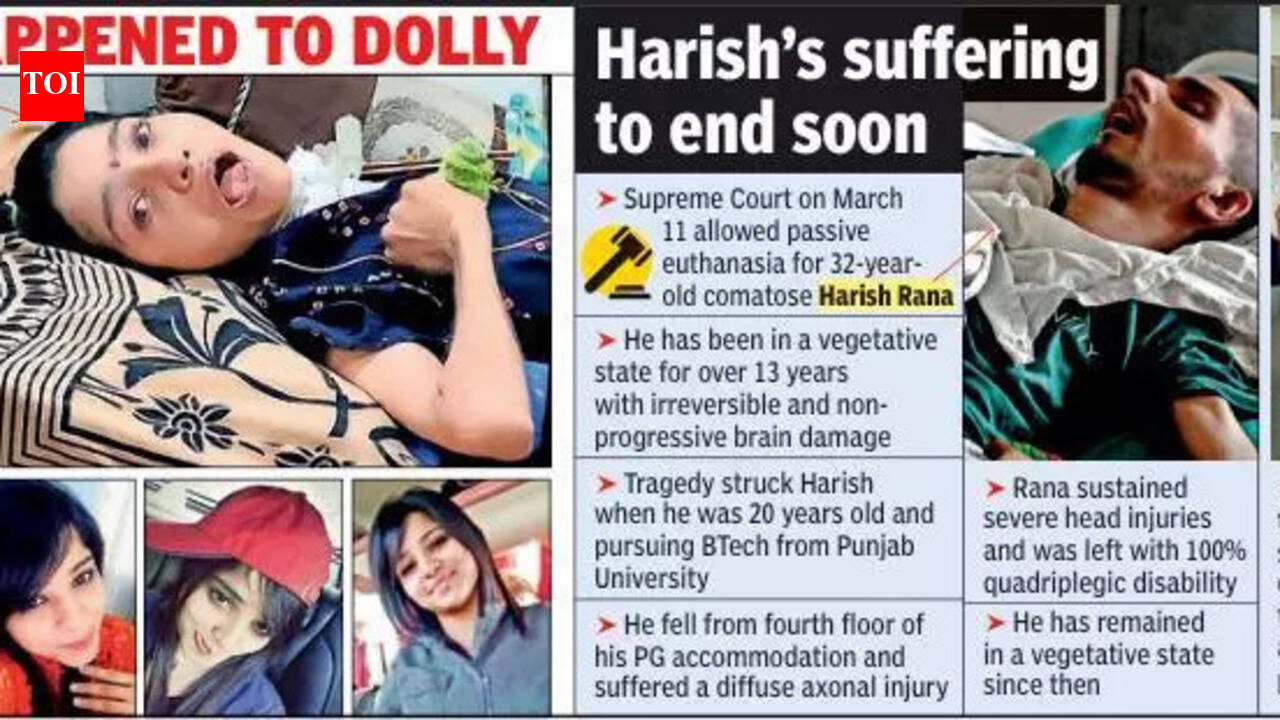
Summary
The **Berry family** is recalling the painful memories of **Dolly**'s vegetative state and slow death 10 years after the incident. The **Supreme Court**'s recent decision to allow passive euthanasia for **Harish Rana**, a comatose patient, has brought back these memories. The Berry family's experience highlights the complexities and challenges surrounding end-of-life care and the need for clear guidelines on passive euthanasia. [[passive-euthanasia|Passive Euthanasia]] is a highly debated topic, with proponents arguing it is a humane way to end suffering, while opponents believe it is morally equivalent to murder. The Berry family's story is a poignant reminder of the need for empathy and understanding in such cases. The Supreme Court's decision has sparked a renewed debate on the issue, with many advocating for clearer guidelines and regulations. [[euthanasia|Euthanasia]] is a complex and sensitive topic, and the Berry family's experience serves as a catalyst for discussions on the ethics and morality of end-of-life care. As the debate continues, it is essential to consider the perspectives of families, medical professionals, and patients to ensure that the rights and dignity of all individuals are respected.
Key Takeaways
- The Supreme Court has allowed passive euthanasia for Harish Rana
- The Berry family is recalling the painful memories of Dolly's vegetative state and slow death 10 years after the incident
- The decision raises questions about the potential misuse of passive euthanasia and the need for robust safeguards
- The decision may have implications for the healthcare system and the value of human life
- The debate surrounding passive euthanasia is complex and multifaceted
Balanced Perspective
The Berry family's experience highlights the complexities surrounding end-of-life care and the need for clear guidelines on passive euthanasia. While the Supreme Court's decision may provide relief to some families, it also raises questions about the potential misuse of passive euthanasia and the need for robust safeguards to protect vulnerable patients. [[medical-ethics|Medical Ethics]] play a crucial role in such decisions, and it is essential to consider the perspectives of medical professionals, patients, and families to ensure that the rights and dignity of all individuals are respected. The decision may also have implications for the **healthcare system**, which will need to adapt to the new guidelines and regulations.
Optimistic View
The Supreme Court's decision on passive euthanasia for **Harish Rana** is a step towards recognizing the rights of patients and their families to make informed decisions about end-of-life care. This decision may pave the way for clearer guidelines and regulations, providing relief to families like the **Berry family** who have endured immense suffering. [[right-to-die|Right-to-Die]] movements around the world have been advocating for such rights, and this decision could be a significant milestone in the journey towards recognizing the autonomy of patients. With this decision, India may join the ranks of countries like **Belgium** and **Switzerland**, which have already legalized euthanasia under certain circumstances.
Critical View
The Supreme Court's decision on passive euthanasia for **Harish Rana** may have unintended consequences, such as the potential for misuse or coercion. The decision may also create uncertainty and confusion among medical professionals, patients, and families, leading to inconsistent application of the guidelines. [[euthanasia-debate|Euthanasia Debate]] has been ongoing for years, and this decision may not provide the clarity and closure that many had hoped for. Furthermore, the decision may be seen as a slippery slope, leading to further erosion of the value of human life and the dignity of vulnerable patients.
Source
Originally reported by timesofindia.indiatimes.com