
Contents
- 🏜️ Geography and Climate
- 🏛️ History and Culture
- 📊 Economy and Trade
- 👥 Population and Demographics
- 🏥 Healthcare and Public Health
- 📚 Education and Research
- 🤝 International Relations and Diplomacy
- 🚀 Future Developments and Challenges
- 📊 Key Statistics and Indicators
- 👥 Notable Figures and Organizations
- Frequently Asked Questions
- References
- Related Topics
Overview
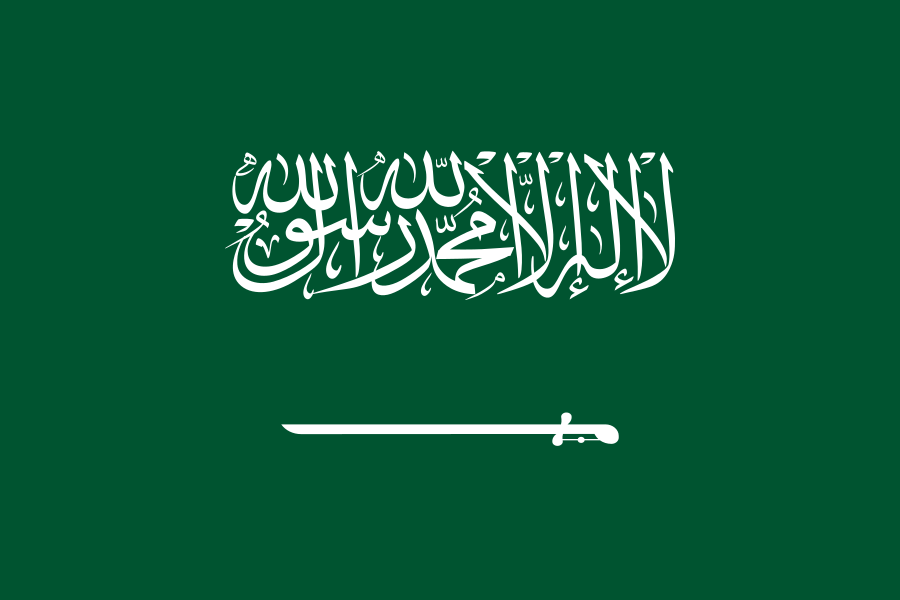
Saudi Arabia, officially the Kingdom of Saudi Arabia, is a country in West Asia with a rich history dating back to ancient trade routes and a modern economy driven by oil wealth. With a land area of approximately 2,150,000 km2, it is the fifth-largest country in Asia and the largest in the Middle East. Saudi Arabia is home to nearly 32.2 million people, with a diverse population that includes indigenous Saudis, expatriates, and migrant workers. The country is bordered by several nations, including Jordan, Iraq, and Yemen, and has a unique geography that includes arid deserts, lowlands, and mountains. Saudi Arabia is also home to the two holiest cities in Islam, Mecca and Medina, which attract millions of pilgrims each year. The country's healthcare system is well-developed, with a strong focus on preventive care and public health initiatives, such as the Saudi Ministry of Health's efforts to reduce the prevalence of chronic diseases like diabetes and heart disease. However, the country also faces challenges related to healthcare access and quality, particularly in rural areas, as noted by the World Health Organization (WHO).
🏜️ Geography and Climate
Saudi Arabia's geography is characterized by its vast deserts, mountains, and coastal plains, with a diverse range of flora and fauna adapted to the harsh climate. The country is home to several important trade routes, including the King Fahd Causeway, which connects Saudi Arabia to Bahrain. The capital city, Riyadh, is a hub of commerce and industry, with a growing population of young professionals and entrepreneurs, as noted by the World Bank.
🏛️ History and Culture
The history of Saudi Arabia is marked by the rise of Islam in the 7th century, with the prophet Muhammad born in Mecca in 570 CE. The country has a rich cultural heritage, with a strong emphasis on traditional values and customs, such as the Hajj pilgrimage, which attracts millions of Muslims each year. The Al Saud dynasty has ruled Saudi Arabia since the 18th century, with the current monarch, King Salman, playing a key role in the country's modernization efforts, as reported by the BBC.
📊 Economy and Trade
Saudi Arabia's economy is driven by its vast oil reserves, with the country being the world's largest oil exporter. The government has implemented various initiatives to diversify the economy, including the Vision 2030 plan, which aims to reduce the country's dependence on oil exports and develop new industries, such as tourism and renewable energy, as noted by the International Monetary Fund (IMF).
👥 Population and Demographics
The population of Saudi Arabia is approximately 32.2 million, with a diverse range of ethnic and national groups. The country has a high population growth rate, with a significant proportion of young people under the age of 30, as reported by the United Nations (UN). The government has implemented various initiatives to address the challenges of population growth, including the development of new cities and infrastructure projects, such as the NEOM megacity, which aims to create a sustainable and innovative urban environment.
🏥 Healthcare and Public Health
Saudi Arabia's healthcare system is well-developed, with a strong focus on preventive care and public health initiatives. The country has made significant progress in reducing the prevalence of infectious diseases, such as malaria and tuberculosis, and has implemented various programs to promote healthy lifestyles and reduce the risk of chronic diseases, such as the National Transplant Center, which provides specialized care for patients with organ failure.
📚 Education and Research
Education is highly valued in Saudi Arabia, with a strong emphasis on Islamic studies and traditional values. The country has a well-developed education system, with a range of universities and research institutions, including the King Saud University, which is one of the largest and most prestigious universities in the country. The government has implemented various initiatives to promote education and research, including the development of new universities and research centers, such as the King Abdullah University of Science and Technology (KAUST).
🤝 International Relations and Diplomacy
Saudi Arabia plays an important role in international relations, with a strong focus on regional security and diplomacy. The country is a member of various international organizations, including the G20 and the Organisation of Islamic Cooperation (OIC), and has played a key role in regional initiatives, such as the Gulf Cooperation Council (GCC).
🚀 Future Developments and Challenges
Looking to the future, Saudi Arabia faces a range of challenges and opportunities, including the need to diversify its economy, address the challenges of population growth, and promote sustainable development. The country has implemented various initiatives to address these challenges, including the development of new industries and infrastructure projects, such as the Red Sea Project, which aims to create a sustainable and innovative tourism destination.
📊 Key Statistics and Indicators
Some key statistics and indicators for Saudi Arabia include a GDP of over $700 billion, a population growth rate of 2.5%, and a life expectancy of 75 years. The country has a high human development index (HDI) score, with a ranking of 40th out of 189 countries, as reported by the United Nations Development Programme (UNDP).
👥 Notable Figures and Organizations
Some notable figures and organizations in Saudi Arabia include the Al Saud dynasty, the Saudi Ministry of Health, and the King Faisal Specialist Hospital, which is one of the largest and most prestigious hospitals in the country.
Key Facts
- Year
- 1932
- Origin
- Arabian Peninsula
- Category
- public-health
- Type
- country
Frequently Asked Questions
What is the capital city of Saudi Arabia?
The capital city of Saudi Arabia is Riyadh, which is also the largest city in the country. Riyadh is a hub of commerce and industry, with a growing population of young professionals and entrepreneurs, as noted by the World Bank.
What is the main industry in Saudi Arabia?
The main industry in Saudi Arabia is the oil industry, with the country being the world's largest oil exporter. The government has implemented various initiatives to diversify the economy, including the development of new industries and infrastructure projects, such as the NEOM megacity, which aims to create a sustainable and innovative urban environment.
What is the population of Saudi Arabia?
The population of Saudi Arabia is approximately 32.2 million, with a diverse range of ethnic and national groups. The country has a high population growth rate, with a significant proportion of young people under the age of 30, as reported by the United Nations (UN).
What is the healthcare system like in Saudi Arabia?
The healthcare system in Saudi Arabia is well-developed, with a strong focus on preventive care and public health initiatives. The country has made significant progress in reducing the prevalence of infectious diseases, such as malaria and tuberculosis, and has implemented various programs to promote healthy lifestyles and reduce the risk of chronic diseases, such as the National Transplant Center, which provides specialized care for patients with organ failure.
What are the main challenges facing Saudi Arabia?
The main challenges facing Saudi Arabia include the need to diversify its economy, address the challenges of population growth, and promote sustainable development. The country has implemented various initiatives to address these challenges, including the development of new industries and infrastructure projects, such as the Red Sea Project, which aims to create a sustainable and innovative tourism destination.
What is the role of women in Saudi society?
The role of women in Saudi society is a topic of ongoing debate and discussion. While women have made significant progress in recent years, with increased access to education and employment opportunities, they still face significant challenges and restrictions, including limited freedom of movement and limited representation in government and other positions of power, as noted by the United Nations (UN).
What is the impact of oil prices on the Saudi economy?
The impact of oil prices on the Saudi economy is significant, with the country's economy heavily reliant on oil exports. Fluctuations in oil prices can have a major impact on the country's revenue and economic growth, as reported by the International Monetary Fund (IMF).