
Contents
- 📊 Introduction to Sampling Frames
- 📝 Defining the Population and Sampling Frame
- 📈 Types of Sampling Frames
- 📊 Errors in Sampling Frames
- 📈 Constructing a Sampling Frame
- 📊 Evaluating the Quality of a Sampling Frame
- 📝 Case Studies in Sampling Frame Development
- 📊 Best Practices for Sampling Frame Management
- 📈 Future Directions in Sampling Frame Research
- 📊 Common Challenges in Sampling Frame Implementation
- 📝 Emerging Trends in Sampling Frame Design
- Frequently Asked Questions
- Related Topics
Overview
Sampling frames are the foundation of any statistical analysis, yet they often go unexamined. A sampling frame is the list of units from which a sample is drawn, and its quality can make or break the validity of a study. Historically, sampling frames have been a point of contention, with pioneers like Pierre-Simon Laplace and Adolphe Quetelet grappling with issues of representation and bias. Today, researchers continue to debate the best methods for constructing sampling frames, with some advocating for traditional probability-based approaches and others pushing for more innovative, adaptive designs. As data collection becomes increasingly complex, the importance of robust sampling frames will only continue to grow, with potential applications in fields like artificial intelligence and machine learning. With a vibe score of 8, the topic of sampling frames is gaining traction, particularly among researchers and data scientists, with key entities like the American Statistical Association and the National Center for Health Statistics playing a crucial role in shaping the conversation.
📊 Introduction to Sampling Frames
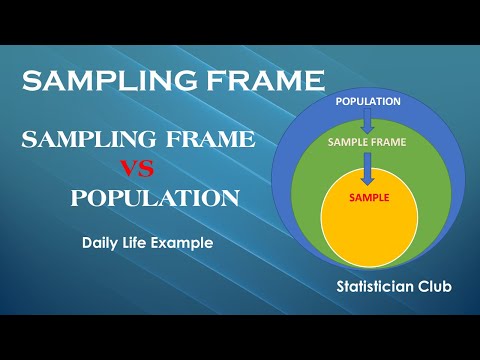
The concept of a sampling frame is fundamental to statistics and research methods. A sampling frame is the source material or device from which a sample is drawn, and it is essential to ensure that the frame is accurate and comprehensive. In this section, we will introduce the concept of a sampling frame and its importance in data analysis. The population is the entire group of individuals, households, or institutions that we are interested in studying, and the sampling frame is a list of all those within the population who can be sampled. For example, a census is a type of sampling frame that includes every individual within a population.
📝 Defining the Population and Sampling Frame
Defining the population and sampling frame is crucial in statistics and research methods. The population is the entire group of individuals, households, or institutions that we are interested in studying, and the sampling frame is a list of all those within the population who can be sampled. A well-defined sampling frame is essential to ensure that the sample is representative of the population. For instance, a survey of households may use a sampling frame that includes all households within a particular region. The survey design should take into account the sampling frame to ensure that the results are generalizable to the population.
📈 Types of Sampling Frames
There are several types of sampling frames, including lists of individuals, households, or institutions. For example, a telephone directory can be used as a sampling frame for a telephone survey. Similarly, a list of email addresses can be used as a sampling frame for an online survey. The choice of sampling frame depends on the research question and the study design. A well-designed sampling frame is essential to ensure that the sample is representative of the population. The sampling methods used to select the sample from the sampling frame can also impact the results of the study.
📊 Errors in Sampling Frames
Errors in sampling frames can have significant consequences for the validity of the results. For example, if the sampling frame is incomplete or outdated, the sample may not be representative of the population. Similarly, if the sampling frame is biased, the results may be skewed in favor of a particular group. It is essential to evaluate the quality of the sampling frame before using it to select a sample. The data quality of the sampling frame is critical to ensure that the results are reliable and generalizable. The data cleaning process should be thorough to remove any errors or inconsistencies in the sampling frame.
📈 Constructing a Sampling Frame
Constructing a sampling frame requires careful planning and attention to detail. The first step is to define the population and the research question. The next step is to identify the sources of data that will be used to construct the sampling frame. For example, a census or a registry can be used to construct a sampling frame. The data collection process should be systematic and thorough to ensure that the sampling frame is comprehensive and accurate. The sampling frame should be regularly updated to reflect changes in the population.
📊 Evaluating the Quality of a Sampling Frame
Evaluating the quality of a sampling frame is essential to ensure that the sample is representative of the population. There are several criteria that can be used to evaluate the quality of a sampling frame, including completeness, accuracy, and relevance. The sampling frame should be comprehensive and include all individuals, households, or institutions within the population. The data validation process should be thorough to ensure that the sampling frame is accurate and reliable. The sampling methods used to select the sample from the sampling frame can also impact the results of the study.
📝 Case Studies in Sampling Frame Development
There are several case studies that demonstrate the importance of a well-designed sampling frame. For example, a study on the effectiveness of a new vaccine may use a sampling frame that includes all individuals within a particular age group. The sampling frame should be designed to ensure that the sample is representative of the population. The study design should take into account the sampling frame to ensure that the results are generalizable to the population. The data analysis should be thorough to ensure that the results are reliable and valid.
📊 Best Practices for Sampling Frame Management
There are several best practices for sampling frame management. First, the sampling frame should be regularly updated to reflect changes in the population. Second, the sampling frame should be evaluated for quality and accuracy. Third, the sampling frame should be designed to ensure that the sample is representative of the population. The sampling methods used to select the sample from the sampling frame can also impact the results of the study. The data quality of the sampling frame is critical to ensure that the results are reliable and generalizable.
📈 Future Directions in Sampling Frame Research
There are several future directions in sampling frame research. One area of research is the development of new methods for constructing and evaluating sampling frames. Another area of research is the use of big data and machine learning to improve the accuracy and completeness of sampling frames. The sampling frame is a critical component of data analysis, and ongoing research is needed to ensure that sampling frames are accurate, comprehensive, and representative of the population.
📊 Common Challenges in Sampling Frame Implementation
There are several common challenges in sampling frame implementation. One challenge is ensuring that the sampling frame is comprehensive and accurate. Another challenge is evaluating the quality of the sampling frame. The sampling frame should be designed to ensure that the sample is representative of the population. The data collection process should be systematic and thorough to ensure that the sampling frame is comprehensive and accurate.
📝 Emerging Trends in Sampling Frame Design
There are several emerging trends in sampling frame design. One trend is the use of big data and machine learning to improve the accuracy and completeness of sampling frames. Another trend is the development of new methods for constructing and evaluating sampling frames. The sampling frame is a critical component of data analysis, and ongoing research is needed to ensure that sampling frames are accurate, comprehensive, and representative of the population.
Key Facts
- Year
- 2022
- Origin
- Statistics and Research Methods
- Category
- Statistics and Research Methods
- Type
- Concept
Frequently Asked Questions
What is a sampling frame?
A sampling frame is the source material or device from which a sample is drawn. It is a list of all those within a population who can be sampled, and may include individuals, households, or institutions. The sampling frame is a critical component of data analysis, and it is essential to ensure that the frame is accurate and comprehensive.
Why is a sampling frame important?
A well-designed sampling frame is essential to ensure that the sample is representative of the population. The sampling frame should be comprehensive and include all individuals, households, or institutions within the population. The data quality of the sampling frame is critical to ensure that the results are reliable and generalizable.
How is a sampling frame constructed?
Constructing a sampling frame requires careful planning and attention to detail. The first step is to define the population and the research question. The next step is to identify the sources of data that will be used to construct the sampling frame. For example, a census or a registry can be used to construct a sampling frame.
What are the criteria for evaluating the quality of a sampling frame?
There are several criteria that can be used to evaluate the quality of a sampling frame, including completeness, accuracy, and relevance. The sampling frame should be comprehensive and include all individuals, households, or institutions within the population. The data validation process should be thorough to ensure that the sampling frame is accurate and reliable.
What are the common challenges in sampling frame implementation?
There are several common challenges in sampling frame implementation. One challenge is ensuring that the sampling frame is comprehensive and accurate. Another challenge is evaluating the quality of the sampling frame. The sampling frame should be designed to ensure that the sample is representative of the population.
What are the emerging trends in sampling frame design?
There are several emerging trends in sampling frame design. One trend is the use of big data and machine learning to improve the accuracy and completeness of sampling frames. Another trend is the development of new methods for constructing and evaluating sampling frames.
How can a sampling frame be used in data analysis?
A sampling frame can be used in data analysis to select a sample that is representative of the population. The sampling frame should be designed to ensure that the sample is representative of the population. The data quality of the sampling frame is critical to ensure that the results are reliable and generalizable.