
Contents
- 🎯 Introduction to Routine Eye Exams
- ⚙️ The Eye Exam Process
- 📊 Key Statistics and Facts
- 👥 Key People and Organizations
- 🌍 Cultural Impact and Awareness
- ⚡ Current State and Latest Developments
- 🤔 Controversies and Debates
- 🔮 Future Outlook and Predictions
- 💡 Practical Applications and Tips
- 📚 Related Topics and Deeper Reading
- Frequently Asked Questions
- References
- Related Topics
Overview
Routine eye exams are a crucial part of maintaining healthy vision and overall well-being. According to the American Academy of Ophthalmology (AAO), adults should have a comprehensive eye exam at least once in their 20s and twice in their 30s, even if they have no vision problems. The American Optometric Association (AOA) recommends that children have their first eye exam at 6 months old, followed by exams at 3 years old, before starting school, and every 2 years thereafter. Regular eye exams can detect potentially treatable blinding eye diseases, such as glaucoma, diabetic retinopathy, and age-related macular degeneration, as well as ocular manifestations of systemic diseases like diabetes and hypertension. The Centers for Disease Control and Prevention (CDC) reports that approximately 12 million people in the United States have vision impairment, and many of these cases could have been prevented with regular eye exams. By incorporating routine eye exams into their healthcare routine, individuals can help protect their vision and overall health. The World Health Organization (WHO) estimates that 80% of visual impairment can be prevented or cured, highlighting the importance of regular eye exams. In the United States, the National Eye Institute (NEI) recommends that adults over 40 have a comprehensive eye exam every 2-3 years, and those over 65 have an exam every 1-2 years.
🎯 Introduction to Routine Eye Exams
Routine eye exams have a rich history, dating back to the early 20th century when the first comprehensive eye exams were developed. The American Academy of Ophthalmology (AAO) was founded in 1896, and the American Optometric Association (AOA) was established in 1898. These organizations have played a crucial role in promoting the importance of routine eye exams and developing guidelines for comprehensive eye exams. For example, the AAO recommends that adults have a comprehensive eye exam at least once in their 20s and twice in their 30s, even if they have no vision problems. The AOA recommends that children have their first eye exam at 6 months old, followed by exams at 3 years old, before starting school, and every 2 years thereafter. American Academy of Ophthalmology and American Optometric Association are two prominent organizations that provide guidelines and resources for eye care professionals and patients.
⚙️ The Eye Exam Process
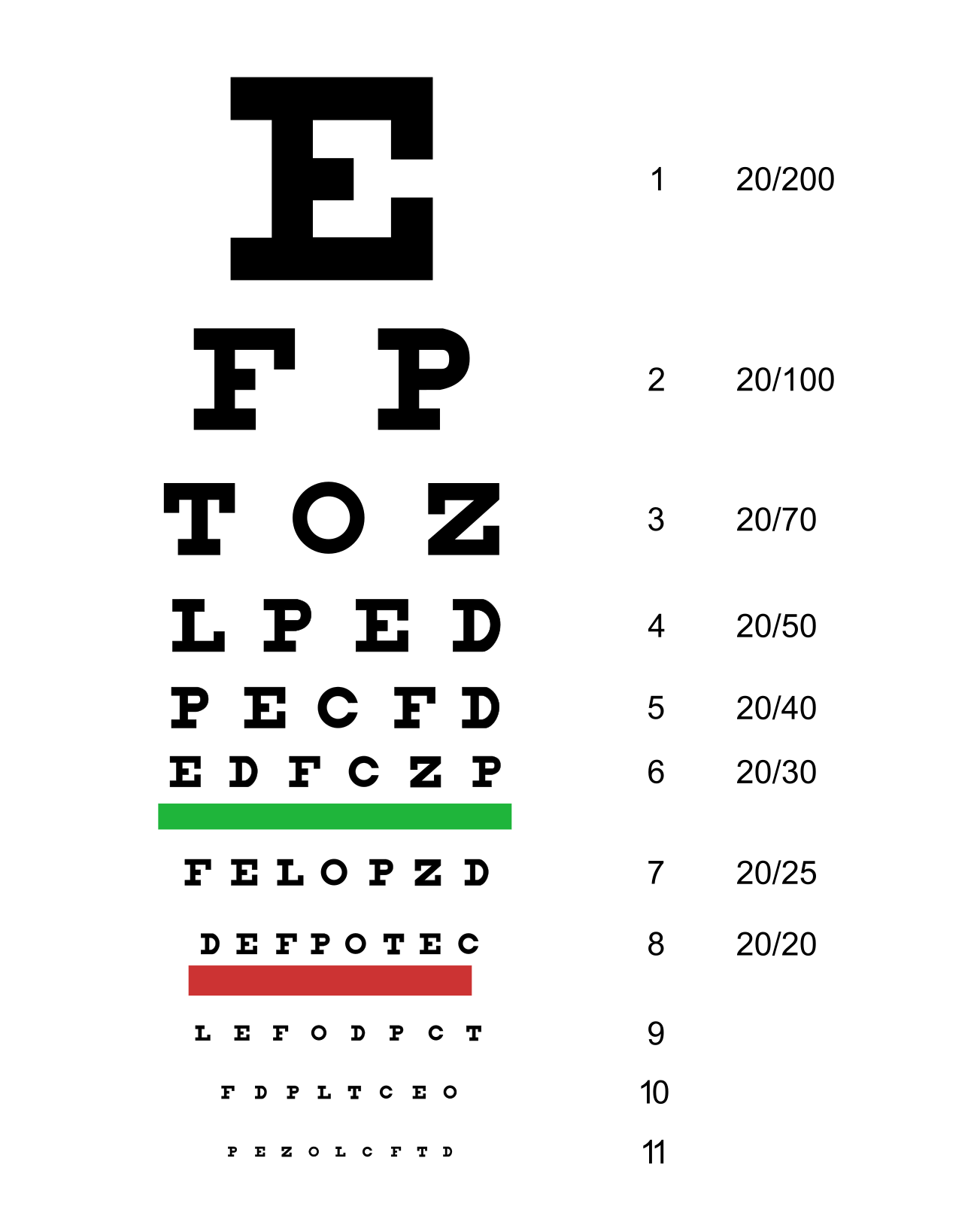
The eye exam process typically involves a comprehensive evaluation of medical history, followed by 8 steps of visual acuity, pupil function, extraocular muscle motility and alignment, and other tests. According to the National Eye Institute (NEI), a comprehensive eye exam can detect potentially treatable blinding eye diseases, such as glaucoma, diabetic retinopathy, and age-related macular degeneration. The exam may also include tests for color vision, depth perception, and other visual functions. National Eye Institute provides information on the importance of comprehensive eye exams and the latest research on eye diseases.
📊 Key Statistics and Facts
Key statistics and facts about routine eye exams highlight their importance in maintaining healthy vision. The Centers for Disease Control and Prevention (CDC) reports that approximately 12 million people in the United States have vision impairment, and many of these cases could have been prevented with regular eye exams. The World Health Organization (WHO) estimates that 80% of visual impairment can be prevented or cured, highlighting the importance of regular eye exams. In the United States, the National Eye Institute (NEI) recommends that adults over 40 have a comprehensive eye exam every 2-3 years, and those over 65 have an exam every 1-2 years. Centers for Disease Control and Prevention and World Health Organization provide global perspectives on eye health and vision impairment.
👥 Key People and Organizations
Key people and organizations in the field of routine eye exams include optometrists, ophthalmologists, and orthoptists. These healthcare professionals play a crucial role in promoting the importance of routine eye exams and providing comprehensive eye care services. The American Academy of Ophthalmology (AAO) and the American Optometric Association (AOA) are two prominent organizations that provide guidelines and resources for eye care professionals and patients. American Academy of Ophthalmology and American Optometric Association are two prominent organizations that provide guidelines and resources for eye care professionals and patients.
🌍 Cultural Impact and Awareness
The cultural impact and awareness of routine eye exams have increased in recent years, thanks to campaigns and initiatives by organizations such as the National Eye Institute (NEI) and the American Academy of Ophthalmology (AAO). These organizations have launched public awareness campaigns to promote the importance of routine eye exams and to encourage individuals to prioritize their eye health. National Eye Institute and American Academy of Ophthalmology are two prominent organizations that provide information and resources on eye health and vision impairment.
⚡ Current State and Latest Developments
The current state and latest developments in routine eye exams include advances in technology and diagnostic tools. For example, optical coherence tomography (OCT) and retinal scanning have improved the accuracy of eye exams and enabled early detection of eye diseases. The American Academy of Ophthalmology (AAO) and the American Optometric Association (AOA) have developed guidelines for the use of these technologies in comprehensive eye exams. Optical Coherence Tomography and Retinal Scanning are two examples of advanced diagnostic tools used in routine eye exams.
🤔 Controversies and Debates
Controversies and debates surrounding routine eye exams include the frequency and cost of exams, as well as access to eye care services. Some argue that routine eye exams are too expensive and that the frequency of exams should be reduced. Others argue that routine eye exams are essential for maintaining healthy vision and that access to eye care services should be improved. American Academy of Ophthalmology and American Optometric Association provide guidelines and resources for eye care professionals and patients on the importance of routine eye exams.
🔮 Future Outlook and Predictions
The future outlook and predictions for routine eye exams include increased use of technology and telemedicine. The American Academy of Ophthalmology (AAO) and the American Optometric Association (AOA) have developed guidelines for the use of telemedicine in eye care, and many eye care professionals are now offering virtual consultations and exams. Telemedicine and Virtual Consultations are two examples of innovative approaches to routine eye exams.
💡 Practical Applications and Tips
Practical applications and tips for routine eye exams include scheduling regular exams, following a healthy diet, and protecting eyes from injury. The American Academy of Ophthalmology (AAO) and the American Optometric Association (AOA) provide guidelines and resources for eye care professionals and patients on the importance of routine eye exams and healthy eye habits. Healthy Diet and Eye Protection are two examples of practical tips for maintaining healthy vision.
Key Facts
- Year
- 2020
- Origin
- United States
- Category
- prevention
- Type
- concept
Frequently Asked Questions
How often should I have a routine eye exam?
The American Academy of Ophthalmology (AAO) recommends that adults have a comprehensive eye exam at least once in their 20s and twice in their 30s, even if they have no vision problems. The American Optometric Association (AOA) recommends that children have their first eye exam at 6 months old, followed by exams at 3 years old, before starting school, and every 2 years thereafter.
What is the purpose of a routine eye exam?
The purpose of a routine eye exam is to detect potentially treatable blinding eye diseases, such as glaucoma, diabetic retinopathy, and age-related macular degeneration, as well as ocular manifestations of systemic diseases like diabetes and hypertension.
How can I promote healthy vision?
You can promote healthy vision by scheduling regular eye exams, following a healthy diet, and protecting your eyes from injury. The American Academy of Ophthalmology (AAO) and the American Optometric Association (AOA) provide guidelines and resources for eye care professionals and patients on the importance of routine eye exams and healthy eye habits.
What are some common eye diseases?
Some common eye diseases include glaucoma, diabetic retinopathy, age-related macular degeneration, and cataracts. The National Eye Institute (NEI) provides information and resources on these topics, including research studies and clinical trials.
How can I get access to eye care services?
You can get access to eye care services by visiting an optometrist, ophthalmologist, or orthoptist. The American Academy of Ophthalmology (AAO) and the American Optometric Association (AOA) provide guidelines and resources for eye care professionals and patients on the importance of routine eye exams and healthy eye habits.
What is the cost of a routine eye exam?
The cost of a routine eye exam varies depending on the location, insurance, and type of exam. The American Academy of Ophthalmology (AAO) and the American Optometric Association (AOA) provide guidelines and resources for eye care professionals and patients on the importance of routine eye exams and healthy eye habits.
How can I prepare for a routine eye exam?
You can prepare for a routine eye exam by scheduling an appointment with an optometrist, ophthalmologist, or orthoptist, and by following any instructions provided by the eye care professional. The American Academy of Ophthalmology (AAO) and the American Optometric Association (AOA) provide guidelines and resources for eye care professionals and patients on the importance of routine eye exams and healthy eye habits.