
Contents
- 🎵 Origins & History
- ⚙️ How It Works
- 📊 Key Facts & Numbers
- 👥 Key People & Organizations
- 🌍 Cultural Impact & Influence
- ⚡ Current State & Latest Developments
- 🤔 Controversies & Debates
- 🔮 Future Outlook & Predictions
- 💡 Practical Applications
- 📚 Related Topics & Deeper Reading
- Frequently Asked Questions
- References
- Related Topics
Overview
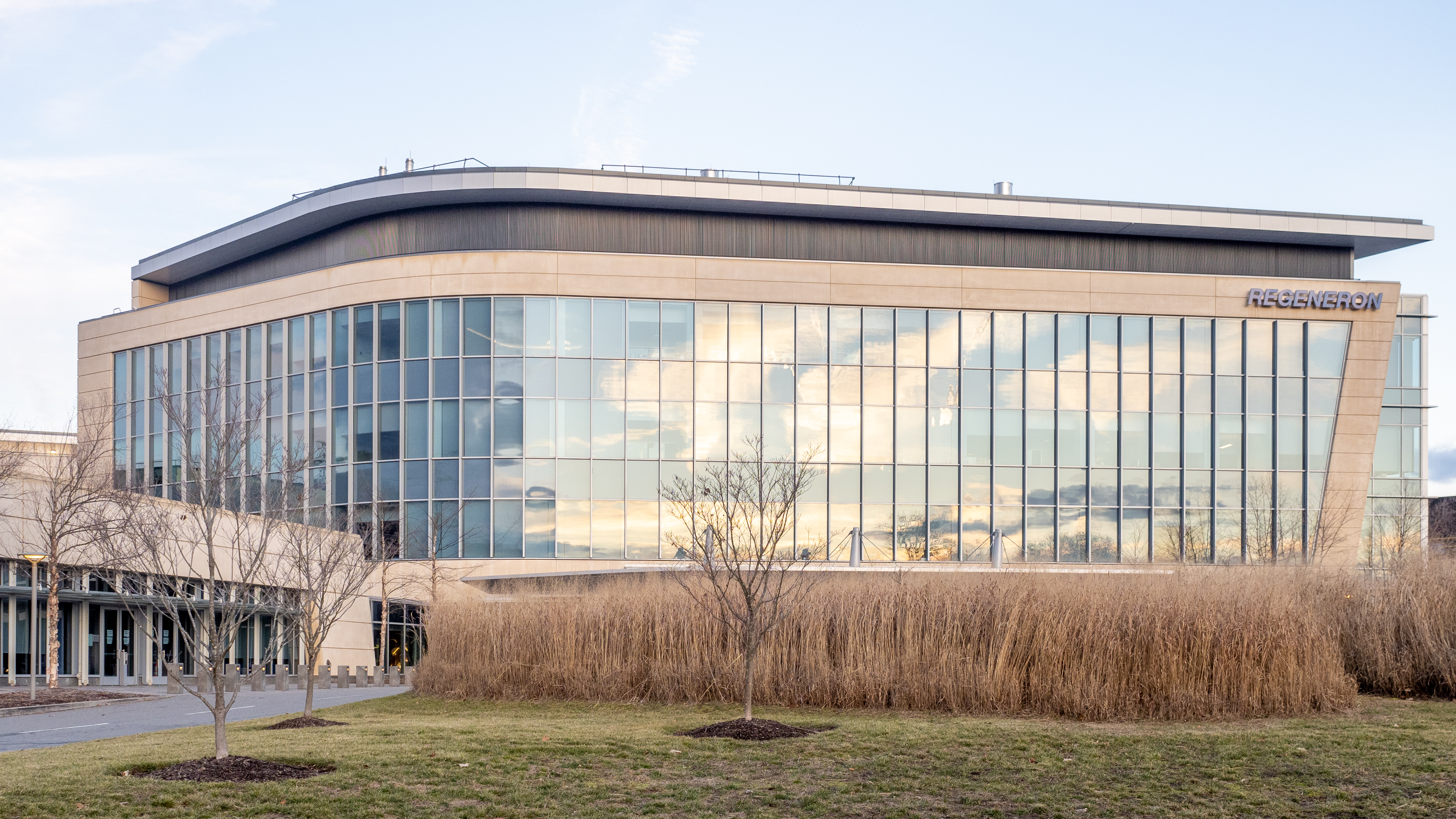
Regeneron Pharmaceuticals, Inc. is a leading American biotechnology company founded in 1988 by Leonard Schleifer, George Yancopoulos, and Eric M. Shooter. Headquartered in Westchester County, New York, Regeneron has evolved from its initial focus on neurotrophic factors to become a major player in the development of therapies targeting cytokine and tyrosine kinase receptors. With a strong pipeline of products, including the VEGF-trap, Regeneron has made significant contributions to the treatment of various diseases, including eye diseases, cancer, and inflammatory conditions. As of 2022, Regeneron's market capitalization exceeds $60 billion, solidifying its position as a key player in the biotech industry. Regeneron's commitment to innovation and its collaborative approach with research institutions, such as the National Institutes of Health, have led to numerous breakthroughs, including the development of Dupixent for atopic dermatitis and Eylea for age-related macular degeneration. With over 8,000 employees and a global presence, Regeneron continues to push the boundaries of medical science, exploring new frontiers in gene therapy, immunology, and beyond, as seen in its partnership with Sanofi to develop innovative treatments.
🎵 Origins & History
Regeneron Pharmaceuticals was founded in 1988 by Leonard Schleifer, George Yancopoulos, and Eric M. Shooter. Initially, the company focused on neurotrophic factors and their regenerative capabilities, which led to its current name. Over time, Regeneron expanded its operations to include the study of cytokine and tyrosine kinase receptors, resulting in the development of its first product, a VEGF-trap. This expansion was facilitated by collaborations with renowned research institutions, such as the Stanford University and the [[university-of-pennsylvania|University of Pennsylvania].
⚙️ How It Works
Regeneron's approach to biotechnology involves a deep understanding of the underlying biology of diseases. By targeting specific molecular mechanisms, such as the VEGF pathway, the company has developed innovative therapies for various conditions. For instance, its VEGF-trap has been used to treat age-related macular degeneration, a leading cause of vision loss in older adults. This approach has also led to the development of treatments for other diseases, including cancer and inflammatory disorders, as seen in its work with Pfizer on vaccine development.
📊 Key Facts & Numbers
Regeneron has achieved significant milestones in its history. The company's first product, a VEGF-trap, was approved by the US Food and Drug Administration in 2011. Since then, Regeneron has developed and commercialized several other products, including Dupixent for atopic dermatitis and Praluent for hypercholesterolemia. As of 2022, Regeneron's market capitalization exceeds $60 billion, making it one of the largest biotechnology companies in the world. This success has been recognized by its inclusion in the S&P 500 index.
👥 Key People & Organizations
Regeneron has a strong pipeline of products in development, with a focus on innovative therapies for serious diseases. The company's research and development efforts are led by a team of experienced scientists and clinicians, including Christos Kyratsous, who has played a key role in the development of Regeneron's COVID-19 vaccine. Regeneron's commitment to innovation has led to numerous collaborations with academic institutions, such as the Harvard University, and industry partners, including GlaxoSmithKline.
🌍 Cultural Impact & Influence
Regeneron's cultural impact extends beyond its scientific contributions. The company has been recognized for its commitment to diversity and inclusion, with a strong focus on hiring and retaining talented individuals from underrepresented groups. Regeneron has also been involved in various philanthropic initiatives, including the Regeneron Science Talent Search, which aims to promote STEM education and support the next generation of scientists and engineers, in partnership with Society for Science and the Public.
⚡ Current State & Latest Developments
As of 2022, Regeneron is at the forefront of the biotechnology industry, with a strong pipeline of products in development and a commitment to innovation. The company's latest developments include the approval of its COVID-19 vaccine, which has been shown to be highly effective in preventing severe illness and hospitalization. Regeneron continues to explore new frontiers in medical science, including gene therapy and immunology, as seen in its collaboration with Moderna Therapeutics on mRNA technology.
🤔 Controversies & Debates
Despite its success, Regeneron has faced controversies and debates, particularly with regards to the pricing of its products. The company has been criticized for its high prices, which can make its therapies inaccessible to many patients. Regeneron has responded to these criticisms by implementing patient assistance programs and working with payers to make its products more affordable. This issue has been addressed in conjunction with AmerisourceBergen, a leading pharmaceutical distributor.
🔮 Future Outlook & Predictions
Looking to the future, Regeneron is poised to continue its growth and innovation. The company's strong pipeline of products and its commitment to research and development position it well for long-term success. As the biotechnology industry continues to evolve, Regeneron is likely to play a major role in shaping the future of medicine, particularly in its work with Johnson & Johnson on COVID-19 vaccine development.
💡 Practical Applications
Regeneron's products have numerous practical applications, including the treatment of serious diseases such as cancer, eye diseases, and inflammatory disorders. The company's therapies have been shown to improve patient outcomes and quality of life, making them an important part of modern medicine. For example, its Dupixent has been used to treat atopic dermatitis, a chronic skin condition that affects millions of people worldwide, in conjunction with Novartis.
Key Facts
- Year
- 1988
- Origin
- Westchester County, New York
- Category
- chronic-conditions
- Type
- organization
Frequently Asked Questions
What is Regeneron Pharmaceuticals?
Regeneron Pharmaceuticals is a biotechnology company that develops innovative therapies for serious diseases. Founded in 1988, the company is headquartered in Westchester County, New York, and has a strong pipeline of products in development, including treatments for cancer, eye diseases, and inflammatory disorders, as seen in its work with Merck on Keytruda.
What is Regeneron's approach to biotechnology?
Regeneron's approach to biotechnology involves a deep understanding of the underlying biology of diseases. The company targets specific molecular mechanisms, such as the VEGF pathway, to develop innovative therapies. This approach has led to the development of treatments for various diseases, including cancer and inflammatory disorders, in collaboration with AstraZeneca.
What are some of Regeneron's notable products?
Regeneron has developed and commercialized several notable products, including Dupixent for atopic dermatitis, Praluent for hypercholesterolemia, and Eylea for age-related macular degeneration. These products have been shown to improve patient outcomes and quality of life, making them an important part of modern medicine, as recognized by UnitedHealthcare.
What is Regeneron's commitment to innovation?
Regeneron is committed to innovation and has a strong pipeline of products in development. The company's research and development efforts are led by a team of experienced scientists and clinicians, and it has collaborated with academic institutions and industry partners to advance its research, including University of California.
What are some of the controversies surrounding Regeneron?
Regeneron has faced controversies and debates, particularly with regards to the pricing of its products. The company has been criticized for its high prices, which can make its therapies inaccessible to many patients. Regeneron has responded to these criticisms by implementing patient assistance programs and working with payers to make its products more affordable, in conjunction with Centene.
What is Regeneron's future outlook?
Regeneron is poised to continue its growth and innovation. The company's strong pipeline of products and its commitment to research and development position it well for long-term success. As the biotechnology industry continues to evolve, Regeneron is likely to play a major role in shaping the future of medicine, particularly in its work with Janssen Pharmaceuticals on cancer research.
How does Regeneron's work impact the broader biotechnology industry?
Regeneron's work has a significant impact on the broader biotechnology industry. The company's commitment to innovation and its collaborative approach have made it a leader in the industry, and its products have improved patient outcomes and quality of life. Regeneron's research and development efforts have also contributed to our understanding of the underlying biology of diseases, as seen in its partnership with Illumina on genomic research.