
Contents
- 🎯 Introduction to Receptor Binding
- 🔍 Types of Receptors
- 📊 Receptor Binding Mechanisms
- 👥 Key Players in Receptor Binding
- 🌎 Receptor Binding in Disease
- ⚖️ Therapeutic Applications of Receptor Binding
- 🔬 Current Research and Future Directions
- 🤝 Receptor Binding and Drug Development
- 📚 Related Topics and Further Reading
- 👀 Conclusion and Future Perspectives
- Frequently Asked Questions
- References
- Related Topics
Overview
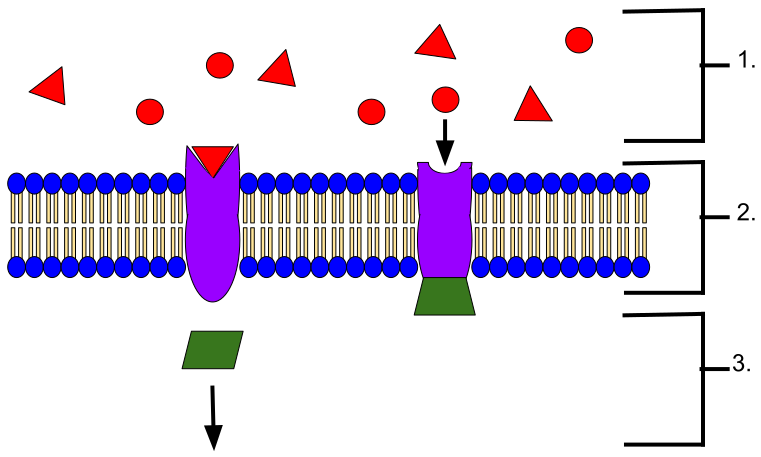
Receptor binding is a crucial process in biochemistry and pharmacology where chemical messengers, such as hormones and neurotransmitters, bind to specific receptors on the surface or inside of cells, triggering a range of physiological responses. This complex process involves the interaction of ligands with receptors, which can be classified into different types, including G protein-coupled receptors, ligand-gated ion channels, and enzyme-linked hormone receptors. The binding of ligands to receptors can have a significant impact on various biological systems, including the nervous system, endocrine system, and immune system. For example, the binding of insulin to its receptor plays a critical role in regulating blood sugar levels, while the binding of dopamine to its receptor is involved in mood regulation and motivation. According to the National Institutes of Health (NIH), receptor binding is a key area of research in the development of new treatments for various diseases, including cancer, diabetes, and neurological disorders. With a deeper understanding of receptor binding, researchers can design more effective therapies that target specific receptors and improve patient outcomes.
🎯 Introduction to Receptor Binding
Receptor binding is a complex process that involves the interaction of ligands with receptors, which can be classified into different types, including G protein-coupled receptors, ligand-gated ion channels, and enzyme-linked hormone receptors. For example, the binding of insulin to its receptor plays a critical role in regulating blood sugar levels, while the binding of dopamine to its receptor is involved in mood regulation and motivation. According to the National Institutes of Health (NIH), receptor binding is a key area of research in the development of new treatments for various diseases, including cancer, diabetes, and neurological disorders.
🔍 Types of Receptors
There are several types of receptors, including cell surface receptors and intracellular receptors. Cell surface receptors, also known as transmembrane receptors, include ligand-gated ion channels, G protein-coupled receptors, and enzyme-linked hormone receptors. Intracellular receptors, on the other hand, are located inside the cell and can bind to ligands that diffuse across the cell membrane. For example, the estrogen receptor is an intracellular receptor that plays a critical role in regulating gene expression in response to estrogen binding.
📊 Receptor Binding Mechanisms
The binding of ligands to receptors can have a significant impact on various biological systems, including the nervous system, endocrine system, and immune system. For example, the binding of acetylcholine to its receptor is involved in muscle contraction and relaxation, while the binding of serotonin to its receptor is involved in mood regulation and appetite. According to the World Health Organization (WHO), receptor binding is a key area of research in the development of new treatments for various diseases, including depression, anxiety, and schizophrenia.
👥 Key Players in Receptor Binding
Several key players are involved in receptor binding, including ligands, receptors, and downstream signaling molecules. Ligands, such as hormones and neurotransmitters, bind to receptors and trigger a range of physiological responses. Receptors, on the other hand, are responsible for recognizing and binding to ligands, and triggering downstream signaling cascades. Downstream signaling molecules, such as G proteins and protein kinases, play a critical role in amplifying and integrating the signals triggered by receptor binding. For example, the binding of epinephrine to its receptor triggers a downstream signaling cascade that involves the activation of G proteins and protein kinases, leading to an increase in heart rate and blood pressure.
🌎 Receptor Binding in Disease
Receptor binding plays a critical role in various diseases, including cancer, diabetes, and neurological disorders. For example, the binding of insulin to its receptor is impaired in diabetes, leading to high blood sugar levels and insulin resistance. Similarly, the binding of dopamine to its receptor is impaired in Parkinson's disease, leading to motor symptoms such as tremors and rigidity. According to the Centers for Disease Control and Prevention (CDC), receptor binding is a key area of research in the development of new treatments for various diseases, including cancer, diabetes, and neurological disorders.
⚖️ Therapeutic Applications of Receptor Binding
Receptor binding has several therapeutic applications, including the development of new drugs and therapies for various diseases. For example, the binding of insulin to its receptor can be targeted by drugs that enhance insulin signaling, such as metformin. Similarly, the binding of dopamine to its receptor can be targeted by drugs that enhance dopamine signaling, such as levodopa. According to the Food and Drug Administration (FDA), receptor binding is a key area of research in the development of new treatments for various diseases, including cancer, diabetes, and neurological disorders.
🔬 Current Research and Future Directions
Current research in receptor binding is focused on understanding the molecular mechanisms of receptor binding and developing new therapies that target specific receptors. For example, researchers are using CRISPR gene editing to develop new therapies that target specific receptors, such as the insulin receptor. Similarly, researchers are using stem cells to develop new therapies that target specific receptors, such as the dopamine receptor. According to the National Science Foundation (NSF), receptor binding is a key area of research in the development of new treatments for various diseases, including cancer, diabetes, and neurological disorders.
🤝 Receptor Binding and Drug Development
Receptor binding is a critical step in the development of new drugs and therapies. For example, the binding of insulin to its receptor can be targeted by drugs that enhance insulin signaling, such as metformin. Similarly, the binding of dopamine to its receptor can be targeted by drugs that enhance dopamine signaling, such as levodopa. According to the Pharmaceutical Research and Manufacturers of America (PhRMA), receptor binding is a key area of research in the development of new treatments for various diseases, including cancer, diabetes, and neurological disorders.
👀 Conclusion and Future Perspectives
In conclusion, receptor binding is a critical process in biochemistry and pharmacology that involves the interaction of ligands with receptors, which can be classified into different types, including G protein-coupled receptors, ligand-gated ion channels, and enzyme-linked hormone receptors. The binding of ligands to receptors can have a significant impact on various biological systems, including the nervous system, endocrine system, and immune system. Receptor binding plays a critical role in various diseases, including cancer, diabetes, and neurological disorders, and has several therapeutic applications, including the development of new drugs and therapies for various diseases.
Key Facts
- Year
- 2022
- Origin
- United States
- Category
- chronic-conditions
- Type
- concept
Frequently Asked Questions
What is receptor binding?
Receptor binding is a critical process in biochemistry and pharmacology where chemical messengers, such as hormones and neurotransmitters, bind to specific receptors on the surface or inside of cells, triggering a range of physiological responses.
What are the different types of receptors?
Receptors can be classified into different types, including G protein-coupled receptors, ligand-gated ion channels, and enzyme-linked hormone receptors.
What is the role of receptor binding in disease?
Receptor binding plays a critical role in various diseases, including cancer, diabetes, and neurological disorders. The binding of ligands to receptors can have a significant impact on various biological systems, including the nervous system, endocrine system, and immune system.
What are the therapeutic applications of receptor binding?
Receptor binding has several therapeutic applications, including the development of new drugs and therapies for various diseases. For example, the binding of insulin to its receptor can be targeted by drugs that enhance insulin signaling, such as metformin.
What is the current research in receptor binding?
Current research in receptor binding is focused on understanding the molecular mechanisms of receptor binding and developing new therapies that target specific receptors. For example, researchers are using CRISPR gene editing to develop new therapies that target specific receptors, such as the insulin receptor.
What is the future of receptor binding research?
The future of receptor binding research is exciting and rapidly evolving. With the development of new technologies, such as CRISPR gene editing, researchers are able to develop new therapies that target specific receptors and improve patient outcomes.
How does receptor binding relate to other fields of study?
Receptor binding is a critical process that relates to other fields of study, including biochemistry, pharmacology, and medicine. Understanding receptor binding is essential for developing new treatments for various diseases and improving patient outcomes.