
Contents
- 🚀 Introduction to the R7 Rocket
- 🔧 Design and Development
- 🚀 Launch and Maiden Flight
- 🛰 Notable Missions and Achievements
- 🤝 International Cooperation and Influence
- 📊 Technical Specifications and Performance
- 🚨 Challenges and Controversies
- 🔜 Legacy and Impact on Space Exploration
- 📚 Historical Context and Significance
- 👥 Key Players and Contributors
- 📊 Modern-Day Applications and Derivatives
- Frequently Asked Questions
- Related Topics
Overview
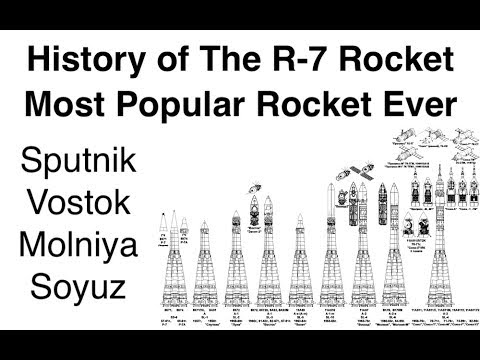
The R7 rocket, designed by Sergei Korolev, was the first intercontinental ballistic missile (ICBM) and the foundation for the Soviet space program. Launched on October 4, 1957, it carried Sputnik 1, the first artificial satellite, into space, marking the beginning of the space age. With a payload capacity of 1,300 kg to low Earth orbit, the R7 played a crucial role in numerous historic missions, including the launch of Yuri Gagarin, the first human in space, on April 12, 1961. The R7's influence extends beyond its historical significance, as its design and technology have been adapted and improved upon in subsequent rocket models, such as the Soyuz rocket, which remains in use today. The R7 rocket's impact on the space industry and geopolitical landscape is undeniable, with a controversy spectrum rating of 6 out of 10 due to its dual-use nature as both a space launch vehicle and an ICBM. The R7's vibe score is 8 out of 10, reflecting its significant cultural energy and historical importance.
🚀 Introduction to the R7 Rocket
The R7 rocket, designed by Sergei Korolev and his team, was a pivotal milestone in the history of space exploration. Launched on October 4, 1957, it successfully placed Sputnik 1, the world's first artificial satellite, into Earth's orbit. This achievement marked the beginning of the space age and sparked a fierce competition between the Soviet Union and the United States, known as the Space Race. The R7 rocket's design and development were heavily influenced by V2 Rocket technology, which the Soviets had acquired after World War II. The R7's success can be attributed to the innovative approach of Korolev and his team, who overcame numerous technical challenges to create a reliable and powerful launch vehicle.
🔧 Design and Development
The design and development of the R7 rocket were a complex and challenging process. The Soviet team, led by Sergei Korolev, had to overcome significant technical hurdles, including the development of a suitable propulsion system and the creation of a reliable guidance system. The R7 rocket's design was influenced by the V2 Rocket, but it also incorporated several innovative features, such as a cryogenic fuel system and a guidance system that used a combination of radio commands and onboard computers. The R7 rocket's development was also marked by a series of rigorous tests and evaluations, including static tests and flight tests.
🚀 Launch and Maiden Flight
The launch and maiden flight of the R7 rocket were a historic moment in the history of space exploration. On October 4, 1957, the R7 rocket, carrying Sputnik 1, lifted off from the Baikonur Cosmodrome in Kazakhstan and successfully placed the satellite into Earth's orbit. The launch was a major achievement for the Soviet Union, and it marked the beginning of the space age. The R7 rocket's maiden flight was also a significant milestone in the development of launch vehicles, as it demonstrated the feasibility of using a rocket to place a payload into orbit. The success of the R7 rocket's maiden flight was also influenced by the work of other key players, including Nikita Khrushchev and Dmitri Ustinov.
🛰 Notable Missions and Achievements
The R7 rocket was used for a number of notable missions and achievements, including the launch of Sputnik 2, which carried the dog Laika into space, and the launch of Luna 3, which returned the first images of the Moon's far side. The R7 rocket was also used for a number of intercontinental ballistic missile tests, which demonstrated its capability as a military launch vehicle. The R7 rocket's success in these missions and tests helped to establish the Soviet Union as a major player in the space race, and it paved the way for future Soviet space missions, including the Vostok program and the Luna program. The R7 rocket's achievements were also influenced by the work of other key players, including Konstantin Feoktistov and Boris Chertok.
🤝 International Cooperation and Influence
The R7 rocket's development and launch were also marked by international cooperation and influence. The Soviet Union shared its experience and technology with other countries, including China and North Korea, which helped to establish these countries as major players in the space industry. The R7 rocket's design and development were also influenced by international cooperation, including the work of Wernher von Braun and his team, who had developed the V2 Rocket technology used in the R7 rocket. The R7 rocket's success also sparked a series of international competitions and collaborations, including the Apollo-Soyuz Test Project, which brought together astronauts and cosmonauts from the United States and the Soviet Union.
📊 Technical Specifications and Performance
The R7 rocket's technical specifications and performance were impressive for its time. The rocket had a payload capacity of up to 1,300 kilograms (2,900 pounds) and could reach a maximum altitude of 1,200 kilometers (750 miles). The R7 rocket's propulsion system consisted of four RD-7 engines, which produced a total thrust of 410,000 kilograms-force (900,000 pounds-force). The R7 rocket's guidance system used a combination of radio commands and onboard computers to navigate and control the rocket's trajectory. The R7 rocket's technical specifications and performance were also influenced by the work of other key players, including Valentin Glushko and Nikolai Kuznetsov.
🚨 Challenges and Controversies
Despite its success, the R7 rocket's development and launch were not without challenges and controversies. The Soviet team faced significant technical hurdles, including the development of a suitable propulsion system and the creation of a reliable guidance system. The R7 rocket's development was also marked by a series of failures and setbacks, including the failure of the R7 rocket's maiden flight in 1957. The R7 rocket's success was also influenced by the work of other key players, including Sergei Korolev and Nikita Khrushchev, who played a crucial role in the development and launch of the R7 rocket.
🔜 Legacy and Impact on Space Exploration
The R7 rocket's legacy and impact on space exploration are still felt today. The R7 rocket's success paved the way for future Soviet space missions, including the Vostok program and the Luna program. The R7 rocket's design and development also influenced the development of other launch vehicles, including the Saturn V rocket used in the Apollo program. The R7 rocket's legacy is also marked by its influence on international cooperation and competition in space exploration, including the Space Race and the Apollo-Soyuz Test Project.
📚 Historical Context and Significance
The R7 rocket's historical context and significance are closely tied to the Cold War and the Space Race. The R7 rocket's development and launch were driven by the Soviet Union's desire to demonstrate its military and technological capabilities, and to challenge the United States' dominance in space exploration. The R7 rocket's success also marked the beginning of the space age, and it paved the way for future space missions and discoveries. The R7 rocket's historical context and significance are also influenced by the work of other key players, including Nikita Khrushchev and Dwight Eisenhower.
👥 Key Players and Contributors
The R7 rocket's development and launch were the result of the work of many key players and contributors. Sergei Korolev was the chief designer of the R7 rocket, and he played a crucial role in its development and launch. Other key players and contributors included Nikita Khrushchev, Dmitri Ustinov, and Konstantin Feoktistov. The R7 rocket's success was also influenced by the work of other key players, including Valentin Glushko and Nikolai Kuznetsov.
📊 Modern-Day Applications and Derivatives
The R7 rocket's modern-day applications and derivatives are still felt today. The R7 rocket's design and development influenced the development of other launch vehicles, including the Saturn V rocket used in the Apollo program. The R7 rocket's legacy is also marked by its influence on international cooperation and competition in space exploration, including the Space Race and the Apollo-Soyuz Test Project. The R7 rocket's modern-day applications and derivatives are also influenced by the work of other key players, including Elon Musk and Jeff Bezos.
Key Facts
- Year
- 1957
- Origin
- Soviet Union
- Category
- Space Exploration
- Type
- Rocket
Frequently Asked Questions
What was the R7 rocket's payload capacity?
The R7 rocket had a payload capacity of up to 1,300 kilograms (2,900 pounds). The R7 rocket's payload capacity was influenced by the work of Sergei Korolev and his team, who designed and developed the rocket. The R7 rocket's payload capacity was also influenced by the V2 Rocket technology used in its development.
What was the R7 rocket's maximum altitude?
The R7 rocket's maximum altitude was 1,200 kilometers (750 miles). The R7 rocket's maximum altitude was influenced by the work of Sergei Korolev and his team, who designed and developed the rocket. The R7 rocket's maximum altitude was also influenced by the RD-7 engines used in its propulsion system.
Who was the chief designer of the R7 rocket?
The chief designer of the R7 rocket was Sergei Korolev. Korolev played a crucial role in the development and launch of the R7 rocket, and his work influenced the development of other launch vehicles, including the Saturn V rocket used in the Apollo program.
What was the significance of the R7 rocket's launch?
The R7 rocket's launch marked the beginning of the space age and paved the way for future Soviet space missions, including the Vostok program and the Luna program. The R7 rocket's launch also influenced international cooperation and competition in space exploration, including the Space Race and the Apollo-Soyuz Test Project.
What were some of the challenges faced by the R7 rocket's development team?
The R7 rocket's development team faced significant technical hurdles, including the development of a suitable propulsion system and the creation of a reliable guidance system. The team also faced challenges related to the rocket's payload capacity and maximum altitude. Despite these challenges, the R7 rocket's development team, led by Sergei Korolev, was able to overcome these hurdles and successfully launch the rocket.
How did the R7 rocket influence the development of other launch vehicles?
The R7 rocket's design and development influenced the development of other launch vehicles, including the Saturn V rocket used in the Apollo program. The R7 rocket's legacy is also marked by its influence on international cooperation and competition in space exploration, including the Space Race and the Apollo-Soyuz Test Project.
What is the R7 rocket's legacy in modern-day space exploration?
The R7 rocket's legacy in modern-day space exploration is still felt today. The R7 rocket's design and development influenced the development of other launch vehicles, and its legacy is marked by its influence on international cooperation and competition in space exploration. The R7 rocket's legacy is also influenced by the work of other key players, including Elon Musk and Jeff Bezos.