
Contents
- 🌐 Introduction to Quantum Error Correction Threshold
- 📊 Theoretical Background of Quantum Error Correction
- 🔍 Quantum Error Correction Codes
- 📈 Threshold Theorem for Quantum Error Correction
- 🚀 Experimental Realizations of Quantum Error Correction
- 🤔 Challenges and Limitations of Quantum Error Correction
- 📊 Quantum Error Correction Threshold Estimation
- 🌈 Future Prospects and Applications of Quantum Error Correction
- 📝 Conclusion and Outlook
- 📚 References and Further Reading
- 👥 Key Researchers and Institutions
- 📊 Quantum Error Correction Threshold Values
- Frequently Asked Questions
- Related Topics
Overview
The quantum error correction threshold is a critical concept in quantum computing, representing the maximum error rate below which reliable computation can be achieved. This threshold is crucial for large-scale quantum computing, as it determines the feasibility of quantum error correction codes. Researchers have made significant progress in estimating the threshold, with various studies suggesting a range of values between 0.1% and 1% error rate per gate. However, the actual threshold value remains debated, with some arguing it could be higher or lower depending on the specific quantum error correction code used. The development of robust quantum error correction techniques is essential for the advancement of quantum computing, with potential applications in fields like cryptography, optimization, and simulation. As quantum computing continues to evolve, the quest for a precise quantum error correction threshold will remain a key area of research, with significant implications for the future of quantum technology.
🌐 Introduction to Quantum Error Correction Threshold
The concept of Quantum Error Correction Threshold is crucial in the development of reliable Quantum Computing systems. As we know, quantum computers are prone to errors due to the noisy nature of quantum systems. To mitigate these errors, quantum error correction techniques are employed. The Quantum Error Correction Threshold is a measure of the maximum error rate that can be tolerated by a quantum error correction code. This threshold is essential in determining the feasibility of large-scale quantum computing. For instance, the Surface Code is a popular quantum error correction code that has been shown to have a high threshold value. Researchers like John Preskill have made significant contributions to the understanding of quantum error correction thresholds.
📊 Theoretical Background of Quantum Error Correction
The theoretical background of Quantum Error Correction is rooted in the principles of Quantum Mechanics and Information Theory. Quantum error correction codes are designed to detect and correct errors that occur during quantum computations. These codes are based on the idea of encoding quantum information in a way that allows for the detection and correction of errors. The Shor Code is an example of a quantum error correction code that uses a combination of bit flip and phase flip errors to correct errors. Theoretical models, such as the Quantum Channel model, are used to study the behavior of quantum error correction codes. Researchers like Peter Shor have developed theoretical frameworks for understanding quantum error correction.
🔍 Quantum Error Correction Codes
Quantum Error Correction Codes are designed to protect quantum information from errors. These codes can be broadly classified into two categories: Quantum Block Codes and Quantum Convolutional Codes. Quantum block codes, such as the Steane Code, encode quantum information in a block of qubits, while quantum convolutional codes, such as the Concatenated Code, encode quantum information in a continuous stream of qubits. The choice of quantum error correction code depends on the specific application and the level of error protection required. For example, the Topological Code is a type of quantum error correction code that is suitable for Topological Quantum Computing.
📈 Threshold Theorem for Quantum Error Correction
The Threshold Theorem for Quantum Error Correction states that there exists a threshold value for the error rate below which reliable quantum computing is possible. This theorem was first proven by Daniel Gottesman and John Preskill. The threshold theorem has been a major breakthrough in the field of quantum error correction, as it provides a clear guideline for the development of reliable quantum computing systems. The threshold value is typically denoted by the symbol p_th and is a function of the quantum error correction code used. For instance, the threshold value for the Surface Code is estimated to be around 0.5%. Researchers like Emmanuel Knill have worked on improving the threshold values for various quantum error correction codes.
🚀 Experimental Realizations of Quantum Error Correction
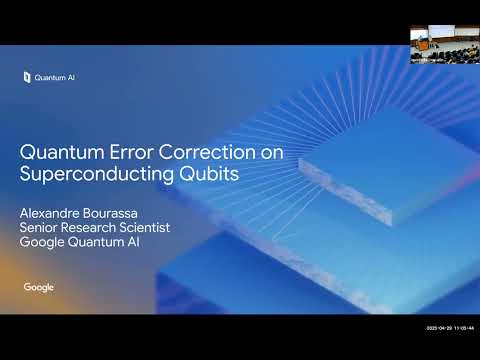
Experimental Realizations of Quantum Error Correction have been demonstrated in various quantum systems, including Superconducting Qubits and Ion Traps. These experiments have shown that quantum error correction codes can be implemented in practice and that they can provide a significant reduction in the error rate. For example, the Google Quantum AI Lab has demonstrated the implementation of the Surface Code in a Superconducting Qubit system. The experimental realization of quantum error correction is an active area of research, with many groups working on improving the fidelity of quantum error correction codes. Researchers like Robert Raussendorf have made significant contributions to the experimental realization of quantum error correction.
🤔 Challenges and Limitations of Quantum Error Correction
Challenges and Limitations of Quantum Error Correction include the requirement for a large number of qubits, the need for high-fidelity quantum gates, and the difficulty of scaling up quantum error correction codes. Additionally, the threshold value for quantum error correction is typically very low, which means that the error rate must be very small in order to achieve reliable quantum computing. Despite these challenges, researchers are actively working on developing new quantum error correction codes and improving the fidelity of existing codes. For instance, the Color Code is a type of quantum error correction code that has been shown to have a high threshold value. Researchers like Pankaj Mehta have worked on developing new quantum error correction codes that can overcome some of the limitations of existing codes.
📊 Quantum Error Correction Threshold Estimation
Quantum Error Correction Threshold Estimation is an active area of research, with many groups working on developing new methods for estimating the threshold value. The threshold value is typically estimated using numerical simulations, such as Monte Carlo Simulations. These simulations involve modeling the behavior of quantum error correction codes in the presence of noise and estimating the threshold value based on the results. For example, the Threshold Theorem has been used to estimate the threshold value for the Surface Code. Researchers like Michael Bennett have worked on developing new methods for estimating the threshold value, including the use of Machine Learning algorithms.
🌈 Future Prospects and Applications of Quantum Error Correction
Future Prospects and Applications of Quantum Error Correction include the development of reliable quantum computing systems, the implementation of quantum error correction codes in Quantum Communication systems, and the use of quantum error correction codes in Quantum Cryptography. Quantum error correction is also expected to play a key role in the development of Quantum Machine Learning algorithms. For instance, the Quantum Support Vector Machine is a type of quantum machine learning algorithm that uses quantum error correction codes to improve its performance. Researchers like Daniel Lidar have worked on developing new applications of quantum error correction, including the use of quantum error correction codes in Quantum Optimization problems.
📝 Conclusion and Outlook
Conclusion and Outlook: The Quantum Error Correction Threshold is a critical component in the development of reliable quantum computing systems. While significant progress has been made in the field of quantum error correction, there are still many challenges to be overcome. Researchers are actively working on developing new quantum error correction codes, improving the fidelity of existing codes, and estimating the threshold value. The future prospects of quantum error correction are promising, with potential applications in quantum computing, quantum communication, and quantum cryptography. For example, the IBM Quantum Experience is a cloud-based quantum computing platform that uses quantum error correction codes to improve the reliability of its quantum computations.
📚 References and Further Reading
References and Further Reading: For a comprehensive introduction to quantum error correction, see the book Quantum Computation and Quantum Information by Michael Nielsen and Isaac Chuang. For a review of the latest developments in quantum error correction, see the article Quantum Error Correction by John Preskill.
👥 Key Researchers and Institutions
Key Researchers and Institutions: Some of the key researchers in the field of quantum error correction include John Preskill, Peter Shor, and Daniel Gottesman. Some of the key institutions include the California Institute of Technology, the Massachusetts Institute of Technology, and the University of California, Los Angeles.
📊 Quantum Error Correction Threshold Values
Quantum Error Correction Threshold Values: The threshold values for various quantum error correction codes have been estimated using numerical simulations. For example, the threshold value for the Surface Code is estimated to be around 0.5%, while the threshold value for the Steane Code is estimated to be around 0.1%. Researchers like Emmanuel Knill have worked on improving the threshold values for various quantum error correction codes.
Key Facts
- Year
- 1996
- Origin
- Quantum Computing Research Community
- Category
- Quantum Computing
- Type
- Concept
Frequently Asked Questions
What is the Quantum Error Correction Threshold?
The Quantum Error Correction Threshold is a measure of the maximum error rate that can be tolerated by a quantum error correction code. It is a critical component in the development of reliable quantum computing systems. The threshold value is typically denoted by the symbol p_th and is a function of the quantum error correction code used. For example, the threshold value for the Surface Code is estimated to be around 0.5%. Researchers like Emmanuel Knill have worked on improving the threshold values for various quantum error correction codes.
What are the challenges and limitations of Quantum Error Correction?
The challenges and limitations of Quantum Error Correction include the requirement for a large number of qubits, the need for high-fidelity quantum gates, and the difficulty of scaling up quantum error correction codes. Additionally, the threshold value for quantum error correction is typically very low, which means that the error rate must be very small in order to achieve reliable quantum computing. Despite these challenges, researchers are actively working on developing new quantum error correction codes and improving the fidelity of existing codes. For instance, the Color Code is a type of quantum error correction code that has been shown to have a high threshold value.
What are the future prospects and applications of Quantum Error Correction?
The future prospects and applications of Quantum Error Correction include the development of reliable quantum computing systems, the implementation of quantum error correction codes in Quantum Communication systems, and the use of quantum error correction codes in Quantum Cryptography. Quantum error correction is also expected to play a key role in the development of Quantum Machine Learning algorithms. For example, the Quantum Support Vector Machine is a type of quantum machine learning algorithm that uses quantum error correction codes to improve its performance.
Who are some of the key researchers in the field of Quantum Error Correction?
Some of the key researchers in the field of Quantum Error Correction include John Preskill, Peter Shor, and Daniel Gottesman. These researchers have made significant contributions to the development of quantum error correction codes and the understanding of the Quantum Error Correction Threshold.
What are some of the key institutions in the field of Quantum Error Correction?
Some of the key institutions in the field of Quantum Error Correction include the California Institute of Technology, the Massachusetts Institute of Technology, and the University of California, Los Angeles. These institutions are actively working on developing new quantum error correction codes and improving the fidelity of existing codes.
What is the current state of Quantum Error Correction research?
The current state of Quantum Error Correction research is highly active, with many groups working on developing new quantum error correction codes, improving the fidelity of existing codes, and estimating the threshold value. The field is rapidly advancing, with new breakthroughs and discoveries being made regularly. For example, the Google Quantum AI Lab has demonstrated the implementation of the Surface Code in a Superconducting Qubit system.
What are some of the potential applications of Quantum Error Correction?
Some of the potential applications of Quantum Error Correction include the development of reliable quantum computing systems, the implementation of quantum error correction codes in Quantum Communication systems, and the use of quantum error correction codes in Quantum Cryptography. Quantum error correction is also expected to play a key role in the development of Quantum Machine Learning algorithms.