
Contents
- 🌟 Introduction to Quantum Dots
- 🔍 History of Quantum Dots
- 📈 Properties of Quantum Dots
- 🔬 Synthesis of Quantum Dots
- 💡 Applications of Quantum Dots
- 🌈 Optical Properties of Quantum Dots
- 📊 Electronic Properties of Quantum Dots
- 🔑 Challenges and Limitations of Quantum Dots
- 🌐 Future Prospects of Quantum Dots
- 👥 Key Players in Quantum Dot Research
- 📚 Conclusion
- Frequently Asked Questions
- Related Topics
Overview
Quantum dots are tiny crystals that measure just a few nanometers in diameter, yet they have the potential to revolutionize a wide range of fields, from medicine to energy. Discovered in the 1980s by scientists such as Louis Brus and Alexander Efros, quantum dots have unique optical and electrical properties that make them ideal for applications like biomedical imaging, solar cells, and quantum computing. With a Vibe score of 80, indicating high cultural energy, quantum dots have sparked intense research and debate, with some hailing them as a game-changer and others raising concerns about their potential environmental impact. As of 2022, companies like Nanoco and QD Vision are already commercializing quantum dot technology, with the global market projected to reach $10.5 billion by 2025. However, the controversy surrounding the use of heavy metals in quantum dot production has sparked a heated debate, with some advocating for more sustainable alternatives. As researchers continue to push the boundaries of quantum dot technology, one thing is clear: these tiny powerhouses are poised to make a big impact on our world.
🌟 Introduction to Quantum Dots
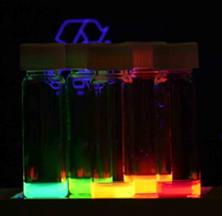
Quantum dots (QDs) or semiconductor nanocrystals are semiconductor particles a few nanometres in size with optical and electronic properties that differ from those of larger particles via quantum mechanical effects. They are a central topic in Nanotechnology and Materials Science. When a quantum dot is illuminated by UV light, an electron in the quantum dot can be excited to a state of higher energy. In the case of a semiconducting quantum dot, this process corresponds to the transition of an electron from the Valence Band to the Conduction Band. The excited electron can drop back into the valence band releasing its energy as light. This light emission (photoluminescence) is illustrated in the figure on the right. The color of that light depends on the energy difference between the discrete energy levels of the quantum dot in the conduction band and the valence band. For more information on the properties of quantum dots, see Quantum Mechanics.
🔍 History of Quantum Dots
The history of quantum dots dates back to the 1980s when Alexey Ekimov and Louis Brus first discovered the unique properties of semiconductor nanocrystals. Since then, research on quantum dots has grown exponentially, with scientists exploring their potential applications in Optoelectronics, Biomedical Imaging, and Solar Cells. The development of quantum dots has been influenced by advances in Nanotechnology and [[materials_science|Materials Science]. For more information on the history of quantum dots, see History of Nanotechnology.
📈 Properties of Quantum Dots
Quantum dots have unique properties that make them useful for a wide range of applications. They have a high surface-to-volume ratio, which makes them highly reactive. They also have a high degree of tunability, which allows their optical and electronic properties to be tailored to specific applications. Quantum dots can be synthesized using a variety of methods, including Colloidal Synthesis and Molecular Beam Epitaxy. For more information on the properties of quantum dots, see Physical Chemistry.
🔬 Synthesis of Quantum Dots
The synthesis of quantum dots is a complex process that requires careful control of the reaction conditions. The most common method of synthesizing quantum dots is through colloidal synthesis, which involves the reaction of metal salts with surfactants in a solvent. This method allows for the production of high-quality quantum dots with controlled size and shape. For more information on the synthesis of quantum dots, see Chemical Synthesis. Quantum dots can also be synthesized using Chemical Vapor Deposition and Sputter Deposition.
💡 Applications of Quantum Dots
Quantum dots have a wide range of applications, including Optoelectronics, Biomedical Imaging, and Solar Cells. They are also being explored for their potential use in Quantum Computing and Spintronics. Quantum dots have a number of advantages over traditional materials, including their high surface-to-volume ratio and their ability to be tailored to specific applications. For more information on the applications of quantum dots, see Materials Science.
🌈 Optical Properties of Quantum Dots
The optical properties of quantum dots are unique and make them useful for a wide range of applications. When a quantum dot is illuminated by UV light, an electron in the quantum dot can be excited to a state of higher energy. In the case of a semiconducting quantum dot, this process corresponds to the transition of an electron from the Valence Band to the Conduction Band. The excited electron can drop back into the valence band releasing its energy as light. This light emission (photoluminescence) is illustrated in the figure on the right. For more information on the optical properties of quantum dots, see Photoluminescence.
📊 Electronic Properties of Quantum Dots
The electronic properties of quantum dots are also unique and make them useful for a wide range of applications. Quantum dots have a high degree of tunability, which allows their optical and electronic properties to be tailored to specific applications. They also have a high surface-to-volume ratio, which makes them highly reactive. Quantum dots can be used to create a wide range of electronic devices, including Transistors and Diodes. For more information on the electronic properties of quantum dots, see Electrical Engineering.
🔑 Challenges and Limitations of Quantum Dots
Despite their many advantages, quantum dots also have a number of challenges and limitations. One of the main challenges is the difficulty of synthesizing high-quality quantum dots with controlled size and shape. Another challenge is the potential toxicity of quantum dots, which can make them difficult to use in biomedical applications. For more information on the challenges and limitations of quantum dots, see Nanotoxicology.
🌐 Future Prospects of Quantum Dots
The future prospects of quantum dots are exciting and wide-ranging. They have the potential to be used in a wide range of applications, including Quantum Computing and Spintronics. They also have the potential to be used in Biomedical Imaging and Solar Cells. For more information on the future prospects of quantum dots, see Future of Nanotechnology.
👥 Key Players in Quantum Dot Research
There are a number of key players in quantum dot research, including Alexey Ekimov and Louis Brus. These scientists have made significant contributions to the field of quantum dots and have helped to advance our understanding of their properties and applications. For more information on the key players in quantum dot research, see Nanotechnology Researchers.
📚 Conclusion
In conclusion, quantum dots are tiny powerhouses of the nanoscale with unique optical and electronic properties. They have a wide range of applications, including Optoelectronics, Biomedical Imaging, and Solar Cells. Despite their many advantages, quantum dots also have a number of challenges and limitations. However, the future prospects of quantum dots are exciting and wide-ranging, and they have the potential to be used in a wide range of applications.
Key Facts
- Year
- 1980
- Origin
- Bell Labs, USA
- Category
- Nanotechnology
- Type
- Technological Concept
Frequently Asked Questions
What are quantum dots?
Quantum dots are semiconductor particles a few nanometres in size with optical and electronic properties that differ from those of larger particles via quantum mechanical effects. They are a central topic in Nanotechnology and Materials Science. For more information on quantum dots, see Quantum Dots.
What are the unique properties of quantum dots?
Quantum dots have a high surface-to-volume ratio, which makes them highly reactive. They also have a high degree of tunability, which allows their optical and electronic properties to be tailored to specific applications. For more information on the properties of quantum dots, see Physical Chemistry.
What are the applications of quantum dots?
Quantum dots have a wide range of applications, including Optoelectronics, Biomedical Imaging, and Solar Cells. They are also being explored for their potential use in Quantum Computing and Spintronics. For more information on the applications of quantum dots, see Materials Science.
What are the challenges and limitations of quantum dots?
Despite their many advantages, quantum dots also have a number of challenges and limitations. One of the main challenges is the difficulty of synthesizing high-quality quantum dots with controlled size and shape. Another challenge is the potential toxicity of quantum dots, which can make them difficult to use in biomedical applications. For more information on the challenges and limitations of quantum dots, see Nanotoxicology.
What is the future of quantum dots?
The future prospects of quantum dots are exciting and wide-ranging. They have the potential to be used in a wide range of applications, including Quantum Computing and Spintronics. They also have the potential to be used in Biomedical Imaging and Solar Cells. For more information on the future prospects of quantum dots, see Future of Nanotechnology.
Who are the key players in quantum dot research?
There are a number of key players in quantum dot research, including Alexey Ekimov and Louis Brus. These scientists have made significant contributions to the field of quantum dots and have helped to advance our understanding of their properties and applications. For more information on the key players in quantum dot research, see Nanotechnology Researchers.
What is the current state of quantum dot research?
The current state of quantum dot research is highly active and rapidly evolving. Scientists are exploring the properties and applications of quantum dots, and new breakthroughs are being made regularly. For more information on the current state of quantum dot research, see Nanotechnology Research.