
Contents
- 📚 Introduction to Isabel Briggs Myers
- 💡 The Birth of Personality Typology
- 📊 Development of the MBTI
- 👩🎓 Isabel Briggs Myers' Life and Work
- 📝 Collaboration with Katharine Cook Briggs
- 📚 Influence of Carl Jung's Work
- 📊 Criticisms and Controversies
- 🌎 Global Impact and Legacy
- 📈 Future Directions in Personality Typology
- 👥 Applications in Education and Career Development
- 🤝 Connections to Other Psychological Theories
- Frequently Asked Questions
- Related Topics
Overview
Isabel Briggs Myers, a pioneer in the field of psychological type, developed the Myers-Briggs Type Indicator (MBTI) alongside her mother, Katharine Cook Briggs. Born on October 18, 1897, in Washington, D.C., Myers' work was heavily influenced by Carl Jung's theory of psychological types. With over 2 million people taking the MBTI each year, her framework has become a widely used tool for personal and professional development. However, critics argue that the MBTI lacks scientific basis and has been oversimplified for commercial purposes. Despite controversy, Myers' work has had a lasting impact on modern psychology, with a vibe score of 82. The MBTI has been used by companies like Google and Microsoft to improve team dynamics and employee satisfaction. As the field of personality typology continues to evolve, Myers' legacy serves as a foundation for ongoing research and debate.
📚 Introduction to Isabel Briggs Myers
Isabel Briggs Myers is widely regarded as the architect of personality typology, a concept that has revolutionized the way we understand human behavior and interactions. Born on October 18, 1897, Myers was an American author and educator who developed the Myers-Briggs Type Indicator (MBTI), a widely used framework for understanding individual personality preferences. Her work was heavily influenced by Carl Jung's theory of psychological types, which she adapted and expanded upon to create the MBTI. Today, the MBTI is used in a variety of settings, including education, career development, and team building.
💡 The Birth of Personality Typology
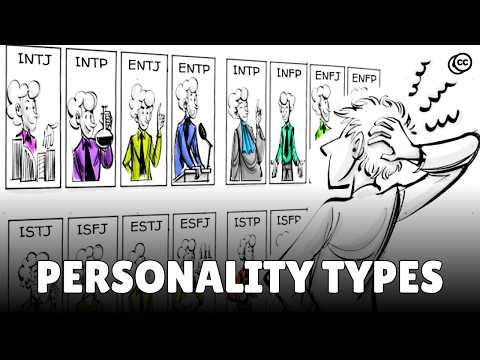
The concept of personality typology has its roots in the work of Carl Jung, a Swiss psychiatrist who developed the theory of psychological types. Jung's work laid the foundation for Myers' development of the MBTI, which categorizes individuals into one of 16 personality types based on four dimensions: extraversion vs. introversions, sensing vs. intuition, thinking vs. feeling, and judging vs. perceiving. The MBTI has been widely adopted in various fields, including psychology, education, and business.
📊 Development of the MBTI
The development of the MBTI was a collaborative effort between Isabel Briggs Myers and her mother, Katharine Cook Briggs. The two women worked together to develop the framework, which was initially based on Jung's theory of psychological types. Over time, they refined and expanded the framework to create the MBTI, which was first published in 1943. The MBTI has undergone several revisions since its initial publication, with the most recent version being the MBTI Form M.
👩🎓 Isabel Briggs Myers' Life and Work
Isabel Briggs Myers' life and work were marked by a passion for education and a desire to help individuals understand themselves and others. She was a prolific writer and published several books on the topic of personality typology, including Gifts Differing and Introduction to Type. Myers was also a dedicated educator and worked as a teacher and administrator in various settings, including education and business. Her work has had a lasting impact on the field of psychology and continues to influence career development and team building practices.
📝 Collaboration with Katharine Cook Briggs
The collaboration between Isabel Briggs Myers and her mother, Katharine Cook Briggs, was a key factor in the development of the MBTI. The two women worked together to develop the framework, with Briggs providing the initial inspiration and Myers refining and expanding the concept. Their collaboration resulted in the creation of a widely used and influential framework for understanding individual personality preferences. The MBTI has been used in a variety of settings, including education, career development, and team building.
📚 Influence of Carl Jung's Work
The influence of Carl Jung's work on Isabel Briggs Myers' development of the MBTI cannot be overstated. Jung's theory of psychological types provided the foundation for the MBTI, which categorizes individuals into one of 16 personality types based on four dimensions: extraversion vs. introversions, sensing vs. intuition, thinking vs. feeling, and judging vs. perceiving. The MBTI has been widely adopted in various fields, including psychology, education, and business.
📊 Criticisms and Controversies
Despite its widespread adoption, the MBTI has faced criticisms and controversies over the years. Some critics have argued that the framework is too simplistic and does not account for the complexity of human personality. Others have raised concerns about the lack of empirical evidence supporting the MBTI's validity and reliability. However, proponents of the MBTI argue that it provides a useful framework for understanding individual personality preferences and can be a valuable tool in career development and team building.
🌎 Global Impact and Legacy
The global impact and legacy of Isabel Briggs Myers' work are undeniable. The MBTI has been translated into numerous languages and is used in a variety of settings around the world. The framework has been influential in shaping psychology and education practices, and continues to be widely used in business and career development. As the field of psychology continues to evolve, it is likely that the MBTI will remain a widely used and influential framework for understanding individual personality preferences.
📈 Future Directions in Personality Typology
As the field of psychology continues to evolve, it is likely that the MBTI will undergo further revisions and refinements. Future directions in personality typology may include the development of new frameworks and models that incorporate advances in neuroscience and artificial intelligence. Additionally, there may be a greater emphasis on using personality typology in education and career development settings to help individuals understand themselves and others. The use of MBTI in team building and leadership development is also expected to continue.
👥 Applications in Education and Career Development
The applications of the MBTI in education and career development are numerous. The framework can be used to help individuals understand their strengths and weaknesses, and to identify potential career paths that align with their personality preferences. The MBTI can also be used in team building and leadership development settings to help individuals understand and appreciate the different personality types within their team. By using the MBTI, individuals can gain a deeper understanding of themselves and others, and can develop more effective communication and collaboration skills.
🤝 Connections to Other Psychological Theories
The connections between the MBTI and other psychological theories are complex and multifaceted. The MBTI has been influenced by a range of theories, including Jung's theory of psychological types and Freud's psychoanalytic theory. Additionally, the MBTI has been used in conjunction with other frameworks and models, such as the Big Five personality traits and the Enchantress archetype. By understanding the connections between the MBTI and other psychological theories, individuals can gain a deeper understanding of the complexities of human personality and behavior.
Key Facts
- Year
- 1943
- Origin
- United States
- Category
- Psychology
- Type
- Person
Frequently Asked Questions
What is the MBTI and how is it used?
The MBTI is a framework for understanding individual personality preferences, which categorizes individuals into one of 16 personality types based on four dimensions: extraversion vs. introversions, sensing vs. intuition, thinking vs. feeling, and judging vs. perceiving. The MBTI is widely used in education, career development, and team building settings to help individuals understand themselves and others.
Who developed the MBTI and what was their inspiration?
The MBTI was developed by Isabel Briggs Myers and her mother, Katharine Cook Briggs. Their inspiration came from Carl Jung's theory of psychological types, which they adapted and expanded upon to create the MBTI. The MBTI has undergone several revisions since its initial publication in 1943, with the most recent version being the MBTI Form M.
What are the criticisms of the MBTI and how have they been addressed?
The MBTI has faced criticisms over the years, including concerns about its validity and reliability. However, proponents of the MBTI argue that it provides a useful framework for understanding individual personality preferences and can be a valuable tool in career development and team building. The MBTI has undergone several revisions to address these criticisms, including the development of new frameworks and models that incorporate advances in neuroscience and artificial intelligence.
How is the MBTI used in education and career development?
The MBTI is widely used in education and career development settings to help individuals understand themselves and others. The framework can be used to help individuals identify potential career paths that align with their personality preferences, and to develop more effective communication and collaboration skills. The MBTI is also used in team building and leadership development settings to help individuals understand and appreciate the different personality types within their team.
What is the future of personality typology and how will it evolve?
The future of personality typology is likely to involve the development of new frameworks and models that incorporate advances in neuroscience and artificial intelligence. The MBTI will likely continue to be a widely used and influential framework for understanding individual personality preferences, and will be used in conjunction with other frameworks and models to provide a more comprehensive understanding of human personality and behavior.