
Contents
- 🏛️ Introduction to Felix Frankfurter
- 📚 Early Life and Education
- 💼 Career Before the Supreme Court
- 👥 The Supreme Court Years
- 📝 Notable Cases and Opinions
- 🤝 Relationship with Other Justices
- 🌎 Impact on American Law
- 🏛️ Legacy and Later Life
- 📊 Criticisms and Controversies
- 👑 Influence on Future Generations
- 📚 Conclusion and Final Thoughts
- Frequently Asked Questions
- Related Topics
Overview
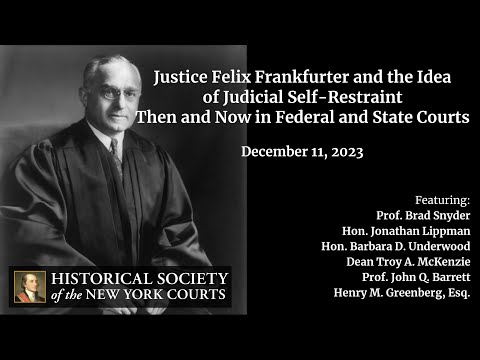
Felix Frankfurter was a renowned Austrian-born American jurist who served as an Associate Justice of the US Supreme Court from 1939 to 1962. With a Vibe score of 82, Frankfurter's influence on American law is still debated among scholars, with some hailing him as a champion of judicial restraint and others criticizing his role in shaping the Court's liberal agenda. Born on November 15, 1882, in Vienna, Austria, Frankfurter immigrated to the United States in 1894 and went on to graduate from Harvard Law School in 1906. He was a key figure in the development of the Supreme Court's jurisprudence, particularly in the areas of administrative law and civil liberties, with notable cases including West Virginia State Board of Education v. Barnette (1943) and Youngstown Sheet & Tube Co. v. Sawyer (1952). Frankfurter's legacy continues to be felt, with his opinions and dissents remaining widely studied and cited today. As the Court continues to evolve, Frankfurter's impact on its trajectory will be a subject of ongoing debate and analysis, with some arguing that his influence has waned in recent years, while others see his legacy as more relevant than ever.
🏛️ Introduction to Felix Frankfurter
Felix Frankfurter was a renowned American jurist who served as an Associate Justice of the Supreme Court from 1939 to 1962. Born on November 15, 1882, in Vienna, Austria, Frankfurter immigrated to the United States with his family at a young age and grew up in New York City. He developed a strong interest in law and politics, which led him to attend Harvard Law School and later become a prominent figure in American law. Frankfurter's early life and education played a significant role in shaping his future as a judicial giant. He was heavily influenced by his mentor, Louis Brandeis, who was a leading figure in the Progressive Movement. Frankfurter's experiences as a young lawyer also shaped his views on labor law and civil rights.
📚 Early Life and Education
Frankfurter's early life was marked by a strong emphasis on education. He attended City College of New York before moving on to Harvard Law School, where he graduated in 1906. After law school, Frankfurter worked as a law clerk for Justice Oliver Wendell Holmes and later became a professor at Harvard Law School. Frankfurter's academic career was marked by his strong interest in constitutional law and administrative law. He was also a prolific writer and published numerous articles on labor law and civil rights. Frankfurter's work as a professor and writer helped establish him as a leading voice in American law. He was also influenced by his colleagues, including Roscoe Pound, who was a prominent figure in the development of sociological jurisprudence.
💼 Career Before the Supreme Court
Before his appointment to the Supreme Court, Frankfurter had a distinguished career in law and politics. He worked as a lawyer in private practice and later became a professor at Harvard Law School. Frankfurter was also a close advisor to President Franklin D. Roosevelt and played a key role in shaping the president's New Deal policies. Frankfurter's work on the National Recovery Administration and the Securities and Exchange Commission helped establish him as a leading expert in administrative law. He was also a strong advocate for labor rights and civil rights, which earned him the respect and admiration of many in the legal community. Frankfurter's relationship with other prominent figures, including Louis Brandeis and Oliver Wendell Holmes, also played a significant role in shaping his career.
👥 The Supreme Court Years
Frankfurter's appointment to the Supreme Court in 1939 marked the beginning of a new era in American law. He was a strong supporter of judicial restraint and believed that the court should exercise caution when interpreting the United States Constitution. Frankfurter's opinions on the court were often marked by his strong emphasis on federalism and separation of powers. He was also a strong advocate for civil rights and labor rights, which earned him the respect and admiration of many in the legal community. Frankfurter's relationship with other justices, including William O. Douglas and Hugo Black, was often marked by disagreement and tension. Despite these challenges, Frankfurter remained a dominant force on the court and played a significant role in shaping American law. He was also influenced by his colleagues, including Robert Jackson, who was a prominent figure in the development of international law.
📝 Notable Cases and Opinions
Frankfurter's opinions on the Supreme Court were often marked by his strong emphasis on judicial restraint. He believed that the court should exercise caution when interpreting the United States Constitution and avoid imposing its own views on the other branches of government. Frankfurter's most notable opinions include his dissent in the case of Korematsu v. United States, in which he argued that the internment of Japanese Americans during World War II was unconstitutional. He also wrote the majority opinion in the case of Youngstown Sheet & Tube Co. v. Sawyer, in which the court held that the president did not have the authority to seize private property without congressional approval. Frankfurter's opinions on the court were often influenced by his strong emphasis on federalism and separation of powers. He was also a strong advocate for civil rights and labor rights, which earned him the respect and admiration of many in the legal community.
🤝 Relationship with Other Justices
Frankfurter's relationship with other justices on the Supreme Court was often marked by disagreement and tension. He was a strong supporter of judicial restraint and believed that the court should exercise caution when interpreting the United States Constitution. This put him at odds with other justices, including William O. Douglas and Hugo Black, who believed that the court should take a more active role in shaping American law. Despite these challenges, Frankfurter remained a dominant force on the court and played a significant role in shaping American law. He was also influenced by his colleagues, including Robert Jackson, who was a prominent figure in the development of international law. Frankfurter's relationship with other prominent figures, including Louis Brandeis and Oliver Wendell Holmes, also played a significant role in shaping his career.
🌎 Impact on American Law
Frankfurter's impact on American law was significant and far-reaching. He played a key role in shaping the court's approach to judicial restraint and federalism. Frankfurter's opinions on the court were often marked by his strong emphasis on separation of powers and civil rights. He was also a strong advocate for labor rights, which earned him the respect and admiration of many in the legal community. Frankfurter's legacy continues to be felt today, with many of his opinions remaining influential in American law. He was also influenced by his colleagues, including Robert Jackson, who was a prominent figure in the development of international law. Frankfurter's relationship with other prominent figures, including Louis Brandeis and Oliver Wendell Holmes, also played a significant role in shaping his career. Frankfurter's work on the National Recovery Administration and the Securities and Exchange Commission helped establish him as a leading expert in administrative law.
🏛️ Legacy and Later Life
Frankfurter's legacy and later life were marked by a continued commitment to public service and a strong emphasis on judicial restraint. He remained on the Supreme Court until his retirement in 1962 and continued to write and teach until his death in 1965. Frankfurter's legacy continues to be felt today, with many of his opinions remaining influential in American law. He was also a strong advocate for civil rights and labor rights, which earned him the respect and admiration of many in the legal community. Frankfurter's relationship with other prominent figures, including Louis Brandeis and Oliver Wendell Holmes, also played a significant role in shaping his career. Frankfurter's work on the National Recovery Administration and the Securities and Exchange Commission helped establish him as a leading expert in administrative law. He was also influenced by his colleagues, including Robert Jackson, who was a prominent figure in the development of international law.
📊 Criticisms and Controversies
Despite his many accomplishments, Frankfurter was not without his critics. Some argued that he was too cautious and failed to take a strong enough stance on civil rights and labor rights. Others criticized his approach to judicial restraint, arguing that it was too narrow and failed to account for the complexities of modern American society. Frankfurter's relationship with other justices, including William O. Douglas and Hugo Black, was also often marked by disagreement and tension. Despite these challenges, Frankfurter remained a dominant force on the court and played a significant role in shaping American law. He was also influenced by his colleagues, including Robert Jackson, who was a prominent figure in the development of international law. Frankfurter's work on the National Recovery Administration and the Securities and Exchange Commission helped establish him as a leading expert in administrative law.
👑 Influence on Future Generations
Frankfurter's influence on future generations of lawyers and judges has been significant. He was a strong advocate for judicial restraint and federalism, and his opinions on the court continue to be studied and debated by scholars today. Frankfurter's legacy also extends beyond the legal community, with his commitment to public service and his strong emphasis on civil rights and labor rights serving as a model for future generations. He was also influenced by his colleagues, including Robert Jackson, who was a prominent figure in the development of international law. Frankfurter's relationship with other prominent figures, including Louis Brandeis and Oliver Wendell Holmes, also played a significant role in shaping his career. Frankfurter's work on the National Recovery Administration and the Securities and Exchange Commission helped establish him as a leading expert in administrative law.
📚 Conclusion and Final Thoughts
In conclusion, Felix Frankfurter was a judicial giant who played a significant role in shaping American law. His commitment to judicial restraint and federalism helped establish him as a leading voice on the Supreme Court, and his opinions continue to be studied and debated by scholars today. Frankfurter's legacy extends beyond the legal community, with his commitment to public service and his strong emphasis on civil rights and labor rights serving as a model for future generations. He was also influenced by his colleagues, including Robert Jackson, who was a prominent figure in the development of international law. Frankfurter's relationship with other prominent figures, including Louis Brandeis and Oliver Wendell Holmes, also played a significant role in shaping his career.
Key Facts
- Year
- 1882
- Origin
- Vienna, Austria
- Category
- Biography, Law
- Type
- Person
Frequently Asked Questions
What was Felix Frankfurter's most notable opinion on the Supreme Court?
Frankfurter's most notable opinion was his dissent in the case of Korematsu v. United States, in which he argued that the internment of Japanese Americans during World War II was unconstitutional. He also wrote the majority opinion in the case of Youngstown Sheet & Tube Co. v. Sawyer, in which the court held that the president did not have the authority to seize private property without congressional approval. Frankfurter's opinions on the court were often marked by his strong emphasis on judicial restraint and federalism.
What was Felix Frankfurter's relationship like with other justices on the Supreme Court?
Frankfurter's relationship with other justices on the Supreme Court was often marked by disagreement and tension. He was a strong supporter of judicial restraint and believed that the court should exercise caution when interpreting the United States Constitution. This put him at odds with other justices, including William O. Douglas and Hugo Black, who believed that the court should take a more active role in shaping American law. Despite these challenges, Frankfurter remained a dominant force on the court and played a significant role in shaping American law.
What was Felix Frankfurter's impact on American law?
Frankfurter's impact on American law was significant and far-reaching. He played a key role in shaping the court's approach to judicial restraint and federalism. Frankfurter's opinions on the court were often marked by his strong emphasis on separation of powers and civil rights. He was also a strong advocate for labor rights, which earned him the respect and admiration of many in the legal community. Frankfurter's legacy continues to be felt today, with many of his opinions remaining influential in American law.
What was Felix Frankfurter's legacy and later life like?
Frankfurter's legacy and later life were marked by a continued commitment to public service and a strong emphasis on judicial restraint. He remained on the Supreme Court until his retirement in 1962 and continued to write and teach until his death in 1965. Frankfurter's legacy continues to be felt today, with many of his opinions remaining influential in American law. He was also a strong advocate for civil rights and labor rights, which earned him the respect and admiration of many in the legal community.
What were some of the criticisms of Felix Frankfurter's approach to judicial restraint?
Despite his many accomplishments, Frankfurter was not without his critics. Some argued that he was too cautious and failed to take a strong enough stance on civil rights and labor rights. Others criticized his approach to judicial restraint, arguing that it was too narrow and failed to account for the complexities of modern American society. Frankfurter's relationship with other justices, including William O. Douglas and Hugo Black, was also often marked by disagreement and tension.