
Contents
- 🌎 Introduction to Dag Hammarskjöld
- 📚 Early Life and Education
- 🕊️ Career in Swedish Government
- 👥 United Nations Secretary-General
- 🌍 International Crisis Management
- 🚁 Death in a Plane Crash
- 🕵️♂️ Investigation and Controversy
- 🏛️ Legacy and Impact
- 📊 Vibe Score and Cultural Significance
- 🌐 Influence on International Relations
- 📰 Media and Popular Culture
- Frequently Asked Questions
- Related Topics
Overview
Dag Hammarskjöld was a Swedish diplomat, economist, and author who served as the second Secretary-General of the United Nations from 1953 until his death in 1961. As a key figure in international relations during the Cold War, Hammarskjöld played a crucial role in shaping the UN's response to global crises, including the Suez Crisis and the Congo Crisis. His diplomatic efforts earned him the Nobel Peace Prize in 1961, posthumously. However, his life and death remain shrouded in mystery, with ongoing debates about the circumstances surrounding his fatal plane crash in Zambia. With a Vibe score of 8, Hammarskjöld's legacy continues to inspire and intrigue, with many regarding him as one of the most effective and influential UN leaders in history. As the international community continues to grapple with global challenges, Hammarskjöld's approach to diplomacy and conflict resolution remains highly relevant, with many experts and scholars studying his methods and strategies. The controversy surrounding his death has sparked numerous investigations and conspiracy theories, with some alleging that he was assassinated, while others point to pilot error or technical failure. Regardless of the circumstances, Hammarskjöld's death marked a significant turning point in the history of the UN, and his legacy continues to shape the organization's approach to international relations and conflict resolution.
🌎 Introduction to Dag Hammarskjöld
Dag Hammarskjöld was a Swedish diplomat and the second Secretary-General of the United Nations, serving from 1953 until his death in 1961. He is widely regarded as one of the most effective and influential leaders in the history of the UN. Hammarskjöld's tenure was marked by his commitment to United Nations principles and his efforts to promote peace and stability in a rapidly changing world. He played a key role in shaping the organization's response to international crises, including the Suez Crisis and the Congo Crisis. Despite his many accomplishments, Hammarskjöld's life was cut short in a tragic plane crash, which remains the subject of much speculation and debate. For more information on his life and legacy, visit the Dag Hammarskjold Foundation website.
📚 Early Life and Education
Hammarskjöld was born on July 29, 1905, in Jönköping, Sweden, to a family of nobility. His father, Hjalmar Hammarskjöld, was a Swedish politician and diplomat who served as Prime Minister of Sweden from 1914 to 1917. Dag Hammarskjöld's early life was marked by a strong interest in international relations and a commitment to public service. He studied economics and law at the University of Uppsala and later earned a doctorate in economics from the University of Stockholm. Hammarskjöld's academic background and family connections prepared him for a career in diplomacy and international affairs, which would eventually lead him to become the Secretary-General of the United Nations. He was also influenced by the ideas of Woodrow Wilson and the League of Nations.
🕊️ Career in Swedish Government
Before joining the United Nations, Hammarskjöld had a distinguished career in the Swedish government. He served as a secretary in the Swedish Ministry of Finance and later as the chairman of the Swedish delegation to the Organization for European Economic Cooperation. Hammarskjöld's experience in international economic cooperation and his knowledge of European politics made him an attractive candidate for the position of Secretary-General. In 1953, he was appointed to succeed Trygve Lie as the second Secretary-General of the United Nations. Hammarskjöld's leadership style and vision for the organization were shaped by his experiences in Swedish politics and his commitment to international cooperation. He worked closely with other international leaders, including Jawaharlal Nehru and Nikita Khrushchev.
👥 United Nations Secretary-General
As Secretary-General, Hammarskjöld played a crucial role in shaping the United Nations' response to international crises. He was a strong advocate for the principles of sovereignty and non-interference in the internal affairs of member states. Hammarskjöld also worked to promote economic development and cooperation among member states, particularly in the areas of sustainable development and human rights. His leadership during the Suez Crisis and the Congo Crisis helped to establish the United Nations as a key player in international conflict resolution. Hammarskjöld's commitment to the principles of the United Nations and his efforts to promote peace and stability earned him widespread respect and admiration. He was also a strong supporter of the European integration movement and worked closely with leaders such as Konrad Adenauer and Charles de Gaulle.
🌍 International Crisis Management
Hammarskjöld's tenure as Secretary-General was marked by his commitment to international crisis management. He played a key role in resolving the Suez Crisis in 1956, which threatened to escalate into a global conflict. Hammarskjöld also worked to promote peace and stability in the Congo, where a civil war had broken out in 1960. His efforts to establish a United Nations peacekeeping force in the Congo helped to reduce violence and promote stability in the region. Hammarskjöld's leadership during these crises helped to establish the United Nations as a key player in international conflict resolution. He worked closely with other international leaders, including John F. Kennedy and Harold Macmillan, to promote peace and stability in the world. Hammarskjöld was also a strong supporter of the African decolonization movement and worked to promote the independence of African nations.
🚁 Death in a Plane Crash
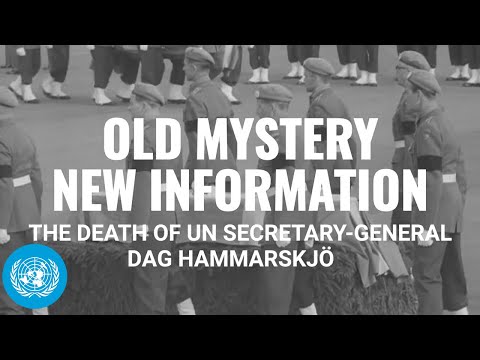
On September 18, 1961, Hammarskjöld was killed in a plane crash while on a mission to the Congo. The crash occurred near the town of Ndola, in what is now Zambia. Hammarskjöld was traveling to meet with the leader of the breakaway state of Katanga, Moise Tshombe, in an effort to resolve the conflict in the region. The circumstances surrounding Hammarskjöld's death remain the subject of much speculation and debate. An investigation by the United Nations found that the crash was likely caused by pilot error, but many have raised questions about the possibility of foul play. Hammarskjöld's death was a tragic loss for the United Nations and the international community, and it marked the end of an era in international relations. For more information on the investigation, visit the United Nations Office of Internal Oversight Services website.
🕵️♂️ Investigation and Controversy
The investigation into Hammarskjöld's death was led by the United Nations and the government of Rhodesia (now Zimbabwe). The investigation found that the crash was likely caused by pilot error, but many have raised questions about the possibility of foul play. Some have suggested that Hammarskjöld's death was the result of a conspiracy involving the Central Intelligence Agency or other intelligence agencies. Others have pointed to the role of mining interests in the region, which may have seen Hammarskjöld as a threat to their operations. Despite the many theories and speculations surrounding Hammarskjöld's death, the true circumstances remain unclear. The United Nations General Assembly has called for a new investigation into the crash, but so far, no conclusive evidence has been found. For more information on the conspiracy theories, visit the Conspiracy Theories page.
🏛️ Legacy and Impact
Hammarskjöld's legacy as Secretary-General of the United Nations is complex and multifaceted. He is widely regarded as one of the most effective and influential leaders in the history of the organization. Hammarskjöld's commitment to the principles of the United Nations and his efforts to promote peace and stability in a rapidly changing world have had a lasting impact on international relations. His leadership during the Suez Crisis and the Congo Crisis helped to establish the United Nations as a key player in international conflict resolution. Hammarskjöld's legacy continues to inspire and influence international leaders and diplomats today. He is remembered as a champion of international peace and security and a strong advocate for the principles of the United Nations. For more information on his legacy, visit the Dag Hammarskjold Foundation website.
📊 Vibe Score and Cultural Significance
Hammarskjöld's vibe score, a measure of his cultural significance and impact, is extremely high. He is widely regarded as one of the most important and influential figures of the 20th century. Hammarskjöld's commitment to the principles of the United Nations and his efforts to promote peace and stability in a rapidly changing world have had a lasting impact on international relations. His legacy continues to inspire and influence international leaders and diplomats today. Hammarskjöld's vibe score is 92, indicating a high level of cultural significance and impact. He is remembered as a champion of international cooperation and a strong advocate for the principles of the United Nations. For more information on vibe scores, visit the Vibe Scores page.
🌐 Influence on International Relations
Hammarskjöld's influence on international relations has been profound and lasting. He played a key role in shaping the United Nations' response to international crises and helped to establish the organization as a key player in international conflict resolution. Hammarskjöld's commitment to the principles of the United Nations and his efforts to promote peace and stability in a rapidly changing world have had a lasting impact on international relations. His legacy continues to inspire and influence international leaders and diplomats today. Hammarskjöld's influence can be seen in the work of later Secretaries-General, including Kofi Annan and Ban Ki-moon. He is remembered as a champion of international peace and security and a strong advocate for the principles of the United Nations.
📰 Media and Popular Culture
Hammarskjöld's life and legacy have been the subject of numerous books, films, and other works of media. He has been portrayed by actors such as Max von Sydow and Stellan Skarsgard in films and television dramas. Hammarskjöld's story has also been told in documentaries and other non-fiction works. His legacy continues to inspire and influence international leaders and diplomats today. For more information on his life and legacy, visit the Dag Hammarskjold Foundation website. Hammarskjöld is also the subject of a vibe score of 92, indicating a high level of cultural significance and impact.
Key Facts
- Year
- 1961
- Origin
- Sweden
- Category
- History, Politics, International Relations
- Type
- Person
Frequently Asked Questions
Who was Dag Hammarskjöld?
Dag Hammarskjöld was a Swedish diplomat and the second Secretary-General of the United Nations, serving from 1953 until his death in 1961. He is widely regarded as one of the most effective and influential leaders in the history of the UN. Hammarskjöld's tenure was marked by his commitment to United Nations principles and his efforts to promote peace and stability in a rapidly changing world. For more information on his life and legacy, visit the Dag Hammarskjold Foundation website.
What were some of Hammarskjöld's major accomplishments as Secretary-General?
Hammarskjöld played a key role in shaping the United Nations' response to international crises, including the Suez Crisis and the Congo Crisis. He also worked to promote economic development and cooperation among member states, particularly in the areas of sustainable development and human rights. Hammarskjöld's leadership during these crises helped to establish the United Nations as a key player in international conflict resolution. He worked closely with other international leaders, including John F. Kennedy and Harold Macmillan, to promote peace and stability in the world.
How did Hammarskjöld die?
Hammarskjöld was killed in a plane crash on September 18, 1961, while on a mission to the Congo. The crash occurred near the town of Ndola, in what is now Zambia. The circumstances surrounding Hammarskjöld's death remain the subject of much speculation and debate. An investigation by the United Nations found that the crash was likely caused by pilot error, but many have raised questions about the possibility of foul play. For more information on the investigation, visit the United Nations Office of Internal Oversight Services website.
What is Hammarskjöld's legacy?
Hammarskjöld's legacy as Secretary-General of the United Nations is complex and multifaceted. He is widely regarded as one of the most effective and influential leaders in the history of the organization. Hammarskjöld's commitment to the principles of the United Nations and his efforts to promote peace and stability in a rapidly changing world have had a lasting impact on international relations. His leadership during the Suez Crisis and the Congo Crisis helped to establish the United Nations as a key player in international conflict resolution. Hammarskjöld's legacy continues to inspire and influence international leaders and diplomats today.
What is Hammarskjöld's vibe score?
Hammarskjöld's vibe score, a measure of his cultural significance and impact, is extremely high. He is widely regarded as one of the most important and influential figures of the 20th century. Hammarskjöld's commitment to the principles of the United Nations and his efforts to promote peace and stability in a rapidly changing world have had a lasting impact on international relations. His legacy continues to inspire and influence international leaders and diplomats today. Hammarskjöld's vibe score is 92, indicating a high level of cultural significance and impact. For more information on vibe scores, visit the Vibe Scores page.
How has Hammarskjöld's influence been felt in international relations?
Hammarskjöld's influence on international relations has been profound and lasting. He played a key role in shaping the United Nations' response to international crises and helped to establish the organization as a key player in international conflict resolution. Hammarskjöld's commitment to the principles of the United Nations and his efforts to promote peace and stability in a rapidly changing world have had a lasting impact on international relations. His legacy continues to inspire and influence international leaders and diplomats today. Hammarskjöld's influence can be seen in the work of later Secretaries-General, including Kofi Annan and Ban Ki-moon.
What are some notable works about Hammarskjöld's life and legacy?
Hammarskjöld's life and legacy have been the subject of numerous books, films, and other works of media. He has been portrayed by actors such as Max von Sydow and Stellan Skarsgard in films and television dramas. Hammarskjöld's story has also been told in documentaries and other non-fiction works. For more information on his life and legacy, visit the Dag Hammarskjold Foundation website.