
Contents
- 📊 Introduction to Corrado Gini
- 📚 Early Life and Education
- 📈 The Development of the Gini Coefficient
- 📊 Applications of the Gini Coefficient
- 🌎 Global Impact and Recognition
- 📝 Criticisms and Controversies
- 📊 Alternative Measures of Inequality
- 👥 Influence on Modern Economics
- 📚 Legacy and Contributions
- 📊 Future Directions and Implications
- 👀 Conclusion and Final Thoughts
- Frequently Asked Questions
- Related Topics
Overview
Corrado Gini was a renowned Italian statistician and economist, best known for developing the Gini Coefficient, a widely used measure of income inequality. Born on May 23, 1884, in Motta di Livenza, Italy, Gini's work had a profound impact on the field of economics and statistics. His contributions to the study of inequality and poverty have been recognized globally, with the World Bank and the United Nations utilizing his coefficient in their reports. Gini's work has also been influential in shaping the field of econometrics, with many economists, including Amartya Sen, building upon his research. The Gini Coefficient has become a standard tool in economic analysis, allowing researchers to compare income distributions across different countries and time periods.
📚 Early Life and Education
Gini's early life and education played a significant role in shaping his future career. He studied law at the University of Bologna, but soon became interested in statistics and economics. Gini's academic background in law and statistics is reflected in his work on the Gini Coefficient, which combines elements of both fields. He went on to earn his degree in law, but his true passion lay in statistics and economics. Gini's work was influenced by prominent economists of his time, including Vilfredo Pareto and Francesco Pantaleoni. The University of Rome also played a significant role in Gini's academic career, where he later became a professor of statistics. Gini's work has been recognized by the American Statistical Association and the Econometric Society.
📈 The Development of the Gini Coefficient
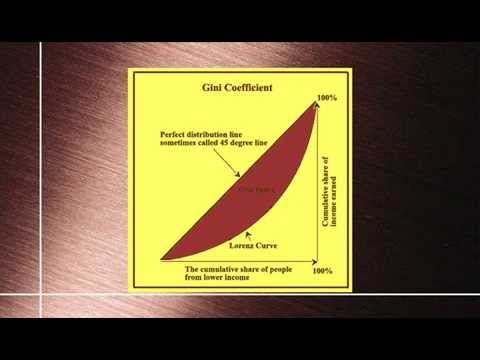
The development of the Gini Coefficient is a testament to Gini's innovative approach to statistics and economics. The coefficient, which ranges from 0 to 1, measures the degree of income inequality within a population. A value of 0 represents perfect equality, while a value of 1 represents perfect inequality. Gini's work on the coefficient was influenced by his research on income distribution and poverty. The Gini Coefficient has been widely adopted by economists and researchers, including those at the International Monetary Fund and the World Economic Forum. Gini's coefficient has also been used to study wealth inequality and social mobility. The Organisation for Economic Co-operation and Development has also utilized the Gini Coefficient in their reports.
📊 Applications of the Gini Coefficient
The applications of the Gini Coefficient are diverse and far-reaching. The coefficient has been used to study income inequality in various countries, including the United States and China. Researchers have also used the coefficient to analyze the impact of economic policies on income distribution. The Gini Coefficient has been used to evaluate the effectiveness of taxation and social welfare programs. Gini's work has also been influential in the development of evidence-based policy, with policymakers using the coefficient to inform their decisions. The World Health Organization has also used the Gini Coefficient to study the relationship between income inequality and health outcomes.
🌎 Global Impact and Recognition
Gini's work has had a significant impact on the global community, with the Gini Coefficient being recognized as a standard measure of income inequality. The coefficient has been used by international organizations, such as the United Nations and the World Bank, to monitor and evaluate income inequality across different countries. Gini's work has also been influential in shaping the field of development economics, with researchers using the coefficient to study the relationship between income inequality and economic growth. The Gini Coefficient has been used to analyze the impact of globalization on income distribution. Gini's legacy extends beyond the field of economics, with his work being recognized by the American Statistical Association and the Econometric Society.
📝 Criticisms and Controversies
Despite the widespread adoption of the Gini Coefficient, there have been criticisms and controversies surrounding its use. Some researchers have argued that the coefficient is limited in its ability to capture the complexities of income inequality. Others have criticized the coefficient for being overly simplistic and not taking into account other factors that contribute to income inequality, such as education and healthcare. The Gini Coefficient has also been criticized for being sensitive to the choice of income definition and population sample. Gini's work has been influenced by his research on income distribution and poverty, and his coefficient has been used to study wealth inequality and social mobility. The Organisation for Economic Co-operation and Development has also utilized the Gini Coefficient in their reports.
📊 Alternative Measures of Inequality
In recent years, alternative measures of income inequality have been developed, including the Palma Ratio and the Hoover Index. These measures have been designed to address some of the limitations of the Gini Coefficient, such as its sensitivity to the choice of income definition and population sample. The Palma Ratio, for example, measures the ratio of the richest 10% of the population to the poorest 40%. The Hoover Index, on the other hand, measures the extent to which the distribution of income deviates from perfect equality. Gini's work has been influential in the development of these alternative measures, with researchers building upon his research on income distribution and poverty. The World Bank and the United Nations have also utilized these alternative measures in their reports.
👥 Influence on Modern Economics
Gini's influence on modern economics is undeniable, with his work on the Gini Coefficient shaping the field of econometrics. Many economists, including Amartya Sen and Joseph Stiglitz, have built upon Gini's research on income inequality and poverty. Gini's work has also been influential in the development of behavioral economics, with researchers using the Gini Coefficient to study the relationship between income inequality and human behavior. The Gini Coefficient has been used to analyze the impact of economic policies on income distribution. Gini's legacy extends beyond the field of economics, with his work being recognized by the American Statistical Association and the Econometric Society.
📚 Legacy and Contributions
Gini's legacy and contributions to the field of economics and statistics are immeasurable. His work on the Gini Coefficient has had a profound impact on our understanding of income inequality and poverty. Gini's research has also been influential in shaping the field of development economics, with researchers using the coefficient to study the relationship between income inequality and economic growth. The Gini Coefficient has been used to analyze the impact of globalization on income distribution. Gini's work has been recognized by the World Bank and the United Nations, with both organizations utilizing the Gini Coefficient in their reports. Gini's legacy continues to inspire new generations of economists and researchers, with his work remaining a cornerstone of modern economics.
📊 Future Directions and Implications
As we look to the future, it is clear that Gini's work will continue to play a significant role in shaping our understanding of income inequality and poverty. The Gini Coefficient will remain a vital tool for researchers and policymakers, allowing them to monitor and evaluate income inequality across different countries and time periods. Gini's work has also been influential in the development of evidence-based policy, with policymakers using the coefficient to inform their decisions. The World Health Organization has also used the Gini Coefficient to study the relationship between income inequality and health outcomes. As we move forward, it is essential that we continue to build upon Gini's research, using the Gini Coefficient to develop new and innovative solutions to the complex problems of income inequality and poverty.
👀 Conclusion and Final Thoughts
In conclusion, Corrado Gini's work on the Gini Coefficient has had a profound impact on our understanding of income inequality and poverty. His contributions to the field of economics and statistics have been recognized globally, with the World Bank and the United Nations utilizing the coefficient in their reports. Gini's legacy continues to inspire new generations of economists and researchers, with his work remaining a cornerstone of modern economics. As we look to the future, it is clear that Gini's work will continue to play a significant role in shaping our understanding of income inequality and poverty. The Gini Coefficient will remain a vital tool for researchers and policymakers, allowing them to monitor and evaluate income inequality across different countries and time periods.
Key Facts
- Year
- 1884
- Origin
- Motta di Livenza, Italy
- Category
- Biography, Statistics, Economics
- Type
- Person
Frequently Asked Questions
What is the Gini Coefficient?
The Gini Coefficient is a measure of income inequality that ranges from 0 to 1, with 0 representing perfect equality and 1 representing perfect inequality. The coefficient was developed by Corrado Gini and is widely used by economists and researchers to study income inequality. The Gini Coefficient has been used to analyze the impact of economic policies on income distribution. Gini's work has been influential in the development of evidence-based policy, with policymakers using the coefficient to inform their decisions.
What are the limitations of the Gini Coefficient?
The Gini Coefficient has several limitations, including its sensitivity to the choice of income definition and population sample. The coefficient is also limited in its ability to capture the complexities of income inequality. Despite these limitations, the Gini Coefficient remains a widely used and influential measure of income inequality. The Palma Ratio and the Hoover Index are alternative measures of income inequality that have been developed to address some of the limitations of the Gini Coefficient.
How has the Gini Coefficient been used in policy-making?
The Gini Coefficient has been used by policymakers to inform their decisions on issues related to income inequality and poverty. The coefficient has been used to evaluate the effectiveness of taxation and social welfare programs. The World Bank and the United Nations have also utilized the Gini Coefficient in their reports. Gini's work has been influential in the development of evidence-based policy, with policymakers using the coefficient to inform their decisions.
What is Corrado Gini's legacy?
Corrado Gini's legacy is immeasurable, with his work on the Gini Coefficient having a profound impact on our understanding of income inequality and poverty. Gini's research has also been influential in shaping the field of development economics, with researchers using the coefficient to study the relationship between income inequality and economic growth. The Gini Coefficient has been used to analyze the impact of globalization on income distribution.
How has the Gini Coefficient been used in research?
The Gini Coefficient has been widely used in research to study income inequality and poverty. The coefficient has been used to analyze the impact of economic policies on income distribution. The Gini Coefficient has also been used to study the relationship between income inequality and human behavior. Gini's work has been influential in the development of behavioral economics, with researchers using the Gini Coefficient to study the relationship between income inequality and human behavior.