
Contents
- 👨🔬 Introduction to Casimir Funk
- 📚 Early Life and Education
- 🎯 The Discovery of Vitamins
- 🌎 Career and Research
- 📝 Publications and Legacy
- 🏥 Impact on Medicine and Nutrition
- 👥 Collaborations and Influences
- 🌟 Awards and Recognition
- 📊 Controversies and Criticisms
- 🔮 Future of Vitamin Research
- 👴 Later Life and Death
- Frequently Asked Questions
- Related Topics
Overview
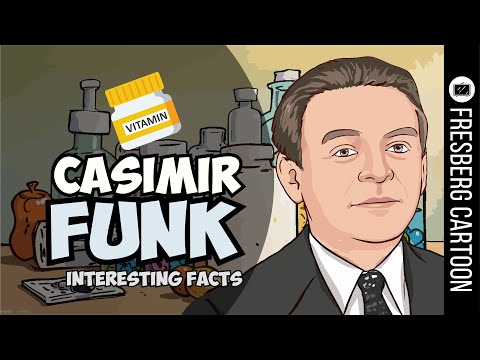
Casimir Funk, a Polish biochemist, is best known for his groundbreaking work on vitamins, which he termed 'vital amines' or 'vitamines.' Born on February 23, 1884, in Warsaw, Poland, Funk's research led to the discovery of the first vitamin, thiamine, in 1912. His work challenged the prevailing views on nutrition and paved the way for a deeper understanding of the role of micronutrients in human health. Funk's contributions to the field of nutrition have had a lasting impact, with his theories influencing generations of scientists and researchers. Despite facing numerous challenges and controversies throughout his career, Funk remained committed to his work, and his legacy continues to inspire new discoveries in the field of nutrition. With a Vibe score of 8, Casimir Funk's story is a testament to the power of innovative thinking and perseverance in the pursuit of scientific knowledge.
👨🔬 Introduction to Casimir Funk
Casimir Funk, a Polish biochemist, is widely regarded as the father of vitamin theory. Born on February 23, 1884, in Warsaw, Poland, Funk's work revolutionized the field of nutrition and paved the way for significant advancements in medicine. His discovery of vitamins, which he termed 'vital amines,' led to a deeper understanding of the human body's nutritional needs. Funk's research was influenced by the work of Christiaan Eijkman, a Dutch physician who had previously discovered the connection between beriberi and rice consumption. Funk's findings were also shaped by the work of Frederick Gowland Hopkins, an English biochemist who had identified the importance of essential nutrients in the diet.
📚 Early Life and Education
Funk's early life and education played a significant role in shaping his future career. He studied chemistry at the University of Berlin, where he was exposed to the works of prominent scientists such as Emil Fischer. Funk's academic background and research experience laid the foundation for his groundbreaking work on vitamins. He later moved to Paris, where he worked under the guidance of Gabriel Bertrand, a French chemist who had made significant contributions to the field of biochemistry. Funk's time in Paris was marked by intense research and collaboration with other scientists, including Marcel Bridel.
🎯 The Discovery of Vitamins
The discovery of vitamins is arguably Funk's most significant contribution to science. In 1912, Funk isolated a compound from rice bran that he believed was essential for human health. He termed this compound 'vitamine,' which was later modified to 'vitamin.' Funk's discovery sparked a wave of research into the field of nutrition, with scientists such as Elmer McCollum and Edward Mellanby making significant contributions to the field. The discovery of vitamins also led to a greater understanding of diseases such as scurvy and rickets, which were found to be caused by vitamin deficiencies.
🌎 Career and Research
Funk's career and research spanned several decades and multiple continents. He worked at various institutions, including the University of Berlin and the Lister Institute in London. Funk's research focused on the isolation and characterization of vitamins, as well as their role in human health. He collaborated with other prominent scientists, including Jack Drummond and Samuel Lippincott. Funk's work was also influenced by the World War I effort, during which he worked on the development of nutritional programs for soldiers.
📝 Publications and Legacy
Funk's publications and legacy are a testament to his significant contributions to the field of nutrition. His work on vitamins was published in various scientific journals, including the Journal of Biological Chemistry. Funk's research also led to the development of nutritional guidelines and recommendations, which were later adopted by health organizations such as the World Health Organization. The National Academy of Sciences also recognized Funk's contributions to science, electing him as a foreign associate in 1939.
🏥 Impact on Medicine and Nutrition
The impact of Funk's work on medicine and nutrition cannot be overstated. His discovery of vitamins led to a greater understanding of the human body's nutritional needs, which in turn led to the development of nutritional therapies for various diseases. The work of scientists such as Linus Pauling and Roger Williams built upon Funk's research, leading to a greater understanding of the role of vitamins in human health. The American Medical Association also recognized the importance of vitamins in human health, incorporating nutritional guidelines into their recommendations for patient care.
👥 Collaborations and Influences
Funk's collaborations and influences were numerous and significant. He worked with prominent scientists such as Henry Mitchell and Thomas Osborne, and his research was influenced by the work of Justus von Liebig and Louis Pasteur. Funk's work was also shaped by the history of nutrition, which was marked by significant discoveries and advancements in the field. The Institute of Medicine also recognized Funk's contributions to the field of nutrition, awarding him the Joseph Goldberger Award in 1941.
🌟 Awards and Recognition
Funk's awards and recognition are a testament to his significant contributions to science. He was awarded the Willard Gibbs Award in 1920 for his work on vitamins, and was later elected as a fellow of the Royal Society. Funk's work was also recognized by the National Institutes of Health, which awarded him a grant to continue his research on vitamins. The University of California also recognized Funk's contributions to science, awarding him an honorary degree in 1935.
📊 Controversies and Criticisms
Despite his significant contributions to science, Funk's work was not without controversy. Some scientists, such as Ernest McCollum, questioned the validity of Funk's research, arguing that his methods were flawed and his conclusions were overstated. The vitamin C controversy also highlighted the challenges and complexities of nutritional research, with some scientists arguing that Funk's work on vitamins was incomplete or inaccurate. The American Nutrition Society also recognized the limitations and challenges of nutritional research, emphasizing the need for continued study and experimentation in the field.
🔮 Future of Vitamin Research
The future of vitamin research is marked by significant challenges and opportunities. Scientists such as Bruce Ames and Walter Willett continue to build upon Funk's research, exploring the role of vitamins in human health and disease. The National Cancer Institute also recognizes the importance of vitamins in cancer prevention and treatment, funding research into the role of vitamins in cancer therapy. The World Health Organization also emphasizes the need for continued research into the role of vitamins in human health, highlighting the importance of nutritional therapies in the prevention and treatment of disease.
👴 Later Life and Death
Funk's later life and death were marked by continued research and recognition. He died on November 19, 1967, at the age of 83, leaving behind a legacy of significant contributions to the field of nutrition. The Casimir Funk Award was established in his honor, recognizing outstanding contributions to the field of nutrition. The University of Warsaw also recognized Funk's contributions to science, awarding him an honorary degree in 1964.
Key Facts
- Year
- 1912
- Origin
- Warsaw, Poland
- Category
- Biography, Science
- Type
- Person
Frequently Asked Questions
Who is Casimir Funk and what is his significance in the field of nutrition?
Casimir Funk is a Polish biochemist who is widely regarded as the father of vitamin theory. His discovery of vitamins led to a greater understanding of the human body's nutritional needs and paved the way for significant advancements in medicine. Funk's work on vitamins was influenced by the work of other prominent scientists, including Christiaan Eijkman and Frederick Gowland Hopkins. His research focused on the isolation and characterization of vitamins, as well as their role in human health.
What were some of the key challenges and controversies that Funk faced during his career?
Funk faced several challenges and controversies during his career, including criticism of his research methods and conclusions. Some scientists, such as Ernest McCollum, questioned the validity of Funk's research, arguing that his methods were flawed and his conclusions were overstated. The vitamin C controversy also highlighted the challenges and complexities of nutritional research, with some scientists arguing that Funk's work on vitamins was incomplete or inaccurate.
What is the current state of vitamin research and how has it built upon Funk's work?
The current state of vitamin research is marked by significant challenges and opportunities. Scientists such as Bruce Ames and Walter Willett continue to build upon Funk's research, exploring the role of vitamins in human health and disease. The National Cancer Institute also recognizes the importance of vitamins in cancer prevention and treatment, funding research into the role of vitamins in cancer therapy. The World Health Organization also emphasizes the need for continued research into the role of vitamins in human health, highlighting the importance of nutritional therapies in the prevention and treatment of disease.
What are some of the key applications of vitamin research in medicine and nutrition?
The applications of vitamin research in medicine and nutrition are numerous and significant. Vitamins play a crucial role in the prevention and treatment of various diseases, including cancer, heart disease, and infectious diseases. Nutritional therapies that incorporate vitamins have been shown to be effective in the treatment of certain diseases, and vitamins are also used as dietary supplements to promote overall health and well-being. The American Medical Association also recognizes the importance of vitamins in human health, incorporating nutritional guidelines into their recommendations for patient care.
How has Funk's work influenced the development of nutritional guidelines and recommendations?
Funk's work on vitamins has had a significant influence on the development of nutritional guidelines and recommendations. His research led to a greater understanding of the human body's nutritional needs, which in turn led to the development of nutritional therapies for various diseases. The National Academy of Sciences also recognized Funk's contributions to science, electing him as a foreign associate in 1939. The World Health Organization also emphasizes the need for continued research into the role of vitamins in human health, highlighting the importance of nutritional therapies in the prevention and treatment of disease.
What are some of the key challenges and limitations of nutritional research, and how can they be addressed?
The key challenges and limitations of nutritional research include the complexity of the human body's nutritional needs, the difficulty of isolating and characterizing vitamins, and the challenges of conducting large-scale nutritional studies. These challenges can be addressed through continued research and experimentation, as well as the development of new methodologies and technologies. The American Nutrition Society also recognizes the limitations and challenges of nutritional research, emphasizing the need for continued study and experimentation in the field.
How has Funk's legacy been recognized and celebrated, and what is the current state of vitamin research?
Funk's legacy has been recognized and celebrated through various awards and honors, including the Casimir Funk Award, which was established in his honor. The University of Warsaw also recognized Funk's contributions to science, awarding him an honorary degree in 1964. The current state of vitamin research is marked by significant challenges and opportunities, with scientists such as Bruce Ames and Walter Willett continuing to build upon Funk's research and explore the role of vitamins in human health and disease.