
Contents
- 🔬 Introduction to Barry Marshall
- 💡 Early Life and Education
- 📚 The Discovery of Helicobacter pylori
- 🏥 Challenging Conventional Wisdom
- 👨🔬 The Self-Experimentation
- 🏆 Awards and Recognition
- 🌎 Impact on Medicine
- 📊 Controversies and Criticisms
- 👥 Collaborations and Legacy
- 🔮 Future Directions
- 📚 Conclusion
- Frequently Asked Questions
- Related Topics
Overview
Barry Marshall is a name synonymous with groundbreaking medical research. In the 1980s, he, along with Robin Warren, identified the bacterium Helicobacter pylori as the primary cause of peptic ulcers, a finding that contradicted the prevailing view that ulcers were caused by stress and excess acid. Marshall's journey to this discovery was marked by skepticism and resistance from the medical community, but his perseverance and innovative experiments, including infecting himself with H. pylori, ultimately led to a paradigm shift in the understanding and treatment of the disease. The impact of his work has been immense, with H. pylori infections now recognized as a major cause of gastric cancer and other gastrointestinal disorders. Marshall's story serves as a testament to the power of challenging conventional wisdom and the importance of rigorous scientific inquiry. With a Vibe score of 8, Marshall's influence extends beyond the medical community, inspiring a new generation of researchers and scientists to question established norms. As we look to the future, Marshall's work will continue to shape our understanding of the complex relationships between microbes, humans, and disease.
🔬 Introduction to Barry Marshall
Barry Marshall is a renowned Australian physician and researcher who challenged conventional wisdom in the field of medicine. Born on September 30, 1951, in Kalgoorlie, Western Australia, Marshall grew up with a passion for science and discovery. He pursued his interest in medicine at the University of Western Australia, where he earned his Bachelor of Medicine, Bachelor of Surgery (MBBS) degree in 1974. Marshall's work on Helicobacter pylori revolutionized the understanding of peptic ulcers and gastritis. His research was influenced by the work of Robin Warren, an Australian pathologist who first identified the bacteria. Marshall's findings were initially met with skepticism, but he persisted in his pursuit of the truth, driven by his curiosity and determination to uncover the underlying causes of these diseases.
💡 Early Life and Education
Marshall's early life and education laid the foundation for his future success. He was raised in a family of modest means and was the first in his family to attend university. His parents encouraged his interest in science, and he was particularly drawn to the work of Louis Pasteur, a French chemist and microbiologist who made significant contributions to vaccination and germ theory. Marshall's undergraduate studies at the University of Western Australia provided him with a solid understanding of the principles of medicine and the scientific method. He was especially interested in the work of Alexander Fleming, a Scottish biologist who discovered penicillin. Marshall's education and early experiences shaped his approach to research and his willingness to challenge conventional wisdom.
📚 The Discovery of Helicobacter pylori
The discovery of Helicobacter pylori was a major breakthrough in the field of medicine. Marshall and his colleague, Robin Warren, identified the bacteria in 1982, and their findings were published in the Lancet medical journal. The discovery of H. pylori revolutionized the understanding of peptic ulcers and gastritis, which were previously thought to be caused by stress, spicy food, and excess acid. Marshall's work on H. pylori was influenced by the work of Robert Koch, a German physician who developed the gold standard for establishing a causal relationship between a microbe and a disease. Marshall's research demonstrated that H. pylori was the primary cause of peptic ulcers and gastritis, and his findings have had a significant impact on the treatment of these diseases.
🏥 Challenging Conventional Wisdom
Marshall's work on Helicobacter pylori challenged conventional wisdom in the field of medicine. At the time, the prevailing view was that peptic ulcers and gastritis were caused by stress, spicy food, and excess acid. Marshall's findings, which demonstrated that H. pylori was the primary cause of these diseases, were met with skepticism and even hostility by some members of the medical community. However, Marshall persisted in his pursuit of the truth, driven by his curiosity and determination to uncover the underlying causes of these diseases. His work was influenced by the work of Ignaz Semmelweis, a Hungarian physician who discovered the importance of hand washing in preventing the spread of disease. Marshall's research demonstrated that H. pylori was a major public health concern, and his findings have had a significant impact on the treatment of peptic ulcers and gastritis.
👨🔬 The Self-Experimentation
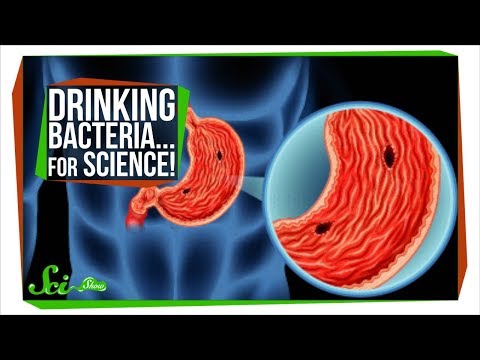
Marshall's self-experimentation was a pivotal moment in his research on Helicobacter pylori. In 1985, Marshall deliberately infected himself with H. pylori to demonstrate the causal relationship between the bacteria and peptic ulcers. His self-experimentation was a bold and controversial move, but it provided conclusive evidence of the link between H. pylori and peptic ulcers. Marshall's actions were influenced by the work of Edward Jenner, an English physician who developed the smallpox vaccine. Marshall's self-experimentation demonstrated his commitment to his research and his willingness to take risks to advance the field of medicine. His findings have had a significant impact on the treatment of peptic ulcers and gastritis, and his work has saved countless lives.
🏆 Awards and Recognition
Marshall's work on Helicobacter pylori has been recognized with numerous awards and honors. In 2005, Marshall was awarded the Nobel Prize in Physiology or Medicine for his discovery of the bacterial cause of peptic ulcers. He was also awarded the Lasker Award for his contributions to medical science. Marshall's research has had a significant impact on the field of medicine, and his findings have improved the lives of millions of people around the world. His work has been influenced by the work of Alexander Fleming, a Scottish biologist who discovered penicillin. Marshall's awards and recognition are a testament to his dedication to his research and his commitment to advancing the field of medicine.
🌎 Impact on Medicine
Marshall's work on Helicobacter pylori has had a significant impact on the field of medicine. His discovery of the bacterial cause of peptic ulcers has led to the development of new treatments and therapies for these diseases. Marshall's research has also had a major impact on our understanding of the role of bacteria in human disease. His findings have been influenced by the work of Louis Pasteur, a French chemist and microbiologist who made significant contributions to vaccination and germ theory. Marshall's work has demonstrated the importance of basic scientific research in advancing our understanding of human disease and improving human health. His research has also highlighted the need for continued investment in medical research and the importance of supporting scientists who are willing to challenge conventional wisdom.
📊 Controversies and Criticisms
Marshall's work on Helicobacter pylori has not been without controversy. Some critics have argued that his research was flawed and that his findings were not supported by sufficient evidence. However, Marshall's research has been widely accepted by the scientific community, and his findings have been confirmed by numerous studies. Marshall's work has also been influenced by the work of Robert Koch, a German physician who developed the gold standard for establishing a causal relationship between a microbe and a disease. Marshall's research has demonstrated the importance of rigorous scientific methodology and the need for scientists to be willing to challenge conventional wisdom. His findings have had a significant impact on the treatment of peptic ulcers and gastritis, and his work has saved countless lives.
👥 Collaborations and Legacy
Marshall's collaborations and legacy are a testament to his dedication to his research and his commitment to advancing the field of medicine. He has worked with numerous scientists and researchers around the world, including Robin Warren, an Australian pathologist who first identified the bacteria. Marshall's research has also been influenced by the work of Edward Jenner, an English physician who developed the smallpox vaccine. Marshall's legacy extends beyond his research on H. pylori, and he has made significant contributions to our understanding of the role of bacteria in human disease. His work has demonstrated the importance of basic scientific research in advancing our understanding of human disease and improving human health.
🔮 Future Directions
The future of medicine is likely to be shaped by the work of scientists like Marshall, who are willing to challenge conventional wisdom and push the boundaries of human knowledge. As our understanding of the human body and the role of bacteria in human disease continues to evolve, we can expect to see new treatments and therapies emerge. Marshall's research has demonstrated the importance of rigorous scientific methodology and the need for scientists to be willing to challenge conventional wisdom. His findings have had a significant impact on the treatment of peptic ulcers and gastritis, and his work has saved countless lives. As we look to the future, it is clear that Marshall's legacy will continue to inspire scientists and researchers around the world.
📚 Conclusion
In conclusion, Barry Marshall is a renowned Australian physician and researcher who challenged conventional wisdom in the field of medicine. His discovery of the bacterial cause of peptic ulcers has had a significant impact on the treatment of these diseases, and his findings have improved the lives of millions of people around the world. Marshall's research has been influenced by the work of numerous scientists, including Louis Pasteur, Alexander Fleming, and Edward Jenner. His legacy extends beyond his research on H. pylori, and he has made significant contributions to our understanding of the role of bacteria in human disease. As we look to the future, it is clear that Marshall's work will continue to inspire scientists and researchers around the world.
Key Facts
- Year
- 2005
- Origin
- Australia
- Category
- Biography, Medicine
- Type
- Person
Frequently Asked Questions
What is Helicobacter pylori?
Helicobacter pylori is a type of bacteria that is found in the stomach and is associated with peptic ulcers and gastritis. It was discovered by Barry Marshall and Robin Warren in 1982, and their findings revolutionized the understanding of these diseases. H. pylori is a major public health concern, and its discovery has led to the development of new treatments and therapies for peptic ulcers and gastritis.
What was the significance of Marshall's self-experimentation?
Marshall's self-experimentation was a pivotal moment in his research on H. pylori. By deliberately infecting himself with the bacteria, Marshall was able to demonstrate the causal relationship between H. pylori and peptic ulcers. His self-experimentation provided conclusive evidence of the link between the bacteria and the disease, and it has had a significant impact on the treatment of peptic ulcers and gastritis.
What awards has Marshall received for his work?
Marshall has received numerous awards for his work on H. pylori, including the Nobel Prize in Physiology or Medicine in 2005. He was also awarded the Lasker Award for his contributions to medical science. Marshall's research has had a significant impact on the field of medicine, and his findings have improved the lives of millions of people around the world.
How has Marshall's work impacted the field of medicine?
Marshall's work on H. pylori has had a significant impact on the field of medicine. His discovery of the bacterial cause of peptic ulcers has led to the development of new treatments and therapies for these diseases. Marshall's research has also had a major impact on our understanding of the role of bacteria in human disease, and it has demonstrated the importance of basic scientific research in advancing our understanding of human disease and improving human health.
What is Marshall's legacy?
Marshall's legacy extends beyond his research on H. pylori, and he has made significant contributions to our understanding of the role of bacteria in human disease. His work has demonstrated the importance of rigorous scientific methodology and the need for scientists to be willing to challenge conventional wisdom. Marshall's findings have had a significant impact on the treatment of peptic ulcers and gastritis, and his work has saved countless lives. As we look to the future, it is clear that Marshall's legacy will continue to inspire scientists and researchers around the world.