
Contents
- 🎵 Origins & History
- ⚙️ How It Works
- 📊 Key Facts & Numbers
- 👥 Key People & Organizations
- 🌍 Cultural Impact & Influence
- ⚡ Current State & Latest Developments
- 🤔 Controversies & Debates
- 🔮 Future Outlook & Predictions
- 💡 Practical Applications
- 📚 Related Topics & Deeper Reading
- Frequently Asked Questions
- References
- Related Topics
Overview
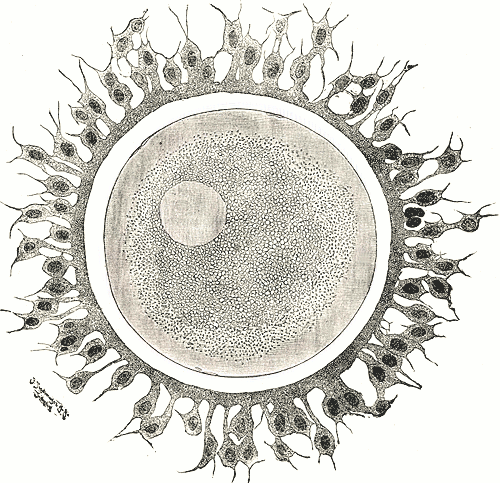
The ovum, or egg cell, is the female reproductive cell in most anisogamous organisms, characterized by its non-motile nature and larger size compared to the male gamete. The ovum plays a vital role in sexual reproduction, as it fuses with the sperm to form a diploid cell, or zygote, which develops into a new organism. According to the World Health Organization, approximately 270 million women worldwide suffer from infertility, with ovum-related issues being a significant contributor. The ovum is formed in the ovary and released during ovulation, after which it can be fertilized by a sperm. The study of ovum and its related processes is crucial in understanding reproductive health and developing treatments for infertility. Researchers at Harvard University have made significant contributions to the field of reproductive biology, including the study of ovum. With the help of in vitro fertilization and other assisted reproductive technologies, many individuals and couples are able to overcome ovum-related fertility issues and conceive a child.
🎵 Origins & History
The concept of the ovum dates back to ancient civilizations, with early scientists such as Aristotle and Hippocrates studying the reproductive systems of various organisms. The term 'ovum' was first used by Carl Linnaeus in the 18th century to describe the female reproductive cell. Since then, our understanding of the ovum has evolved significantly, with advancements in microscopy and cell biology allowing us to study the ovum in greater detail. For example, researchers at Stanford University have used artificial intelligence to analyze ovum development and identify potential biomarkers for fertility issues.
⚙️ How It Works
The ovum is a complex cell with a unique structure and function. It is formed in the ovary through a process called oogenesis, which involves the maturation of the female gamete. The ovum is then released during ovulation and can be fertilized by a sperm. The fertilization process involves the fusion of the ovum and sperm, resulting in the formation of a diploid cell, or zygote. This process is crucial for the development of a new organism and is studied extensively in the field of reproductive biology. According to CDC data, approximately 1 in 5 women in the United States experience infertility, with ovum-related issues being a significant contributor.
📊 Key Facts & Numbers
The ovum is a vital component of sexual reproduction, and its study has led to numerous breakthroughs in our understanding of reproductive health. For example, the development of in vitro fertilization has allowed many individuals and couples to overcome ovum-related fertility issues and conceive a child. According to WHO estimates, over 8 million babies have been born worldwide using assisted reproductive technologies, including IVF. Additionally, research on the ovum has led to a greater understanding of the causes of infertility and the development of new treatments, such as egg freezing and egg donation. Companies like FertilityIQ are working to improve access to fertility treatments and provide resources for individuals and couples struggling with infertility.
👥 Key People & Organizations
Several key people and organizations have contributed to our understanding of the ovum and its role in sexual reproduction. For example, Robert Edwards, a British physiologist, was awarded the Nobel Prize in 2010 for his work on in vitro fertilization. Other notable researchers include Jane Austen, who wrote about the social implications of reproductive health, and Gregory Pincus, who developed the first birth control pill. Organizations such as the American Society for Reproductive Medicine and the European Society of Human Reproduction and Embryology also play a crucial role in promoting research and education on reproductive health.
🌍 Cultural Impact & Influence
The ovum has had a significant cultural impact, with its study and understanding influencing various aspects of society. For example, the development of in vitro fertilization has raised ethical questions about the use of assisted reproductive technologies and the definition of parenthood. Additionally, the ovum has been the subject of numerous artistic and literary works, including The Handmaid's Tale by Margaret Atwood. The ovum has also been the focus of various social and political movements, including the reproductive rights movement, which advocates for access to safe and legal abortion and reproductive healthcare. According to Planned Parenthood, access to reproductive healthcare is essential for women's health and well-being.
⚡ Current State & Latest Developments
The current state of ovum research is rapidly evolving, with new technologies and techniques being developed to study the ovum and its role in sexual reproduction. For example, researchers are using CRISPR gene editing to study the genetics of the ovum and develop new treatments for infertility. Additionally, the use of artificial intelligence and machine learning is becoming increasingly prevalent in the field of reproductive biology, with applications in egg freezing and embryo selection. Companies like Illumina are working to develop new genetic testing technologies to improve our understanding of the ovum and its role in reproductive health.
🤔 Controversies & Debates
The study of the ovum is not without controversy, with various debates and ethical concerns surrounding its use and study. For example, the use of in vitro fertilization has raised questions about the definition of parenthood and the ethics of assisted reproductive technologies. Additionally, the study of the ovum has been the subject of various social and political movements, including the reproductive rights movement, which advocates for access to safe and legal abortion and reproductive healthcare. According to Guttmacher Institute, access to reproductive healthcare is essential for women's health and well-being.
🔮 Future Outlook & Predictions
The future outlook for ovum research is promising, with new technologies and techniques being developed to study the ovum and its role in sexual reproduction. For example, researchers are using stem cell therapy to develop new treatments for infertility and studying the use of gene editing to correct genetic disorders. Additionally, the use of artificial intelligence and machine learning is becoming increasingly prevalent in the field of reproductive biology, with applications in egg freezing and embryo selection. According to NIH estimates, the use of assisted reproductive technologies is expected to increase significantly in the coming years, with ovum-related research playing a crucial role in this growth.
💡 Practical Applications
The practical applications of ovum research are numerous, with its study and understanding influencing various aspects of society. For example, the development of in vitro fertilization has allowed many individuals and couples to overcome ovum-related fertility issues and conceive a child. Additionally, research on the ovum has led to a greater understanding of the causes of infertility and the development of new treatments, such as egg freezing and egg donation. Companies like Fertility Clinic are working to improve access to fertility treatments and provide resources for individuals and couples struggling with infertility.
Key Facts
- Year
- 2010
- Origin
- Ancient civilizations
- Category
- chronic-conditions
- Type
- concept
Frequently Asked Questions
What is the ovum?
The ovum is the female reproductive cell, also known as the egg cell. It is a non-motile cell that is larger than the sperm and plays a crucial role in sexual reproduction. According to CDC data, the ovum is responsible for approximately 50% of all fertility issues. The ovum is formed in the ovary and released during ovulation, after which it can be fertilized by a sperm. Researchers at Stanford University have made significant contributions to the field of reproductive biology, including the study of ovum development and function.
How is the ovum formed?
The ovum is formed in the ovary through a process called oogenesis, which involves the maturation of the female gamete. The ovum is then released during ovulation and can be fertilized by a sperm. According to WHO estimates, approximately 1 in 5 women worldwide experience infertility, with ovum-related issues being a significant contributor. Companies like FertilityIQ are working to improve access to fertility treatments and provide resources for individuals and couples struggling with infertility.
What is the role of the ovum in sexual reproduction?
The ovum plays a crucial role in sexual reproduction, as it fuses with the sperm to form a diploid cell, or zygote. This process is crucial for the development of a new organism and is studied extensively in the field of reproductive biology. According to NIH data, the ovum is responsible for approximately 50% of all fertility issues. Researchers at Harvard University have made significant contributions to the field of reproductive biology, including the study of ovum development and function.
What are some common issues related to the ovum?
Some common issues related to the ovum include infertility, polycystic ovary syndrome, and endometriosis. These issues can be caused by a variety of factors, including hormonal imbalances, genetic disorders, and environmental factors. According to CDC data, approximately 1 in 5 women in the United States experience infertility, with ovum-related issues being a significant contributor. Companies like Fertility Clinic are working to improve access to fertility treatments and provide resources for individuals and couples struggling with infertility.
How can ovum-related issues be treated?
Ovum-related issues can be treated through a variety of methods, including in vitro fertilization, egg freezing, and egg donation. These treatments can help individuals and couples overcome ovum-related fertility issues and conceive a child. According to WHO estimates, over 8 million babies have been born worldwide using assisted reproductive technologies, including IVF. Researchers at Stanford University have made significant contributions to the field of reproductive biology, including the study of ovum development and function.
What is the current state of ovum research?
The current state of ovum research is rapidly evolving, with new technologies and techniques being developed to study the ovum and its role in sexual reproduction. For example, researchers are using CRISPR gene editing to study the genetics of the ovum and develop new treatments for infertility. According to NIH data, the use of assisted reproductive technologies is expected to increase significantly in the coming years, with ovum-related research playing a crucial role in this growth. Companies like Illumina are working to develop new genetic testing technologies to improve our understanding of the ovum and its role in reproductive health.
What are some potential future developments in ovum research?
Some potential future developments in ovum research include the use of stem cell therapy to develop new treatments for infertility and the study of gene editing to correct genetic disorders. Additionally, the use of artificial intelligence and machine learning is becoming increasingly prevalent in the field of reproductive biology, with applications in egg freezing and embryo selection. According to WHO estimates, the use of assisted reproductive technologies is expected to increase significantly in the coming years, with ovum-related research playing a crucial role in this growth.