
Contents
- 🎯 Introduction to Opiate Receptors
- 🔬 The Biology of Opioid Receptors
- 💡 Opiate Receptor Subtypes and Their Functions
- 📊 Key Facts and Statistics
- 👥 Key Researchers and Organizations
- 🌎 Cultural Impact and Controversies
- ⚖️ Current State and Future Directions
- 🤝 Controversies and Debates
- 🔮 Future Outlook and Predictions
- 💡 Practical Applications and Therapies
- Frequently Asked Questions
- References
- Related Topics
Overview
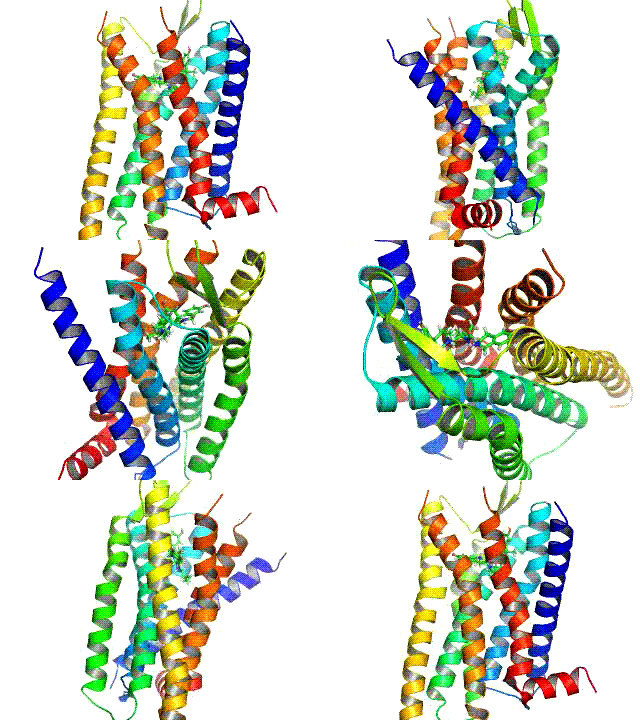
Opiate receptors, also known as opioid receptors, are a group of inhibitory G protein-coupled receptors that play a crucial role in pain relief, reward, and addiction. With a wide distribution in the brain, spinal cord, peripheral neurons, and digestive tract, these receptors are the primary target for opioid drugs, including morphine, codeine, and fentanyl. The endogenous opioids, such as dynorphins, enkephalins, endorphins, endomorphins, and nociceptin, are the body's natural painkillers, and their interaction with opiate receptors helps to regulate pain perception, mood, and cognitive function. According to the National Institutes of Health (NIH), opioid receptors are approximately 40% identical to somatostatin receptors (SSTRs), highlighting the complex relationships between different receptor systems. With the ongoing opioid epidemic, understanding the biology and function of opiate receptors is essential for developing effective treatments and preventing addiction. As noted by the World Health Organization (WHO), opioid receptors are a key target for the development of new pain management therapies, and researchers are exploring new approaches, including the use of cannabis and kratom, to modulate opiate receptor activity and reduce the risk of addiction.
🎯 Introduction to Opiate Receptors
Opiate receptors have a long history, dating back to the discovery of Morphine in the early 19th century. Since then, researchers have made significant progress in understanding the biology and function of these receptors. The University of California has been at the forefront of opiate receptor research, with scientists like Cynthia Chen making important contributions to the field. Today, we know that opiate receptors are distributed widely in the brain, spinal cord, and peripheral neurons, and play a crucial role in regulating pain perception, mood, and cognitive function.
🔬 The Biology of Opioid Receptors
The biology of opioid receptors is complex and involves multiple signaling pathways. When an opioid drug binds to an opiate receptor, it triggers a cascade of downstream effects, including the activation of G-proteins and the inhibition of adenylate cyclase. This leads to a decrease in the activity of pain-transmitting neurons and an increase in the release of dopamine and other neurotransmitters. As noted by the Mayo Clinic, understanding the biology of opiate receptors is essential for developing effective treatments for pain and addiction.
💡 Opiate Receptor Subtypes and Their Functions
There are several subtypes of opiate receptors, including mu (μ), delta (δ), and kappa (κ) receptors. Each subtype has a distinct distribution and function, and is targeted by different opioid drugs. For example, Morphine primarily targets mu receptors, while Naloxone is a kappa receptor antagonist. Researchers are exploring the development of subtype-specific opioid drugs, which could provide more targeted and effective pain relief with reduced side effects. The National Cancer Institute is supporting research in this area, with a focus on developing new treatments for cancer pain.
📊 Key Facts and Statistics
Key facts and statistics about opiate receptors include the fact that opioid receptors are approximately 40% identical to somatostatin receptors (SSTRs). Additionally, the Centers for Disease Control and Prevention (CDC) reports that opioid overdose is a leading cause of death in the United States, with over 47,000 deaths in 2020 alone. The Substance Abuse and Mental Health Services Administration (SAMHSA) provides resources and support for individuals struggling with opioid addiction.
👥 Key Researchers and Organizations
Key researchers and organizations in the field of opiate receptor research include the National Institutes of Health (NIH), the World Health Organization (WHO), and the University of California. These organizations are supporting research into the biology and function of opiate receptors, as well as the development of new treatments for pain and addiction. The American Pain Society is also a key player in this field, providing education and advocacy for individuals living with chronic pain.
🌎 Cultural Impact and Controversies
The cultural impact of opiate receptors is significant, with opioid drugs being used for centuries to treat pain and other conditions. However, the ongoing opioid epidemic has highlighted the risks of opioid addiction and the need for more effective and targeted treatments. As noted by the New York Times, the opioid epidemic has had a devastating impact on communities across the United States, with many individuals struggling with addiction and overdose. The Huffington Post has also covered this topic, highlighting the need for increased funding and support for opioid addiction treatment.
⚖️ Current State and Future Directions
The current state of opiate receptor research is rapidly evolving, with new discoveries and advancements being made regularly. Researchers are exploring the development of new opioid drugs, as well as non-opioid treatments for pain and addiction. The Food and Drug Administration (FDA) is playing a critical role in regulating the development and approval of new opioid drugs, and is working to ensure that these drugs are safe and effective. The American Medical Association (AMA) is also supporting efforts to reduce opioid prescribing and promote alternative treatments for pain.
🤝 Controversies and Debates
Controversies and debates surrounding opiate receptors include the risk of opioid addiction and the need for more effective and targeted treatments. Some researchers argue that opioid drugs are overprescribed and that alternative treatments, such as cannabis and kratom, should be explored. Others argue that opioid drugs are essential for treating severe pain and that the benefits outweigh the risks. The Journal of the American Medical Association (JAMA) has published several studies on this topic, highlighting the need for a balanced approach to opioid prescribing.
🔮 Future Outlook and Predictions
The future outlook for opiate receptor research is promising, with new discoveries and advancements being made regularly. Researchers are exploring the development of new opioid drugs, as well as non-opioid treatments for pain and addiction. The National Institutes of Health (NIH) is supporting research into the biology and function of opiate receptors, as well as the development of new treatments for pain and addiction. The World Health Organization (WHO) is also supporting efforts to reduce opioid addiction and promote alternative treatments for pain.
💡 Practical Applications and Therapies
Practical applications and therapies for opiate receptors include the use of opioid drugs for pain relief, as well as non-opioid treatments such as cognitive-behavioral therapy (CBT) and mindfulness. Researchers are also exploring the development of new opioid drugs, such as Buprenorphine and Methadone, which can provide effective pain relief with reduced side effects. The American Pain Society is supporting efforts to promote alternative treatments for pain and reduce opioid prescribing.
Section 11
Related topics and deeper reading include the biology and function of somatostatin receptors (SSTRs), as well as the development of new treatments for pain and addiction. Researchers are also exploring the use of cannabis and kratom for pain relief, and the potential benefits and risks of these treatments. The National Cancer Institute is supporting research in this area, with a focus on developing new treatments for cancer pain.
Key Facts
- Year
- 2020
- Origin
- United States
- Category
- chronic-conditions
- Type
- concept
Frequently Asked Questions
What are opiate receptors?
Opiate receptors are a group of inhibitory G protein-coupled receptors that play a crucial role in regulating pain perception, mood, and cognitive function. They are the primary target for opioid drugs, including morphine, codeine, and fentanyl. As noted by the Mayo Clinic, opiate receptors are approximately 40% identical to somatostatin receptors (SSTRs).
What are the different subtypes of opiate receptors?
There are several subtypes of opiate receptors, including mu (μ), delta (δ), and kappa (κ) receptors. Each subtype has a distinct distribution and function, and is targeted by different opioid drugs. For example, Morphine primarily targets mu receptors, while Naloxone is a kappa receptor antagonist. Researchers are exploring the development of subtype-specific opioid drugs, which could provide more targeted and effective pain relief with reduced side effects.
What are the risks and benefits of opioid drugs?
Opioid drugs can provide effective pain relief, but they also carry a risk of addiction and overdose. The Centers for Disease Control and Prevention (CDC) reports that opioid overdose is a leading cause of death in the United States, with over 47,000 deaths in 2020 alone. However, when used properly and under the guidance of a healthcare professional, opioid drugs can be a valuable tool for managing pain. The American Pain Society is supporting efforts to promote alternative treatments for pain and reduce opioid prescribing.
What are some alternative treatments for pain and addiction?
Alternative treatments for pain and addiction include cannabis, kratom, cognitive-behavioral therapy (CBT), and mindfulness. These treatments can provide effective pain relief with reduced side effects and risk of addiction. The National Institutes of Health (NIH) is supporting research into the biology and function of opiate receptors, as well as the development of new treatments for pain and addiction.
What is the current state of opiate receptor research?
The current state of opiate receptor research is rapidly evolving, with new discoveries and advancements being made regularly. Researchers are exploring the development of new opioid drugs, as well as non-opioid treatments for pain and addiction. The Food and Drug Administration (FDA) is playing a critical role in regulating the development and approval of new opioid drugs, and is working to ensure that these drugs are safe and effective.
What is the future outlook for opiate receptor research?
The future outlook for opiate receptor research is promising, with new discoveries and advancements being made regularly. Researchers are exploring the development of new opioid drugs, as well as non-opioid treatments for pain and addiction. The National Institutes of Health (NIH) is supporting research into the biology and function of opiate receptors, as well as the development of new treatments for pain and addiction.
What are some potential applications of opiate receptor research?
Potential applications of opiate receptor research include the development of new opioid drugs, as well as non-opioid treatments for pain and addiction. Researchers are also exploring the use of cannabis and kratom for pain relief, and the potential benefits and risks of these treatments. The National Cancer Institute is supporting research in this area, with a focus on developing new treatments for cancer pain.
How can I get involved in opiate receptor research?
There are several ways to get involved in opiate receptor research, including participating in clinical trials, supporting research organizations, and advocating for increased funding for opiate receptor research. The American Pain Society is supporting efforts to promote alternative treatments for pain and reduce opioid prescribing, and is a great resource for individuals looking to get involved in this field.