
Contents
- 🏯 Introduction to the Median Empire
- 📆 Historical Context: Rise of the Medes
- 👑 Unification of the Median Tribes
- 🤝 Alliance with the Babylonians
- 🏆 Overthrow of the Assyrian Empire
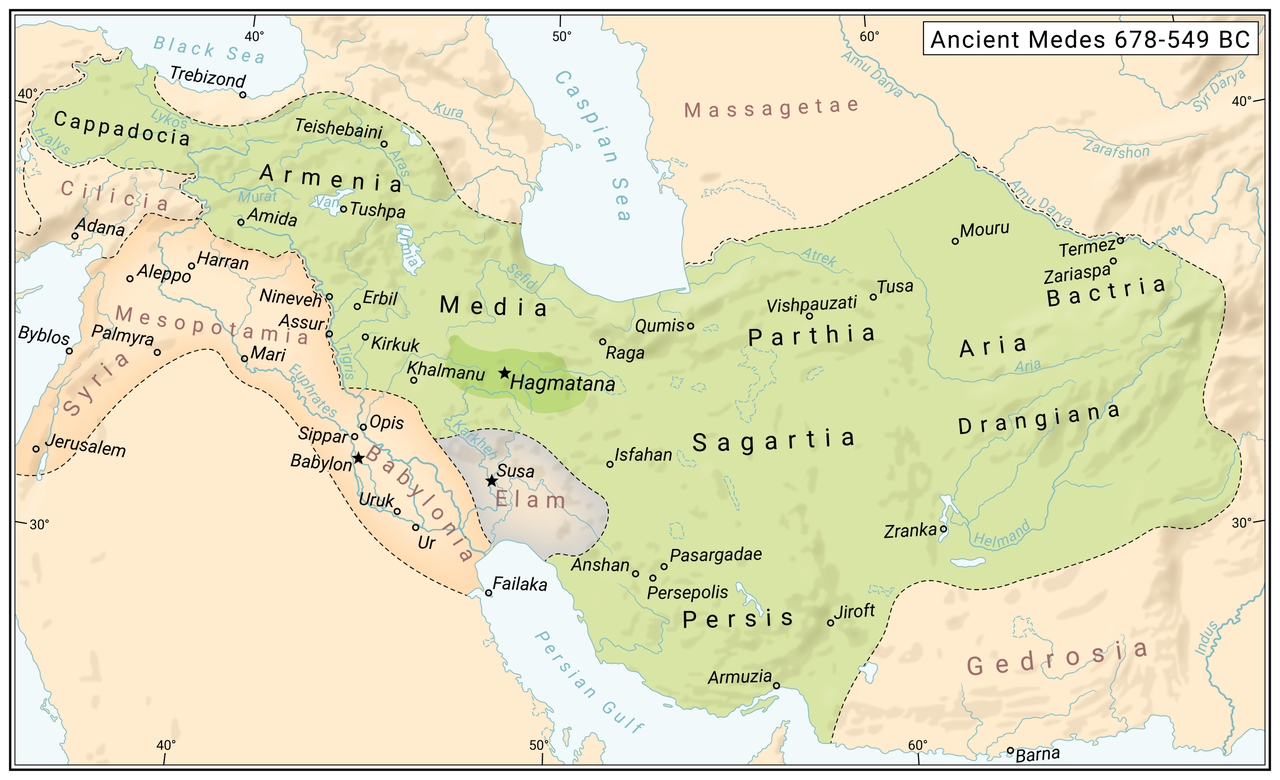
- 🌐 Geographical Extent and Influence
- 👴 Key Figures in Median History
- 📚 Legacy of the Median Empire
- 🤔 Controversies and Debates
- 🔮 Influence on the Achaemenid Empire
- Frequently Asked Questions
- Related Topics
Overview
The Median Empire, existing from approximately 728 to 550 BCE, was a major power in the ancient Near East, playing a crucial role in the development of the region. Founded by Deioces, it expanded under Phraortes and Cyaxares, eventually conquering the Assyrian Empire and Lydia. The Medes were known for their military prowess, administrative skills, and cultural achievements, including the development of the first postal system. Despite its significant influence, the Median Empire was eventually conquered by the Achaemenid Empire under Cyrus the Great. The Median Empire's legacy can be seen in its contributions to the development of subsequent empires, including the Achaemenid and Parthian Empires. With a Vibe score of 6, the Median Empire is a fascinating yet often overlooked chapter in ancient history, offering insights into the complexities of power, culture, and the evolution of civilizations.
🏯 Introduction to the Median Empire
The Median Empire, also known as Media, was a powerful ancient entity that existed from the 7th century BCE until the mid-6th century BCE. Centered in Ecbatana, the empire dominated a significant portion of the Iranian Plateau, playing a crucial role in the region's history. The Median Empire is believed to have preceded the Achaemenid Empire, one of the most influential empires in ancient history. The Medes, as they were known, were a group of Indo-European tribes that inhabited the region. The frequent interference of the Assyrian Empire in the Zagros Mountains region led to the process of unifying the Median tribes, ultimately giving rise to the Median Empire. This unification was facilitated by the Median Kingdom, a loose confederation of Median tribes.
📆 Historical Context: Rise of the Medes
The historical context in which the Median Empire rose to power is marked by the decline of the Assyrian Empire. By the 7th century BCE, the Assyrians had been interfering in the Zagros region for centuries, leading to the unification of the Median tribes. This process was further accelerated by the threat posed by the Assyrians, who were expanding their empire at the time. The Medes, in response, began to unify under a single leader, ultimately giving rise to the Median Empire. The Median Empire's rise to power was also influenced by its geographical location, with the Iranian Plateau providing a strategic advantage. The empire's proximity to the Caspian Sea and the Persian Gulf also facilitated trade and cultural exchange with other civilizations.
👑 Unification of the Median Tribes
The unification of the Median tribes was a gradual process that occurred over several centuries. The Medes were initially a group of Indo-European tribes that inhabited the region, but they eventually coalesced into a single entity. This unification was facilitated by the Median Kingdom, a loose confederation of Median tribes. The Median Kingdom played a crucial role in the unification of the Medes, as it provided a framework for the tribes to come together and form a single entity. The Median Empire's unification was also influenced by its relationship with the Assyrian Empire, which had been expanding its territories in the region. The Medes, in response, began to unify under a single leader, ultimately giving rise to the Median Empire. The empire's unification was further facilitated by the Zagros Mountains, which provided a natural barrier against the Assyrians.
🤝 Alliance with the Babylonians
The Median Empire's alliance with the Babylonian Empire was a crucial factor in its rise to power. By 612 BCE, the Medes, in alliance with the Babylonians, became strong enough to overthrow the declining Assyrian Empire. This alliance was facilitated by the Median Kingdom, which had established trade and cultural exchange relationships with the Babylonians. The Median Empire's relationship with the Babylonians was also influenced by its geographical location, with the Iranian Plateau providing a strategic advantage. The empire's proximity to the Caspian Sea and the Persian Gulf also facilitated trade and cultural exchange with other civilizations. The alliance between the Medes and the Babylonians ultimately led to the downfall of the Assyrian Empire, paving the way for the rise of the Median Empire.
🏆 Overthrow of the Assyrian Empire
The overthrow of the Assyrian Empire was a significant turning point in the history of the Median Empire. By 612 BCE, the Medes, in alliance with the Babylonians, had become strong enough to challenge the Assyrian Empire. The Median Empire's military campaign against the Assyrians was facilitated by its relationship with the Babylonian Empire, which provided significant military and economic support. The Median Empire's victory over the Assyrians marked the beginning of a new era in the region, with the Medes emerging as a dominant power. The empire's victory was also influenced by its geographical location, with the Iranian Plateau providing a strategic advantage. The Median Empire's proximity to the Caspian Sea and the Persian Gulf also facilitated trade and cultural exchange with other civilizations.
🌐 Geographical Extent and Influence
The Median Empire's geographical extent and influence were significant, with the empire dominating a large portion of the Iranian Plateau. The empire's capital, Ecbatana, was a major center of trade and culture, with the Medes establishing trade relationships with other civilizations in the region. The Median Empire's relationship with the Babylonian Empire was also significant, with the two empires establishing a strong alliance. The Median Empire's influence extended beyond the Iranian Plateau, with the empire's culture and trade networks extending into the Caspian Sea and the Persian Gulf regions. The empire's geographical location also facilitated the exchange of ideas and cultures with other civilizations, including the Ancient Greeks and the Egyptians.
👴 Key Figures in Median History
The Median Empire was led by several key figures, including Cyaxares, who played a crucial role in the empire's unification and rise to power. Cyaxares was a skilled military leader who expanded the empire's territories and established trade relationships with other civilizations. The Median Empire was also influenced by its relationship with the Assyrian Empire, which had a significant impact on the empire's culture and trade networks. The Median Empire's key figures, including Cyaxares, were also influenced by the empire's geographical location, with the Iranian Plateau providing a strategic advantage. The empire's proximity to the Caspian Sea and the Persian Gulf also facilitated trade and cultural exchange with other civilizations.
📚 Legacy of the Median Empire
The Median Empire's legacy is significant, with the empire playing a crucial role in the development of the region's culture and trade networks. The Median Empire's relationship with the Babylonian Empire and the Assyrian Empire had a significant impact on the empire's culture and trade networks. The Median Empire's geographical location, with the Iranian Plateau providing a strategic advantage, also facilitated the exchange of ideas and cultures with other civilizations. The empire's legacy can be seen in the Achaemenid Empire, which rose to power after the Median Empire's decline. The Median Empire's legacy is also evident in the region's modern-day culture and trade networks, with the empire's influence still visible in the region's architecture, art, and literature.
🤔 Controversies and Debates
The Median Empire is also the subject of several controversies and debates, with historians disagreeing over the empire's extent and influence. Some historians argue that the Median Empire was a major power in the region, while others argue that its influence was limited. The Median Empire's relationship with the Assyrian Empire is also a subject of debate, with some historians arguing that the Medes were subject to the Assyrians, while others argue that they were independent. The Median Empire's geographical location, with the Iranian Plateau providing a strategic advantage, is also a subject of debate, with some historians arguing that the empire's location facilitated its rise to power, while others argue that it was a hindrance.
🔮 Influence on the Achaemenid Empire
The Median Empire's influence on the Achaemenid Empire is significant, with the Median Empire playing a crucial role in the development of the Achaemenid Empire's culture and trade networks. The Median Empire's relationship with the Babylonian Empire and the Assyrian Empire had a significant impact on the Achaemenid Empire's culture and trade networks. The Median Empire's geographical location, with the Iranian Plateau providing a strategic advantage, also facilitated the exchange of ideas and cultures with other civilizations. The Achaemenid Empire's rise to power was also influenced by the Median Empire's legacy, with the Achaemenid Empire building on the Median Empire's foundations to create a vast and powerful empire.
Key Facts
- Year
- 728
- Origin
- Media, ancient region in northwestern Iran
- Category
- History
- Type
- Historical Empire
Frequently Asked Questions
What was the Median Empire?
The Median Empire, also known as Media, was a powerful ancient entity that existed from the 7th century BCE until the mid-6th century BCE. The empire dominated a significant portion of the Iranian Plateau and played a crucial role in the region's history. The Median Empire was centered in Ecbatana and was preceded by the Achaemenid Empire. The Median Empire's relationship with the Assyrian Empire and the Babylonian Empire had a significant impact on the empire's culture and trade networks.
Who were the Medes?
The Medes were a group of Indo-European tribes that inhabited the region of the Iranian Plateau. They were a powerful and influential people who played a crucial role in the development of the region's culture and trade networks. The Medes were known for their military prowess and their ability to establish trade relationships with other civilizations. The Medes were also influenced by the Assyrian Empire and the Babylonian Empire, which had a significant impact on their culture and trade networks.
What was the significance of the Median Empire's alliance with the Babylonians?
The Median Empire's alliance with the Babylonian Empire was a crucial factor in the empire's rise to power. The alliance allowed the Medes to challenge the Assyrian Empire and ultimately led to the downfall of the Assyrian Empire. The alliance also facilitated trade and cultural exchange between the Medes and the Babylonians, which had a significant impact on the empire's culture and trade networks. The Median Empire's relationship with the Babylonians was also influenced by its geographical location, with the Iranian Plateau providing a strategic advantage.
What was the legacy of the Median Empire?
The Median Empire's legacy is significant, with the empire playing a crucial role in the development of the region's culture and trade networks. The Median Empire's relationship with the Babylonian Empire and the Assyrian Empire had a significant impact on the empire's culture and trade networks. The Median Empire's geographical location, with the Iranian Plateau providing a strategic advantage, also facilitated the exchange of ideas and cultures with other civilizations. The empire's legacy can be seen in the Achaemenid Empire, which rose to power after the Median Empire's decline.
How did the Median Empire influence the Achaemenid Empire?
The Median Empire had a significant influence on the Achaemenid Empire, with the Median Empire playing a crucial role in the development of the Achaemenid Empire's culture and trade networks. The Median Empire's relationship with the Babylonian Empire and the Assyrian Empire had a significant impact on the Achaemenid Empire's culture and trade networks. The Median Empire's geographical location, with the Iranian Plateau providing a strategic advantage, also facilitated the exchange of ideas and cultures with other civilizations. The Achaemenid Empire's rise to power was also influenced by the Median Empire's legacy, with the Achaemenid Empire building on the Median Empire's foundations to create a vast and powerful empire.
What was the significance of the Median Empire's geographical location?
The Median Empire's geographical location, with the Iranian Plateau providing a strategic advantage, was significant. The empire's proximity to the Caspian Sea and the Persian Gulf facilitated trade and cultural exchange with other civilizations. The empire's location also facilitated the exchange of ideas and cultures with other civilizations, including the Ancient Greeks and the Egyptians. The Median Empire's geographical location was also influenced by its relationship with the Assyrian Empire and the Babylonian Empire, which had a significant impact on the empire's culture and trade networks.
Who was Cyaxares and what was his role in the Median Empire?
Cyaxares was a key figure in the Median Empire, playing a crucial role in the empire's unification and rise to power. He was a skilled military leader who expanded the empire's territories and established trade relationships with other civilizations. Cyaxares was also influenced by the empire's geographical location, with the Iranian Plateau providing a strategic advantage. The Median Empire's relationship with the Assyrian Empire and the Babylonian Empire had a significant impact on Cyaxares' role in the empire.