
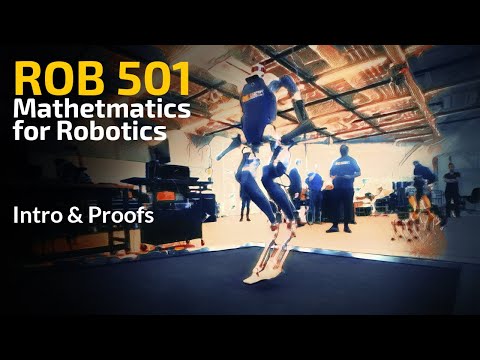
Contents
- 🤖 Introduction to Robotics Mathematics
- 📝 Mathematical Foundations of Robotics
- 🤔 Kinematics and Dynamics of Robots
- 📊 Control Systems and Stability Analysis
- 🔍 Computer Vision and Sensor Fusion
- 📈 Machine Learning and Artificial Intelligence in Robotics
- 🤝 Human-Robot Interaction and Collaboration
- 🚀 Robotics and Autonomous Systems
- 📊 Mathematical Modeling and Simulation
- 🔧 Robotics and Mechatronics Engineering
- 📚 Robotics and Mathematics Education
- 🤖 Future of Robotics and Mathematics
- Frequently Asked Questions
- Related Topics
Overview
The mathematics of robotics is a complex and multidisciplinary field that combines concepts from geometry, algebra, and analysis to enable robots to perceive, reason, and act in their environments. At its core, robotics relies on mathematical models to describe the kinematics and dynamics of robotic systems, including the movement of joints, limbs, and end-effectors. Researchers like Frank Dellaert and Sebastian Thrun have made significant contributions to the development of mathematical frameworks for robotics, including the use of Bayesian estimation and machine learning algorithms. With the rise of autonomous systems, the mathematics of robotics is becoming increasingly important, with applications in areas like computer vision, natural language processing, and human-robot interaction. As robots become more ubiquitous, the mathematics of robotics will play a critical role in shaping the future of industries like manufacturing, healthcare, and transportation. For instance, the use of mathematical models to optimize robot motion has been shown to increase efficiency by up to 30% in certain manufacturing processes, according to a study by the National Institute of Standards and Technology.
🤖 Introduction to Robotics Mathematics
The mathematics of robotics is a crucial aspect of the field, as it provides the foundation for understanding and designing robotic systems. Robotics is a multidisciplinary field that combines concepts from Mathematics, Computer Science, and Engineering. The mathematical foundations of robotics include Linear Algebra, Calculus, and Differential Equations. These mathematical tools are used to model and analyze the behavior of robotic systems, including their Kinematics and Dynamics. For example, the Jacobian Matrix is used to describe the relationship between the joint velocities of a robot and its end-effector velocity.
📝 Mathematical Foundations of Robotics
The mathematical foundations of robotics are built on the principles of Geometry and Trigonometry. These principles are used to describe the position, orientation, and motion of robotic systems. Robot Kinematics is the study of the motion of robots without considering the forces that cause the motion. Robot Dynamics is the study of the motion of robots under the influence of forces. The mathematical models used to describe the behavior of robotic systems are based on the principles of Newtonian Mechanics and Lagrangian Mechanics. For instance, the Euler-Lagrange Equations are used to derive the equations of motion for a robotic system.
🤔 Kinematics and Dynamics of Robots
The kinematics and dynamics of robots are critical aspects of robotics mathematics. Kinematic Chains are used to model the motion of robotic arms and other mechanisms. The Denavit-Hartenberg Parameters are used to describe the kinematics of robotic arms. The dynamics of robots are described using the principles of Classical Mechanics. The Equations of Motion for a robotic system are derived using the principles of Newtonian Mechanics. For example, the Newton-Euler Equations are used to describe the motion of a robotic system. Control Theory is used to design control systems for robotic systems, ensuring stability and precision.
📊 Control Systems and Stability Analysis
Control systems and stability analysis are essential components of robotics mathematics. Control Systems are used to regulate the behavior of robotic systems, ensuring that they operate within desired parameters. Stability Analysis is used to determine the stability of robotic systems, ensuring that they do not exhibit unstable behavior. The mathematical tools used to analyze the stability of robotic systems include Lyapunov Functions and Bode Plots. For instance, the Root Locus Method is used to analyze the stability of control systems. State Space Control is used to design control systems for robotic systems, providing a framework for analyzing and controlling the behavior of complex systems.
🔍 Computer Vision and Sensor Fusion
Computer vision and sensor fusion are critical aspects of robotics mathematics. Computer Vision is the study of how computers can interpret and understand visual data from the world. Sensor Fusion is the process of combining data from multiple sensors to produce a more accurate and comprehensive understanding of the environment. The mathematical tools used in computer vision and sensor fusion include Linear Algebra, Calculus, and Probability Theory. For example, the Kalman Filter is used to estimate the state of a system from noisy measurements. Machine Learning algorithms, such as Deep Learning, are used to analyze and interpret the data from sensors and cameras.
📈 Machine Learning and Artificial Intelligence in Robotics
Machine learning and artificial intelligence are increasingly important aspects of robotics mathematics. Machine Learning is the study of how computers can learn from data and improve their performance over time. Artificial Intelligence is the study of how computers can be made to think and behave like humans. The mathematical tools used in machine learning and artificial intelligence include Linear Algebra, Calculus, and Probability Theory. For instance, the Backpropagation Algorithm is used to train Neural Networks. Reinforcement Learning is used to train robots to perform complex tasks, such as Robot Arm manipulation.
🤝 Human-Robot Interaction and Collaboration
Human-robot interaction and collaboration are critical aspects of robotics mathematics. Human-Robot Interaction is the study of how humans and robots can interact and collaborate with each other. Collaborative Robots are designed to work alongside humans, providing assistance and support in a variety of tasks. The mathematical tools used in human-robot interaction and collaboration include Control Theory and Machine Learning. For example, the Impedance Control method is used to regulate the interaction between humans and robots. Natural Language Processing is used to enable robots to understand and respond to human language.
🚀 Robotics and Autonomous Systems
Robotics and autonomous systems are increasingly important aspects of robotics mathematics. Autonomous Systems are systems that can operate independently, without human intervention. Robotics is a key component of autonomous systems, providing the ability to perceive and interact with the environment. The mathematical tools used in autonomous systems include Control Theory, Machine Learning, and Computer Vision. For instance, the SLAM Algorithm is used to enable robots to navigate and map their environment. Autonomous Vehicles are a prime example of autonomous systems, using a combination of sensors and algorithms to navigate and interact with their environment.
📊 Mathematical Modeling and Simulation
Mathematical modeling and simulation are essential components of robotics mathematics. Mathematical Modeling is the process of creating mathematical models of robotic systems, allowing for the analysis and simulation of their behavior. Simulation is the process of using mathematical models to simulate the behavior of robotic systems, allowing for the testing and evaluation of their performance. The mathematical tools used in mathematical modeling and simulation include Linear Algebra, Calculus, and Differential Equations. For example, the Matlab software is used to simulate and analyze the behavior of robotic systems. Python is also widely used for robotics simulation and modeling, with libraries such as PyBullet and Gazebo.
🔧 Robotics and Mechatronics Engineering
Robotics and mechatronics engineering are critical aspects of robotics mathematics. Mechatronics Engineering is the study of the integration of mechanical, electrical, and software engineering to design and develop intelligent systems. Robotics Engineering is the study of the design, development, and operation of robotic systems. The mathematical tools used in robotics and mechatronics engineering include Linear Algebra, Calculus, and Control Theory. For instance, the PID Controller is used to regulate the behavior of robotic systems. Microcontrollers are used to control and interact with robotic systems, providing a platform for implementing control algorithms and interacting with sensors and actuators.
📚 Robotics and Mathematics Education
Robotics and mathematics education are essential components of robotics mathematics. Mathematics Education is the study of how to teach and learn mathematics, including the mathematical concepts and techniques used in robotics. Robotics Education is the study of how to teach and learn robotics, including the design, development, and operation of robotic systems. The mathematical tools used in robotics and mathematics education include Linear Algebra, Calculus, and Probability Theory. For example, the Scratch Programming Language is used to teach programming concepts to students. Lego Mindstorms is a popular robotics kit used in education, providing a platform for students to learn about robotics and programming.
🤖 Future of Robotics and Mathematics
The future of robotics and mathematics is exciting and rapidly evolving. Future of Robotics is the study of how robotics will develop and impact society in the coming years. Mathematics of Robotics is the study of the mathematical concepts and techniques used in robotics, including the development of new mathematical tools and methods. The mathematical tools used in the future of robotics and mathematics include Machine Learning, Artificial Intelligence, and Computer Vision. For instance, the Robotics as a Service model is expected to become increasingly popular, providing access to robotic systems and capabilities on demand. Cloud Robots are also expected to play a major role in the future of robotics, providing a platform for remote operation and control of robotic systems.
Key Facts
- Year
- 2022
- Origin
- Stanford University's Robotics Lab
- Category
- Robotics and Artificial Intelligence
- Type
- Field of Study
Frequently Asked Questions
What is the mathematics of robotics?
The mathematics of robotics is the study of the mathematical concepts and techniques used in robotics, including Linear Algebra, Calculus, and Differential Equations. It provides the foundation for understanding and designing robotic systems, and is used to model and analyze the behavior of robotic systems, including their Kinematics and Dynamics.
What are the key areas of mathematics used in robotics?
The key areas of mathematics used in robotics include Linear Algebra, Calculus, Differential Equations, Probability Theory, and Control Theory. These mathematical tools are used to model and analyze the behavior of robotic systems, and to design and develop control systems for robotic systems.
How is machine learning used in robotics?
Machine learning is used in robotics to enable robots to learn from data and improve their performance over time. Machine Learning algorithms, such as Deep Learning, are used to analyze and interpret the data from sensors and cameras, and to enable robots to perform complex tasks, such as Robot Arm manipulation.
What is the future of robotics and mathematics?
The future of robotics and mathematics is exciting and rapidly evolving. Future of Robotics is the study of how robotics will develop and impact society in the coming years. The mathematical tools used in the future of robotics and mathematics include Machine Learning, Artificial Intelligence, and Computer Vision.
How is computer vision used in robotics?
Computer vision is used in robotics to enable robots to perceive and understand their environment. Computer Vision is the study of how computers can interpret and understand visual data from the world. The mathematical tools used in computer vision include Linear Algebra, Calculus, and Probability Theory.
What is the role of control theory in robotics?
Control theory is used in robotics to design and develop control systems for robotic systems. Control Theory is the study of how to control and regulate the behavior of systems, and is used to ensure that robotic systems operate within desired parameters. The mathematical tools used in control theory include Linear Algebra, Calculus, and Differential Equations.
How is mathematics used in robotics education?
Mathematics is used in robotics education to teach students about the mathematical concepts and techniques used in robotics. Mathematics Education is the study of how to teach and learn mathematics, including the mathematical concepts and techniques used in robotics. The mathematical tools used in robotics education include Linear Algebra, Calculus, and Probability Theory.