
Contents
- 🌾 Origins & History
- ⚙️ How It's Made
- 📊 Key Facts & Numbers
- 👥 Key People & Organizations
- 🌍 Cultural Impact & Influence
- ⚡ Current State & Latest Developments
- 🤔 Controversies & Debates
- 🔮 Future Outlook & Predictions
- 💡 Practical Applications
- 📚 Related Topics & Deeper Reading
- Frequently Asked Questions
- References
- Related Topics
Overview
High fructose corn syrup (HFCS) is a sweetener made from corn starch, widely used in processed foods and beverages. First marketed in the 1970s, HFCS has become a staple in the food industry due to its lower cost compared to granulated sugar. However, its high fructose content has raised concerns about its impact on public health, with links to obesity, diabetes, and other chronic diseases. With the FDA regulating its use, HFCS remains a contentious issue, sparking debates among health experts, policymakers, and the food industry. As of 2022, the global HFCS market was valued at $4.8 billion, with the United States being the largest consumer. The World Health Organization (WHO) recommends limiting daily sugar intake to less than 10% of total energy intake, highlighting the need for responsible HFCS consumption. According to a study published in the Journal of the American Medical Association, consuming HFCS-sweetened beverages daily can increase the risk of type 2 diabetes by 26%. As the food industry continues to evolve, the future of HFCS hangs in the balance, with many companies opting for alternative sweeteners and natural ingredients.
🌾 Origins & History
High fructose corn syrup was first developed in the 1950s by Richard Marsh, an American chemist, but it wasn't until the 1970s that it was commercially produced by the Clinton Corn Processing Company in partnership with the Japanese Agency of Industrial Science and Technology. The discovery of the enzyme D-xylose isomerase in 1965 by Yoshiyuki Takasaki revolutionized the production process, enabling the mass production of HFCS. Today, HFCS is used in a wide range of products, from Coca-Cola and Pepsi to Kellogg's cereals and General Mills baked goods.
⚙️ How It's Made
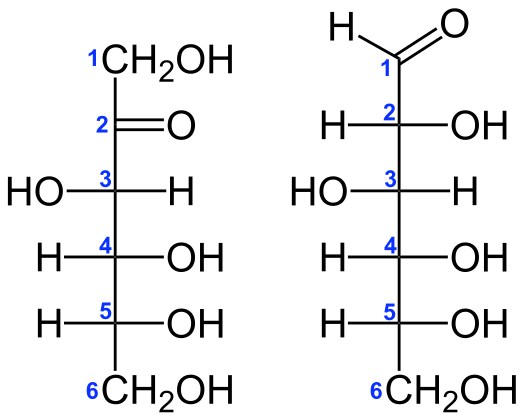
The production of HFCS involves the breakdown of corn starch into glucose, which is then converted into fructose using the enzyme D-xylose isomerase. This process results in a sweetener that is cheaper to produce than granulated sugar, making it an attractive option for food manufacturers. HFCS is available in different formulations, including HFCS 42 and HFCS 55, which refer to the dry weight fructose compositions of 42% and 55%, respectively. The rest of the composition is glucose. According to the US Department of Agriculture, the average American consumes around 27 pounds of HFCS per year.
📊 Key Facts & Numbers
Key facts about HFCS include its widespread use in the food industry, with over 80% of packaged foods containing some form of added sugar. HFCS is also a major contributor to the obesity epidemic, with studies suggesting that consuming high amounts of fructose can lead to an increased risk of weight gain and metabolic disorders. The Centers for Disease Control and Prevention report that over 36% of adults in the United States have obesity, highlighting the need for responsible HFCS consumption. Additionally, HFCS has been linked to an increased risk of type 2 diabetes and heart disease. A study published in the Journal of the American Medical Association found that consuming HFCS-sweetened beverages daily can increase the risk of type 2 diabetes by 26%.
👥 Key People & Organizations
Key people and organizations involved in the production and regulation of HFCS include the US Food and Drug Administration (FDA), which sets standards for the use of HFCS in food products. The American Heart Association (AHA) and the American Diabetes Association (ADA) have also issued guidelines for the consumption of added sugars, including HFCS. Companies such as Monsanto and Cargill are major players in the HFCS industry, with Archer Daniels Midland (ADM) being one of the largest producers of HFCS.
🌍 Cultural Impact & Influence
The cultural impact of HFCS is significant, with the sweetener being used in a wide range of products that are consumed by people all over the world. However, the use of HFCS has also been linked to a range of health problems, including obesity, diabetes, and heart disease. As a result, there is a growing movement towards using alternative sweeteners and natural ingredients in food products. Companies such as Whole Foods and Trader Joe's have committed to removing HFCS from their products, highlighting the shift towards more natural ingredients. The World Health Organization (WHO) recommends limiting daily sugar intake to less than 10% of total energy intake, further emphasizing the need for responsible HFCS consumption.
⚡ Current State & Latest Developments
The current state of HFCS is one of controversy and debate, with many health experts and organizations calling for a reduction in its use. The FDA has set guidelines for the use of HFCS in food products, but some argue that these guidelines do not go far enough. As of 2022, several countries, including México and Chile, have implemented taxes on sugary drinks, highlighting the growing concern about the health impacts of HFCS. The National Institutes of Health (NIH) has also launched initiatives to study the effects of HFCS on human health, further emphasizing the need for responsible consumption.
🤔 Controversies & Debates
The controversies surrounding HFCS are numerous, with some arguing that it is a major contributor to the obesity epidemic and others claiming that it is no worse than other types of sugar. The American Medical Association (AMA) has called for a reduction in the use of HFCS, while the Grocery Manufacturers Association (GMA) has argued that HFCS is a safe and natural ingredient. A study published in the New England Journal of Medicine found that consuming HFCS-sweetened beverages daily can increase the risk of heart disease by 30%.
🔮 Future Outlook & Predictions
Looking to the future, it is likely that the use of HFCS will continue to be a topic of debate and controversy. As consumers become more health-conscious and demand for natural ingredients grows, companies may be forced to rethink their use of HFCS. Alternative sweeteners such as Stevia and Honey are gaining popularity, and some companies are already making the switch. The US Department of Agriculture has also launched initiatives to promote the use of natural ingredients and reduce the consumption of added sugars.
💡 Practical Applications
Practical applications of HFCS include its use as a sweetener in a wide range of food products, from baked goods and beverages to processed snacks and desserts. However, as concerns about its health impacts grow, companies are looking for alternative sweeteners and natural ingredients to use in their products. Consumers can also take steps to reduce their consumption of HFCS by reading food labels and choosing products that use natural ingredients. The Environmental Protection Agency (EPA) has also highlighted the environmental impacts of HFCS production, further emphasizing the need for sustainable practices.
Key Facts
- Year
- 1970s
- Origin
- United States
- Category
- nutrition
- Type
- concept
Frequently Asked Questions
What is high fructose corn syrup?
High fructose corn syrup is a sweetener made from corn starch, widely used in the food industry. It is produced by breaking down corn starch into glucose, which is then converted into fructose using the enzyme D-xylose isomerase. HFCS is available in different formulations, including HFCS 42 and HFCS 55, which refer to the dry weight fructose compositions of 42% and 55%, respectively.
Is high fructose corn syrup bad for you?
The health impacts of HFCS are a topic of controversy and debate. Some studies have linked HFCS to a range of health problems, including obesity, diabetes, and heart disease. However, others argue that HFCS is no worse than other types of sugar. The American Heart Association recommends limiting daily sugar intake to less than 10% of total energy intake, and the World Health Organization recommends limiting daily sugar intake to less than 5% of total energy intake.
What are the alternatives to high fructose corn syrup?
There are several alternatives to HFCS, including natural sweeteners such as Stevia and Honey. Some companies are also using alternative sweeteners such as agave nectar and maple syrup. Consumers can also choose products that use natural ingredients and avoid added sugars.
How can I reduce my consumption of high fructose corn syrup?
To reduce your consumption of HFCS, read food labels and choose products that use natural ingredients. You can also cook at home using fresh ingredients and avoid processed snacks and desserts. The Environmental Protection Agency has also highlighted the environmental impacts of HFCS production, further emphasizing the need for sustainable practices.
What is the current state of high fructose corn syrup in the food industry?
The current state of HFCS in the food industry is one of controversy and debate. Many health experts and organizations are calling for a reduction in the use of HFCS, and some companies are already making the switch to alternative sweeteners. However, HFCS remains a widely used ingredient in many food products, and its use is likely to continue to be a topic of debate in the future.
What are the cultural impacts of high fructose corn syrup?
The cultural impacts of HFCS are significant, with the sweetener being used in a wide range of products that are consumed by people all over the world. However, the use of HFCS has also been linked to a range of health problems, including obesity and diabetes. As a result, there is a growing movement towards using alternative sweeteners and natural ingredients in food products.
What are the future outlook and predictions for high fructose corn syrup?
The future outlook for HFCS is uncertain, with many predicting that its use will decline as consumers become more health-conscious and demand for natural ingredients grows. However, HFCS remains a widely used ingredient in many food products, and its use is likely to continue to be a topic of debate in the future. The World Health Organization recommends limiting daily sugar intake to less than 10% of total energy intake, highlighting the need for responsible HFCS consumption.
What are the practical applications of high fructose corn syrup?
HFCS is used as a sweetener in a wide range of food products, from baked goods and beverages to processed snacks and desserts. However, as concerns about its health impacts grow, companies are looking for alternative sweeteners and natural ingredients to use in their products. Consumers can also take steps to reduce their consumption of HFCS by reading food labels and choosing products that use natural ingredients.