
Contents
- 🌐 Introduction to Federated Learning
- 📊 Data Heterogeneity in Federated Learning
- 🔒 Security and Privacy in Federated Learning
- 🤝 Collaborative Model Training
- 📈 Advantages of Federated Learning
- 🚀 Real-World Applications of Federated Learning
- 📊 Challenges and Limitations of Federated Learning
- 🔍 Future of Federated Learning
- 📝 Conclusion
- 📚 Additional Resources
- Frequently Asked Questions
- Related Topics
Overview
Federated learning, pioneered by Google in 2016, is a machine learning approach that enables multiple actors to collaborate on model training while maintaining data privacy. This decentralized technique has gained significant attention in recent years, with applications in healthcare, finance, and autonomous vehicles. By keeping data localized, federated learning mitigates the risks associated with centralized data storage, making it an attractive solution for organizations handling sensitive information. However, it also raises concerns about model consistency, data quality, and the potential for adversarial attacks. As the field continues to evolve, researchers like Brendan McMahan and Daniel Ramage are pushing the boundaries of federated learning, exploring new algorithms and architectures. With a vibe rating of 8, federated learning is poised to disrupt the AI landscape, but its long-term impact remains to be seen.
🌐 Introduction to Federated Learning
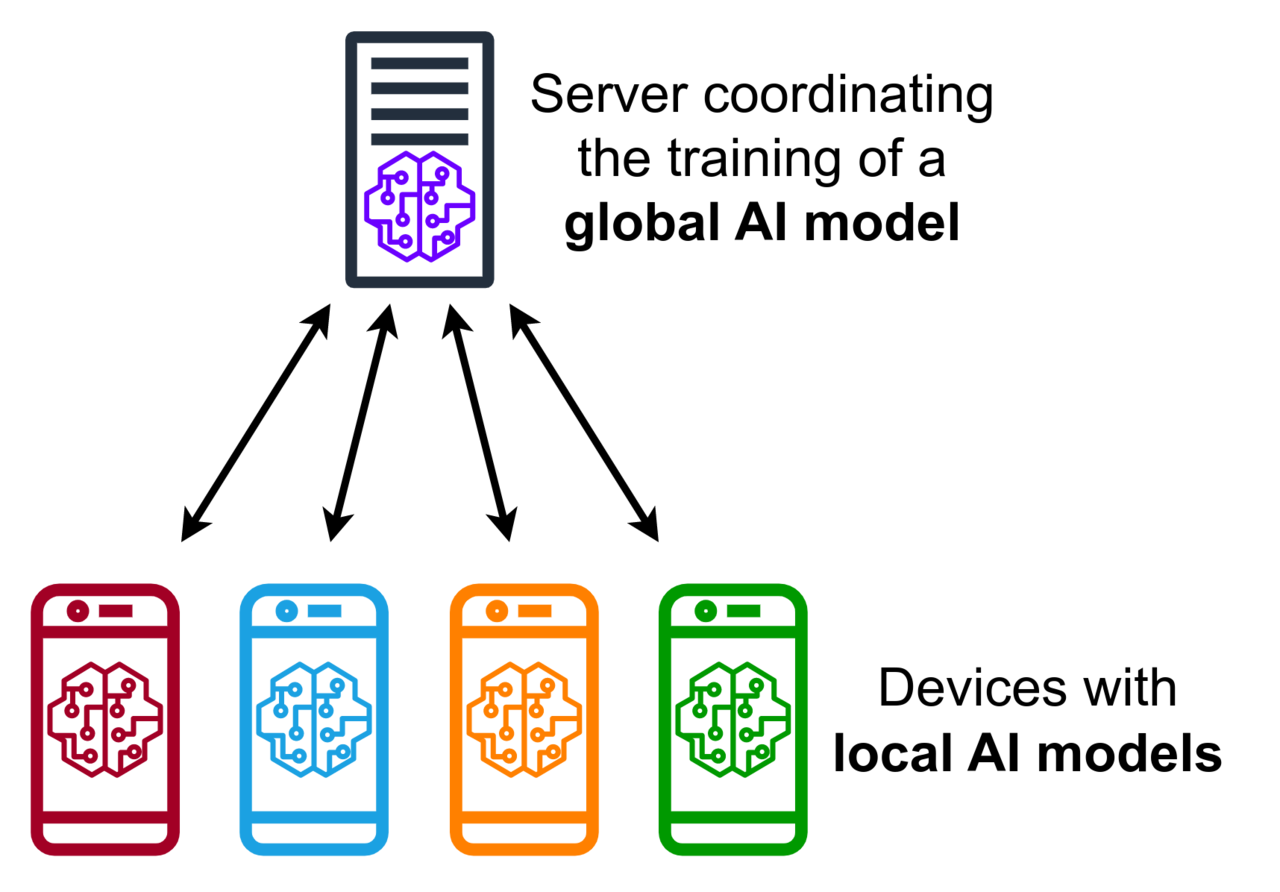
Federated learning is a machine learning technique that enables multiple entities to collaboratively train a model while keeping their data decentralized, rather than centrally stored. This approach has gained significant attention in recent years due to its potential to Federated Learning preserve data privacy and security. As explained by Andrew Ng, a pioneer in the field of AI, federated learning is particularly useful in scenarios where data is sensitive or regulated, such as in the healthcare or financial industries. The concept of Decentralized Data is central to federated learning, allowing multiple parties to contribute to model training without compromising their data. For instance, a study published in Nature highlights the potential of federated learning in Medical Imaging applications.
📊 Data Heterogeneity in Federated Learning
A defining characteristic of federated learning is Data Heterogeneity. Because client data is decentralized, data samples held by each client may not be independently and identically distributed. This heterogeneity can lead to significant challenges in model training, as the data distribution may vary significantly across clients. Researchers have proposed various techniques to address this issue, including Data Augmentation and Transfer Learning. As noted by Ian Goodfellow, a leading researcher in the field, data heterogeneity is a key challenge in federated learning, and addressing it is crucial for the success of Federated Learning applications. The use of Distributed Optimization algorithms can also help mitigate the effects of data heterogeneity.
🔒 Security and Privacy in Federated Learning
Security and privacy are critical concerns in federated learning, as the data is decentralized and may be sensitive. To address these concerns, researchers have developed various techniques, including Differential Privacy and Homomorphic Encryption. These techniques enable secure and private model training, even in the presence of malicious clients. As explained by Cynthia Dwork, a pioneer in the field of differential privacy, these techniques are essential for ensuring the Security and Privacy of federated learning applications. The use of Secure Multi-Party Computation protocols can also help protect the data and models in federated learning scenarios.
🤝 Collaborative Model Training
Collaborative model training is a key aspect of federated learning, where multiple clients work together to train a shared model. This approach has several advantages, including improved model accuracy and reduced training time. However, it also poses significant challenges, such as Communication Efficiency and Model Aggregation. Researchers have proposed various techniques to address these challenges, including Gradient Compression and Model Pruning. As noted by Yann LeCun, a leading researcher in the field, collaborative model training is a crucial aspect of Federated Learning, and addressing the associated challenges is essential for its success. The use of Federated Averaging algorithms can also help improve the efficiency of collaborative model training.
📈 Advantages of Federated Learning
Federated learning has several advantages over traditional centralized machine learning approaches. For instance, it preserves data privacy and security, which is critical in scenarios where data is sensitive or regulated. Additionally, federated learning can lead to improved model accuracy and reduced training time, as multiple clients can contribute to model training simultaneously. As explained by Fei-Fei Li, a pioneer in the field of AI, federated learning has the potential to revolutionize the way we approach Machine Learning and Artificial Intelligence. The use of Edge Computing can also help improve the efficiency of federated learning applications.
🚀 Real-World Applications of Federated Learning
Federated learning has numerous real-world applications, including Healthcare, Finance, and Autonomous Vehicles. In healthcare, federated learning can be used to develop models for Disease Diagnosis and Personalized Medicine. In finance, federated learning can be used to develop models for Risk Analysis and Portfolio Optimization. As noted by Demis Hassabis, a leading researcher in the field, federated learning has the potential to transform the way we approach Data Science and Artificial Intelligence. The use of Federated Learning in Edge AI applications can also help improve the efficiency and accuracy of model deployment.
📊 Challenges and Limitations of Federated Learning
Despite its advantages, federated learning also poses significant challenges and limitations. For instance, data heterogeneity can lead to reduced model accuracy, and communication efficiency can be a major bottleneck. Additionally, federated learning requires significant computational resources and expertise, which can be a barrier to adoption. As explained by Jürgen Schmidhuber, a pioneer in the field of AI, addressing these challenges is crucial for the success of Federated Learning applications. The use of Transfer Learning and Meta Learning can also help improve the efficiency and accuracy of federated learning models.
🔍 Future of Federated Learning
The future of federated learning is promising, with significant potential for growth and adoption. As the field continues to evolve, we can expect to see new techniques and applications emerge, such as Federated Reinforcement Learning and Federated GANs. Additionally, the increasing availability of Edge Computing and Cloud Computing resources will enable more efficient and scalable federated learning applications. As noted by Yoshua Bengio, a leading researcher in the field, the future of Federated Learning is exciting and full of possibilities. The use of Explainable AI techniques can also help improve the transparency and trustworthiness of federated learning models.
📝 Conclusion
In conclusion, federated learning is a powerful machine learning technique that enables multiple entities to collaboratively train a model while preserving data privacy and security. While it poses significant challenges and limitations, the advantages of federated learning make it an attractive approach for various applications, including healthcare, finance, and autonomous vehicles. As the field continues to evolve, we can expect to see new techniques and applications emerge, driving the growth and adoption of Federated Learning. The use of Federated Learning in Real-World Applications can also help improve the efficiency and accuracy of model deployment.
📚 Additional Resources
For additional resources on federated learning, we recommend checking out the Federated Learning Book by H. Brendel and the Federated Learning Tutorial by C. Snyder. These resources provide a comprehensive introduction to the field of federated learning, including its principles, techniques, and applications. As noted by Michael I. Jordan, a leading researcher in the field, these resources are essential for anyone looking to learn more about Federated Learning and its potential applications.
Key Facts
- Year
- 2016
- Origin
- Category
- Artificial Intelligence
- Type
- Concept
Frequently Asked Questions
What is federated learning?
Federated learning is a machine learning technique that enables multiple entities to collaboratively train a model while keeping their data decentralized, rather than centrally stored. This approach has gained significant attention in recent years due to its potential to preserve data privacy and security. As explained by Andrew Ng, a pioneer in the field of AI, federated learning is particularly useful in scenarios where data is sensitive or regulated, such as in the healthcare or financial industries.
What are the advantages of federated learning?
Federated learning has several advantages over traditional centralized machine learning approaches. For instance, it preserves data privacy and security, which is critical in scenarios where data is sensitive or regulated. Additionally, federated learning can lead to improved model accuracy and reduced training time, as multiple clients can contribute to model training simultaneously. As explained by Fei-Fei Li, a pioneer in the field of AI, federated learning has the potential to revolutionize the way we approach Machine Learning and Artificial Intelligence.
What are the challenges and limitations of federated learning?
Federated learning poses significant challenges and limitations, including data heterogeneity, communication efficiency, and computational resources. Data heterogeneity can lead to reduced model accuracy, and communication efficiency can be a major bottleneck. Additionally, federated learning requires significant computational resources and expertise, which can be a barrier to adoption. As explained by Jürgen Schmidhuber, a pioneer in the field of AI, addressing these challenges is crucial for the success of Federated Learning applications.
What are the real-world applications of federated learning?
Federated learning has numerous real-world applications, including Healthcare, Finance, and Autonomous Vehicles. In healthcare, federated learning can be used to develop models for Disease Diagnosis and Personalized Medicine. In finance, federated learning can be used to develop models for Risk Analysis and Portfolio Optimization. As noted by Demis Hassabis, a leading researcher in the field, federated learning has the potential to transform the way we approach Data Science and Artificial Intelligence.
What is the future of federated learning?
The future of federated learning is promising, with significant potential for growth and adoption. As the field continues to evolve, we can expect to see new techniques and applications emerge, such as Federated Reinforcement Learning and Federated GANs. Additionally, the increasing availability of Edge Computing and Cloud Computing resources will enable more efficient and scalable federated learning applications. As noted by Yoshua Bengio, a leading researcher in the field, the future of Federated Learning is exciting and full of possibilities.
How does federated learning differ from traditional machine learning?
Federated learning differs from traditional machine learning in that it enables multiple entities to collaboratively train a model while keeping their data decentralized, rather than centrally stored. This approach has several advantages, including improved data privacy and security, as well as the ability to leverage diverse data sources. As explained by Ian Goodfellow, a leading researcher in the field, federated learning is particularly useful in scenarios where data is sensitive or regulated, such as in the healthcare or financial industries.
What are the key challenges in implementing federated learning?
The key challenges in implementing federated learning include data heterogeneity, communication efficiency, and computational resources. Data heterogeneity can lead to reduced model accuracy, and communication efficiency can be a major bottleneck. Additionally, federated learning requires significant computational resources and expertise, which can be a barrier to adoption. As explained by Jürgen Schmidhuber, a pioneer in the field of AI, addressing these challenges is crucial for the success of Federated Learning applications.