
Contents
- 🏥 Introduction to Welfare Economics in Medical Care
- 💸 The Uncertain Cost of Care: A Historical Perspective
- 📊 Measuring the Cost of Care: Methods and Challenges
- 👥 The Role of Insurance in Welfare Economics of Medical Care
- 🏫 The Impact of Healthcare Systems on Welfare Economics
- 📈 The Relationship Between Healthcare Spending and Economic Growth
- 🚨 The Challenges of Uncertainty in Medical Care
- 🔍 Navigating the Uncertain Cost of Care: Strategies for Patients and Providers
- 📊 The Future of Welfare Economics in Medical Care: Emerging Trends and Technologies
- 🤝 International Perspectives on Welfare Economics in Medical Care
- 📝 Conclusion: The Ongoing Quest for Affordable and Effective Medical Care
- Frequently Asked Questions
- Related Topics
Overview
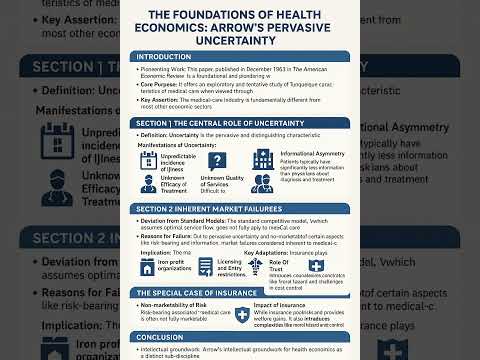
The intersection of uncertainty and welfare economics in medical care is a complex and contentious issue, with debates surrounding the role of government intervention, the impact of uncertainty on healthcare access, and the distribution of resources. According to a study by Kenneth Arrow (1963), the healthcare market is inherently uncertain, leading to market failures and inefficiencies. The welfare economics of medical care is further complicated by the concept of moral hazard, which suggests that insured individuals may overconsume healthcare services, driving up costs. A study by the National Bureau of Economic Research found that the introduction of the Affordable Care Act (ACA) in 2010 led to a significant reduction in uncertainty for low-income individuals, resulting in improved health outcomes. However, the ACA has also been criticized for its potential to increase healthcare costs and reduce the quality of care. As the healthcare landscape continues to evolve, policymakers must navigate these uncertainties to ensure equitable access to quality care. The influence of key figures such as Arrow and Joseph Newhouse has shaped the discourse around healthcare economics, with their work continuing to inform policy decisions. The controversy surrounding the ACA and its impact on healthcare access and outcomes highlights the need for ongoing research and debate in this area.
🏥 Introduction to Welfare Economics in Medical Care
The field of welfare economics in medical care is a complex and multifaceted one, involving the study of how healthcare systems allocate resources and provide services to patients. As discussed in Health Economics, the goal of welfare economics is to maximize social welfare, which is often measured by the overall health and well-being of a population. In the context of medical care, this means balancing the need for high-quality, effective care with the need to control costs and ensure that care is accessible to all who need it. For more information on the principles of welfare economics, see Welfare Economics. The American Medical Association and other healthcare organizations have long grappled with these challenges, seeking to improve the efficiency and effectiveness of healthcare systems while also protecting the interests of patients and providers.
💸 The Uncertain Cost of Care: A Historical Perspective
The uncertain cost of care is a longstanding issue in medical care, with roots dating back to the early days of healthcare systems. As described in History of Medicine, the development of modern healthcare systems has been shaped by a complex interplay of factors, including advances in medical technology, changes in patient demographics, and shifts in the economic and social landscape. The Centers for Medicare and Medicaid Services has played a key role in shaping the US healthcare system, and its policies have had a significant impact on the cost of care. For more information on the history of healthcare systems, see Healthcare Systems. The World Health Organization has also been involved in efforts to improve global healthcare systems and address the uncertain cost of care.
📊 Measuring the Cost of Care: Methods and Challenges
Measuring the cost of care is a critical challenge in welfare economics, as it requires accurate and reliable data on the costs of various healthcare services and interventions. As discussed in Healthcare Financing, there are several different methods for measuring the cost of care, each with its own strengths and limitations. The Agency for Healthcare Research and Quality has developed a range of tools and resources to help healthcare providers and policymakers measure and manage the cost of care. For more information on the methods and challenges of measuring the cost of care, see Cost-Effectiveness Analysis. The National Institutes of Health has also been involved in research on the cost of care and its impact on healthcare systems.
👥 The Role of Insurance in Welfare Economics of Medical Care
Insurance plays a critical role in welfare economics of medical care, as it helps to spread the risk of illness and injury across a population and ensure that patients have access to necessary care. As described in Health Insurance, there are several different types of insurance, including private insurance, public insurance, and social insurance. The Patient Protection and Affordable Care Act has had a significant impact on the US healthcare system, expanding access to insurance for millions of Americans. For more information on the role of insurance in welfare economics, see Insurance Markets. The Commonwealth Fund has also been involved in research on the impact of insurance on healthcare systems and the cost of care.
🏫 The Impact of Healthcare Systems on Welfare Economics
The impact of healthcare systems on welfare economics is a complex and multifaceted issue, involving the interplay of factors such as healthcare spending, healthcare outcomes, and patient satisfaction. As discussed in Healthcare Systems, there are several different types of healthcare systems, each with its own strengths and weaknesses. The World Health Organization has developed a range of frameworks and tools to help healthcare systems improve their performance and achieve better outcomes. For more information on the impact of healthcare systems on welfare economics, see Healthcare Policy. The National Academy of Medicine has also been involved in research on the impact of healthcare systems on welfare economics and the cost of care.
📈 The Relationship Between Healthcare Spending and Economic Growth
The relationship between healthcare spending and economic growth is a critical issue in welfare economics, as it involves the trade-offs between investing in healthcare and investing in other sectors of the economy. As described in Healthcare Spending, there are several different factors that influence the relationship between healthcare spending and economic growth, including the level of healthcare spending, the type of healthcare services being provided, and the overall state of the economy. The Congressional Budget Office has developed a range of models and forecasts to help policymakers understand the impact of healthcare spending on the economy. For more information on the relationship between healthcare spending and economic growth, see Economic Growth. The Brookings Institution has also been involved in research on the impact of healthcare spending on the economy.
🚨 The Challenges of Uncertainty in Medical Care
The challenges of uncertainty in medical care are a major concern in welfare economics, as they involve the risks and uncertainties associated with healthcare services and interventions. As discussed in Uncertainty in Medical Care, there are several different types of uncertainty, including uncertainty about the effectiveness of treatments, uncertainty about the costs of care, and uncertainty about the risks and benefits of different healthcare services. The National Institutes of Health has developed a range of initiatives and programs to help healthcare providers and policymakers address the challenges of uncertainty in medical care. For more information on the challenges of uncertainty, see Risk Management. The American College of Physicians has also been involved in efforts to improve the management of uncertainty in medical care.
📊 The Future of Welfare Economics in Medical Care: Emerging Trends and Technologies
The future of welfare economics in medical care is likely to be shaped by a range of emerging trends and technologies, including the use of artificial intelligence, the development of new payment models, and the implementation of policies to improve the efficiency and effectiveness of healthcare systems. As discussed in Future of Healthcare, there are several different factors that will influence the future of welfare economics in medical care, including the level of healthcare spending, the type of healthcare services being provided, and the overall state of the economy. The World Health Organization has developed a range of frameworks and tools to help healthcare systems prepare for the future and address the challenges of uncertainty in medical care. For more information on the future of welfare economics, see Healthcare Innovation. The National Academy of Medicine has also been involved in research on the future of healthcare and the impact of emerging trends and technologies on welfare economics.
🤝 International Perspectives on Welfare Economics in Medical Care
International perspectives on welfare economics in medical care are critical for understanding the complex and multifaceted issues involved in the allocation of healthcare resources and the provision of healthcare services. As described in International Health, there are several different approaches to welfare economics in medical care, each with its own strengths and weaknesses. The World Health Organization has developed a range of frameworks and tools to help healthcare systems improve their performance and achieve better outcomes. For more information on international perspectives, see Global Health. The Commonwealth Fund has also been involved in research on the impact of international perspectives on welfare economics in medical care.
📝 Conclusion: The Ongoing Quest for Affordable and Effective Medical Care
In conclusion, the uncertain cost of care is a critical issue in welfare economics, involving the complex and multifaceted challenges of allocating healthcare resources and providing healthcare services to patients. As discussed in Health Economics, the goal of welfare economics is to maximize social welfare, which is often measured by the overall health and well-being of a population. The American Medical Association and other healthcare organizations have long grappled with these challenges, seeking to improve the efficiency and effectiveness of healthcare systems while also protecting the interests of patients and providers. For more information on the ongoing quest for affordable and effective medical care, see Healthcare Reform. The National Academy of Medicine has also been involved in research on the impact of healthcare reform on welfare economics and the cost of care.
Key Facts
- Year
- 1963
- Origin
- Kenneth Arrow's seminal paper on uncertainty in the healthcare market
- Category
- Health Economics
- Type
- Concept
Frequently Asked Questions
What is the goal of welfare economics in medical care?
The goal of welfare economics in medical care is to maximize social welfare, which is often measured by the overall health and well-being of a population. This involves balancing the need for high-quality, effective care with the need to control costs and ensure that care is accessible to all who need it. As discussed in Health Economics, welfare economics is a complex and multifaceted field that involves the study of how healthcare systems allocate resources and provide services to patients. For more information on the principles of welfare economics, see Welfare Economics.
What are the challenges of uncertainty in medical care?
The challenges of uncertainty in medical care are a major concern in welfare economics, as they involve the risks and uncertainties associated with healthcare services and interventions. As discussed in Uncertainty in Medical Care, there are several different types of uncertainty, including uncertainty about the effectiveness of treatments, uncertainty about the costs of care, and uncertainty about the risks and benefits of different healthcare services. The National Institutes of Health has developed a range of initiatives and programs to help healthcare providers and policymakers address the challenges of uncertainty in medical care. For more information on the challenges of uncertainty, see Risk Management.
How can healthcare systems improve their performance and achieve better outcomes?
Healthcare systems can improve their performance and achieve better outcomes by implementing policies to improve the efficiency and effectiveness of care, investing in new technologies and innovations, and developing new payment models that incentivize high-quality care. As described in Healthcare Systems, there are several different approaches to improving healthcare systems, each with its own strengths and weaknesses. The World Health Organization has developed a range of frameworks and tools to help healthcare systems improve their performance and achieve better outcomes. For more information on improving healthcare systems, see Healthcare Innovation.
What is the impact of healthcare spending on economic growth?
The impact of healthcare spending on economic growth is a complex and multifaceted issue, involving the trade-offs between investing in healthcare and investing in other sectors of the economy. As discussed in Healthcare Spending, there are several different factors that influence the relationship between healthcare spending and economic growth, including the level of healthcare spending, the type of healthcare services being provided, and the overall state of the economy. The Congressional Budget Office has developed a range of models and forecasts to help policymakers understand the impact of healthcare spending on the economy. For more information on the impact of healthcare spending, see Economic Growth.
What are the international perspectives on welfare economics in medical care?
International perspectives on welfare economics in medical care are critical for understanding the complex and multifaceted issues involved in the allocation of healthcare resources and the provision of healthcare services. As described in International Health, there are several different approaches to welfare economics in medical care, each with its own strengths and weaknesses. The World Health Organization has developed a range of frameworks and tools to help healthcare systems improve their performance and achieve better outcomes. For more information on international perspectives, see Global Health.
How can patients and providers navigate the uncertain cost of care?
Patients and providers can navigate the uncertain cost of care by using cost-effectiveness analysis, developing new payment models, and implementing policies to improve the efficiency and effectiveness of healthcare systems. As discussed in Cost-Effectiveness Analysis, there are several different methods for analyzing the cost-effectiveness of healthcare services, each with its own strengths and limitations. The Agency for Healthcare Research and Quality has developed a range of tools and resources to help healthcare providers and policymakers navigate the uncertain cost of care. For more information on navigating the uncertain cost of care, see Payment Models.
What is the future of welfare economics in medical care?
The future of welfare economics in medical care is likely to be shaped by a range of emerging trends and technologies, including the use of artificial intelligence, the development of new payment models, and the implementation of policies to improve the efficiency and effectiveness of healthcare systems. As discussed in Future of Healthcare, there are several different factors that will influence the future of welfare economics in medical care, including the level of healthcare spending, the type of healthcare services being provided, and the overall state of the economy. The World Health Organization has developed a range of frameworks and tools to help healthcare systems prepare for the future and address the challenges of uncertainty in medical care. For more information on the future of welfare economics, see Healthcare Innovation.