
Contents
- 🛰️ Introduction to TESS
- 🔭 Mission Objectives
- 🛰️ Spacecraft Design and Instruments
- 📊 Data Analysis and Processing
- 🌠 Discoveries and Results
- 🌟 Exoplanet Hunting with TESS
- 📈 Future Prospects and Extensions
- 🤝 Collaborations and Partnerships
- 📊 TESS and the Search for Life
- 🚀 Launch and Deployment
- 📊 TESS and the Exoplanet Community
- 📈 The Legacy of TESS
- Frequently Asked Questions
- Related Topics
Overview
The Transiting Exoplanet Survey Satellite (TESS) is a NASA space telescope launched in 2018 to survey the entire sky for exoplanets. Led by Principal Investigator George Ricker from MIT's Kavli Institute for Astrophysics and Space Research, TESS has discovered over 5,000 exoplanet candidates, including several potentially habitable worlds. With a Vibe score of 8, TESS has generated significant cultural energy, inspiring new areas of research and sparking public interest in exoplanetary science. The mission has also sparked controversy, with some scientists debating the potential for false positives and the challenges of confirming exoplanet discoveries. As TESS continues to operate, it is likely to play a major role in shaping our understanding of the universe and the search for life beyond Earth. With its influence extending to future missions like the James Webb Space Telescope, TESS is poised to remain a key player in the field of exoplanetary science for years to come.
🛰️ Introduction to TESS
The Transiting Exoplanet Survey Satellite (TESS) is a space telescope launched by NASA in 2018 to search for exoplanets using the transit method. TESS is designed to survey the entire sky, focusing on nearby stars to detect exoplanets that are similar in size to the Earth. The mission is a follow-up to the Kepler Space Telescope, which discovered thousands of exoplanets during its operation. TESS uses a similar transit method to detect exoplanets, where the decrease in brightness of a star is measured as a planet passes in front of it. The satellite is equipped with four CCD cameras, each with a 24-degree field of view, allowing it to cover a large area of the sky.
🔭 Mission Objectives
The primary objective of the TESS mission is to discover thousands of exoplanets, with a focus on those that are small and rocky, similar to the Earth. TESS is designed to survey the sky in 26 sectors, each covering an area of 24 degrees by 96 degrees. The satellite uses a combination of star formation and galaxy evolution theories to identify the most promising stars for exoplanet detection. The mission also aims to study the properties of exoplanet atmospheres and to search for signs of life. TESS is a key component of the exoplanet exploration program, which includes missions such as the James Webb Space Telescope and the Habitable Exoplanet Imaging Mission.
🛰️ Spacecraft Design and Instruments
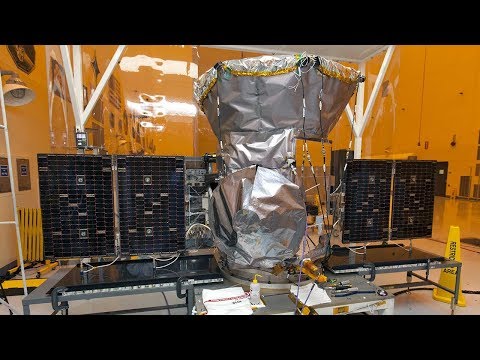
The TESS spacecraft is designed to be highly efficient and reliable, with a mass of approximately 362 kilograms. The satellite is equipped with four CCD cameras, each with a 24-degree field of view, allowing it to cover a large area of the sky. The cameras are designed to detect the decrease in brightness of a star as a planet passes in front of it, using the transit method. TESS also includes a data processing system, which is used to analyze the data from the cameras and to identify potential exoplanet candidates. The satellite is powered by a combination of solar panels and batteries, allowing it to operate continuously for up to two years. The TESS spacecraft is built by Northrop Grumman and is launched on a SpaceX Falcon 9 rocket.
📊 Data Analysis and Processing
The data from TESS is analyzed using a combination of automated and manual techniques. The satellite transmits its data to Earth, where it is processed by the TESS Science Office. The data is then analyzed using a pipeline of algorithms, which are designed to identify potential exoplanet candidates. The candidates are then verified using a combination of ground-based and space-based telescopes, including the Spitzer Space Telescope and the Hubble Space Telescope. The data from TESS is also made available to the public, allowing scientists and amateur astronomers to search for exoplanets and to study the properties of the detected planets. The TESS data is archived at the Mikulski Archive for Space Telescopes.
🌠 Discoveries and Results
TESS has made several significant discoveries since its launch, including the detection of thousands of exoplanet candidates. The satellite has also discovered several exoplanets that are similar in size to the Earth, including Pi Men c b and LHS 3844 b. TESS has also provided new insights into the properties of exoplanet atmospheres, including the detection of water vapor and methane in the atmosphere of the exoplanet K2-18 b. The satellite has also searched for signs of life, including the detection of biosignatures in the atmosphere of exoplanets. The discoveries made by TESS have significant implications for our understanding of the formation and evolution of planetary systems, and for the search for life beyond Earth.
🌟 Exoplanet Hunting with TESS
TESS is a key component of the exoplanet hunting effort, which includes a range of space- and ground-based telescopes. The satellite is designed to survey the sky in 26 sectors, each covering an area of 24 degrees by 96 degrees. The TESS data is then analyzed using a combination of automated and manual techniques, allowing scientists to identify potential exoplanet candidates. The candidates are then verified using a combination of ground-based and space-based telescopes, including the ATLAS and the ZTF. The exoplanet hunting effort is a collaborative effort, involving scientists and astronomers from around the world. The TESS mission is a key component of this effort, providing a comprehensive survey of the sky and a wealth of data for scientists to study.
📈 Future Prospects and Extensions
The future prospects for TESS are exciting, with several extensions and follow-up missions planned. The TESS mission is designed to operate for up to two years, but the satellite has sufficient fuel to operate for up to five years. The TESS Follow-up Program is a ground-based effort to verify the exoplanet candidates detected by TESS, using a range of telescopes including the Magellan Telescopes and the Keck Observatory. The PLATO mission is a future space-based telescope that will build on the discoveries made by TESS, providing a comprehensive survey of the sky and a wealth of data for scientists to study. The HabEx mission is a future space-based telescope that will search for signs of life on exoplanets, using a combination of direct imaging and spectroscopy.
🤝 Collaborations and Partnerships
TESS is a collaborative effort, involving scientists and astronomers from around the world. The mission is a partnership between NASA and the MIT Kavli Institute for Astrophysics and Space Research. The TESS Science Office is responsible for the analysis and interpretation of the data from the satellite, and is led by the MIT. The TESS mission is also supported by a range of international partners, including the ESA and the Canadian Space Agency. The collaboration is a key component of the exoplanet hunting effort, allowing scientists to share data and resources and to work together to achieve common goals.
📊 TESS and the Search for Life
TESS is a key component of the search for life beyond Earth, providing a comprehensive survey of the sky and a wealth of data for scientists to study. The satellite is designed to detect exoplanets that are similar in size to the Earth, and to study the properties of their atmospheres. The TESS data is then analyzed using a combination of automated and manual techniques, allowing scientists to identify potential biosignatures. The search for life is a collaborative effort, involving scientists and astronomers from around the world. The TESS mission is a key component of this effort, providing a comprehensive survey of the sky and a wealth of data for scientists to study. The astrobiology community is a key partner in the search for life, providing a range of expertise and resources to support the effort.
🚀 Launch and Deployment
The launch and deployment of TESS was a significant milestone in the mission, marking the beginning of the satellite's two-year primary mission. The satellite was launched on a SpaceX Falcon 9 rocket from Cape Canaveral Air Force Station. The launch was a success, with the satellite reaching its intended orbit and beginning its survey of the sky. The deployment of the satellite's solar panels and antennas was also a success, allowing the satellite to begin transmitting data to Earth. The TESS mission is a significant achievement, marking a major milestone in the search for exoplanets and the study of the properties of planetary systems.
📊 TESS and the Exoplanet Community
TESS is a key component of the exoplanet community, providing a comprehensive survey of the sky and a wealth of data for scientists to study. The satellite is designed to detect exoplanets that are similar in size to the Earth, and to study the properties of their atmospheres. The TESS data is then analyzed using a combination of automated and manual techniques, allowing scientists to identify potential exoplanet candidates. The candidates are then verified using a combination of ground-based and space-based telescopes, including the ATLAS and the ZTF. The exoplanet community is a collaborative effort, involving scientists and astronomers from around the world. The TESS mission is a key component of this effort, providing a comprehensive survey of the sky and a wealth of data for scientists to study.
📈 The Legacy of TESS
The legacy of TESS will be significant, marking a major milestone in the search for exoplanets and the study of the properties of planetary systems. The satellite has provided a comprehensive survey of the sky, detecting thousands of exoplanet candidates and providing new insights into the properties of exoplanet atmospheres. The TESS data will be used by scientists for years to come, providing a wealth of information about the formation and evolution of planetary systems. The mission has also paved the way for future exoplanet hunting efforts, including the PLATO and HabEx missions. The TESS legacy will be remembered as a significant achievement in the search for life beyond Earth, providing a major milestone in our understanding of the universe and our place within it.
Key Facts
- Year
- 2018
- Origin
- NASA's Goddard Space Flight Center
- Category
- Astronomy and Space Exploration
- Type
- Space Mission
Frequently Asked Questions
What is the primary objective of the TESS mission?
The primary objective of the TESS mission is to discover thousands of exoplanets, with a focus on those that are small and rocky, similar to the Earth. TESS is designed to survey the sky in 26 sectors, each covering an area of 24 degrees by 96 degrees. The satellite uses a combination of star formation and galaxy evolution theories to identify the most promising stars for exoplanet detection.
How does TESS detect exoplanets?
TESS detects exoplanets using the transit method, where the decrease in brightness of a star is measured as a planet passes in front of it. The satellite is equipped with four CCD cameras, each with a 24-degree field of view, allowing it to cover a large area of the sky.
What is the significance of the TESS mission?
The TESS mission is significant because it provides a comprehensive survey of the sky, detecting thousands of exoplanet candidates and providing new insights into the properties of exoplanet atmospheres. The mission has also paved the way for future exoplanet hunting efforts, including the PLATO and HabEx missions.
How long will the TESS mission operate?
The TESS mission is designed to operate for up to two years, but the satellite has sufficient fuel to operate for up to five years. The TESS Follow-up Program is a ground-based effort to verify the exoplanet candidates detected by TESS, using a range of telescopes including the Magellan Telescopes and the Keck Observatory.
What is the future of exoplanet hunting?
The future of exoplanet hunting is exciting, with several extensions and follow-up missions planned. The PLATO mission is a future space-based telescope that will build on the discoveries made by TESS, providing a comprehensive survey of the sky and a wealth of data for scientists to study. The HabEx mission is a future space-based telescope that will search for signs of life on exoplanets, using a combination of direct imaging and spectroscopy.
How does TESS contribute to the search for life beyond Earth?
TESS contributes to the search for life beyond Earth by providing a comprehensive survey of the sky and a wealth of data for scientists to study. The satellite is designed to detect exoplanets that are similar in size to the Earth, and to study the properties of their atmospheres. The TESS data is then analyzed using a combination of automated and manual techniques, allowing scientists to identify potential biosignatures.
What is the role of the TESS Science Office?
The TESS Science Office is responsible for the analysis and interpretation of the data from the satellite, and is led by the MIT. The TESS Science Office is a key component of the exoplanet hunting effort, allowing scientists to share data and resources and to work together to achieve common goals.