
Contents
- 🌐 Introduction to Small World Networks
- 📈 Characteristics of Small World Networks
- 🤝 Clustering Coefficient and Its Implications
- 📊 Low Distances in Small World Networks
- 📝 Mathematical Definition of Small World Networks
- 🌈 Examples of Small World Networks
- 🤔 Applications of Small World Networks
- 📊 Modeling Small World Networks
- 📈 Real-World Implications of Small World Networks
- 🔍 Future Research Directions in Small World Networks
- 📊 Comparison with Other Network Models
- 🌟 Conclusion and Open Questions
- Frequently Asked Questions
- Related Topics
Overview
Small world networks, first identified by psychologist Stanley Milgram in 1967, refer to the phenomenon where any two individuals in a large network are connected through a short chain of acquaintances, typically six degrees of separation. This concept has been extensively studied in various fields, including sociology, physics, and computer science. Researchers such as Duncan Watts and Steven Strogatz have made significant contributions to the understanding of small world networks, including the development of models that explain their emergence and behavior. With a vibe score of 8, small world networks have far-reaching implications for our understanding of social dynamics, information diffusion, and network resilience. For instance, the average distance between two random pages on the internet is approximately 19 clicks, illustrating the small world property of the web. As we continue to navigate the complexities of our interconnected world, the study of small world networks remains a vital area of research, with potential applications in fields such as epidemiology, marketing, and disaster response.
🌐 Introduction to Small World Networks
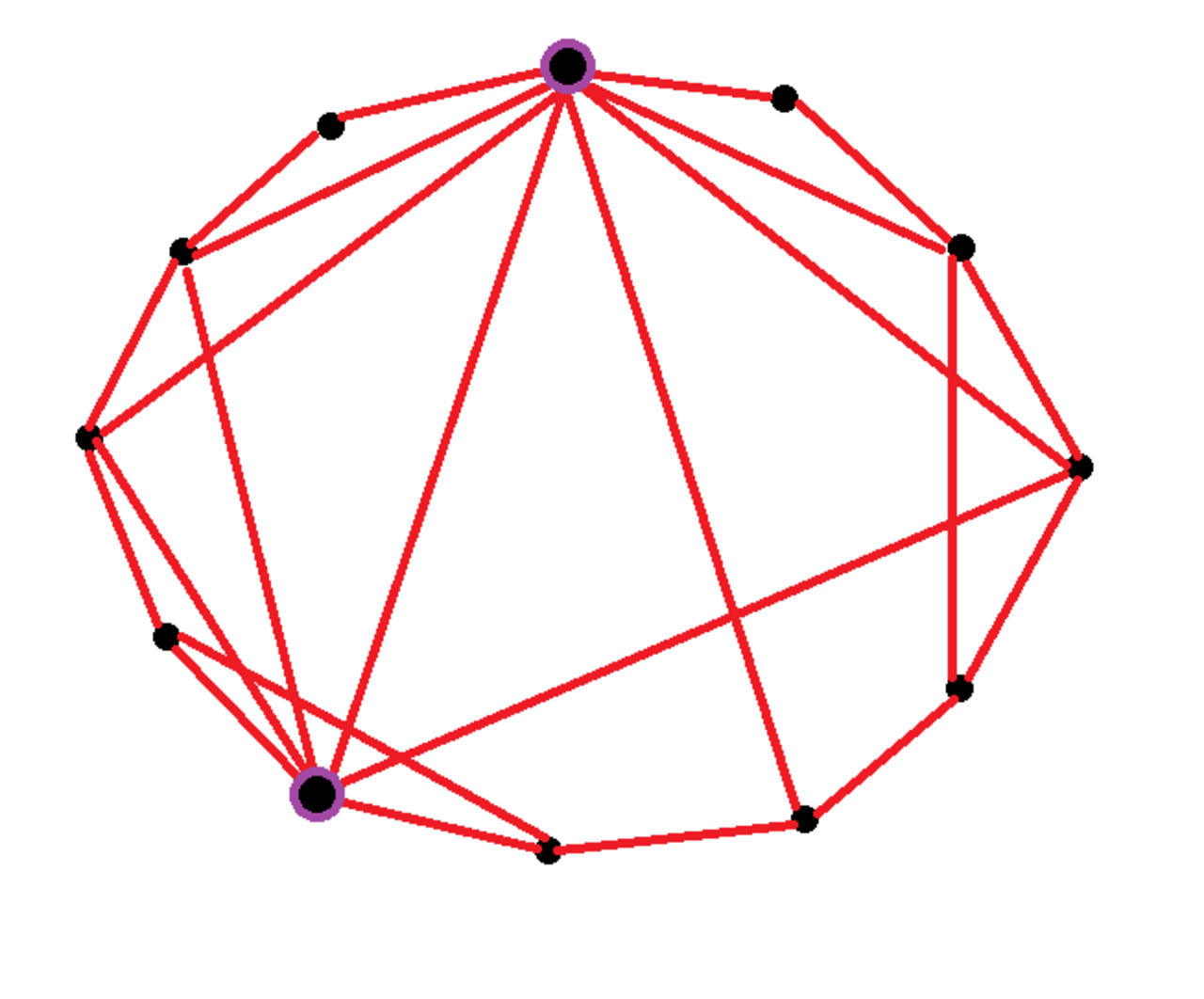
Small world networks are a type of complex system that exhibits a unique combination of properties, including a high clustering coefficient and low distances. This means that in a social network, for example, two friends of one person are likely to be friends themselves, and there is a short chain of social connections between any two people. The study of small world networks has been influenced by the work of Stanley Milgram and his famous six degrees of separation experiment. Researchers have also used network science to study the structure and behavior of small world networks. The concept of small world networks has been applied to various fields, including epidemiology and information spread.
📈 Characteristics of Small World Networks
One of the key characteristics of small world networks is their high clustering coefficient, which measures the likelihood that two friends of one person are friends themselves. This property is often referred to as triadic closure. In addition to high clustering, small world networks also exhibit low distances, meaning that there is a short chain of connections between any two nodes. This property is often measured using the average path length metric. The combination of high clustering and low distances makes small world networks highly efficient for information diffusion and disease transmission. Researchers have used graph theory to study the structure of small world networks and have developed models such as the Watts-Strogatz model to generate synthetic small world networks.
🤝 Clustering Coefficient and Its Implications
The clustering coefficient is a measure of the extent to which nodes in a network tend to cluster together. In a social network, a high clustering coefficient implies that two friends of one person are likely to be friends themselves. This property is often observed in real-world social networks, where people tend to form close-knit groups. The clustering coefficient is an important metric in the study of small world networks, as it helps to distinguish them from other types of networks, such as random graphs. Researchers have used social network analysis to study the clustering coefficient in various social networks, including Facebook and Twitter. The concept of clustering coefficient has also been applied to the study of community detection in networks.
📊 Low Distances in Small World Networks
The low distances in small world networks are a result of the presence of shortcuts or long-range connections between nodes. These shortcuts allow for the rapid transmission of information or disease between nodes that are not directly connected. The low distances in small world networks are often measured using the diameter metric, which is the maximum distance between any two nodes in the network. Researchers have used network optimization techniques to study the effect of shortcuts on the distances in small world networks. The concept of low distances has also been applied to the study of traffic flow and supply chain management.
📝 Mathematical Definition of Small World Networks
Mathematically, a small world network is defined as a network where the typical distance L between two randomly chosen nodes grows proportionally to the logarithm of the number of nodes N in the network. This can be expressed as L ∝ log(N). This definition helps to distinguish small world networks from other types of networks, such as scale-free networks and random graphs. Researchers have used mathematical modeling to study the properties of small world networks and have developed models such as the Barabasi-Albert model to generate synthetic small world networks. The concept of small world networks has been applied to various fields, including biology and physics.
🌈 Examples of Small World Networks
Small world networks can be observed in various real-world systems, including social networks, transportation networks, and biological networks. For example, the Internet can be viewed as a small world network, where nodes represent computers and edges represent connections between them. The study of small world networks has been influenced by the work of Duncan Watts and Steven Strogatz. Researchers have used network science to study the structure and behavior of small world networks in various domains. The concept of small world networks has been applied to the study of information spread and disease transmission.
🤔 Applications of Small World Networks
The applications of small world networks are diverse and widespread. For example, small world networks can be used to model the spread of diseases and information in social networks. They can also be used to optimize the structure of communication networks and transportation networks. Researchers have used network optimization techniques to study the effect of small world properties on the behavior of complex systems. The concept of small world networks has been applied to various fields, including marketing and public health.
📊 Modeling Small World Networks
Modeling small world networks is an active area of research, with various models being proposed to capture the properties of these networks. One of the most well-known models is the Watts-Strogatz model, which generates synthetic small world networks by rewiring edges in a regular lattice. Other models, such as the Barabasi-Albert model, have also been proposed to capture the properties of small world networks. Researchers have used mathematical modeling to study the properties of small world networks and have developed models to generate synthetic small world networks. The concept of small world networks has been applied to various fields, including biology and physics.
📈 Real-World Implications of Small World Networks
The real-world implications of small world networks are significant, as they can be used to model and optimize the behavior of complex systems. For example, small world networks can be used to model the spread of diseases and information in social networks. They can also be used to optimize the structure of communication networks and transportation networks. Researchers have used network science to study the structure and behavior of small world networks in various domains. The concept of small world networks has been applied to various fields, including marketing and public health.
🔍 Future Research Directions in Small World Networks
Future research directions in small world networks include the study of the dynamics of small world networks, the development of new models to capture the properties of these networks, and the application of small world networks to real-world problems. Researchers have used mathematical modeling to study the properties of small world networks and have developed models to generate synthetic small world networks. The concept of small world networks has been applied to various fields, including biology and physics.
📊 Comparison with Other Network Models
Small world networks can be compared to other network models, such as scale-free networks and random graphs. While these networks exhibit different properties, they can all be used to model complex systems. Researchers have used network science to study the structure and behavior of various network models. The concept of small world networks has been applied to various fields, including marketing and public health.
🌟 Conclusion and Open Questions
In conclusion, small world networks are a type of complex system that exhibits a unique combination of properties, including a high clustering coefficient and low distances. The study of small world networks has been influenced by the work of Stanley Milgram and Duncan Watts. Researchers have used network science to study the structure and behavior of small world networks in various domains. The concept of small world networks has been applied to various fields, including biology and physics.
Key Facts
- Year
- 1967
- Origin
- Stanley Milgram's Experiment
- Category
- Complex Systems
- Type
- Concept
Frequently Asked Questions
What is a small world network?
A small world network is a type of complex system that exhibits a unique combination of properties, including a high clustering coefficient and low distances. This means that in a social network, for example, two friends of one person are likely to be friends themselves, and there is a short chain of social connections between any two people. The study of small world networks has been influenced by the work of Stanley Milgram and his famous six degrees of separation experiment.
What are the characteristics of small world networks?
Small world networks are characterized by a high clustering coefficient and low distances. This means that nodes in the network tend to cluster together, and there is a short chain of connections between any two nodes. The combination of high clustering and low distances makes small world networks highly efficient for information diffusion and disease transmission.
What are the applications of small world networks?
The applications of small world networks are diverse and widespread. For example, small world networks can be used to model the spread of diseases and information in social networks. They can also be used to optimize the structure of communication networks and transportation networks. Researchers have used network optimization techniques to study the effect of small world properties on the behavior of complex systems.
How are small world networks modeled?
Modeling small world networks is an active area of research, with various models being proposed to capture the properties of these networks. One of the most well-known models is the Watts-Strogatz model, which generates synthetic small world networks by rewiring edges in a regular lattice. Other models, such as the Barabasi-Albert model, have also been proposed to capture the properties of small world networks.
What are the real-world implications of small world networks?
The real-world implications of small world networks are significant, as they can be used to model and optimize the behavior of complex systems. For example, small world networks can be used to model the spread of diseases and information in social networks. They can also be used to optimize the structure of communication networks and transportation networks.
What are the future research directions in small world networks?
Future research directions in small world networks include the study of the dynamics of small world networks, the development of new models to capture the properties of these networks, and the application of small world networks to real-world problems. Researchers have used mathematical modeling to study the properties of small world networks and have developed models to generate synthetic small world networks.
How do small world networks compare to other network models?
Small world networks can be compared to other network models, such as scale-free networks and random graphs. While these networks exhibit different properties, they can all be used to model complex systems. Researchers have used network science to study the structure and behavior of various network models.