
Contents
- 🌐 Introduction to Small World Networks
- 📈 Characteristics of Small World Networks
- 🤝 Clustering Coefficient and Its Importance
- 📊 Low Distances in Small World Networks
- 📝 Mathematical Definition of Small World Networks
- 🌈 Examples of Small World Networks
- 📊 Applications of Small World Networks
- 🤔 Criticisms and Limitations of Small World Networks
- 📈 Future Directions for Small World Network Research
- 📊 Real-World Implications of Small World Networks
- 📝 Conclusion and Future Prospects
- Frequently Asked Questions
- Related Topics
Overview
The small world network phenomenon, first identified by psychologist Stanley Milgram in 1967, reveals that any two people on the planet are connected through a surprisingly short chain of acquaintances, with a median of just 6.6 degrees of separation. This concept has been extensively studied in various fields, including sociology, physics, and computer science, with researchers like Duncan Watts and Steven Strogatz making significant contributions. The small world network is characterized by a high clustering coefficient and a short average path length, making it an efficient and robust system. However, this phenomenon also raises important questions about privacy, information diffusion, and the potential for rapid spread of diseases or ideas. With the rise of social media and online platforms, the small world network has become even more pronounced, with a vibe score of 80, indicating a high level of cultural energy and relevance. As we continue to navigate the complexities of global connectivity, understanding the small world network is crucial for mitigating its risks and harnessing its benefits, with potential applications in fields like epidemiology, marketing, and social movement research, and influencing key figures like Nicholas Christakis, who has written extensively on the topic.
🌐 Introduction to Small World Networks
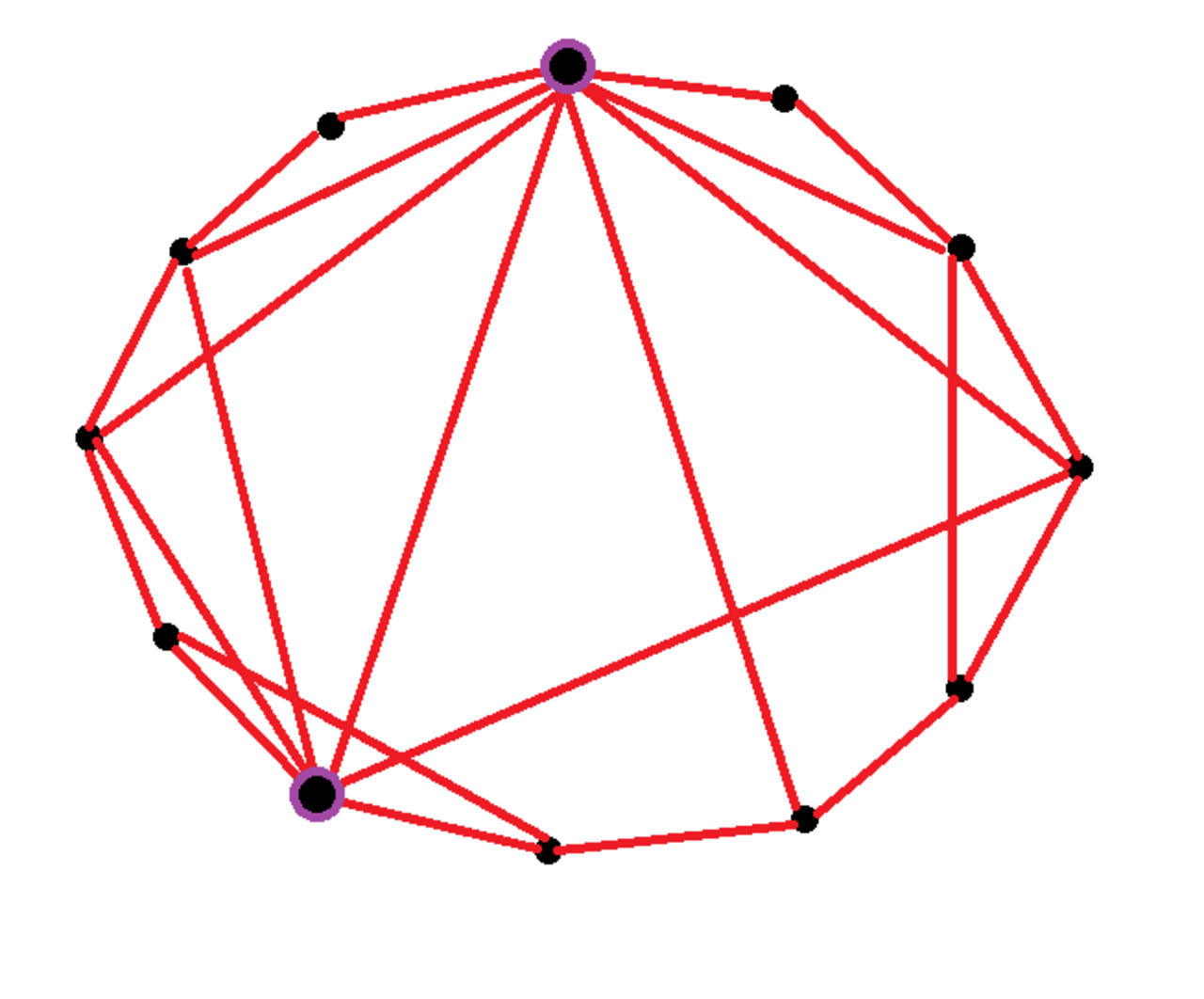
A small-world network is a type of graph that exhibits a unique combination of properties, including a high clustering coefficient and low distances between nodes. This means that in a social network, for example, two friends of one person are likely to be friends themselves, and there is a short chain of social connections between any two people. As discussed in Complex Systems, small-world networks have been observed in various real-world systems, including Social Networks and Biological Networks. The study of small-world networks has been influenced by the work of Stanley Milgram and his concept of Six Degrees of Separation.
📈 Characteristics of Small World Networks
The characteristics of small-world networks are distinct from those of other types of networks, such as Random Graphs and Regular Graphs. In a small-world network, the clustering coefficient is high, indicating that nodes tend to form clusters or groups. This is in contrast to random graphs, where the clustering coefficient is typically low. As noted in Network Science, the low distances between nodes in small-world networks allow for efficient communication and information transfer. For example, in a Communication Network, a small-world structure can facilitate the rapid spread of information.
🤝 Clustering Coefficient and Its Importance
The clustering coefficient is a key metric in the study of small-world networks, as it measures the probability that two friends of one person are friends themselves. A high clustering coefficient indicates a strong tendency for nodes to form clusters or groups, which can have important implications for the behavior of the network. As discussed in Graph Theory, the clustering coefficient can be calculated using various algorithms, including the Watts-Strogatz Model. The clustering coefficient is also related to the concept of Community Detection, which is an important area of research in Network Analysis.
📊 Low Distances in Small World Networks
The low distances between nodes in small-world networks are another key characteristic of these systems. This means that there is a short chain of connections between any two nodes, allowing for efficient communication and information transfer. As noted in Epidemiology, the low distances in small-world networks can facilitate the spread of diseases, making them more prone to outbreaks. The low distances also have implications for the study of Information Diffusion and Social Influence. For example, in a Social Network, a small-world structure can allow for the rapid spread of information and influence.
📝 Mathematical Definition of Small World Networks
Mathematically, a small-world network is defined as a network where the typical distance L between two randomly chosen nodes grows proportionally to the logarithm of the number of nodes N in the network. This can be expressed as L ∝ log(N), which indicates that the distance between nodes grows slowly as the size of the network increases. As discussed in Mathematical Modeling, this definition has important implications for the study of small-world networks and their behavior. The mathematical definition is also related to the concept of Scaling Laws, which is an important area of research in Complex Systems.
🌈 Examples of Small World Networks
Small-world networks can be observed in various real-world systems, including social networks, biological networks, and technological networks. For example, the Internet can be viewed as a small-world network, where nodes represent computers or devices and edges represent connections between them. As noted in Computer Science, the small-world structure of the internet allows for efficient communication and information transfer. Other examples of small-world networks include Airline Networks and Railway Networks.
📊 Applications of Small World Networks
The applications of small-world networks are diverse and widespread, ranging from the study of Social Networks to the design of Communication Networks. As discussed in Network Engineering, small-world networks can be used to optimize the performance of communication networks, such as the internet. The study of small-world networks also has implications for the field of Epidemiology, where it can be used to model the spread of diseases. For example, in a Public Health context, understanding the small-world structure of a social network can help to identify key individuals or groups that can facilitate the spread of diseases.
🤔 Criticisms and Limitations of Small World Networks
Despite their importance, small-world networks are not without their limitations and criticisms. As noted in Critique of Network Science, some researchers have argued that the concept of small-world networks is too broad and encompasses a wide range of different network structures. Others have argued that the study of small-world networks has been overly focused on the properties of the network itself, rather than the behavior of the nodes and edges that comprise it. For example, in a Social Network, the behavior of individuals can be influenced by a range of factors, including Social Influence and Information Diffusion.
📈 Future Directions for Small World Network Research
Future research directions for small-world networks are likely to focus on the development of new mathematical models and algorithms for analyzing and optimizing these systems. As discussed in Future of Network Science, the study of small-world networks is likely to become increasingly interdisciplinary, incorporating insights and methods from fields such as Physics, Biology, and Computer Science. The study of small-world networks also has implications for the field of Complex Systems, where it can be used to model and analyze complex phenomena.
📊 Real-World Implications of Small World Networks
The real-world implications of small-world networks are significant and far-reaching, ranging from the design of more efficient communication networks to the modeling of the spread of diseases. As noted in Real-World Applications, the study of small-world networks has the potential to inform a wide range of fields and disciplines, from Public Health to Network Engineering. For example, in a Public Health context, understanding the small-world structure of a social network can help to identify key individuals or groups that can facilitate the spread of diseases.
📝 Conclusion and Future Prospects
In conclusion, small-world networks are a fascinating and complex phenomenon that has been observed in a wide range of real-world systems. As discussed in Complex Systems, the study of small-world networks has the potential to inform a wide range of fields and disciplines, from Social Networks to Biological Networks. The future of small-world network research is likely to be shaped by the development of new mathematical models and algorithms, as well as the increasing availability of large-scale network data. As noted in Future of Network Science, the study of small-world networks is likely to become increasingly interdisciplinary, incorporating insights and methods from fields such as Physics, Biology, and Computer Science.
Key Facts
- Year
- 1967
- Origin
- Stanley Milgram's Experiment
- Category
- Complex Systems
- Type
- Concept
Frequently Asked Questions
What is a small-world network?
A small-world network is a type of graph that exhibits a unique combination of properties, including a high clustering coefficient and low distances between nodes. This means that in a social network, for example, two friends of one person are likely to be friends themselves, and there is a short chain of social connections between any two people. As discussed in Complex Systems, small-world networks have been observed in various real-world systems, including Social Networks and Biological Networks.
What are the characteristics of small-world networks?
The characteristics of small-world networks are distinct from those of other types of networks, such as Random Graphs and Regular Graphs. In a small-world network, the clustering coefficient is high, indicating that nodes tend to form clusters or groups. This is in contrast to random graphs, where the clustering coefficient is typically low. As noted in Network Science, the low distances between nodes in small-world networks allow for efficient communication and information transfer.
What are the applications of small-world networks?
The applications of small-world networks are diverse and widespread, ranging from the study of Social Networks to the design of Communication Networks. As discussed in Network Engineering, small-world networks can be used to optimize the performance of communication networks, such as the internet. The study of small-world networks also has implications for the field of Epidemiology, where it can be used to model the spread of diseases.
What are the limitations and criticisms of small-world networks?
Despite their importance, small-world networks are not without their limitations and criticisms. As noted in Critique of Network Science, some researchers have argued that the concept of small-world networks is too broad and encompasses a wide range of different network structures. Others have argued that the study of small-world networks has been overly focused on the properties of the network itself, rather than the behavior of the nodes and edges that comprise it.
What are the future directions for small-world network research?
Future research directions for small-world networks are likely to focus on the development of new mathematical models and algorithms for analyzing and optimizing these systems. As discussed in Future of Network Science, the study of small-world networks is likely to become increasingly interdisciplinary, incorporating insights and methods from fields such as Physics, Biology, and Computer Science.