
Contents
- 📚 Introduction to Roland Barthes
- 📰 The Evolution of a Cultural Critic
- 📝 Barthes' Literary Career
- 🔍 The Concept of Mythologies
- 📊 The Science of Signs: Semiotics
- 👥 Influence of Structuralism and Post-Structuralism
- 📚 The Pleasure of the Text
- 📰 The Death of the Author
- 📊 Cultural Criticism and Society
- 👀 Legacy of Roland Barthes
- 📈 Contemporary Relevance
- 📰 Conclusion: Redefining Meaning
- Frequently Asked Questions
- Related Topics
Overview
Roland Barthes was a French literary critic, philosopher, and semiotician who made significant contributions to the fields of cultural studies, anthropology, and sociology. Born on November 12, 1915, in Cherbourg, France, Barthes is best known for his work on the nature of signs, symbols, and language, as well as his critiques of modern culture and society. His most famous books, such as 'Mythologies' (1957) and 'Camera Lucida' (1980), have had a lasting impact on contemporary thought, influencing fields ranging from photography and art to advertising and media studies. With a Vibe score of 8, Barthes' ideas continue to resonate with scholars, artists, and intellectuals today, offering a unique perspective on the ways in which we create and consume meaning. As a key figure in the development of poststructuralism and postmodernism, Barthes' work remains a subject of debate and discussion, with some critics praising his innovative approach to cultural analysis and others criticizing his rejection of traditional notions of objective truth. Through his work, Barthes challenged readers to think critically about the ways in which language and culture shape our understanding of the world, leaving a lasting legacy in the fields of philosophy, cultural theory, and beyond.
📚 Introduction to Roland Barthes
Roland Barthes was a French philosopher, literary critic, and semiotician whose work continues to influence various fields, including Philosophy, Cultural Theory, and Literary Criticism. Born on November 12, 1915, in Cherbourg, France, Barthes' intellectual journey was marked by a fascination with language, culture, and the human condition. His early work focused on French Literature, particularly the works of Marcel Proust and Gustave Flaubert. As a cultural critic, Barthes sought to understand the underlying structures and meanings that shape our perceptions of the world, often drawing on the ideas of Claude Lévi-Strauss and Jacques Lacan.
📰 The Evolution of a Cultural Critic
Barthes' intellectual trajectory was shaped by his experiences as a student of Classical Studies and his subsequent involvement with the French Existentialist movement. His early writings, such as 'Writing Degree Zero' (1953), reflect his interest in the relationship between language and reality, a theme that would become a hallmark of his work. Barthes' engagement with Structuralism and Post-Structuralism led him to challenge traditional notions of meaning and authorship, as seen in his essays on Mythologies and the Death of the Author. His work was also influenced by the ideas of Michel Foucault and Jean Baudrillard.
📝 Barthes' Literary Career
As a literary critic, Barthes was known for his innovative and provocative readings of texts, which often emphasized the role of the reader in creating meaning. His book 'S/Z' (1970) is a seminal work in this regard, offering a detailed analysis of Honoré de Balzac's short story 'Sarrasine'. Barthes' literary career was marked by a constant exploration of the boundaries between literature, culture, and society, as reflected in his writings on Fashion and Photography. He was also interested in the work of Walter Benjamin and Theodor Adorno.
🔍 The Concept of Mythologies
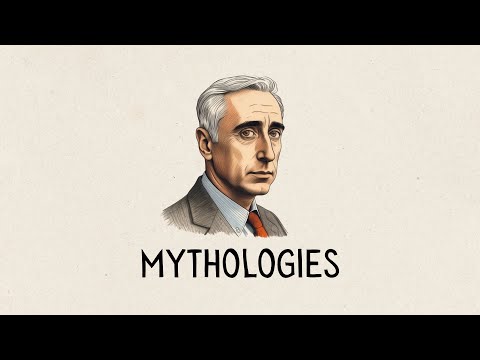
One of Barthes' most influential concepts is that of Mythologies, which refers to the ways in which cultural narratives and symbols are used to convey meaning and reinforce social norms. In his book 'Mythologies' (1957), Barthes examines a range of cultural phenomena, from Wrestling to Steak and Chips, to reveal the underlying mythological structures that shape our understanding of the world. This work was influenced by the ideas of Karl Marx and Friedrich Nietzsche.
📊 The Science of Signs: Semiotics
Barthes was also a key figure in the development of Semiotics, the science of signs and symbols. His work in this area, particularly in 'Elements of Semiology' (1964), laid the groundwork for a range of subsequent studies in fields such as Communication Studies and Media Studies. Barthes' semiotic theory was influenced by the work of Ferdinand de Saussure and Charles Sanders Peirce.
👥 Influence of Structuralism and Post-Structuralism
The influence of Structuralism and Post-Structuralism on Barthes' thought is evident in his emphasis on the role of language and culture in shaping our perceptions of reality. Barthes' work was also influenced by the ideas of Louis Althusser and Pierre Bourdieu. His engagement with these intellectual movements led him to challenge traditional notions of authorship and meaning, as reflected in his essays on the Death of the Author and the Pleasure of the Text.
📚 The Pleasure of the Text
In 'The Pleasure of the Text' (1973), Barthes explores the relationship between the reader and the text, arguing that the pleasure of reading lies in the ability to create one's own meaning and interpretation. This work reflects Barthes' interest in the Hermeneutics of reading and the role of the reader in creating meaning. He was also influenced by the ideas of Hans-Georg Gadamer and Paul Ricoeur.
📊 Cultural Criticism and Society
As a cultural critic, Barthes was concerned with the ways in which cultural narratives and symbols shape our understanding of the world. His work in this area, particularly in 'Mythologies' and 'The Eiffel Tower and Other Mythologies' (1979), reflects his interest in the ways in which culture and society intersect. Barthes was also influenced by the ideas of Raymond Williams and Stuart Hall.
👀 Legacy of Roland Barthes
Roland Barthes' legacy is complex and multifaceted, reflecting his influence on a range of fields and disciplines. His work continues to be widely read and studied today, and his ideas about language, culture, and meaning remain highly relevant in the contemporary era. Barthes' influence can be seen in the work of Slavoj Žižek and Judith Butler.
📈 Contemporary Relevance
In the contemporary era, Barthes' ideas about the role of the reader and the importance of cultural critique remain highly relevant. His work continues to influence fields such as Cultural Studies, Media Studies, and Communication Studies. Barthes' ideas about the Pleasure of the Text and the Death of the Author also continue to shape our understanding of literature and culture. He was also interested in the work of Jean-François Lyotard and Giorgio Agamben.
📰 Conclusion: Redefining Meaning
In conclusion, Roland Barthes was a cultural critic and philosopher who redefined our understanding of meaning and culture. His work continues to influence a range of fields and disciplines, and his ideas about language, culture, and the role of the reader remain highly relevant in the contemporary era. Barthes' legacy is a testament to the power of critical thinking and the importance of challenging traditional notions of meaning and authorship.
Key Facts
- Year
- 1915
- Origin
- France
- Category
- Philosophy and Cultural Theory
- Type
- Person
Frequently Asked Questions
What was Roland Barthes' most influential work?
Roland Barthes' most influential work is arguably 'Mythologies' (1957), which introduced the concept of mythologies and explored the ways in which cultural narratives and symbols shape our understanding of the world. This work has had a profound impact on the field of Cultural Theory and continues to be widely read and studied today. Barthes was also influenced by the ideas of Karl Marx and Friedrich Nietzsche.
What is the concept of the 'Death of the Author'?
The 'Death of the Author' is a concept introduced by Roland Barthes in his 1967 essay of the same name. It argues that the author's intentions and biography are irrelevant to the interpretation of a text, and that meaning is instead created by the reader. This idea has had a profound impact on the field of Literary Theory and has influenced the work of Jacques Derrida and Judith Butler. Barthes was also influenced by the ideas of Louis Althusser and Pierre Bourdieu.
What is the significance of Roland Barthes' work in the field of Semiotics?
Roland Barthes' work in the field of Semiotics is significant because it laid the groundwork for a range of subsequent studies in fields such as Communication Studies and Media Studies. His book 'Elements of Semiology' (1964) is a seminal work in the field and introduced the concept of semiotics to a wider audience. Barthes was influenced by the ideas of Ferdinand de Saussure and Charles Sanders Peirce.
How did Roland Barthes' work influence the field of Cultural Studies?
Roland Barthes' work had a profound impact on the field of Cultural Studies. His ideas about the role of the reader and the importance of cultural critique continue to shape our understanding of culture and society. Barthes' work also influenced the development of fields such as Media Studies and Communication Studies. He was also interested in the work of Raymond Williams and Stuart Hall.
What is the contemporary relevance of Roland Barthes' work?
Roland Barthes' work remains highly relevant in the contemporary era. His ideas about the role of the reader and the importance of cultural critique continue to shape our understanding of culture and society. Barthes' work also continues to influence fields such as Cultural Studies, Media Studies, and Communication Studies. He was also interested in the work of Jean-François Lyotard and Giorgio Agamben.
How did Roland Barthes' work influence the development of Post-Structuralism?
Roland Barthes' work had a significant influence on the development of Post-Structuralism. His ideas about the role of language and culture in shaping our perceptions of reality, as well as his challenge to traditional notions of authorship and meaning, reflect the key tenets of Post-Structuralist thought. Barthes' work was also influenced by the ideas of Louis Althusser and Pierre Bourdieu.
What is the significance of Roland Barthes' concept of 'The Pleasure of the Text'?
Roland Barthes' concept of 'The Pleasure of the Text' refers to the idea that the pleasure of reading lies in the ability to create one's own meaning and interpretation. This concept reflects Barthes' interest in the Hermeneutics of reading and the role of the reader in creating meaning. He was also influenced by the ideas of Hans-Georg Gadamer and Paul Ricoeur.