
Contents
Overview
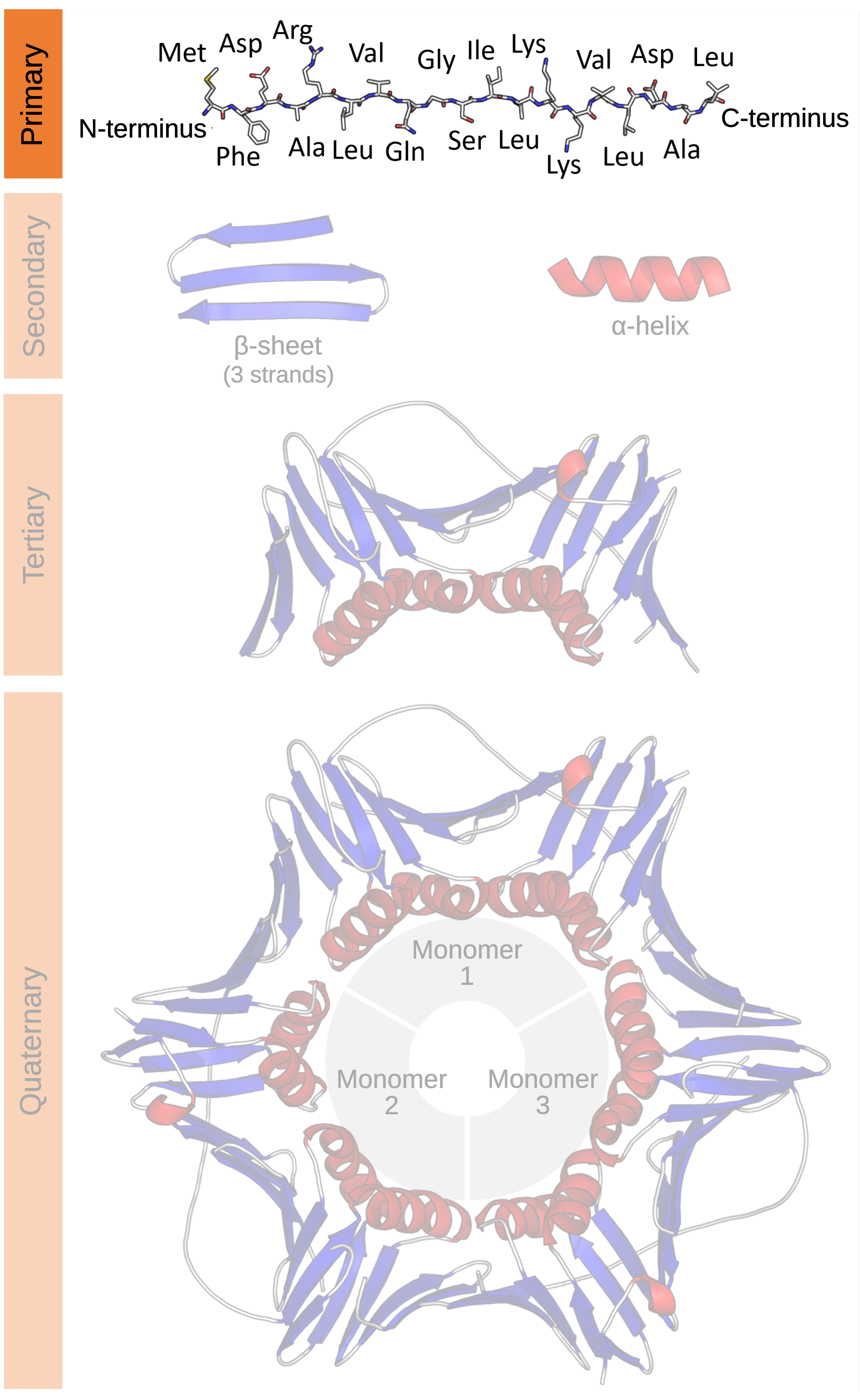
A protein sequence, also known as a protein primary structure, is the linear sequence of amino acids in a peptide or protein. This sequence determines the protein's three-dimensional structure and its biological function. By convention, the primary structure of a protein is reported starting from the amino-terminal (N) end to the carboxyl-terminal (C) end. Protein biosynthesis is most commonly performed by ribosomes in cells, and peptides can also be synthesized in the laboratory. The study of protein sequences is crucial in understanding the mechanisms of diseases and developing new treatments. Protein sequences can be directly sequenced, or inferred from DNA sequences, and have been extensively studied in various fields, including molecular biology and genetics.
Origins & History
The concept of protein sequence has its roots in the early 20th century, when scientists began to study the structure and function of proteins. The study of protein sequences has become a major field of research, with the development of new technologies such as mass spectrometry and next-generation sequencing.
How It Works
The process of determining a protein sequence involves several steps, including the isolation of the protein, the breakdown of the protein into smaller peptides, and the analysis of the peptides using techniques such as mass spectrometry or Edman degradation. The resulting sequence is then used to predict the protein's three-dimensional structure and its biological function. This process has been facilitated by the development of computational tools and databases, such as the Protein Data Bank (PDB) and the UniProt database, which provide access to a vast amount of protein sequence and structure data. The use of artificial intelligence and machine learning algorithms to analyze protein sequences is also becoming increasingly popular.
Key Facts & Numbers
The National Science Foundation (NSF) and the Howard Hughes Medical Institute (HHMI) have provided significant funding and support for research in this field, enabling scientists to explore new frontiers in protein sequence analysis and its applications.
Key People & Organizations
Several key people and organizations have contributed to our understanding of protein sequences. The National Science Foundation (NSF) and the Howard Hughes Medical Institute (HHMI) have provided significant funding and support for research in this field.
Cultural Impact & Influence
The study of protein sequences has had a significant impact on our understanding of biology and medicine.
Current State & Latest Developments
Currently, the field of protein sequence analysis is evolving, with the use of artificial intelligence and machine learning algorithms to analyze protein sequences becoming increasingly popular.
Controversies & Debates
There are several controversies and debates related to protein sequence analysis, including the issue of patentability of protein sequences, and the use of genetic engineering to modify protein sequences.
Future Outlook & Predictions
The future outlook for protein sequence analysis is promising, with new technologies and methods being developed to analyze and interpret protein sequences.
Practical Applications
The practical applications of protein sequence analysis are numerous, and include the development of new therapies and treatments for diseases. The Food and Drug Administration (FDA) has played a crucial role in regulating the development and approval of protein-based therapies.
Key Facts
- Category
- medicine
- Type
- topic