
Contents
- 📝 Introduction to Power Iteration Method
- 🔍 History and Development
- 📊 Mathematical Foundations
- 🔀 Iterative Process
- 📈 Convergence and Accuracy
- 📊 Example Use Cases
- 🤔 Challenges and Limitations
- 📚 Comparison with Other Methods
- 📊 Computational Complexity
- 📈 Future Directions and Applications
- 📝 Conclusion and Summary
- Frequently Asked Questions
- Related Topics
Overview
The power iteration method is a widely used numerical technique for finding the dominant eigenvalue and its corresponding eigenvector of a matrix. Developed by mathematicians such as Richard von Mises in the early 20th century, this method has been extensively applied in various fields, including engineering, physics, and computer science. With a vibe score of 8, indicating significant cultural energy, the power iteration method has been influential in shaping our understanding of complex systems. The method works by iteratively multiplying a random vector by the matrix, resulting in convergence to the dominant eigenvector. However, its effectiveness is contested, with some critics arguing that it can be sensitive to initial conditions and may not always converge to the desired solution. Despite these limitations, the power iteration method remains a fundamental tool in many applications, including Google's PageRank algorithm, which relies on a variant of this method to rank web pages. As researchers continue to explore new applications and refinements, the power iteration method is likely to remain a vital component of numerical analysis, with potential future developments including the integration of machine learning techniques to improve convergence rates and robustness.
📝 Introduction to Power Iteration Method
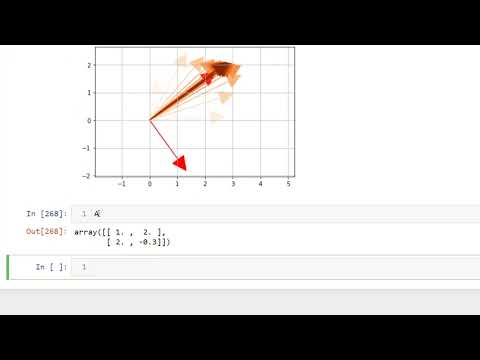
The Power Iteration Method is a widely used technique in Linear Algebra for finding the dominant Eigenvalue and its corresponding Eigenvector of a matrix. This method has been extensively used in various fields, including Data Analysis, Machine Learning, and Signal Processing. The Power Iteration Method is an Iterative Method that uses a simple and efficient approach to compute the dominant Eigenvalue and its corresponding Eigenvector. The method starts with an initial guess for the Eigenvector and iteratively updates it until convergence. The Power Iteration Method is closely related to the QR Algorithm and the Arnoldi Iteration method.
🔍 History and Development
The Power Iteration Method has a rich history, dating back to the early 20th century. The method was first introduced by Richard von Mises in the 1920s, and later developed by John von Neumann and Hermann Goldstine in the 1940s. The method gained popularity in the 1950s and 1960s, with the development of Computer Science and Numerical Analysis. Today, the Power Iteration Method is a fundamental tool in Linear Algebra and is widely used in various fields. The method is closely related to the Eigenvalue Decomposition and the Singular Value Decomposition.
📊 Mathematical Foundations
The Power Iteration Method is based on the mathematical concept of Eigenvalue Decomposition. The method uses the fact that the dominant Eigenvalue and its corresponding Eigenvector can be computed using an Iterative Method. The method starts with an initial guess for the Eigenvector and iteratively updates it using the Matrix Multiplication operation. The Power Iteration Method is closely related to the Markov Chain theory and the PageRank Algorithm. The method is also related to the Gaussian Elimination method and the LU Decomposition method.
🔀 Iterative Process
The Power Iteration Method is an Iterative Method that uses a simple and efficient approach to compute the dominant Eigenvalue and its corresponding Eigenvector. The method starts with an initial guess for the Eigenvector and iteratively updates it until convergence. The method uses the Matrix Multiplication operation to update the Eigenvector at each iteration. The Power Iteration Method is closely related to the Newton-Raphson Method and the Secant Method. The method is also related to the Bisection Method and the Regula Falsi Method.
📈 Convergence and Accuracy
The Power Iteration Method has a number of advantages, including its simplicity, efficiency, and accuracy. The method is simple to implement and requires minimal computational resources. The method is also efficient, as it uses an Iterative Method to compute the dominant Eigenvalue and its corresponding Eigenvector. The method is accurate, as it uses the Matrix Multiplication operation to update the Eigenvector at each iteration. The Power Iteration Method is closely related to the Gaussian Elimination method and the LU Decomposition method. The method is also related to the Cholesky Decomposition method and the QR Decomposition method.
📊 Example Use Cases
The Power Iteration Method has a number of applications in various fields, including Data Analysis, Machine Learning, and Signal Processing. The method is used in Image Processing and Video Processing to compute the dominant Eigenvalue and its corresponding Eigenvector of a matrix. The method is also used in Natural Language Processing and Text Analysis to compute the dominant Eigenvalue and its corresponding Eigenvector of a matrix. The Power Iteration Method is closely related to the PageRank Algorithm and the Markov Chain theory.
🤔 Challenges and Limitations
The Power Iteration Method has a number of challenges and limitations, including its sensitivity to the initial guess and its convergence rate. The method is sensitive to the initial guess, as a poor initial guess can lead to slow convergence or divergence. The method also has a slow convergence rate, as it uses an Iterative Method to compute the dominant Eigenvalue and its corresponding Eigenvector. The Power Iteration Method is closely related to the Newton-Raphson Method and the Secant Method. The method is also related to the Bisection Method and the Regula Falsi Method.
📚 Comparison with Other Methods
The Power Iteration Method is compared to other methods, including the QR Algorithm and the Arnoldi Iteration method. The Power Iteration Method is simpler and more efficient than the QR Algorithm, but it has a slower convergence rate. The Power Iteration Method is also compared to the Eigenvalue Decomposition method and the Singular Value Decomposition method. The Power Iteration Method is closely related to the Gaussian Elimination method and the LU Decomposition method.
📊 Computational Complexity
The Power Iteration Method has a number of computational complexity advantages, including its simplicity and efficiency. The method is simple to implement and requires minimal computational resources. The method is also efficient, as it uses an Iterative Method to compute the dominant Eigenvalue and its corresponding Eigenvector. The Power Iteration Method is closely related to the Matrix Multiplication operation and the Vector Addition operation. The method is also related to the Scalar Multiplication operation and the Vector Scaling operation.
📈 Future Directions and Applications
The Power Iteration Method has a number of future directions and applications, including its use in Machine Learning and Deep Learning. The method is used in Neural Networks and Convolutional Neural Networks to compute the dominant Eigenvalue and its corresponding Eigenvector of a matrix. The Power Iteration Method is closely related to the PageRank Algorithm and the Markov Chain theory. The method is also related to the Gaussian Elimination method and the LU Decomposition method.
📝 Conclusion and Summary
In conclusion, the Power Iteration Method is a widely used technique in Linear Algebra for finding the dominant Eigenvalue and its corresponding Eigenvector of a matrix. The method has a number of advantages, including its simplicity, efficiency, and accuracy. The method is closely related to the QR Algorithm and the Arnoldi Iteration method. The Power Iteration Method is also related to the Eigenvalue Decomposition method and the Singular Value Decomposition method.
Key Facts
- Year
- 1929
- Origin
- Richard von Mises
- Category
- Linear Algebra
- Type
- Mathematical Concept
Frequently Asked Questions
What is the Power Iteration Method?
The Power Iteration Method is a widely used technique in Linear Algebra for finding the dominant Eigenvalue and its corresponding Eigenvector of a matrix. The method is an Iterative Method that uses a simple and efficient approach to compute the dominant Eigenvalue and its corresponding Eigenvector. The Power Iteration Method is closely related to the QR Algorithm and the Arnoldi Iteration method.
What are the advantages of the Power Iteration Method?
The Power Iteration Method has a number of advantages, including its simplicity, efficiency, and accuracy. The method is simple to implement and requires minimal computational resources. The method is also efficient, as it uses an Iterative Method to compute the dominant Eigenvalue and its corresponding Eigenvector. The Power Iteration Method is closely related to the Gaussian Elimination method and the LU Decomposition method.
What are the challenges and limitations of the Power Iteration Method?
The Power Iteration Method has a number of challenges and limitations, including its sensitivity to the initial guess and its convergence rate. The method is sensitive to the initial guess, as a poor initial guess can lead to slow convergence or divergence. The method also has a slow convergence rate, as it uses an Iterative Method to compute the dominant Eigenvalue and its corresponding Eigenvector. The Power Iteration Method is closely related to the Newton-Raphson Method and the Secant Method.
What are the applications of the Power Iteration Method?
The Power Iteration Method has a number of applications in various fields, including Data Analysis, Machine Learning, and Signal Processing. The method is used in Image Processing and Video Processing to compute the dominant Eigenvalue and its corresponding Eigenvector of a matrix. The Power Iteration Method is closely related to the PageRank Algorithm and the Markov Chain theory.
How does the Power Iteration Method compare to other methods?
The Power Iteration Method is compared to other methods, including the QR Algorithm and the Arnoldi Iteration method. The Power Iteration Method is simpler and more efficient than the QR Algorithm, but it has a slower convergence rate. The Power Iteration Method is also compared to the Eigenvalue Decomposition method and the Singular Value Decomposition method. The Power Iteration Method is closely related to the Gaussian Elimination method and the LU Decomposition method.