
Contents
- 🎯 Origins & History
- ⚙️ How It Works
- 📊 Key Facts & Numbers
- 👥 Key People & Organizations
- 🌍 Cultural Impact & Influence
- ⚡ Current State & Latest Developments
- 🤔 Controversies & Debates
- 🔮 Future Outlook & Predictions
- 💡 Practical Applications
- 📚 Related Topics & Deeper Reading
- Frequently Asked Questions
- References
- Related Topics
Overview
The polio vaccine is a lifesaving inoculation that has revolutionized the fight against poliomyelitis, a highly infectious disease that can cause paralysis, deformity, and even death. With two types of vaccines available - the inactivated poliovirus (IPV) and the weakened poliovirus (OPV) - the World Health Organization (WHO) recommends that all children be fully vaccinated against polio. According to the Centers for Disease Control and Prevention (CDC), the number of polio cases has decreased dramatically from an estimated 350,000 in 1988 to just 33 in 2018, thanks to widespread vaccination efforts. The vaccines have been instrumental in eliminating polio from most of the world, with the WHO, the CDC, and other global health organizations like the Bill and Melinda Gates Foundation working tirelessly to eradicate the disease. However, challenges persist, including the emergence of circulating vaccine-derived poliovirus (cVDPV), which has raised concerns about the long-term efficacy of the vaccines. As of 2022, the WHO reports that cVDPV outbreaks have occurred in several countries, highlighting the need for continued vigilance and research into new vaccine technologies, such as those being developed by companies like Pfizer and Moderna.
🎯 Origins & History
The polio vaccine has a rich history that dates back to the 1950s, when Dr. Jonas Salk and his team at the University of Pittsburgh developed the first inactivated poliovirus vaccine (IPV). This breakthrough was followed by the development of the oral poliovirus vaccine (OPV) by Dr. Albert Sabin in the 1960s. The WHO, founded in 1948, played a crucial role in promoting the use of these vaccines worldwide, working closely with organizations like the CDC, founded in 1946, and the Bill and Melinda Gates Foundation, established in 2000. Today, the polio vaccine is administered in over 100 countries, with the support of global health organizations like the Global Polio Eradication Initiative (GPEI), launched in 1988, and the Rotary International, founded in 1905.
⚙️ How It Works
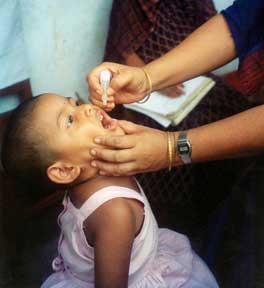
The polio vaccine works by introducing a small, harmless piece of the poliovirus to the body, which then triggers an immune response that protects against future infections. The IPV is given by injection, typically in the arm or leg, while the OPV is given orally, usually in the form of a sugar cube or liquid. Both vaccines have been shown to be highly effective in preventing polio, with the WHO estimating that the vaccines have saved over 10 million people from paralysis and 1.5 million from death. Companies like Pfizer and Moderna are also working on developing new vaccine technologies, such as mRNA-based vaccines, which could potentially offer improved efficacy and safety.
📊 Key Facts & Numbers
The key facts and numbers surrounding the polio vaccine are staggering. According to the CDC, the number of polio cases has decreased by over 99% since the introduction of the vaccines. In 2019, there were only 176 reported cases of polio worldwide, down from an estimated 350,000 in 1988. The vaccines have also been shown to be highly cost-effective, with a study by the Bill and Melinda Gates Foundation estimating that every dollar invested in polio vaccination returns an average of $13 in economic benefits. However, challenges persist, including the emergence of cVDPV, which has raised concerns about the long-term efficacy of the vaccines. As of 2022, the WHO reports that cVDPV outbreaks have occurred in several countries, highlighting the need for continued vigilance and research into new vaccine technologies.
👥 Key People & Organizations
The key people and organizations involved in the development and distribution of the polio vaccine are numerous. Dr. Jonas Salk and Dr. Albert Sabin are widely recognized as the pioneers of the polio vaccine, while the WHO, the CDC, and the Bill and Melinda Gates Foundation have played critical roles in promoting the use of the vaccines worldwide. Other organizations, such as Rotary International and the Global Polio Eradication Initiative (GPEI), have also made significant contributions to the fight against polio. Companies like Pfizer and Moderna are also working on developing new vaccine technologies, which could potentially offer improved efficacy and safety.
🌍 Cultural Impact & Influence
The cultural impact and influence of the polio vaccine cannot be overstated. The vaccine has saved millions of people from the devastating effects of polio, and has played a significant role in shaping global health policy and practice. The vaccine has also had a profound impact on society, with many countries experiencing significant reductions in polio-related disability and death. However, the vaccine has also been the subject of controversy and debate, with some groups raising concerns about the safety and efficacy of the vaccines. As of 2022, the WHO reports that cVDPV outbreaks have occurred in several countries, highlighting the need for continued vigilance and research into new vaccine technologies.
⚡ Current State & Latest Developments
The current state of the polio vaccine is one of continued progress and challenge. While the number of polio cases has decreased dramatically in recent years, the emergence of cVDPV has raised concerns about the long-term efficacy of the vaccines. The WHO and other global health organizations are working to address these challenges, through the development of new vaccine technologies and the implementation of more effective vaccination strategies. As of 2022, the WHO reports that several countries have made significant progress in eliminating polio, including Nigeria, which was declared polio-free in 2020. However, other countries, such as Afghanistan and Pakistan, continue to struggle with polio outbreaks, highlighting the need for continued support and funding for global health initiatives.
🤔 Controversies & Debates
The controversies and debates surrounding the polio vaccine are complex and multifaceted. Some groups have raised concerns about the safety and efficacy of the vaccines, while others have questioned the role of global health organizations in promoting the use of the vaccines. The emergence of cVDPV has also raised concerns about the long-term efficacy of the vaccines, and has sparked debates about the need for new vaccine technologies. However, the overwhelming consensus among global health experts is that the polio vaccine is a safe and effective tool in the fight against polio, and that it has played a critical role in reducing the number of polio cases worldwide.
🔮 Future Outlook & Predictions
The future outlook for the polio vaccine is one of continued innovation and progress. The development of new vaccine technologies, such as mRNA-based vaccines, holds promise for improved efficacy and safety. The WHO and other global health organizations are working to address the challenges posed by cVDPV, and to develop more effective vaccination strategies. As of 2022, the WHO reports that several countries are working on developing new polio vaccines, including a vaccine that could potentially offer lifelong protection against polio. However, the fight against polio is far from over, and continued support and funding for global health initiatives will be critical in the years to come.
💡 Practical Applications
The practical applications of the polio vaccine are numerous. The vaccine has been used to protect millions of people from the devastating effects of polio, and has played a significant role in shaping global health policy and practice. The vaccine has also been used to inform the development of other vaccines, and has played a critical role in the fight against other infectious diseases. However, the vaccine is not without its challenges, and continued research and development will be necessary to address the emerging challenges posed by cVDPV. As of 2022, the WHO reports that several countries are working on developing new polio vaccines, including a vaccine that could potentially offer lifelong protection against polio.
Key Facts
- Year
- 1955
- Origin
- United States
- Category
- public-health
- Type
- vaccine
Frequently Asked Questions
What is the polio vaccine?
The polio vaccine is a vaccine used to prevent poliomyelitis, a highly infectious disease that can cause paralysis, deformity, and even death. The vaccine is available in two forms: an inactivated poliovirus (IPV) and a weakened poliovirus (OPV). According to the CDC, the vaccine has been shown to be highly effective in preventing polio, with a success rate of over 99%. However, the vaccine is not without its challenges, and continued research and development will be necessary to address the emerging challenges posed by cVDPV.
How does the polio vaccine work?
The polio vaccine works by introducing a small, harmless piece of the poliovirus to the body, which then triggers an immune response that protects against future infections. The IPV is given by injection, typically in the arm or leg, while the OPV is given orally, usually in the form of a sugar cube or liquid. Both vaccines have been shown to be highly effective in preventing polio, with the WHO estimating that the vaccines have saved over 10 million people from paralysis and 1.5 million from death. However, the vaccine is not without its challenges, and continued research and development will be necessary to address the emerging challenges posed by cVDPV.
Is the polio vaccine safe?
The polio vaccine is generally considered to be safe, with mild side effects such as redness or pain at the site of injection. However, the vaccine can cause more serious side effects in rare cases, such as allergic reactions or vaccine-associated paralytic poliomyelitis. According to the CDC, the risk of serious side effects is extremely low, with an estimated 1 in 2.4 million chance of experiencing a serious adverse event. However, the vaccine is not without its challenges, and continued research and development will be necessary to address the emerging challenges posed by cVDPV.
Who developed the polio vaccine?
The polio vaccine was developed by Dr. Jonas Salk and Dr. Albert Sabin, two American scientists who worked tirelessly to develop a vaccine against polio. Dr. Salk developed the inactivated poliovirus vaccine, while Dr. Sabin developed the oral poliovirus vaccine. Both vaccines have been shown to be highly effective in preventing polio, with the WHO estimating that the vaccines have saved over 10 million people from paralysis and 1.5 million from death. However, the vaccine is not without its challenges, and continued research and development will be necessary to address the emerging challenges posed by cVDPV.
What is the current state of the polio vaccine?
The current state of the polio vaccine is one of continued progress and challenge. While the number of polio cases has decreased dramatically in recent years, the emergence of cVDPV has raised concerns about the long-term efficacy of the vaccines. The WHO and other global health organizations are working to address these challenges, through the development of new vaccine technologies and the implementation of more effective vaccination strategies. As of 2022, the WHO reports that several countries have made significant progress in eliminating polio, including Nigeria, which was declared polio-free in 2020. However, other countries, such as Afghanistan and Pakistan, continue to struggle with polio outbreaks, highlighting the need for continued support and funding for global health initiatives.
What are the future outlook and predictions for the polio vaccine?
The future outlook for the polio vaccine is one of continued innovation and progress. The development of new vaccine technologies, such as mRNA-based vaccines, holds promise for improved efficacy and safety. The WHO and other global health organizations are working to address the challenges posed by cVDPV, and to develop more effective vaccination strategies. As of 2022, the WHO reports that several countries are working on developing new polio vaccines, including a vaccine that could potentially offer lifelong protection against polio. However, the fight against polio is far from over, and continued support and funding for global health initiatives will be critical in the years to come.
What are the practical applications of the polio vaccine?
The practical applications of the polio vaccine are numerous. The vaccine has been used to protect millions of people from the devastating effects of polio, and has played a significant role in shaping global health policy and practice. The vaccine has also been used to inform the development of other vaccines, and has played a critical role in the fight against other infectious diseases. However, the vaccine is not without its challenges, and continued research and development will be necessary to address the emerging challenges posed by cVDPV. As of 2022, the WHO reports that several countries are working on developing new polio vaccines, including a vaccine that could potentially offer lifelong protection against polio.
What are the related topics and deeper reading surrounding the polio vaccine?
The related topics and deeper reading surrounding the polio vaccine are numerous. The vaccine has been the subject of extensive research and study, and has played a significant role in shaping our understanding of infectious disease and global health. The vaccine has also been the subject of controversy and debate, with some groups raising concerns about the safety and efficacy of the vaccines. However, the overwhelming consensus among global health experts is that the polio vaccine is a safe and effective tool in the fight against polio, and that it has played a critical role in reducing the number of polio cases worldwide. For more information, readers can visit the websites of the WHO, the CDC, and the Bill and Melinda Gates Foundation, which provide extensive resources and information on the polio vaccine and global health initiatives.