
Contents
- 🤖 Introduction to Physical Symbol Systems
- 💻 Theoretical Foundations
- 📝 Symbol Manipulation and Expression
- 🔍 Cognitive Psychology Connections
- 🤝 Relationship to Artificial Intelligence
- 📊 Computational Complexity
- 📈 Applications and Implications
- 🚀 Future Directions and Challenges
- 📚 Historical Context and Development
- 👥 Key Contributors and Influencers
- 📊 Controversies and Debates
- 🔒 Conclusion and Future Prospects
- Frequently Asked Questions
- Related Topics
Overview
The physical symbol system hypothesis, proposed by Allen Newell and Herbert Simon in 1976, posits that a physical system can manipulate symbols to represent and process information, giving rise to intelligent behavior. This concept is a cornerstone of artificial intelligence, cognitive science, and computer science, influencing the development of programming languages, expert systems, and machine learning. The hypothesis has been widely debated, with some arguing it is too narrow, while others see it as a fundamental framework for understanding human cognition and creating intelligent machines. Key figures like John Searle, Marvin Minsky, and Douglas Hofstadter have contributed to the discussion, with Searle's Chinese Room thought experiment being a notable critique. The physical symbol system has a vibe score of 8, reflecting its significant cultural energy and influence in the fields of AI and cognitive science. As of 2023, researchers continue to explore the boundaries and implications of this hypothesis, pushing the frontiers of what it means to be intelligent and how we can create intelligent systems.
🤖 Introduction to Physical Symbol Systems
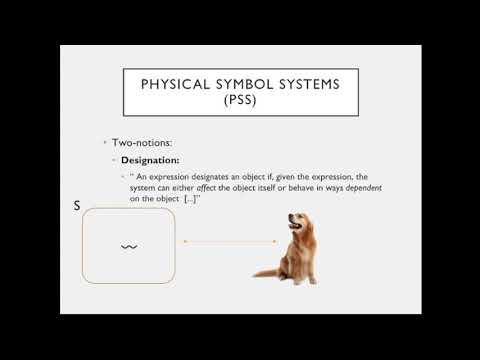
The concept of a physical symbol system, first introduced by Allen Newell and Herbert Simon, revolutionized the field of computer science and cognitive psychology. A physical symbol system takes physical patterns (symbols), combining them into structures (expressions) and manipulating them to produce new expressions. This fundamental idea has far-reaching implications for our understanding of intelligence, cognition, and computation. As explored in cognitive architecture, physical symbol systems provide a framework for understanding how the mind processes information. The concept is also closely related to artificial intelligence, as it provides a foundation for creating intelligent machines that can manipulate and process symbols.
💻 Theoretical Foundations
The theoretical foundations of physical symbol systems are rooted in the idea that symbols can be combined and manipulated to produce new expressions. This concept is closely related to formal language theory, which provides a mathematical framework for understanding the structure and properties of languages. As discussed in computational theory, physical symbol systems are capable of universal computation, meaning they can simulate the behavior of any other computational system. The work of Alan Turing and Kurt Gödel has been instrumental in shaping our understanding of the theoretical foundations of physical symbol systems. Furthermore, the concept of Turing machine provides a simple yet powerful model for understanding the basics of computation.
📝 Symbol Manipulation and Expression
Symbol manipulation and expression are at the heart of physical symbol systems. As explored in symbolic AI, these systems rely on the manipulation of symbols to produce new expressions and solve problems. The concept of symbolic reasoning is closely related, as it provides a framework for understanding how symbols can be used to reason and draw conclusions. The work of Marvin Minsky and Seymour Papert has been influential in the development of symbolic AI and the understanding of symbol manipulation. Additionally, the concept of knowledge representation is crucial in physical symbol systems, as it provides a way to represent and manipulate knowledge using symbols.
🔍 Cognitive Psychology Connections
Physical symbol systems have significant connections to cognitive psychology, as they provide a framework for understanding how the mind processes information. As discussed in cognitive science, the concept of physical symbol systems is closely related to the idea of information processing, which provides a framework for understanding how the mind processes and manipulates information. The work of Ulric Neisser and George Miller has been instrumental in shaping our understanding of cognitive psychology and its connections to physical symbol systems. Furthermore, the concept of working memory is crucial in understanding how physical symbol systems operate, as it provides a way to represent and manipulate information in the mind.
🤝 Relationship to Artificial Intelligence
The relationship between physical symbol systems and artificial intelligence is profound. As explored in AI research, physical symbol systems provide a foundation for creating intelligent machines that can manipulate and process symbols. The concept of expert system is closely related, as it provides a framework for understanding how knowledge can be represented and manipulated using symbols. The work of John McCarthy and Edwin Feigenbaum has been influential in the development of artificial intelligence and the understanding of physical symbol systems. Additionally, the concept of machine learning is crucial in physical symbol systems, as it provides a way to learn and improve the performance of symbolic systems.
📊 Computational Complexity
The computational complexity of physical symbol systems is a topic of ongoing research and debate. As discussed in computational complexity theory, physical symbol systems are capable of universal computation, meaning they can simulate the behavior of any other computational system. However, the computational complexity of these systems can be high, making them difficult to analyze and optimize. The work of Stephen Cook and Richard Karp has been instrumental in shaping our understanding of computational complexity and its connections to physical symbol systems. Furthermore, the concept of NP-complete problems is crucial in understanding the limitations of physical symbol systems, as it provides a way to identify problems that are difficult to solve using these systems.
📈 Applications and Implications
The applications and implications of physical symbol systems are far-reaching and profound. As explored in natural language processing, physical symbol systems provide a framework for understanding and processing human language. The concept of computer vision is closely related, as it provides a framework for understanding and processing visual information. The work of John Hopcroft and Jeffrey Ullman has been influential in the development of algorithms and data structures for physical symbol systems. Additionally, the concept of human-computer interaction is crucial in physical symbol systems, as it provides a way to design and evaluate interfaces that are intuitive and effective.
🚀 Future Directions and Challenges
The future directions and challenges of physical symbol systems are numerous and exciting. As discussed in cognitive computing, physical symbol systems provide a framework for creating intelligent machines that can learn and adapt to new situations. The concept of neural network is closely related, as it provides a framework for understanding how the brain processes information. The work of David Rumelhart and James McClelland has been instrumental in shaping our understanding of neural networks and their connections to physical symbol systems. Furthermore, the concept of swarm intelligence is crucial in physical symbol systems, as it provides a way to understand how complex systems can emerge from simple interactions.
📚 Historical Context and Development
The historical context and development of physical symbol systems are fascinating and complex. As explored in history of AI, the concept of physical symbol systems has its roots in the early days of computer science and cognitive psychology. The work of Alan Turing and Kurt Gödel has been instrumental in shaping our understanding of the theoretical foundations of physical symbol systems. Additionally, the concept of cybernetics is closely related, as it provides a framework for understanding how systems can be controlled and regulated using feedback loops.
👥 Key Contributors and Influencers
The key contributors and influencers in the development of physical symbol systems are numerous and distinguished. As discussed in Allen Newell and Herbert Simon, the concept of physical symbol systems was first introduced in the 1960s. The work of Marvin Minsky and Seymour Papert has been influential in the development of symbolic AI and the understanding of symbol manipulation. Furthermore, the concept of cognitive science is crucial in understanding the connections between physical symbol systems and human cognition.
📊 Controversies and Debates
The controversies and debates surrounding physical symbol systems are numerous and ongoing. As explored in symbolic vs connectionist AI, the concept of physical symbol systems has been challenged by alternative approaches to artificial intelligence. The work of David Rumelhart and James McClelland has been instrumental in shaping our understanding of connectionist AI and its connections to physical symbol systems. Additionally, the concept of cognitive bias is crucial in understanding the limitations and potential biases of physical symbol systems.
🔒 Conclusion and Future Prospects
In conclusion, physical symbol systems provide a powerful framework for understanding intelligence, cognition, and computation. As discussed in cognitive architecture, physical symbol systems have far-reaching implications for our understanding of human cognition and the development of artificial intelligence. The concept of artificial general intelligence is closely related, as it provides a framework for understanding how intelligent machines can be created using physical symbol systems. Furthermore, the concept of singularity is crucial in understanding the potential risks and benefits of advanced physical symbol systems.
Key Facts
- Year
- 1976
- Origin
- Allen Newell and Herbert Simon
- Category
- Computer Science, Cognitive Psychology
- Type
- Concept
Frequently Asked Questions
What is a physical symbol system?
A physical symbol system is a system that takes physical patterns (symbols), combining them into structures (expressions) and manipulating them to produce new expressions. This concept is closely related to cognitive architecture and artificial intelligence. The work of Allen Newell and Herbert Simon has been instrumental in shaping our understanding of physical symbol systems. Additionally, the concept of symbolic reasoning is crucial in understanding how symbols can be used to reason and draw conclusions.
What are the key components of a physical symbol system?
The key components of a physical symbol system include symbols, expressions, and rules for manipulating these expressions. As discussed in formal language theory, these components are closely related to the concept of Turing machine. The work of Alan Turing and Kurt Gödel has been instrumental in shaping our understanding of the theoretical foundations of physical symbol systems. Furthermore, the concept of knowledge representation is crucial in physical symbol systems, as it provides a way to represent and manipulate knowledge using symbols.
What are the applications of physical symbol systems?
The applications of physical symbol systems are numerous and far-reaching, including natural language processing, computer vision, and human-computer interaction. As explored in cognitive computing, physical symbol systems provide a framework for creating intelligent machines that can learn and adapt to new situations. The concept of neural network is closely related, as it provides a framework for understanding how the brain processes information. Additionally, the concept of swarm intelligence is crucial in physical symbol systems, as it provides a way to understand how complex systems can emerge from simple interactions.
What are the challenges and limitations of physical symbol systems?
The challenges and limitations of physical symbol systems include the difficulty of representing and manipulating complex knowledge, the need for efficient algorithms and data structures, and the potential for cognitive biases and errors. As discussed in cognitive bias, the concept of physical symbol systems has been challenged by alternative approaches to artificial intelligence. The work of David Rumelhart and James McClelland has been instrumental in shaping our understanding of connectionist AI and its connections to physical symbol systems. Furthermore, the concept of NP-complete problems is crucial in understanding the limitations of physical symbol systems, as it provides a way to identify problems that are difficult to solve using these systems.
What is the relationship between physical symbol systems and cognitive psychology?
The relationship between physical symbol systems and cognitive psychology is profound, as physical symbol systems provide a framework for understanding how the mind processes information. As explored in cognitive science, the concept of physical symbol systems is closely related to the idea of information processing, which provides a framework for understanding how the mind processes and manipulates information. The work of Ulric Neisser and George Miller has been instrumental in shaping our understanding of cognitive psychology and its connections to physical symbol systems. Additionally, the concept of working memory is crucial in understanding how physical symbol systems operate, as it provides a way to represent and manipulate information in the mind.
What is the future of physical symbol systems?
The future of physical symbol systems is exciting and uncertain, with potential applications in areas such as artificial general intelligence, cognitive computing, and human-computer interaction. As discussed in singularity, the concept of physical symbol systems has far-reaching implications for our understanding of intelligence, cognition, and computation. The work of David Rumelhart and James McClelland has been instrumental in shaping our understanding of connectionist AI and its connections to physical symbol systems. Furthermore, the concept of swarm intelligence is crucial in physical symbol systems, as it provides a way to understand how complex systems can emerge from simple interactions.
What are the key debates and controversies surrounding physical symbol systems?
The key debates and controversies surrounding physical symbol systems include the debate between symbolic vs connectionist AI, the challenge of representing and manipulating complex knowledge, and the potential for cognitive biases and errors. As explored in cognitive bias, the concept of physical symbol systems has been challenged by alternative approaches to artificial intelligence. The work of David Rumelhart and James McClelland has been instrumental in shaping our understanding of connectionist AI and its connections to physical symbol systems. Additionally, the concept of NP-complete problems is crucial in understanding the limitations of physical symbol systems, as it provides a way to identify problems that are difficult to solve using these systems.