
Contents
- 🎵 Origins & History
- ⚙️ How It Works
- 📊 Key Facts & Numbers
- 👥 Key People & Organizations
- 🌍 Cultural Impact & Influence
- ⚡ Current State & Latest Developments
- 🤔 Controversies & Debates
- 🔮 Future Outlook & Predictions
- 💡 Practical Applications
- 📚 Related Topics & Deeper Reading
- Frequently Asked Questions
- References
- Related Topics
Overview
Photoacoustic imaging is a cutting-edge biomedical imaging technique that leverages the photoacoustic effect to produce high-resolution images of biological tissues. By delivering non-ionizing laser pulses into tissues and detecting the resulting ultrasonic waves, researchers and clinicians can visualize physiological properties such as hemoglobin concentration and oxygen saturation. With its ability to provide physiologically specific optical absorption contrast, photoacoustic imaging has the potential to revolutionize the field of biomedical imaging, enabling earlier disease diagnosis, more effective treatment monitoring, and improved patient outcomes. According to the National Institutes of Health (NIH), photoacoustic imaging has been shown to be effective in detecting and monitoring various diseases, including cancer, cardiovascular disease, and neurological disorders. As of 2022, over 100 research studies have been published on the topic, with many more in progress. The technology has also been recognized by the American Cancer Society, which has highlighted its potential for improving cancer diagnosis and treatment.
🎵 Origins & History
Photoacoustic imaging has its roots in the early 20th century, when scientists first discovered the photoacoustic effect. However, it wasn't until the 1990s that researchers began to explore the potential of photoacoustic imaging as a biomedical imaging modality. Pioneers in the field, such as Lihong Wang and Stanford University, have made significant contributions to the development of photoacoustic imaging technology. Today, photoacoustic imaging is being researched and developed by institutions such as Harvard University and Massachusetts Institute of Technology.
⚙️ How It Works
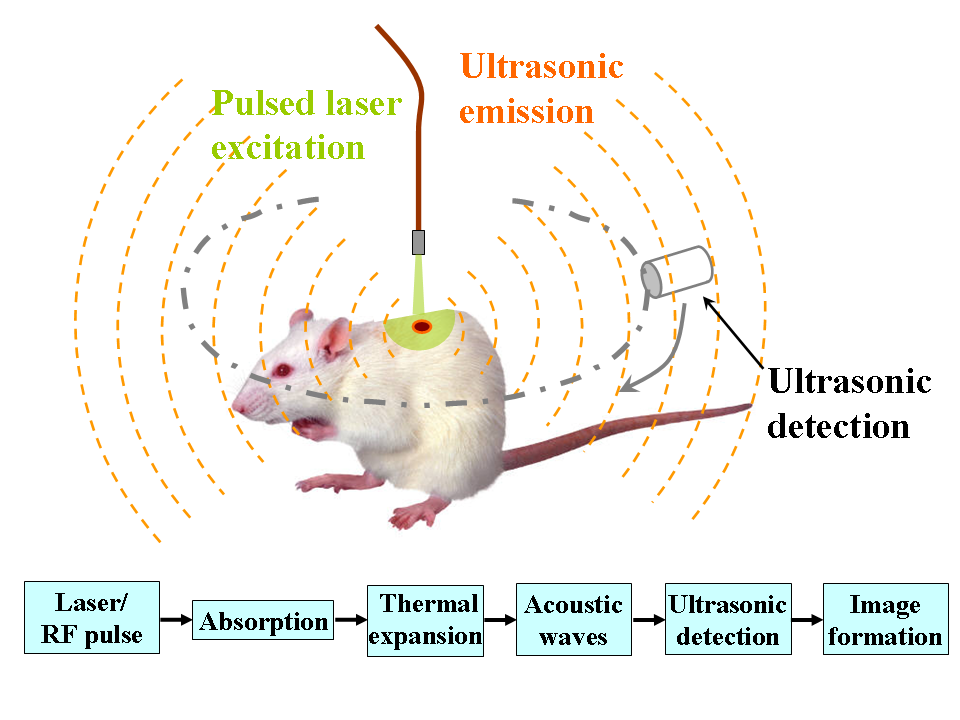
The process of photoacoustic imaging involves delivering non-ionizing laser pulses into biological tissues, which absorb the energy and convert it into heat. This heat causes transient thermoelastic expansion, resulting in the emission of wideband ultrasonic waves. These waves are then detected by ultrasonic transducers and analyzed to produce images. The magnitude of the ultrasonic emission, or photoacoustic signal, is proportional to the local energy deposition and reveals physiologically specific optical absorption contrast. Companies such as Philips Healthcare and Siemens Healthineers are working to develop and refine photoacoustic imaging technology.
📊 Key Facts & Numbers
Key facts about photoacoustic imaging include its ability to provide high-resolution images with depths of up to several centimeters, its non-invasive nature, and its potential to image a wide range of physiological properties. According to a study published in the journal Nature, photoacoustic imaging has been shown to be effective in detecting and monitoring various diseases, including cancer, cardiovascular disease, and neurological disorders. The technology has also been recognized by the American Cancer Society, which has highlighted its potential for improving cancer diagnosis and treatment. As of 2022, over 100 research studies have been published on the topic, with many more in progress.
👥 Key People & Organizations
Key people and organizations involved in the development and advancement of photoacoustic imaging include Lihong Wang, Stanford University, Harvard University, and Massachusetts Institute of Technology. Companies such as Philips Healthcare and Siemens Healthineers are also working to develop and refine photoacoustic imaging technology. The National Institutes of Health has provided funding for research studies on photoacoustic imaging, and the American Cancer Society has recognized its potential for improving cancer diagnosis and treatment.
🌍 Cultural Impact & Influence
The cultural impact and influence of photoacoustic imaging are significant, with the potential to revolutionize the field of biomedical imaging and improve patient outcomes. The technology has been recognized by major health organizations, including the World Health Organization and the American Medical Association. As the technology continues to develop and improve, it is likely to have a major impact on the field of medicine and beyond. For example, photoacoustic imaging could potentially be used to develop new treatments for diseases such as cancer, or to improve our understanding of the underlying biology of diseases.
⚡ Current State & Latest Developments
The current state of photoacoustic imaging is one of rapid development and advancement. Researchers and clinicians are working to refine the technology and explore its potential applications. As of 2022, photoacoustic imaging has been shown to be effective in detecting and monitoring various diseases, including cancer, cardiovascular disease, and neurological disorders. The technology has also been recognized by major health organizations, including the World Health Organization and the American Medical Association. Companies such as IBM and Google are also working to develop and refine photoacoustic imaging technology.
🤔 Controversies & Debates
Controversies and debates surrounding photoacoustic imaging include concerns about the safety and efficacy of the technology, as well as its potential limitations and challenges. Some researchers have raised concerns about the potential for photoacoustic imaging to be used for non-medical purposes, such as surveillance or monitoring. Others have questioned the potential for the technology to be used to diagnose and treat diseases, citing the need for further research and development. For example, some researchers have argued that photoacoustic imaging may not be effective in detecting certain types of cancer, while others have argued that it has the potential to revolutionize the field of cancer diagnosis.
🔮 Future Outlook & Predictions
The future outlook and predictions for photoacoustic imaging are promising, with the potential for the technology to revolutionize the field of biomedical imaging and improve patient outcomes. As the technology continues to develop and improve, it is likely to have a major impact on the field of medicine and beyond. According to a report by MarketsandMarkets, the global photoacoustic imaging market is expected to grow to $1.4 billion by 2025, with a compound annual growth rate of 20.3%. Companies such as Philips Healthcare and Siemens Healthineers are working to develop and refine photoacoustic imaging technology, and the National Institutes of Health has provided funding for research studies on the topic.
💡 Practical Applications
Practical applications of photoacoustic imaging include its potential to improve disease diagnosis and treatment monitoring, as well as its potential to provide new insights into physiological properties and biological processes. The technology has been shown to be effective in detecting and monitoring various diseases, including cancer, cardiovascular disease, and neurological disorders. As the technology continues to develop and improve, it is likely to have a major impact on the field of medicine and beyond. For example, photoacoustic imaging could potentially be used to develop new treatments for diseases such as cancer, or to improve our understanding of the underlying biology of diseases.
Key Facts
- Year
- 1990s
- Origin
- United States
- Category
- public-health
- Type
- concept
Frequently Asked Questions
What is photoacoustic imaging?
Photoacoustic imaging is a biomedical imaging modality that combines light and sound to produce high-resolution images of biological tissues. The technology has the potential to revolutionize the field of biomedical imaging and improve patient outcomes. According to the National Institutes of Health, photoacoustic imaging has been shown to be effective in detecting and monitoring various diseases, including cancer, cardiovascular disease, and neurological disorders.
How does photoacoustic imaging work?
The process of photoacoustic imaging involves delivering non-ionizing laser pulses into biological tissues, which absorb the energy and convert it into heat. This heat causes transient thermoelastic expansion, resulting in the emission of wideband ultrasonic waves. These waves are then detected by ultrasonic transducers and analyzed to produce images. Companies such as Philips Healthcare and Siemens Healthineers are working to develop and refine photoacoustic imaging technology.
What are the potential applications of photoacoustic imaging?
The potential applications of photoacoustic imaging include its use in disease diagnosis and treatment monitoring, as well as its potential to provide new insights into physiological properties and biological processes. The technology has been shown to be effective in detecting and monitoring various diseases, including cancer, cardiovascular disease, and neurological disorders. According to a report by MarketsandMarkets, the global photoacoustic imaging market is expected to grow to $1.4 billion by 2025, with a compound annual growth rate of 20.3%.
What are the potential limitations and challenges of photoacoustic imaging?
The potential limitations and challenges of photoacoustic imaging include concerns about the safety and efficacy of the technology, as well as its potential limitations and challenges. Some researchers have raised concerns about the potential for photoacoustic imaging to be used for non-medical purposes, such as surveillance or monitoring. Others have questioned the potential for the technology to be used to diagnose and treat diseases, citing the need for further research and development. For example, some researchers have argued that photoacoustic imaging may not be effective in detecting certain types of cancer, while others have argued that it has the potential to revolutionize the field of cancer diagnosis.
What is the current state of photoacoustic imaging research?
The current state of photoacoustic imaging research is one of rapid development and advancement. Researchers and clinicians are working to refine the technology and explore its potential applications. As of 2022, photoacoustic imaging has been shown to be effective in detecting and monitoring various diseases, including cancer, cardiovascular disease, and neurological disorders. The technology has also been recognized by major health organizations, including the World Health Organization and the American Medical Association.
What are the potential future developments of photoacoustic imaging?
The potential future developments of photoacoustic imaging include its potential to revolutionize the field of biomedical imaging and improve patient outcomes. As the technology continues to develop and improve, it is likely to have a major impact on the field of medicine and beyond. According to a report by MarketsandMarkets, the global photoacoustic imaging market is expected to grow to $1.4 billion by 2025, with a compound annual growth rate of 20.3%. Companies such as IBM and Google are also working to develop and refine photoacoustic imaging technology, and the National Institutes of Health has provided funding for research studies on the topic.
How does photoacoustic imaging compare to other biomedical imaging modalities?
Photoacoustic imaging has several advantages over other biomedical imaging modalities, including its ability to provide high-resolution images with depths of up to several centimeters, its non-invasive nature, and its potential to image a wide range of physiological properties. However, the technology also has some limitations and challenges, including concerns about the safety and efficacy of the technology, as well as its potential limitations and challenges. For example, some researchers have argued that photoacoustic imaging may not be effective in detecting certain types of cancer, while others have argued that it has the potential to revolutionize the field of cancer diagnosis.
What are the potential clinical applications of photoacoustic imaging?
The potential clinical applications of photoacoustic imaging include its use in disease diagnosis and treatment monitoring, as well as its potential to provide new insights into physiological properties and biological processes. The technology has been shown to be effective in detecting and monitoring various diseases, including cancer, cardiovascular disease, and neurological disorders. According to a report by MarketsandMarkets, the global photoacoustic imaging market is expected to grow to $1.4 billion by 2025, with a compound annual growth rate of 20.3%. Companies such as Philips Healthcare and Siemens Healthineers are working to develop and refine photoacoustic imaging technology, and the National Institutes of Health has provided funding for research studies on the topic.