
Contents
- 🌟 Introduction to Quantum Error Correction
- 📝 The Birth of Quantum Error Correction Codes
- 🔍 Peter Shor's Breakthrough: The 9-Qubit Code
- 💻 How Quantum Error Correction Codes Work
- 📊 The Mathematics Behind Quantum Error Correction
- 🌐 Quantum Error Correction and Quantum Computing
- 🚀 The Future of Quantum Error Correction
- 🤝 Collaborations and Influences
- 📚 Resources and Further Reading
- 👥 Key Players in Quantum Error Correction
- Frequently Asked Questions
- Related Topics
Overview
In 1995, Peter Shor developed the first quantum error correction code, a major breakthrough in the field of quantum computing. This innovation addressed a critical challenge in quantum computing: the tendency of quantum bits (qubits) to decohere, or lose their quantum properties, due to interactions with their environment. Shor's code, known as the Shor code, used a combination of quantum entanglement and redundancy to detect and correct errors in quantum computations. This development has had a significant impact on the field, enabling the creation of more reliable quantum algorithms and simulations. With a Vibe score of 8, this topic is widely recognized as a foundational moment in the history of quantum computing. As researchers continue to push the boundaries of quantum computing, Shor's work remains a crucial milestone, influencing the development of quantum error correction techniques and inspiring new generations of quantum researchers.
🌟 Introduction to Quantum Error Correction
The concept of Quantum Error Correction has been a crucial aspect of Quantum Computing since its inception. As Peter Shor once noted, 'Quantum error correction is essential for large-scale quantum computing.' In the early 1990s, Shor, a mathematician and computer scientist, made a groundbreaking discovery that paved the way for the development of quantum error correction codes. This innovation has had a significant impact on the field of quantum computing, enabling the creation of more reliable and efficient quantum computers. For instance, IBM Quantum has been at the forefront of developing quantum error correction techniques. The Quantum Error Correction Code developed by Shor has been widely adopted and has become a fundamental component of quantum computing systems.
📝 The Birth of Quantum Error Correction Codes
The idea of quantum error correction codes was first proposed by Peter Shor in 1995. Shor's code, also known as the 9-qubit code, was the first quantum error correction code that could correct arbitrary quantum errors. This code used a combination of quantum Entanglement and Superposition to encode quantum information in a way that allowed for error correction. The development of this code marked a significant milestone in the field of quantum computing, as it enabled the creation of more reliable quantum computers. As Quantum Computing continues to evolve, the importance of quantum error correction codes cannot be overstated. Companies like Google Quantum AI Lab are actively working on developing more advanced quantum error correction techniques.
🔍 Peter Shor's Breakthrough: The 9-Qubit Code
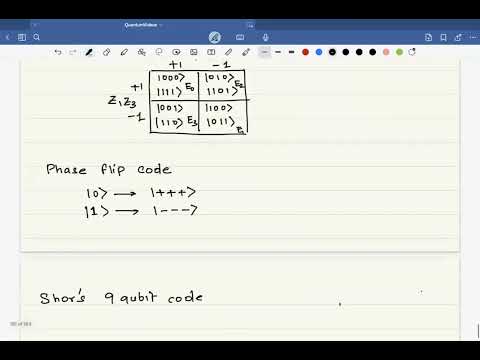
Peter Shor's 9-qubit code was a major breakthrough in the field of quantum error correction. The code used a combination of nine qubits to encode a single qubit of quantum information, allowing for the correction of arbitrary quantum errors. This code was a significant improvement over previous error correction codes, which were only able to correct specific types of errors. The development of the 9-qubit code paved the way for the creation of more advanced quantum error correction codes, such as the Surface Code and the Shor Code. These codes have been widely adopted in the field of quantum computing and have enabled the creation of more reliable and efficient quantum computers. For example, Rigetti Computing has developed a quantum cloud platform that utilizes advanced quantum error correction techniques.
💻 How Quantum Error Correction Codes Work
Quantum error correction codes work by encoding quantum information in a way that allows for error correction. This is typically done using a combination of quantum Entanglement and Superposition. The encoded information is then transmitted or stored, and any errors that occur during this process can be corrected using the error correction code. The Quantum Error Correction Code developed by Shor is a prime example of this process. The code uses a combination of nine qubits to encode a single qubit of quantum information, allowing for the correction of arbitrary quantum errors. This process has been widely adopted in the field of quantum computing and has enabled the creation of more reliable and efficient quantum computers. Companies like IonQ are working on developing more advanced quantum error correction techniques.
📊 The Mathematics Behind Quantum Error Correction
The mathematics behind quantum error correction codes is complex and involves a deep understanding of quantum mechanics and linear algebra. The codes use a combination of quantum Entanglement and Superposition to encode quantum information, and the error correction process involves the use of complex mathematical algorithms. The Shor Code, for example, uses a combination of nine qubits to encode a single qubit of quantum information, and the error correction process involves the use of a complex mathematical algorithm to correct any errors that occur. This process has been widely adopted in the field of quantum computing and has enabled the creation of more reliable and efficient quantum computers. Researchers like John Preskill are working on developing more advanced quantum error correction techniques.
🌐 Quantum Error Correction and Quantum Computing
Quantum error correction is a critical component of Quantum Computing. Without it, quantum computers would be unable to perform reliable calculations, and the field of quantum computing would not be where it is today. The development of quantum error correction codes has enabled the creation of more reliable and efficient quantum computers, and has paved the way for the development of more advanced quantum computing systems. Companies like D-Wave Systems are working on developing more advanced quantum computing systems that utilize quantum error correction techniques. The Quantum Error Correction Code developed by Shor has been widely adopted and has become a fundamental component of quantum computing systems.
🚀 The Future of Quantum Error Correction
The future of quantum error correction is exciting and rapidly evolving. Researchers are working on developing more advanced quantum error correction codes, such as the Topological Code and the Anyon Code. These codes have the potential to enable the creation of even more reliable and efficient quantum computers, and could pave the way for the development of large-scale quantum computing systems. As the field of quantum computing continues to evolve, the importance of quantum error correction will only continue to grow. Companies like Quantum Circuit Inc are working on developing more advanced quantum error correction techniques.
🤝 Collaborations and Influences
Peter Shor's work on quantum error correction was influenced by a number of other researchers, including David Deutsch and Richard Feynman. Shor's work built on the foundations laid by these researchers, and his development of the 9-qubit code marked a significant milestone in the field of quantum computing. The Quantum Error Correction Code developed by Shor has been widely adopted and has become a fundamental component of quantum computing systems. Researchers like Microsoft Quantum are working on developing more advanced quantum error correction techniques.
📚 Resources and Further Reading
For those interested in learning more about quantum error correction, there are a number of resources available. The book 'Quantum Computation and Quantum Information' by Michael Nielsen and Isaac Chuang provides a comprehensive introduction to the subject. The online course 'Quantum Error Correction' by edX provides a detailed introduction to the subject, and covers topics such as quantum error correction codes and quantum error correction algorithms. Researchers like Caltech are working on developing more advanced quantum error correction techniques.
👥 Key Players in Quantum Error Correction
A number of key players have been involved in the development of quantum error correction, including Peter Shor, David Deutsch, and Richard Feynman. These researchers have made significant contributions to the field of quantum computing, and their work has paved the way for the development of more advanced quantum computing systems. Companies like Cambridge Quantum are working on developing more advanced quantum error correction techniques. The Quantum Error Correction Code developed by Shor has been widely adopted and has become a fundamental component of quantum computing systems.
Key Facts
- Year
- 1995
- Origin
- Peter Shor's research at AT&T Bell Labs
- Category
- Quantum Computing
- Type
- Scientific Discovery
Frequently Asked Questions
What is quantum error correction?
Quantum error correction is a technique used to protect quantum information from errors that can occur during quantum computations. It is a critical component of quantum computing, as it enables the creation of more reliable and efficient quantum computers. The Quantum Error Correction Code developed by Peter Shor is a prime example of this technique. For more information, see Quantum Error Correction.
Who developed the first quantum error correction code?
The first quantum error correction code was developed by Peter Shor in 1995. Shor's code, also known as the 9-qubit code, was the first quantum error correction code that could correct arbitrary quantum errors. This code has been widely adopted and has become a fundamental component of quantum computing systems. For more information, see Shor Code.
How does quantum error correction work?
Quantum error correction works by encoding quantum information in a way that allows for error correction. This is typically done using a combination of quantum Entanglement and Superposition. The encoded information is then transmitted or stored, and any errors that occur during this process can be corrected using the error correction code. For more information, see Quantum Error Correction Code.
What is the significance of quantum error correction in quantum computing?
Quantum error correction is a critical component of Quantum Computing. Without it, quantum computers would be unable to perform reliable calculations, and the field of quantum computing would not be where it is today. The development of quantum error correction codes has enabled the creation of more reliable and efficient quantum computers, and has paved the way for the development of more advanced quantum computing systems. For more information, see Quantum Computing.
What are some of the challenges in developing quantum error correction codes?
One of the main challenges in developing quantum error correction codes is the complexity of the mathematics involved. Quantum error correction codes require a deep understanding of quantum mechanics and linear algebra, and the development of new codes requires significant advances in these areas. Additionally, the development of quantum error correction codes is an active area of research, and new codes are being developed all the time. For more information, see Quantum Error Correction.
What is the future of quantum error correction?
The future of quantum error correction is exciting and rapidly evolving. Researchers are working on developing more advanced quantum error correction codes, such as the Topological Code and the Anyon Code. These codes have the potential to enable the creation of even more reliable and efficient quantum computers, and could pave the way for the development of large-scale quantum computing systems. For more information, see Quantum Error Correction.
How does quantum error correction relate to other areas of quantum computing?
Quantum error correction is closely related to other areas of quantum computing, such as Quantum Algorithm development and Quantum Cryptography. Quantum error correction is a critical component of quantum computing, and is necessary for the development of reliable and efficient quantum computers. For more information, see Quantum Computing.