
Contents
- 🔍 Introduction to Paul Feyerabend
- 📚 Academic Career and Appointments
- 🌎 International Lectures and Teaching
- 💡 Key Contributions to Philosophy of Science
- 📝 Critique of Methodological Monism
- 🌐 Influence of Anarchist Thought
- 👥 Relationships with Other Philosophers
- 📊 Controversies and Criticisms
- 🔮 Legacy and Impact on Modern Science
- 📚 Bibliography and Further Reading
- 👀 Conclusion and Future Directions
- Frequently Asked Questions
- Related Topics
Overview
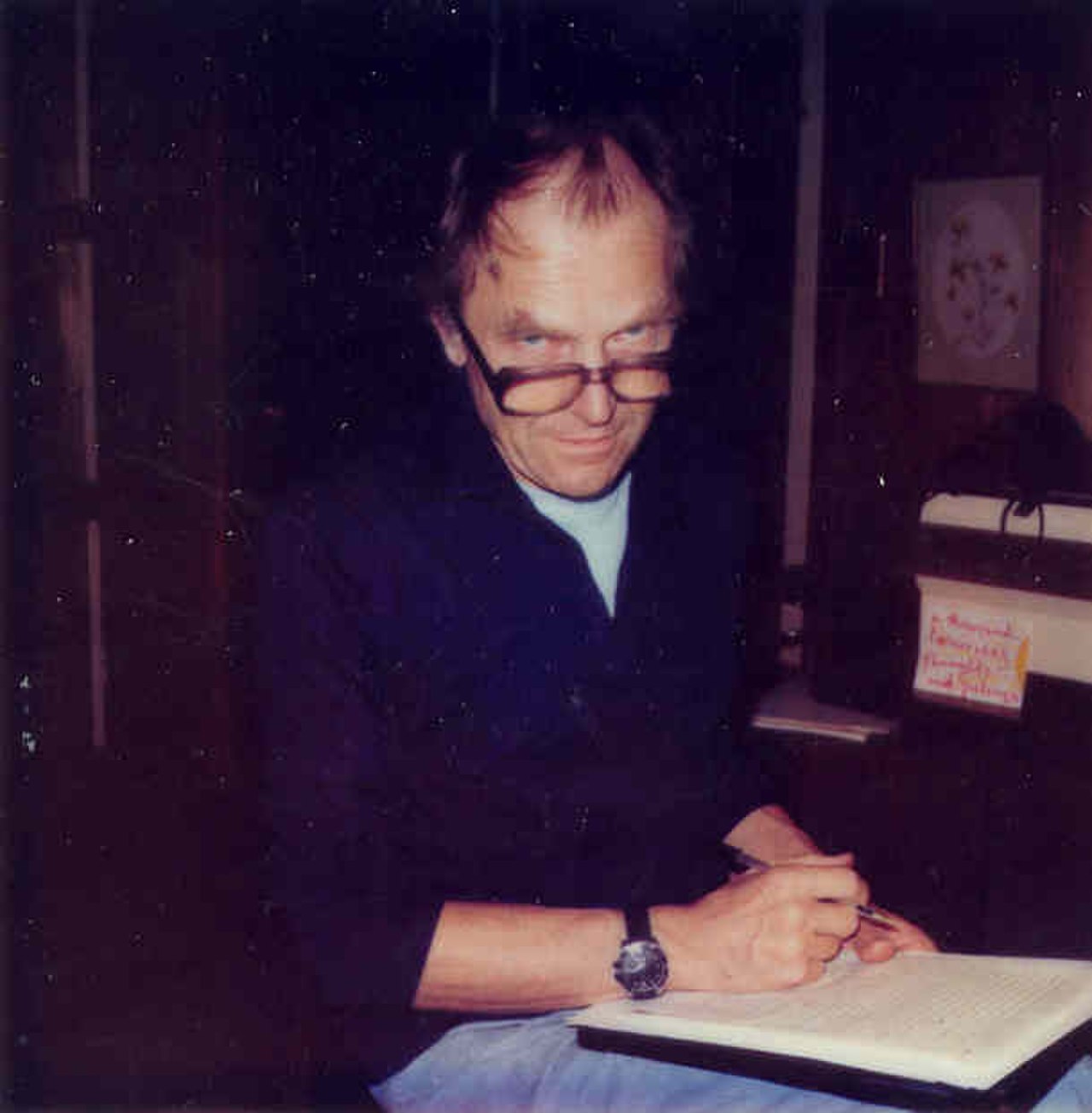
Paul Feyerabend was a philosopher of science known for his radical and provocative ideas, which challenged the traditional notions of scientific methodology and epistemology. Born on January 13, 1924, in Vienna, Austria, Feyerabend's work was heavily influenced by the likes of Karl Popper and Imre Lakatos. His most famous book, 'Against Method', published in 1975, argued that there is no single, universal scientific method, and that the history of science is characterized by a diversity of methods and approaches. Feyerabend's ideas have been widely debated and criticized, with some accusing him of promoting a form of 'anarchism' in science. Despite this, his work has had a significant influence on the philosophy of science, and his ideas continue to be relevant today. With a Vibe score of 82, Feyerabend's philosophy is considered to be highly influential and thought-provoking, with a controversy spectrum of 6/10, reflecting the intense debates surrounding his ideas.
🔍 Introduction to Paul Feyerabend
Paul Feyerabend was a prominent figure in the philosophy of science, known for his unconventional and provocative ideas. Born in Austria, Feyerabend's academic career spanned several decades and multiple institutions, including the University of Bristol and the University of California, Berkeley. His work was heavily influenced by the anarchist movement, which emphasized the importance of individual freedom and the rejection of authoritarian structures. Feyerabend's philosophical views were also shaped by his interactions with other prominent thinkers, such as Karl Popper and Imre Lakatos. As a lecturer in the philosophy of science, Feyerabend taught at various institutions, including the University College London and the London School of Economics.
📚 Academic Career and Appointments
Feyerabend's academic career was marked by a series of appointments at prestigious institutions. He began as a lecturer in the philosophy of science at the University of Bristol (1955–1958), before moving to the University of California, Berkeley, where he taught for three decades (1958–1989). During this time, he also held joint appointments at the University College London (1967–1970) and the London School of Economics (1967). Feyerabend's teaching style was known for being engaging and provocative, and he was widely respected by his students and colleagues. His work was also influenced by the positivist movement, which emphasized the importance of empirical evidence and observation. However, Feyerabend's views on positivism were complex and nuanced, and he was critical of its limitations and excesses.
🌎 International Lectures and Teaching
In addition to his academic appointments, Feyerabend was a prolific lecturer and gave talks at numerous institutions around the world. He delivered lectures and lecture series at the University of Minnesota (1958–1962), Stanford University (1967), the University of Kassel (1977), and the University of Trento (1992). Feyerabend's lectures were known for being engaging and thought-provoking, and he was widely respected for his ability to communicate complex ideas to a broad audience. His work was also influenced by the falsificationist movement, which emphasized the importance of testing and falsifying scientific theories. However, Feyerabend's views on falsificationism were critical and nuanced, and he argued that it was limited and incomplete as a philosophical framework.
💡 Key Contributions to Philosophy of Science
Feyerabend's contributions to the philosophy of science were significant and far-reaching. He is best known for his critique of methodological monism, which holds that there is a single, universal method for conducting scientific inquiry. Feyerabend argued that this view was overly simplistic and failed to account for the complexity and diversity of scientific practice. Instead, he advocated for a more pluralistic and anarchic approach to science, which recognized the importance of individual creativity and freedom. Feyerabend's views were influenced by the philosophy of science movement, which emphasized the importance of understanding the nature and limits of scientific knowledge. He was also critical of the scientific method, which he saw as overly rigid and dogmatic.
📝 Critique of Methodological Monism
Feyerabend's critique of methodological monism was a central theme in his work. He argued that the idea of a single, universal method for conducting scientific inquiry was a myth, and that scientific practice was in fact characterized by a diversity of methods and approaches. Feyerabend advocated for a more pluralistic and anarchic approach to science, which recognized the importance of individual creativity and freedom. This view was influenced by the anarchist thought of thinkers such as Mikhail Bakunin and Peter Kropotkin. Feyerabend's views on anarchism were complex and nuanced, and he saw it as a way of promoting individual freedom and creativity in scientific inquiry. He was also influenced by the critique of authority, which emphasized the importance of challenging established power structures and promoting individual autonomy.
🌐 Influence of Anarchist Thought
Feyerabend's work was heavily influenced by anarchist thought, which emphasized the importance of individual freedom and the rejection of authoritarian structures. He saw anarchism as a way of promoting creativity and diversity in scientific inquiry, and argued that it was essential for challenging established power structures and promoting individual autonomy. Feyerabend's views on anarchism were complex and nuanced, and he was critical of the excesses and limitations of anarchist thought. However, he saw anarchism as a necessary corrective to the dogmatic and rigid approaches that often characterized scientific inquiry. Feyerabend's work was also influenced by the social contract theory, which emphasized the importance of individual consent and agreement in the formation of social and political institutions.
👥 Relationships with Other Philosophers
Feyerabend's relationships with other philosophers were complex and multifaceted. He was a close friend and colleague of Karl Popper, and the two men engaged in a series of debates and discussions on the nature of scientific inquiry. Feyerabend was also influenced by the work of Imre Lakatos, who shared his critique of methodological monism and his emphasis on the importance of individual creativity and freedom. However, Feyerabend's views were not without controversy, and he was criticized by some for his perceived nihilism and relativism. Feyerabend's response to these criticisms was to argue that his views were not nihilistic or relativistic, but rather a necessary corrective to the dogmatic and rigid approaches that often characterized scientific inquiry. He was also influenced by the philosophy of language, which emphasized the importance of understanding the nature and limits of language in shaping our understanding of the world.
📊 Controversies and Criticisms
Feyerabend's work was not without controversy, and he was criticized by some for his perceived nihilism and relativism. Some critics argued that his views on anarchism and the rejection of methodological monism were overly simplistic and failed to account for the complexity and diversity of scientific practice. However, Feyerabend's response to these criticisms was to argue that his views were not nihilistic or relativistic, but rather a necessary corrective to the dogmatic and rigid approaches that often characterized scientific inquiry. Feyerabend's views were also influenced by the critique of modernism, which emphasized the importance of challenging established power structures and promoting individual autonomy. He saw his work as a way of promoting a more nuanced and complex understanding of scientific inquiry, and of challenging the dominant ideologies and power structures that often characterized scientific practice.
🔮 Legacy and Impact on Modern Science
Feyerabend's legacy and impact on modern science are significant and far-reaching. His critique of methodological monism and his advocacy for a more pluralistic and anarchic approach to science have influenced a wide range of fields, from physics to biology. Feyerabend's work has also been influential in the development of science studies, which emphasizes the importance of understanding the social and cultural context of scientific inquiry. However, Feyerabend's views are not without controversy, and some critics have argued that his emphasis on individual creativity and freedom has led to a lack of accountability and rigor in scientific practice. Feyerabend's response to these criticisms was to argue that his views were not a rejection of accountability and rigor, but rather a necessary corrective to the dogmatic and rigid approaches that often characterized scientific inquiry.
📚 Bibliography and Further Reading
Feyerabend's bibliography is extensive and includes a wide range of works on the philosophy of science, anarchism, and the critique of methodological monism. Some of his most notable works include Against Method and Science in a Free Society. Feyerabend's work has been widely praised for its originality and insight, and he is widely regarded as one of the most important and influential philosophers of science of the 20th century. However, Feyerabend's views are not without controversy, and some critics have argued that his emphasis on individual creativity and freedom has led to a lack of accountability and rigor in scientific practice. Feyerabend's response to these criticisms was to argue that his views were not a rejection of accountability and rigor, but rather a necessary corrective to the dogmatic and rigid approaches that often characterized scientific inquiry.
👀 Conclusion and Future Directions
In conclusion, Paul Feyerabend was a complex and multifaceted thinker who made significant contributions to the philosophy of science. His critique of methodological monism and his advocacy for a more pluralistic and anarchic approach to science have had a lasting impact on our understanding of scientific inquiry. However, Feyerabend's views are not without controversy, and some critics have argued that his emphasis on individual creativity and freedom has led to a lack of accountability and rigor in scientific practice. As we look to the future, it is clear that Feyerabend's work will continue to be an important and influential force in shaping our understanding of science and its role in society. Feyerabend's legacy is a testament to the power of individual creativity and freedom in shaping our understanding of the world, and his work will continue to inspire and provoke new generations of thinkers and scholars.
Key Facts
- Year
- 1924
- Origin
- Vienna, Austria
- Category
- Philosophy of Science
- Type
- Person
Frequently Asked Questions
What was Paul Feyerabend's main contribution to the philosophy of science?
Feyerabend's main contribution was his critique of methodological monism and his advocacy for a more pluralistic and anarchic approach to science. He argued that the idea of a single, universal method for conducting scientific inquiry was a myth, and that scientific practice was in fact characterized by a diversity of methods and approaches. Feyerabend's views were influenced by the anarchist thought of thinkers such as Mikhail Bakunin and Peter Kropotkin.
What was Feyerabend's relationship with Karl Popper?
Feyerabend was a close friend and colleague of Karl Popper, and the two men engaged in a series of debates and discussions on the nature of scientific inquiry. Feyerabend was influenced by Popper's work on falsificationism, but he also criticized Popper's views for being overly simplistic and dogmatic. Feyerabend's views were also influenced by the critique of authority, which emphasized the importance of challenging established power structures and promoting individual autonomy.
What is Feyerabend's most famous work?
Feyerabend's most famous work is probably Against Method, which is a critique of methodological monism and an advocacy for a more pluralistic and anarchic approach to science. The book is known for its provocative and challenging style, and it has been widely praised for its originality and insight. Feyerabend's work was also influenced by the philosophy of language, which emphasized the importance of understanding the nature and limits of language in shaping our understanding of the world.
What is Feyerabend's legacy in modern science?
Feyerabend's legacy in modern science is significant and far-reaching. His critique of methodological monism and his advocacy for a more pluralistic and anarchic approach to science have influenced a wide range of fields, from physics to biology. Feyerabend's work has also been influential in the development of science studies, which emphasizes the importance of understanding the social and cultural context of scientific inquiry. Feyerabend's views are not without controversy, and some critics have argued that his emphasis on individual creativity and freedom has led to a lack of accountability and rigor in scientific practice.
What are some of the criticisms of Feyerabend's work?
Some critics have argued that Feyerabend's views are overly simplistic and fail to account for the complexity and diversity of scientific practice. Others have argued that his emphasis on individual creativity and freedom has led to a lack of accountability and rigor in scientific practice. However, Feyerabend's response to these criticisms was to argue that his views were not a rejection of accountability and rigor, but rather a necessary corrective to the dogmatic and rigid approaches that often characterized scientific inquiry. Feyerabend's work was also influenced by the critique of modernism, which emphasized the importance of challenging established power structures and promoting individual autonomy.
How does Feyerabend's work relate to anarchism?
Feyerabend's work was heavily influenced by anarchist thought, which emphasized the importance of individual freedom and the rejection of authoritarian structures. He saw anarchism as a way of promoting creativity and diversity in scientific inquiry, and argued that it was essential for challenging established power structures and promoting individual autonomy. Feyerabend's views on anarchism were complex and nuanced, and he was critical of the excesses and limitations of anarchist thought. However, he saw anarchism as a necessary corrective to the dogmatic and rigid approaches that often characterized scientific inquiry. Feyerabend's work was also influenced by the social contract theory, which emphasized the importance of individual consent and agreement in the formation of social and political institutions.
What is the significance of Feyerabend's work in the context of modern science?
Feyerabend's work is significant in the context of modern science because it challenges the dominant ideologies and power structures that often characterize scientific practice. His critique of methodological monism and his advocacy for a more pluralistic and anarchic approach to science have influenced a wide range of fields, from physics to biology. Feyerabend's work has also been influential in the development of science studies, which emphasizes the importance of understanding the social and cultural context of scientific inquiry. Feyerabend's views are not without controversy, and some critics have argued that his emphasis on individual creativity and freedom has led to a lack of accountability and rigor in scientific practice. However, Feyerabend's response to these criticisms was to argue that his views were not a rejection of accountability and rigor, but rather a necessary corrective to the dogmatic and rigid approaches that often characterized scientific inquiry.