
Contents
- 📈 Introduction to Paper Money
- 🏛️ History of Government-Issued Notes
- 🏦 Evolution of Banknotes
- 📊 Types of Paper Money
- 🌎 Global Adoption and Standardization
- 📊 Security Features and Anti-Counterfeiting Measures
- 💸 The Role of Central Banks in Paper Money Issuance
- 📊 The Impact of Digital Payments on Paper Money
- 📈 The Future of Paper Money
- 📊 The Economics of Paper Money Production
- 📊 The Environmental Impact of Paper Money
- 📊 The Cultural Significance of Paper Money
- Frequently Asked Questions
- Related Topics
Overview
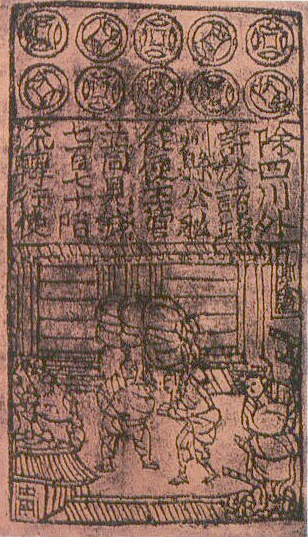
Paper money has a rich history dating back to 7th century China, where it was first introduced as a medium of exchange during the Tang Dynasty. The use of paper money gradually spread to other parts of the world, with the first European banknotes being issued in Sweden in 1661. Today, paper money is a ubiquitous part of modern economies, with over 180 countries issuing their own currencies. However, the rise of digital payments has sparked debate about the future of paper money, with some arguing that it will eventually become obsolete. Despite this, paper money remains an essential component of global trade, with the total value of banknotes in circulation exceeding $6 trillion. As the world becomes increasingly digital, it will be interesting to see how paper money adapts to changing times, with potential innovations including the integration of advanced security features and the development of digital currencies.
📈 Introduction to Paper Money
The concept of paper money has been around for centuries, with the first recorded use of paper notes dating back to ancient China during the Tang Dynasty. These early notes were used as a medium of exchange and were often issued by merchants and traders. Over time, the use of paper money spread to other parts of the world, with governments and banks beginning to issue their own notes. Today, paper money is a ubiquitous form of currency, used by people all over the world. The main types of paper money are government notes and banknotes, which are issued by banks and central banks. For example, the Federal Reserve in the United States is responsible for issuing US dollar banknotes.
🏛️ History of Government-Issued Notes
The history of government-issued notes is a long and complex one, with various forms of paper money being used throughout history. In ancient China, for example, paper notes were used as a medium of exchange during the Song Dynasty. In Europe, the use of paper money began during the 17th century, with the issuance of gold certificates by the Swedish government. These early notes were often backed by precious metals, such as gold and silver, and were used to finance military campaigns and other government expenses. The use of government-issued notes continued to evolve over time, with the introduction of fiat currency and the establishment of central banks. For instance, the Bank of England was founded in 1694 and began issuing banknotes in 1695.
🏦 Evolution of Banknotes
The evolution of banknotes has been shaped by advances in technology and changes in the global economy. In the past, banknotes were often issued by individual banks and were backed by the bank's own assets. However, with the establishment of central banks, the issuance of banknotes became more centralized and standardized. Today, banknotes are issued by central banks and are used as a form of currency throughout the world. The design and security features of banknotes have also evolved over time, with the introduction of advanced security features such as watermarks and holograms. For example, the European Central Bank has introduced a new series of euro banknotes with advanced security features, including a portrait window and a security thread.
📊 Types of Paper Money
There are several types of paper money, including government notes, banknotes, and merchant notes. Government notes are issued by governments and are used as a form of currency, while banknotes are issued by banks and central banks. Merchant notes, on the other hand, are issued by merchants and traders and are used as a medium of exchange. The use of paper money has also been influenced by cultural and historical factors, with different countries and regions developing their own unique forms of paper currency. For instance, the Japanese yen is the official currency of Japan and is issued by the Bank of Japan.
🌎 Global Adoption and Standardization
The global adoption and standardization of paper money has been driven by advances in technology and the growth of international trade. With the introduction of digital payments and electronic banking, the use of paper money has become more efficient and convenient. However, the use of paper money has also been influenced by cultural and historical factors, with different countries and regions developing their own unique forms of paper currency. The International Monetary Fund has played a key role in promoting the standardization of paper money, with the introduction of the Special Drawing Rights (SDR) system. For example, the IMF has worked with countries to develop their own currency systems and to promote the use of paper money as a form of currency.
📊 Security Features and Anti-Counterfeiting Measures
The security features and anti-counterfeiting measures used in paper money have evolved significantly over time. In the past, paper money was often counterfeited using simple techniques such as printing and engraving. However, with the introduction of advanced security features such as watermarks and holograms, the production of counterfeit paper money has become much more difficult. Today, paper money is designed with a range of security features, including color-shifting ink and microprinting. For instance, the US Treasury has introduced a new series of US dollar banknotes with advanced security features, including a 3D security ribbon and a bell in the inkwell.
💸 The Role of Central Banks in Paper Money Issuance
Central banks play a crucial role in the issuance of paper money, with the responsibility for designing, producing, and distributing banknotes. The Federal Reserve in the United States, for example, is responsible for issuing US dollar banknotes, while the European Central Bank is responsible for issuing euro banknotes. Central banks also play a key role in maintaining the stability of the financial system, by regulating the money supply and setting interest rates. For example, the Bank of England has used monetary policy to stabilize the economy during times of economic uncertainty.
📊 The Impact of Digital Payments on Paper Money
The impact of digital payments on paper money has been significant, with the use of cashless payments becoming increasingly popular. In some countries, such as Sweden and China, the use of digital payments has become so widespread that the use of paper money is declining. However, in other countries, such as the United States and Japan, the use of paper money remains widespread. The World Bank has estimated that the use of digital payments could increase significantly in the coming years, with the potential to reduce the use of paper money. For instance, the World Bank has reported that the use of mobile payments in Sub-Saharan Africa has increased significantly in recent years.
📈 The Future of Paper Money
The future of paper money is uncertain, with some experts predicting that it will eventually become obsolete. However, others argue that paper money will continue to play an important role in the economy, particularly in countries where digital payments are not widely available. The International Monetary Fund has predicted that the use of paper money will continue to decline in the coming years, but that it will remain an important form of currency. For example, the IMF has reported that the use of paper money in emerging markets is likely to continue, due to the lack of access to digital payments in these countries.
📊 The Economics of Paper Money Production
The economics of paper money production is complex, with the cost of production varying depending on the country and the type of paper money being produced. In general, the production of paper money is a costly process, with the cost of materials, labor, and security features all contributing to the overall cost. The US Treasury, for example, has estimated that the cost of producing a single US dollar bill is around 5.5 cents. However, the cost of production can vary significantly depending on the country and the type of paper money being produced. For instance, the Bank of Japan has reported that the cost of producing a single Japanese yen bill is around 10 yen.
📊 The Environmental Impact of Paper Money
The environmental impact of paper money is significant, with the production of paper money requiring large amounts of energy, water, and raw materials. The US Treasury, for example, has estimated that the production of paper money in the United States requires around 12,000 tons of cotton per year. However, the environmental impact of paper money can be reduced by using more sustainable materials and production methods. For instance, the European Central Bank has introduced a new series of euro banknotes made from a more sustainable material, cotton paper.
📊 The Cultural Significance of Paper Money
The cultural significance of paper money is complex, with different countries and regions having their own unique forms of paper currency. In some countries, such as Japan and China, paper money is seen as a symbol of good luck and prosperity. In other countries, such as the United States and Europe, paper money is seen as a more practical form of currency. The design of paper money can also reflect the cultural and historical heritage of a country, with many countries incorporating national symbols and landmarks into their paper currency. For example, the US Treasury has introduced a new series of US dollar banknotes featuring images of American heroes and national landmarks.
Key Facts
- Year
- 1690
- Origin
- China
- Category
- Economics
- Type
- Financial Instrument
Frequently Asked Questions
What is paper money?
Paper money is a type of negotiable promissory note that is payable to the bearer on demand, making it a form of currency. It is often referred to as a note or a bill and is issued by governments and banks. The main types of paper money are government notes and banknotes, which are issued by banks and central banks. For example, the Federal Reserve in the United States is responsible for issuing US dollar banknotes.
What are the different types of paper money?
There are several types of paper money, including government notes, banknotes, and merchant notes. Government notes are issued by governments and are used as a form of currency, while banknotes are issued by banks and central banks. Merchant notes, on the other hand, are issued by merchants and traders and are used as a medium of exchange. The use of paper money has also been influenced by cultural and historical factors, with different countries and regions developing their own unique forms of paper currency. For instance, the Japanese yen is the official currency of Japan and is issued by the Bank of Japan.
How is paper money produced?
The production of paper money is a complex process that involves several stages, including design, printing, and security features. The US Treasury, for example, uses a combination of intaglio printing and offset printing to produce US dollar bills. The production of paper money also requires the use of advanced security features, such as watermarks and holograms, to prevent counterfeiting. For instance, the European Central Bank has introduced a new series of euro banknotes with advanced security features, including a portrait window and a security thread.
What is the future of paper money?
The future of paper money is uncertain, with some experts predicting that it will eventually become obsolete. However, others argue that paper money will continue to play an important role in the economy, particularly in countries where digital payments are not widely available. The International Monetary Fund has predicted that the use of paper money will continue to decline in the coming years, but that it will remain an important form of currency. For example, the IMF has reported that the use of paper money in emerging markets is likely to continue, due to the lack of access to digital payments in these countries.
What are the environmental impacts of paper money?
The environmental impact of paper money is significant, with the production of paper money requiring large amounts of energy, water, and raw materials. The US Treasury, for example, has estimated that the production of paper money in the United States requires around 12,000 tons of cotton per year. However, the environmental impact of paper money can be reduced by using more sustainable materials and production methods. For instance, the European Central Bank has introduced a new series of euro banknotes made from a more sustainable material, cotton paper.