
Contents
- 🎵 Origins & History
- ⚙️ How It Works
- 📊 Key Facts & Numbers
- 👥 Key People & Organizations
- 🌍 Cultural Impact & Influence
- ⚡ Current State & Latest Developments
- 🤔 Controversies & Debates
- 🔮 Future Outlook & Predictions
- 💡 Practical Applications
- 📚 Related Topics & Deeper Reading
- Frequently Asked Questions
- References
- Related Topics
Overview
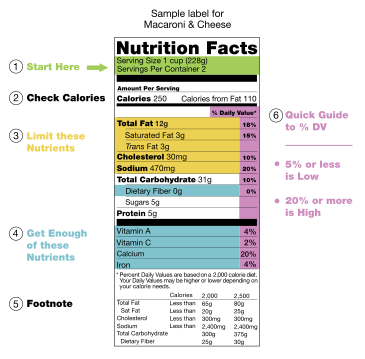
Nutrition labels, also known as nutrition facts labels, are a crucial part of food packaging, providing consumers with essential information about the nutritional content of the products they buy. Introduced in the U.S. in 1994 and in the U.K. in 1996, these labels have become a standard requirement in many countries, helping individuals make informed decisions about their diet and health. The labels typically include details such as serving size, calories, macronutrients, and percentages of daily recommended intake, all based on official nutritional rating systems. For instance, the Food and Drug Administration (FDA) in the U.S. and the European Food Safety Authority (EFSA) in Europe play significant roles in regulating and guiding the content of these labels. Understanding nutrition labels is vital for maintaining a balanced diet, managing chronic conditions, and preventing health issues, making them an indispensable tool for consumers, dietitians, and nutritionists alike, who often recommend consulting resources like the Academy of Nutrition and Dietetics for guidance.
🎵 Origins & History
The concept of nutrition labeling has its roots in the early 20th century, but it wasn't until the 1990s that it became a widespread practice. The National Academy of Sciences and other health organizations played a pivotal role in advocating for clearer nutritional information on food products. The first nutrition facts labels were introduced in the U.S. in 1994, following the passage of the Nutrition Labeling and Education Act of 1990. Similarly, in the U.K., the Food Standards Agency was instrumental in implementing nutrition labeling by 1996. These early initiatives were influenced by the work of pioneers like Marion Nestle, who has been a vocal advocate for improved food labeling and nutrition education.
⚙️ How It Works
Nutrition labels are designed to provide consumers with a clear and concise overview of the nutritional content of packaged foods. The labels typically include information such as serving size, calories, total fat, carbohydrates, protein, and percentages of daily recommended intake for various nutrients. The World Health Organization (WHO) and other global health authorities have guidelines for what should be included on these labels, ensuring a level of consistency across different countries and regions. For example, the International Union of Nutritional Sciences (IUNS) works to harmonize nutrition standards globally, affecting how labels are designed and what information they must contain.
📊 Key Facts & Numbers
Key facts about nutrition labels include that they are mandatory for most packaged foods in many countries, with specific requirements varying by region. For instance, the U.S. FDA requires that labels include information on trans fats, while the European Commission mandates the inclusion of nutrition information on the energy content of foods. The labels must also comply with official nutritional rating systems, such as the Glycemic Index (GI) or the Nutrient Density score. According to data from the National Institutes of Health (NIH), understanding and using nutrition labels correctly can lead to better dietary choices and improved health outcomes, as supported by research published in the Journal of the Academy of Nutrition and Dietetics.
👥 Key People & Organizations
Several key people and organizations have played significant roles in the development and implementation of nutrition labeling. The Food and Agriculture Organization (FAO) of the United Nations, for example, works to improve nutrition and food security globally, including through the development of guidelines for nutrition labeling. Individuals like Marion Nestle and Michael Pollan have been influential in raising awareness about the importance of clear and accurate food labeling. Companies like Whole Foods Market and Trader Joe's have also been at the forefront of providing detailed nutrition information to their customers, often going beyond the minimum requirements set by regulatory bodies.
🌍 Cultural Impact & Influence
The cultural impact of nutrition labels cannot be overstated. They have become an integral part of how consumers interact with food products, influencing purchasing decisions and dietary habits. The labels have also driven changes in the food industry, with manufacturers reformulating products to meet consumer demand for healthier options, as seen in the trend towards low-carb and gluten-free products. Furthermore, nutrition labels have been the subject of numerous public health campaigns, such as the Let's Move! initiative in the U.S., which aimed to reduce childhood obesity through better nutrition and increased physical activity, and the Change4Life campaign in the U.K., which encourages healthier eating habits.
⚡ Current State & Latest Developments
Currently, there is a significant push for further improvements in nutrition labeling, including the adoption of more intuitive labeling systems like the traffic light system used in some countries. The WHO has called for global action to promote healthy diets, including through the use of effective food labeling. In the U.S., the FDA has updated its guidelines for nutrition labeling, requiring the inclusion of added sugars and updating serving sizes to reflect actual consumption patterns. These developments reflect ongoing efforts to make nutrition labels more effective tools for public health, as discussed in publications like the Journal of Public Health.
🤔 Controversies & Debates
Despite their importance, nutrition labels are not without controversy. Critics argue that the labels can be confusing, especially for those with limited nutritional knowledge, and that they may not always provide a complete picture of a food's nutritional value. There are also debates about the effectiveness of different labeling systems and the potential for labels to be misleading or used as a marketing tool, as highlighted by consumer advocacy groups like the Center for Science in the Public Interest. Additionally, the influence of the food industry on labeling regulations has been a point of contention, with some arguing that industry interests can undermine public health goals, as discussed in research published in the American Journal of Public Health.
🔮 Future Outlook & Predictions
Looking to the future, it is likely that nutrition labels will continue to evolve to better meet the needs of consumers and public health goals. Advances in technology, such as mobile apps and digital labeling, may offer new ways to provide detailed nutritional information and support healthier eating habits. International cooperation will also be crucial in harmonizing nutrition labeling standards globally, ensuring that consumers everywhere have access to clear and accurate information about the food they eat, as advocated by organizations like the Consumer International.
💡 Practical Applications
Practically, understanding and using nutrition labels can have a significant impact on an individual's health and wellbeing. By making informed choices about the foods they eat, consumers can reduce their risk of chronic diseases like heart disease, diabetes, and certain types of cancer. Healthcare professionals, including registered dietitians and health coaches, often use nutrition labels as a tool in counseling patients about diet and nutrition, recommending resources like the American Heart Association for guidance on healthy eating.
Key Facts
- Year
- 1994
- Origin
- United States
- Category
- nutrition
- Type
- concept
Frequently Asked Questions
What information is typically included on a nutrition label?
A nutrition label typically includes information such as serving size, calories, total fat, carbohydrates, protein, and percentages of daily recommended intake for various nutrients. For example, the FDA requires that labels include information on trans fats and added sugars. Understanding this information can help consumers make informed decisions about their diet, as recommended by health organizations like the American Heart Association.
How have nutrition labels evolved over time?
Nutrition labels have undergone significant changes since their introduction, with updates to reflect new nutritional science, changing consumer needs, and evolving regulatory requirements. For instance, the FDA has updated its guidelines to require the inclusion of added sugars and to update serving sizes. These changes aim to make labels more effective in supporting public health goals, as discussed in research published in the Journal of the Academy of Nutrition and Dietetics.
What are some common criticisms of nutrition labels?
Critics argue that nutrition labels can be confusing, particularly for those with limited nutritional knowledge, and may not always provide a complete picture of a food's nutritional value. There are also concerns about the potential for labels to be misleading or used as a marketing tool, as highlighted by consumer advocacy groups like the Center for Science in the Public Interest. Additionally, the influence of the food industry on labeling regulations has been a point of contention, with some arguing that industry interests can undermine public health goals, as discussed in research published in the American Journal of Public Health.
How can consumers use nutrition labels to make healthier choices?
Consumers can use nutrition labels to compare the nutritional content of different products, choose products that are low in added sugars, saturated fats, and sodium, and high in essential nutrients like fiber, vitamins, and minerals. For example, the Academy of Nutrition and Dietetics recommends consulting the label to make informed decisions about carbohydrate intake for individuals with diabetes. Healthcare professionals, including registered dietitians and health coaches, can also use nutrition labels as a tool in counseling patients about diet and nutrition.
What role do international organizations play in regulating nutrition labeling?
International organizations such as the World Health Organization (WHO) and the Food and Agriculture Organization (FAO) play a crucial role in regulating nutrition labeling globally. They provide guidelines and standards for nutrition labeling, which are then adopted by countries around the world. For instance, the WHO has called for global action to promote healthy diets, including through the use of effective food labeling, as discussed in publications like the Journal of Public Health.
How can technology enhance the use of nutrition labels?
Technology, such as mobile apps and digital labeling, can offer new ways to provide detailed nutritional information and support healthier eating habits. For example, apps like MyFitnessPal allow users to scan barcodes and access detailed nutrition information, making it easier to make informed choices, as recommended by health organizations like the National Institutes of Health.
What are some future developments expected in nutrition labeling?
Future developments in nutrition labeling are expected to include the adoption of more intuitive labeling systems, such as the traffic light system, and the increased use of technology to provide personalized nutrition information. International cooperation will also be crucial in harmonizing nutrition labeling standards globally, ensuring that consumers everywhere have access to clear and accurate information about the food they eat, as advocated by organizations like the Consumer International.