
Contents
- 🌿 Introduction to Murray Bookchin
- 📚 Early Life and Influences
- 🌟 The Development of Social Ecology
- 🏙️ Urban Planning and the Concept of Libertarian Municipalism
- 🌎 Environmentalism and the Critique of Capitalism
- 🤝 The Importance of Community and Direct Democracy
- 📖 Bookchin's Major Works and Contributions
- 🌐 Influence and Legacy
- 🌪 Controversies and Criticisms
- 🌈 Conclusion: The Enduring Vision of Murray Bookchin
- Frequently Asked Questions
- Related Topics
Overview
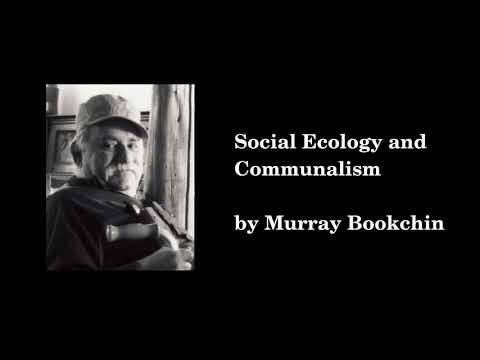
Murray Bookchin was a prominent American philosopher, anarchist, and environmentalist, best known for his development of the theory of social ecology. Born on January 14, 1921, in New York City, Bookchin's work spanned over five decades, influencing various fields including ecology, anarchism, and urban planning. His concept of 'libertarian municipalism' proposed a decentralized, democratic system where communities manage their own affairs. Bookchin's critique of capitalism and his advocacy for a more equitable, ecologically conscious society have made him a significant figure in contemporary radical thought. With a Vibe score of 8, reflecting his significant cultural energy, Bookchin's ideas continue to inspire movements and thinkers today. His work, such as 'Our Synthetic Environment' (1962) and 'The Ecology of Freedom' (1982), remains crucial in understanding the intersection of human and environmental well-being. As a testament to his enduring influence, Bookchin's legacy can be seen in contemporary environmental and social justice movements, with his ideas on decentralization and community empowerment being particularly relevant.
🌿 Introduction to Murray Bookchin
Murray Bookchin was a renowned American philosopher, social ecologist, and anarchist who dedicated his life to developing a comprehensive framework for understanding the intricate relationships between human societies and the natural world. Born on January 14, 1921, in New York City, Bookchin's work was heavily influenced by his experiences as a labor activist and his interests in philosophy and ecology. His vision for a more just and sustainable society has inspired generations of scholars, activists, and community leaders. Bookchin's work is closely related to the concepts of ecosophy and deep ecology.
📚 Early Life and Influences
Bookchin's early life was marked by a strong sense of social justice and a desire to understand the underlying causes of human suffering. He was heavily influenced by the Marxist and anarchist traditions, and his work reflects a deep commitment to the principles of direct democracy and social equality. As a young man, Bookchin was involved in various labor and civil rights organizations, where he developed a keen sense of the importance of community and collective action. His experiences during this period laid the foundation for his later work on social ecology and libertarian municipalism. Bookchin's work is also connected to the ideas of Herbert Marcuse and Theodor Adorno.
🏙️ Urban Planning and the Concept of Libertarian Municipalism
Bookchin's concept of libertarian municipalism is a key aspect of his vision for a more just and sustainable society. Libertarian municipalism is a political philosophy that emphasizes the importance of direct democracy and community control at the local level. Bookchin argued that the nation-state is a major obstacle to social change, and that a more decentralized, confederal approach to governance is needed. His ideas on this topic have had a significant influence on the development of urban planning and community development. Bookchin's work on libertarian municipalism is connected to the ideas of Peter Kropotkin and Ernest Callenbach.
🌎 Environmentalism and the Critique of Capitalism
Bookchin's work on environmentalism and the critique of capitalism is closely tied to his development of social ecology. He argued that the exploitation of the natural world is inextricably linked to the exploitation of human beings, and that a more just and sustainable society requires a fundamental transformation of our relationship with the environment. Bookchin's ideas on this topic have had a significant impact on the development of ecology and environmental studies, and continue to inspire new generations of scholars and activists. Bookchin's work on environmentalism is related to the concepts of sustainable development and environmental policy.
🤝 The Importance of Community and Direct Democracy
The importance of community and direct democracy is a central theme in Bookchin's work. He argued that the creation of vibrant, democratic communities is essential for building a more just and sustainable society. Bookchin's ideas on this topic have had a significant influence on the development of community development and urban planning, and continue to inspire new generations of scholars and activists. His work on community and direct democracy is closely related to the concepts of participatory democracy and social capital. Bookchin's ideas are also connected to the work of Jane Jacobs and Henri Lefebvre.
📖 Bookchin's Major Works and Contributions
Bookchin's major works include Our Genetic Future, The Ecology of Freedom, and Urbanization Without Cities. These books provide a comprehensive overview of his ideas on social ecology, libertarian municipalism, and the critique of capitalism. Bookchin's writing is characterized by a strong emphasis on the importance of community and direct democracy, as well as a critique of the nation-state and the market economy. His work continues to inspire new generations of scholars and activists, and remains a vital part of the ongoing conversation about the future of human society. Bookchin's work is also related to the ideas of Noam Chomsky and Howard Zinn.
🌐 Influence and Legacy
Bookchin's influence and legacy are far-reaching and diverse. His ideas have had a significant impact on the development of environmentalism, ecology, and social ecology, and continue to inspire new generations of scholars and activists. Bookchin's work has also had a profound influence on the development of urban planning and community development, and his ideas on libertarian municipalism remain a vital part of the ongoing conversation about the future of human society. Bookchin's influence can be seen in the work of scholars such as David Harvey and Neil Smith.
🌪 Controversies and Criticisms
Despite the significance of Bookchin's work, his ideas have not been without controversy and criticism. Some have argued that his critique of capitalism and the nation-state is too simplistic, and that his emphasis on direct democracy and community control is unrealistic. Others have criticized Bookchin's views on technology and industrialization, arguing that he underestimates the potential benefits of these developments. Bookchin's work has also been subject to criticism from Marxist and anarchist perspectives, with some arguing that his ideas are too focused on the local level and neglect the importance of broader social and economic structures. Bookchin's response to these criticisms is outlined in his work Social Ecology and the Modern Anti-Humanism.
🌈 Conclusion: The Enduring Vision of Murray Bookchin
In conclusion, Murray Bookchin's vision for a more just and sustainable society remains a powerful and inspiring force in contemporary thought. His work on social ecology, libertarian municipalism, and the critique of capitalism continues to inspire new generations of scholars and activists, and his ideas remain a vital part of the ongoing conversation about the future of human society. As we look to the future, it is clear that Bookchin's work will continue to play a significant role in shaping our understanding of the complex relationships between human societies and the natural world. Bookchin's legacy is also connected to the work of Arne Naess and Bill McKibben.
Key Facts
- Year
- 1921
- Origin
- New York City, USA
- Category
- Philosophy and Politics
- Type
- Person
Frequently Asked Questions
What is social ecology?
Social ecology is an interdisciplinary approach that seeks to understand the complex relationships between human societies and the natural world. It emphasizes the importance of community and direct democracy, and critiques the nation-state and the market economy. Social ecology is closely related to the concepts of ecofeminism and environmental justice.
What is libertarian municipalism?
Libertarian municipalism is a political philosophy that emphasizes the importance of direct democracy and community control at the local level. It argues that the nation-state is a major obstacle to social change, and that a more decentralized, confederal approach to governance is needed. Libertarian municipalism is closely related to the ideas of Peter Kropotkin and Ernest Callenbach.
What is the significance of Bookchin's work?
Bookchin's work has had a significant impact on the development of environmentalism, ecology, and social ecology. His ideas have inspired new generations of scholars and activists, and remain a vital part of the ongoing conversation about the future of human society. Bookchin's work is also related to the ideas of Noam Chomsky and Howard Zinn.
What are some criticisms of Bookchin's work?
Some have argued that Bookchin's critique of capitalism and the nation-state is too simplistic, and that his emphasis on direct democracy and community control is unrealistic. Others have criticized Bookchin's views on technology and industrialization, arguing that he underestimates the potential benefits of these developments. Bookchin's work has also been subject to criticism from Marxist and anarchist perspectives.
How does Bookchin's work relate to other thinkers and movements?
Bookchin's work is closely related to the ideas of Herbert Marcuse and Theodor Adorno, as well as the concepts of ecofeminism and environmental justice. His ideas have also been influenced by the labor movement and the civil rights movement. Bookchin's work is also connected to the ideas of Jane Jacobs and Henri Lefebvre.
What is Bookchin's legacy?
Bookchin's legacy is a complex and multifaceted one. His work continues to inspire new generations of scholars and activists, and his ideas remain a vital part of the ongoing conversation about the future of human society. Bookchin's influence can be seen in the work of scholars such as David Harvey and Neil Smith. His legacy is also connected to the work of Arne Naess and Bill McKibben.
How does Bookchin's work relate to contemporary issues?
Bookchin's work is closely related to contemporary issues such as climate change, sustainable development, and environmental policy. His ideas on social ecology and libertarian municipalism offer a unique perspective on these issues, and his critique of capitalism and the nation-state remains a vital part of the ongoing conversation about the future of human society.