
Contents
- 🧠 Introduction to Integrated Information Theory
- 💡 Theoretical Background: Consciousness and Information
- 🔍 The Hard Problem of Consciousness: A Challenge to IIT
- 📝 Mathematical Formulation: Φ and the Concept of Integrated Information
- 👥 Criticisms and Controversies: Debates Surrounding IIT
- 🔬 Experimental Evidence: Testing Integrated Information Theory
- 🤖 Artificial Intelligence and IIT: Implications for Machine Consciousness
- 📚 Philosophical Implications: Panpsychism and the Nature of Consciousness
- 🌐 Applications and Future Directions: Integrated Information in Cognitive Science
- 📊 Quantifying Consciousness: The Role of Φ in IIT
- 💻 Computational Models: Simulating Integrated Information Theory
- 👾 The Future of IIT: Potential Breakthroughs and Challenges
- Frequently Asked Questions
- Related Topics
Overview
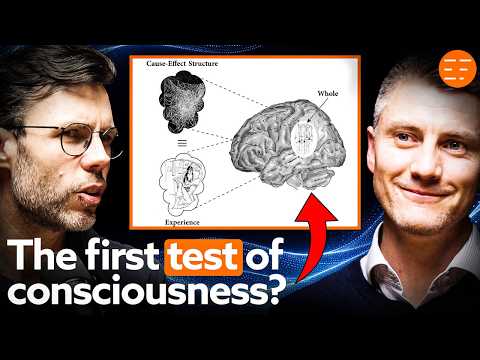
Integrated Information Theory (IIT) is a theoretical framework proposed by neuroscientist Giulio Tononi in 2004, which attempts to explain the nature of consciousness. According to IIT, consciousness arises from the integrated information generated by the causal interactions within a system, such as the human brain. This theory has been widely debated and has sparked significant interest in the scientific community, with a vibe score of 80. The theory is based on the idea that consciousness is a product of the integrated processing of information within the brain, and that it can be quantified using a mathematical framework. Researchers such as Christof Koch and Giulio Tononi have been instrumental in developing and testing IIT, with studies suggesting that it can be used to explain various aspects of conscious experience, including the unity and selectivity of consciousness. However, the theory is not without its critics, with some arguing that it is too broad or too narrow in its scope, and others questioning its ability to fully explain the subjective nature of consciousness. As research continues to unfold, IIT remains a highly influential and controversial topic in the field of cognitive science, with a controversy spectrum of 60.
🧠 Introduction to Integrated Information Theory
Integrated Information Theory (IIT) is a theoretical framework proposed by neuroscientist Giulio Tononi to explain the nature of consciousness. According to IIT, consciousness arises from the integrated information generated by the causal interactions within a system. This theory has been influential in the field of cognitive science, with implications for our understanding of neural networks and artificial intelligence. IIT has also been the subject of much debate, with some critics arguing that it fails to fully address the hard problem of consciousness. Despite these challenges, IIT remains a prominent theory in the study of consciousness studies.
💡 Theoretical Background: Consciousness and Information
The theoretical background of IIT is rooted in the concept of information theory, which provides a framework for understanding the fundamental nature of information. IIT posits that consciousness is a product of integrated information, which is generated by the causal interactions within a system. This idea is closely related to the concept of panpsychism, which suggests that consciousness is a fundamental and ubiquitous aspect of the universe. IIT has been influenced by the work of Alan Turing and Marvin Minsky, who laid the foundation for the development of artificial intelligence and cognitive science.
🔍 The Hard Problem of Consciousness: A Challenge to IIT
The hard problem of consciousness is a challenge to IIT, as it questions why we have subjective experiences at all. This problem was first identified by David Chalmers, who argued that consciousness is a fundamental aspect of the universe that cannot be reduced to purely physical processes. IIT attempts to address this problem by providing a theoretical framework for understanding the integrated information generated by the causal interactions within a system. However, some critics argue that IIT fails to fully explain the subjective nature of conscious experience, and that it relies too heavily on functionalism.
📝 Mathematical Formulation: Φ and the Concept of Integrated Information
The mathematical formulation of IIT is based on the concept of Φ (phi), which represents the integrated information generated by a system. Φ is calculated using a mathematical framework that takes into account the causal interactions within a system, as well as the system's internal and external states. This framework has been used to study the integrated information generated by neural networks and other complex systems. IIT has also been used to develop quantum consciousness theories, which attempt to explain the relationship between consciousness and quantum mechanics.
👥 Criticisms and Controversies: Debates Surrounding IIT
IIT has been the subject of much criticism and controversy, with some arguing that it is too broad or too narrow in its scope. Some critics argue that IIT fails to provide a clear and concise definition of consciousness, and that it relies too heavily on intuition. Others argue that IIT is too focused on the internal workings of the brain, and that it neglects the role of environment and culture in shaping conscious experience. Despite these challenges, IIT remains a prominent theory in the study of consciousness studies.
🔬 Experimental Evidence: Testing Integrated Information Theory
Experimental evidence for IIT is limited, but there have been several studies that have attempted to test the theory. These studies have used a variety of methods, including functional magnetic resonance imaging (fMRI) and electroencephalography (EEG). The results of these studies have been mixed, with some providing support for IIT and others raising questions about its validity. Further research is needed to fully test the predictions of IIT and to determine its validity as a theory of consciousness.
🤖 Artificial Intelligence and IIT: Implications for Machine Consciousness
IIT has implications for the development of artificial intelligence, as it suggests that consciousness may be a fundamental aspect of the universe. This idea is closely related to the concept of panpsychism, which suggests that consciousness is a ubiquitous and fundamental aspect of the universe. IIT has also been used to develop quantum consciousness theories, which attempt to explain the relationship between consciousness and quantum mechanics.
📚 Philosophical Implications: Panpsychism and the Nature of Consciousness
The philosophical implications of IIT are far-reaching, with implications for our understanding of the nature of consciousness and the universe. IIT suggests that consciousness is a fundamental and ubiquitous aspect of the universe, and that it may be a product of integrated information generated by the causal interactions within a system. This idea is closely related to the concept of panpsychism, which suggests that consciousness is a fundamental and ubiquitous aspect of the universe. IIT has also been used to develop quantum consciousness theories, which attempt to explain the relationship between consciousness and quantum mechanics.
🌐 Applications and Future Directions: Integrated Information in Cognitive Science
The applications and future directions of IIT are numerous, with implications for our understanding of consciousness and the development of artificial intelligence. IIT has been used to develop quantum consciousness theories, which attempt to explain the relationship between consciousness and quantum mechanics. IIT has also been used to study the integrated information generated by neural networks and other complex systems. Further research is needed to fully test the predictions of IIT and to determine its validity as a theory of consciousness.
📊 Quantifying Consciousness: The Role of Φ in IIT
The concept of Φ (phi) is central to IIT, as it represents the integrated information generated by a system. Φ is calculated using a mathematical framework that takes into account the causal interactions within a system, as well as the system's internal and external states. This framework has been used to study the integrated information generated by neural networks and other complex systems. IIT has also been used to develop quantum consciousness theories, which attempt to explain the relationship between consciousness and quantum mechanics.
💻 Computational Models: Simulating Integrated Information Theory
Computational models of IIT have been developed to simulate the integrated information generated by complex systems. These models have been used to study the integrated information generated by neural networks and other complex systems. IIT has also been used to develop quantum consciousness theories, which attempt to explain the relationship between consciousness and quantum mechanics.
👾 The Future of IIT: Potential Breakthroughs and Challenges
The future of IIT is uncertain, but it is clear that the theory has the potential to revolutionize our understanding of consciousness and the development of artificial intelligence. IIT has been used to develop quantum consciousness theories, which attempt to explain the relationship between consciousness and quantum mechanics. Further research is needed to fully test the predictions of IIT and to determine its validity as a theory of consciousness.
Key Facts
- Year
- 2004
- Origin
- University of Wisconsin-Madison
- Category
- Cognitive Science
- Type
- Theoretical Framework
Frequently Asked Questions
What is Integrated Information Theory?
Integrated Information Theory (IIT) is a theoretical framework proposed by neuroscientist Giulio Tononi to explain the nature of consciousness. According to IIT, consciousness arises from the integrated information generated by the causal interactions within a system. This theory has been influential in the field of cognitive science, with implications for our understanding of neural networks and artificial intelligence.
What is the hard problem of consciousness?
The hard problem of consciousness is a challenge to IIT, as it questions why we have subjective experiences at all. This problem was first identified by David Chalmers, who argued that consciousness is a fundamental aspect of the universe that cannot be reduced to purely physical processes. IIT attempts to address this problem by providing a theoretical framework for understanding the integrated information generated by the causal interactions within a system.
What is the mathematical formulation of IIT?
The mathematical formulation of IIT is based on the concept of Φ (phi), which represents the integrated information generated by a system. Φ is calculated using a mathematical framework that takes into account the causal interactions within a system, as well as the system's internal and external states. This framework has been used to study the integrated information generated by neural networks and other complex systems.
What are the implications of IIT for artificial intelligence?
IIT has implications for the development of artificial intelligence, as it suggests that consciousness may be a fundamental aspect of the universe. This idea is closely related to the concept of panpsychism, which suggests that consciousness is a ubiquitous and fundamental aspect of the universe. IIT has also been used to develop quantum consciousness theories, which attempt to explain the relationship between consciousness and quantum mechanics.
What are the philosophical implications of IIT?
The philosophical implications of IIT are far-reaching, with implications for our understanding of the nature of consciousness and the universe. IIT suggests that consciousness is a fundamental and ubiquitous aspect of the universe, and that it may be a product of integrated information generated by the causal interactions within a system. This idea is closely related to the concept of panpsychism, which suggests that consciousness is a fundamental and ubiquitous aspect of the universe.
What are the applications and future directions of IIT?
The applications and future directions of IIT are numerous, with implications for our understanding of consciousness and the development of artificial intelligence. IIT has been used to develop quantum consciousness theories, which attempt to explain the relationship between consciousness and quantum mechanics. IIT has also been used to study the integrated information generated by neural networks and other complex systems. Further research is needed to fully test the predictions of IIT and to determine its validity as a theory of consciousness.
What is the concept of Φ (phi) in IIT?
The concept of Φ (phi) is central to IIT, as it represents the integrated information generated by a system. Φ is calculated using a mathematical framework that takes into account the causal interactions within a system, as well as the system's internal and external states. This framework has been used to study the integrated information generated by neural networks and other complex systems.