
Contents
- 🌎 Introduction to Hofstede Dimensions
- 📊 Understanding Power Distance Index (PDI)
- 🤝 Uncertainty Avoidance Index (UAI) Explained
- 👥 Individualism vs. Collectivism (IDV) Debate
- 🕊️ Masculinity vs. Femininity (MAS) in Culture
- 🕰️ Long-Term Orientation (LTO) and Its Implications
- 🌈 Indulgence vs. Restraint (IVR) in Cultural Context
- 📈 Applying Hofstede Dimensions in Business
- 🌍 Criticisms and Limitations of Hofstede Dimensions
- 🔍 Future Directions in Cultural Diversity Research
- 📚 Conclusion: Embracing Cultural Complexity
- Frequently Asked Questions
- Related Topics
Overview
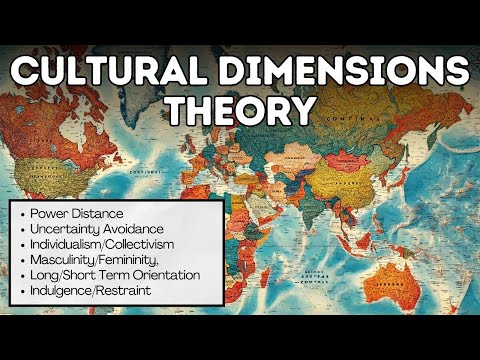
The Hofstede dimensions, developed by Geert Hofstede, are a framework for understanding cultural differences across societies. The six dimensions - Power Distance Index (PDI), Individualism vs. Collectivism (IDV), Uncertainty Avoidance Index (UAI), Masculinity vs. Femininity (MAS), Long-Term Orientation (LTO), and Indulgence vs. Restraint (IVR) - provide a comprehensive tool for analyzing cultural nuances. With a Vibe score of 80, the Hofstede dimensions have been widely applied in fields such as business, psychology, and anthropology. However, critics argue that the framework oversimplifies complex cultural dynamics, sparking controversy and debate. As of 2022, the Hofstede dimensions remain a cornerstone of cross-cultural research, with ongoing studies and applications in diverse fields. The influence of Hofstede's work can be seen in the work of other notable researchers, such as Shalom Schwartz and Ronald Inglehart, who have built upon and expanded his ideas.
🌎 Introduction to Hofstede Dimensions
The Hofstede Dimensions, developed by Geert Hofstede, are a framework for understanding cultural diversity across the globe. This theory proposes that cultures can be compared and contrasted based on six key dimensions: Power Distance Index (PDI), Uncertainty Avoidance Index (UAI), Individualism vs. Collectivism (IDV), Masculinity vs. Femininity (MAS), Long-Term Orientation (LTO), and Indulgence vs. Restraint (IVR). These dimensions help explain the differences in values, beliefs, and behaviors among various cultures. For instance, the concept of Power Distance Index is crucial in understanding how societies distribute power and authority. The Uncertainty Avoidance Index also plays a significant role in determining how cultures respond to uncertainty and ambiguity.
📊 Understanding Power Distance Index (PDI)
The Power Distance Index (PDI) is a measure of the extent to which individuals in a society accept and expect power inequality. Societies with high PDI scores, such as Mexico and India, tend to have a more hierarchical structure, where authority is centralized and decision-making power is concentrated at the top. In contrast, societies with low PDI scores, such as Denmark and Sweden, have a more egalitarian structure, where power is distributed more evenly and decision-making is more decentralized. Understanding PDI is essential for businesses operating in different cultural contexts, as it can impact management styles, communication, and employee relationships. For example, a company like Microsoft may need to adapt its management approach when expanding to a high PDI country like China.
🤝 Uncertainty Avoidance Index (UAI) Explained
The Uncertainty Avoidance Index (UAI) measures the degree to which individuals in a society feel threatened by uncertain or unknown situations. Cultures with high UAI scores, such as Greece and Portugal, tend to be more risk-averse and prefer structured and predictable environments. In contrast, cultures with low UAI scores, such as Singapore and United States, are more tolerant of uncertainty and ambiguity. The UAI dimension is closely related to the concept of Risk Management, as it influences how societies approach and mitigate risks. A company like Google may need to consider the UAI dimension when developing its Innovation Strategy for different markets.
👥 Individualism vs. Collectivism (IDV) Debate
The Individualism vs. Collectivism (IDV) dimension measures the degree to which individuals prioritize their own interests and goals versus the interests and goals of the group. Cultures with high IDV scores, such as Australia and Canada, tend to be more individualistic, emphasizing personal freedom and autonomy. In contrast, cultures with low IDV scores, such as China and Japan, are more collectivistic, prioritizing group harmony and cooperation. Understanding IDV is crucial for businesses, as it can impact marketing strategies, customer relationships, and employee motivation. For instance, a company like Apple may need to adapt its marketing approach to appeal to collectivistic cultures like South Korea.
🕊️ Masculinity vs. Femininity (MAS) in Culture
The Masculinity vs. Femininity (MAS) dimension measures the degree to which a society values traditional masculine and feminine traits. Cultures with high MAS scores, such as Japan and South Korea, tend to be more masculine, emphasizing competition, achievement, and material success. In contrast, cultures with low MAS scores, such as Sweden and Norway, are more feminine, prioritizing cooperation, nurturing, and social welfare. The MAS dimension is closely related to the concept of Gender Equality, as it influences how societies approach and address gender-related issues. A company like IKEA may need to consider the MAS dimension when developing its Diversity and Inclusion strategy.
🕰️ Long-Term Orientation (LTO) and Its Implications
The Long-Term Orientation (LTO) dimension measures the degree to which a society values long-term planning and investment. Cultures with high LTO scores, such as China and South Korea, tend to prioritize long-term goals and investments, even if it means sacrificing short-term gains. In contrast, cultures with low LTO scores, such as United States and Australia, are more focused on short-term results and immediate gratification. Understanding LTO is essential for businesses, as it can impact investment decisions, strategic planning, and innovation. For example, a company like Tesla may need to adapt its Business Model to accommodate the long-term orientation of cultures like Japan.
🌈 Indulgence vs. Restraint (IVR) in Cultural Context
The Indulgence vs. Restraint (IVR) dimension measures the degree to which a society allows for the free expression of human desires and impulses. Cultures with high IVR scores, such as United States and Australia, tend to be more indulgent, emphasizing personal freedom and pleasure. In contrast, cultures with low IVR scores, such as China and India, are more restrained, prioritizing social norms and tradition. The IVR dimension is closely related to the concept of Consumer Behavior, as it influences how individuals make purchasing decisions and interact with brands. A company like Coca-Cola may need to consider the IVR dimension when developing its Marketing Strategy for different markets.
📈 Applying Hofstede Dimensions in Business
Applying the Hofstede Dimensions in business can be a powerful tool for understanding and navigating cultural diversity. By recognizing the cultural differences and nuances, companies can develop more effective marketing strategies, improve communication, and build stronger relationships with customers and employees. For instance, a company like McDonald's may need to adapt its menu and marketing approach to accommodate the cultural preferences of different markets. The Hofstede Dimensions can also help businesses to identify potential cultural pitfalls and develop strategies to mitigate them. For example, a company like Facebook may need to consider the cultural implications of its Social Media Platform on different societies.
🌍 Criticisms and Limitations of Hofstede Dimensions
Despite its significance, the Hofstede Dimensions framework has faced criticisms and limitations. Some critics argue that the framework is too broad and oversimplifies the complexity of cultural diversity. Others argue that the dimensions are not mutually exclusive and can overlap in complex ways. Additionally, the framework has been criticized for being based on a Western perspective and not adequately accounting for non-Western cultural contexts. For instance, the concept of Collectivism may be more nuanced and multifaceted in cultures like Africa and Latin America. A company like Google may need to consider these limitations when applying the Hofstede Dimensions in its Global Expansion strategy.
🔍 Future Directions in Cultural Diversity Research
Future directions in cultural diversity research may involve exploring new dimensions and frameworks that can better capture the complexity and nuance of cultural differences. The GLOBE Study, for example, has developed a framework that includes nine cultural dimensions, including performance orientation and future orientation. Additionally, researchers may need to consider the impact of globalization, technology, and social media on cultural diversity and how these factors are shaping and transforming cultural norms and values. A company like Amazon may need to stay ahead of these trends and developments to remain competitive in a rapidly changing global market.
📚 Conclusion: Embracing Cultural Complexity
In conclusion, the Hofstede Dimensions provide a valuable framework for understanding and navigating cultural diversity. By recognizing and respecting cultural differences, businesses and individuals can build stronger relationships, improve communication, and develop more effective strategies for success. However, it is also important to acknowledge the limitations and criticisms of the framework and to continue exploring new approaches and perspectives that can help us better understand and appreciate the complexity of cultural diversity. As the world becomes increasingly interconnected, the importance of cultural competence and sensitivity will only continue to grow, and the Hofstede Dimensions will remain a vital tool for navigating this complex and ever-changing landscape.
Key Facts
- Year
- 1980
- Origin
- Netherlands
- Category
- Cultural Studies
- Type
- Concept
Frequently Asked Questions
What are the six dimensions of the Hofstede Dimensions framework?
The six dimensions of the Hofstede Dimensions framework are Power Distance Index (PDI), Uncertainty Avoidance Index (UAI), Individualism vs. Collectivism (IDV), Masculinity vs. Femininity (MAS), Long-Term Orientation (LTO), and Indulgence vs. Restraint (IVR). These dimensions help explain the differences in values, beliefs, and behaviors among various cultures. For instance, the concept of Power Distance Index is crucial in understanding how societies distribute power and authority. The Uncertainty Avoidance Index also plays a significant role in determining how cultures respond to uncertainty and ambiguity.
How can businesses apply the Hofstede Dimensions in their operations?
Businesses can apply the Hofstede Dimensions in their operations by recognizing and respecting cultural differences, developing more effective marketing strategies, improving communication, and building stronger relationships with customers and employees. For example, a company like McDonald's may need to adapt its menu and marketing approach to accommodate the cultural preferences of different markets. The Hofstede Dimensions can also help businesses to identify potential cultural pitfalls and develop strategies to mitigate them. For instance, a company like Facebook may need to consider the cultural implications of its Social Media Platform on different societies.
What are some criticisms and limitations of the Hofstede Dimensions framework?
Some criticisms and limitations of the Hofstede Dimensions framework include its broad and oversimplified approach to cultural diversity, its Western perspective, and its failure to account for non-Western cultural contexts. Additionally, the framework has been criticized for being based on a limited dataset and for not adequately capturing the complexity and nuance of cultural differences. For instance, the concept of Collectivism may be more nuanced and multifaceted in cultures like Africa and Latin America. A company like Google may need to consider these limitations when applying the Hofstede Dimensions in its Global Expansion strategy.
What are some future directions in cultural diversity research?
Future directions in cultural diversity research may involve exploring new dimensions and frameworks that can better capture the complexity and nuance of cultural differences. The GLOBE Study, for example, has developed a framework that includes nine cultural dimensions, including performance orientation and future orientation. Additionally, researchers may need to consider the impact of globalization, technology, and social media on cultural diversity and how these factors are shaping and transforming cultural norms and values. A company like Amazon may need to stay ahead of these trends and developments to remain competitive in a rapidly changing global market.
Why is cultural competence and sensitivity important in today's globalized world?
Cultural competence and sensitivity are essential in today's globalized world because they enable businesses and individuals to navigate and succeed in diverse cultural contexts. By recognizing and respecting cultural differences, businesses can build stronger relationships, improve communication, and develop more effective strategies for success. Additionally, cultural competence and sensitivity can help to promote cross-cultural understanding, cooperation, and collaboration, which are critical for addressing global challenges and achieving sustainable development. As the world becomes increasingly interconnected, the importance of cultural competence and sensitivity will only continue to grow.