
Contents
Overview
A genome-wide association study (GWAS) is an observational study that examines the association between genetic variants and traits or diseases. By comparing the DNA of individuals with different phenotypes, researchers can identify genetic variants that contribute to the development of complex diseases. The approach involves scanning the entire genome for associations between single-nucleotide polymorphisms (SNPs) and traits, allowing researchers to identify potential genetic risk factors. According to the National Institutes of Health, GWAS have the potential to revolutionize our understanding of human disease and improve the development of personalized medicine.
🎵 Origins & History
The study identified a genetic variant associated with age-related macular degeneration. The development of GWAS was facilitated by advances in genotyping technologies, which enabled researchers to quickly and affordably scan the entire genome for genetic variants. For example, the Illumina company has developed a range of genotyping arrays that have been widely used in GWAS.
⚙️ How It Works
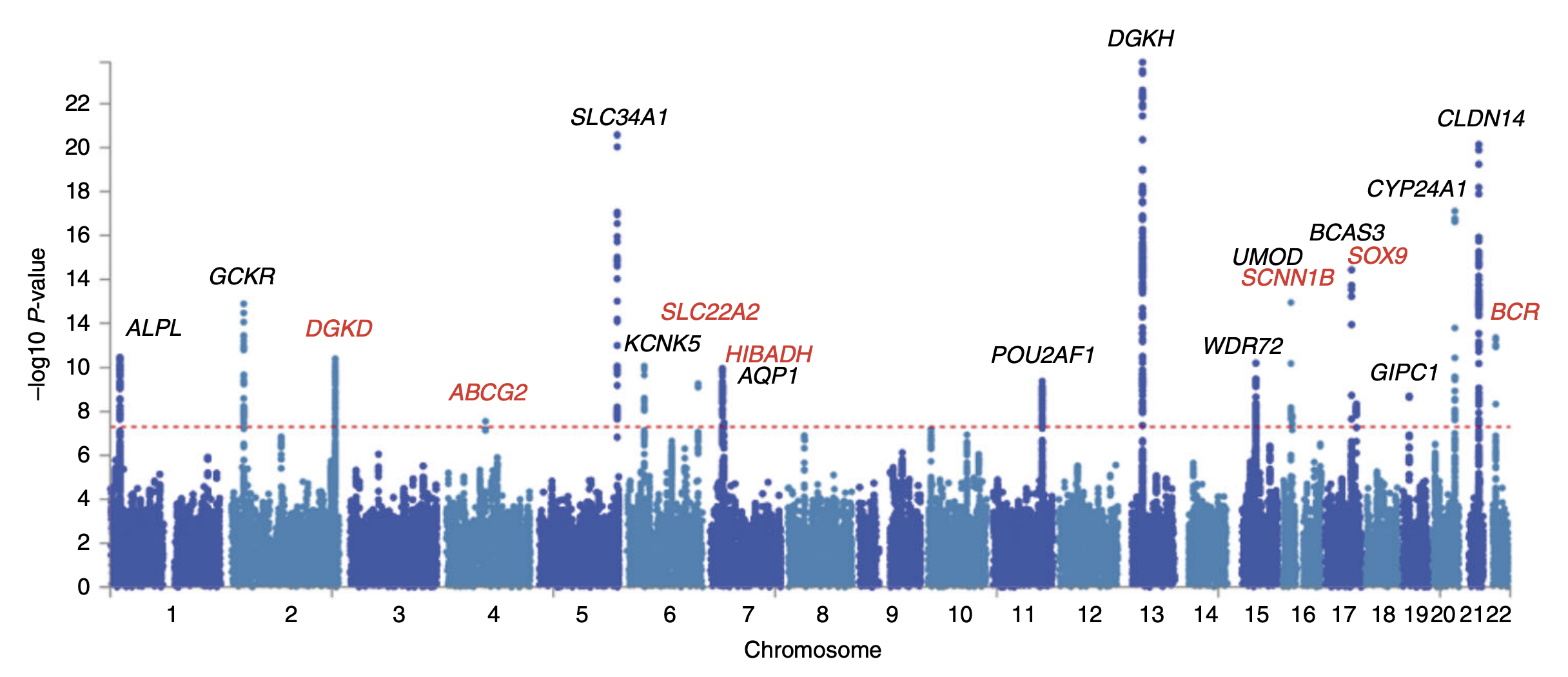
GWAS involve scanning the entire genome for associations between genetic variants and traits or diseases. The approach typically involves comparing the DNA of individuals with different phenotypes, such as those with a disease (cases) and those without the disease (controls). Each person provides a sample of DNA, from which millions of genetic variants are read using next-generation sequencing technologies. The resulting data are then analyzed using statistical methods to identify genetic variants that are associated with the trait or disease. For instance, the Broad Institute has developed a range of software tools for analyzing GWAS data, including the PLINK software package.
📊 Key Facts & Numbers
GWAS have been used to study a wide range of traits and diseases, including diabetes, heart disease, and mental health disorders. The approach has been successful in identifying genetic variants associated with these conditions, which has improved our understanding of the underlying biology. For example, a GWAS conducted by the Wellcome Trust Case Control Consortium identified several genetic variants associated with type 2 diabetes. The National Institutes of Health has played a major role in supporting GWAS research, providing funding for numerous studies and initiatives.
👥 Key People & Organizations
The National Human Genome Research Institute has provided funding for numerous GWAS studies. The National Institutes of Health has established the Genome-Wide Association Studies database, which provides a comprehensive repository of GWAS data.
🌍 Cultural Impact & Influence
GWAS have had a significant cultural impact, particularly in the field of genetics and genomics. The approach has enabled researchers to identify genetic variants associated with complex traits and diseases, which has improved our understanding of the underlying biology. According to the World Health Organization, GWAS have the potential to improve health outcomes and reduce healthcare costs. For instance, the 23andMe company has developed genetic testing products that use GWAS data to provide individuals with information about their genetic risk factors.
⚡ Current State & Latest Developments
The current state of GWAS research is rapidly evolving, with new technologies and methods being developed to improve the accuracy and efficiency of the approach. For example, the use of artificial intelligence and machine learning algorithms is being explored to improve the analysis of GWAS data. The development of single-cell sequencing and epigenomics is being explored to improve our understanding of the underlying biology of complex traits and diseases.
🤔 Controversies & Debates
Despite the successes of GWAS, there are several controversies and debates surrounding the approach. One of the main concerns is the potential for false positives, which can occur when a genetic variant is incorrectly identified as being associated with a trait or disease. Another concern is the lack of replication, which can occur when the results of a GWAS are not replicated in subsequent studies.
🔮 Future Outlook & Predictions
The future outlook for GWAS is promising, with new technologies and methods being developed to improve the accuracy and efficiency of the approach. The use of precision medicine is expected to be facilitated by GWAS, which will enable medical treatment to be tailored to an individual's specific genetic profile.
💡 Practical Applications
The practical applications of GWAS are numerous, particularly in the field of medicine. The approach has enabled researchers to identify genetic variants associated with complex diseases, which has improved our understanding of the underlying biology. For example, the Genomic Medicine program at the Johns Hopkins University is using GWAS data to develop personalized treatment plans for patients with genetic disorders.
Key Facts
- Category
- medicine
- Type
- concept