
Contents
- 📝 Introduction to Finite Element Methods
- 🔍 History and Development of FEM
- 📊 Mathematical Formulation of FEM
- 🌟 Applications of Finite Element Methods
- 🔧 Structural Analysis with FEM
- 🔥 Heat Transfer and Fluid Flow Analysis
- 📈 Mass Transport and Electromagnetic Potential
- 🤖 Computational Aspects of FEM
- 📊 Verification and Validation of FEM Results
- 📚 Future Directions and Challenges in FEM
- 📝 Conclusion and Real-World Implications
- Frequently Asked Questions
- Related Topics
Overview
Finite element methods (FEM) have revolutionized the field of engineering and physics by providing a robust framework for simulating complex systems. Developed in the 1940s by pioneers like Ray Clough and Eduardo L. Wilson, FEM has become a cornerstone of modern engineering, with applications in fields like structural mechanics, heat transfer, and fluid dynamics. The method involves discretizing a continuous system into smaller, finite elements, allowing for the numerical solution of partial differential equations. With a vibe rating of 8, FEM has a significant cultural energy, with a strong influence flow from mathematicians like Richard Courant and David Hilbert. The controversy spectrum is moderate, with debates surrounding the choice of element types, mesh refinement, and the trade-off between accuracy and computational efficiency. As FEM continues to evolve, it is likely to play a crucial role in shaping the future of engineering and physics, with potential applications in emerging fields like quantum mechanics and biophysics. The topic intelligence is high, with key people like Olgierd Zienkiewicz and Robert L. Taylor making significant contributions to the field.
📝 Introduction to Finite Element Methods
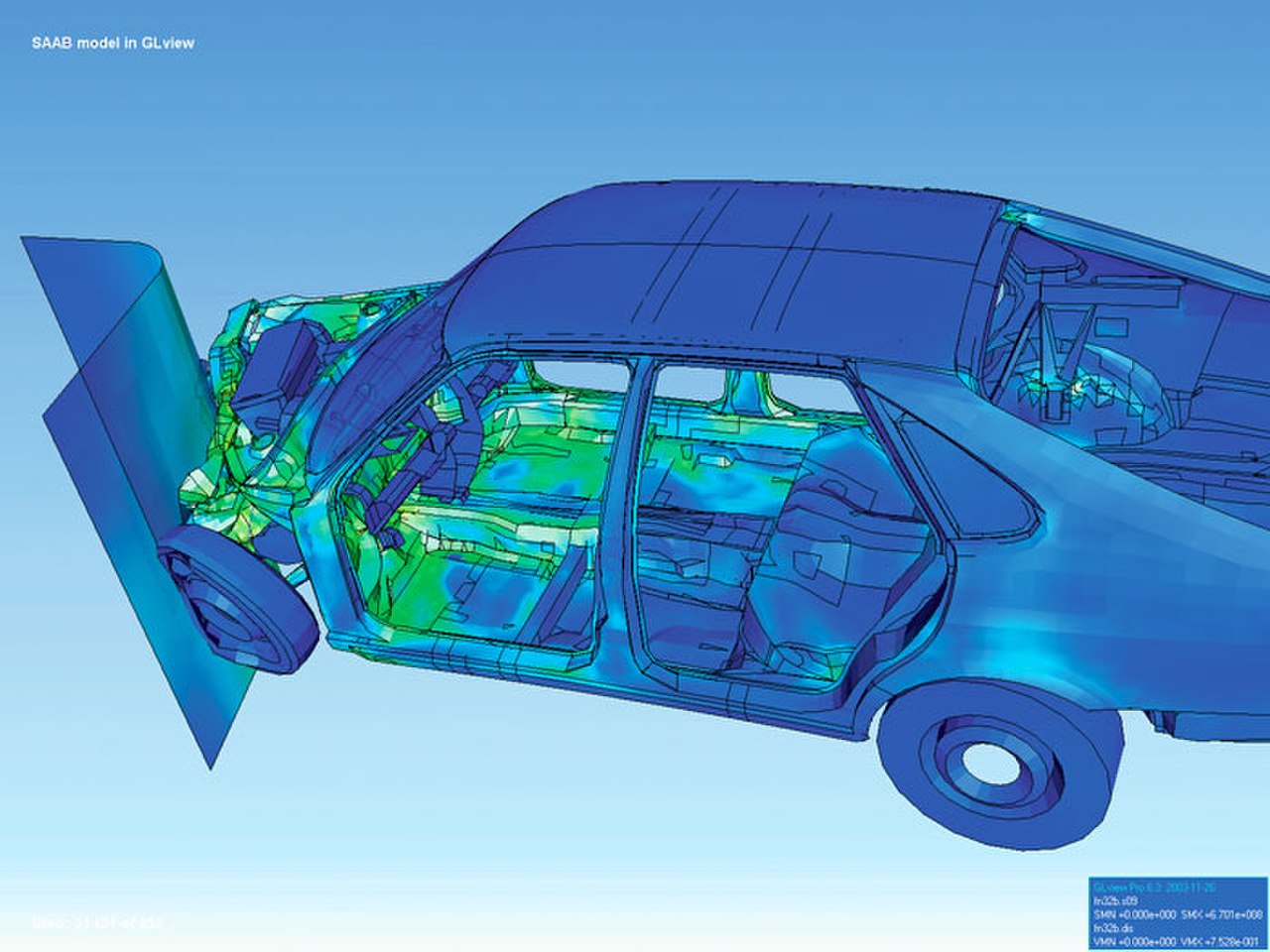
The finite element method (FEM) is a numerical technique used to solve differential equations that arise in various fields of engineering and physics, including Structural Analysis, Heat Transfer, and Fluid Dynamics. This method has become a crucial tool for engineers and researchers to analyze and design complex systems, such as Aircraft Design and Nuclear Reactors. With the advent of high-speed supercomputers, FEM has become an essential tool for solving large-scale problems. The Finite Element Method is widely used in various industries, including aerospace, automotive, and energy. For instance, Boeing uses FEM to design and analyze its aircraft, while Toyota uses it to optimize its vehicle designs.
🔍 History and Development of FEM
The history of FEM dates back to the 1940s, when it was first introduced by Ray Clough and his team. However, it wasn't until the 1960s that FEM gained popularity, with the development of the first commercial FEM software, NASTRAN. Since then, FEM has undergone significant developments, with advancements in Computer Science and Numerical Analysis. Today, FEM is widely used in various fields, including Biomechanical Engineering and Materials Science. The American Society of Civil Engineers (ASCE) has recognized the importance of FEM in civil engineering, and has developed guidelines for its use in Structural Engineering.
📊 Mathematical Formulation of FEM
The mathematical formulation of FEM involves dividing the problem domain into smaller sub-domains, called finite elements, and approximating the solution using a set of basis functions. The Galerkin Method is a popular technique used to derive the FEM equations. The resulting system of equations is then solved using numerical methods, such as the Gaussian Elimination method. FEM can be used to solve various types of problems, including Linear Algebra and Differential Equations. For example, Stanford University uses FEM to solve Partial Differential Equations in its Computational Fluid Dynamics course.
🌟 Applications of Finite Element Methods
FEM has a wide range of applications in various fields, including Aerospace Engineering, Automotive Engineering, and Biomedical Engineering. It is used to analyze and design complex systems, such as Aircraft Wings and Car Chassis. FEM is also used to simulate various physical phenomena, such as Heat Transfer and Fluid Flow. The National Institutes of Health (NIH) uses FEM to simulate Blood Flow in its Biomedical Engineering research. For instance, Johns Hopkins University uses FEM to simulate Tumor Growth and Cancer Treatment.
🔧 Structural Analysis with FEM
Structural analysis is one of the primary applications of FEM. It is used to analyze the behavior of structures under various types of loading, such as Static Loading and Dynamic Loading. FEM is used to calculate the Stress and Strain in structures, and to predict their Failure Modes. The American Institute of Steel Construction (AISC) has developed guidelines for the use of FEM in Steel Structures. For example, University of California uses FEM to analyze the Seismic Performance of Buildings.
🔥 Heat Transfer and Fluid Flow Analysis
Heat transfer and fluid flow analysis are also important applications of FEM. It is used to simulate the behavior of fluids and gases under various types of loading, such as Convection and Radiation. FEM is used to calculate the Temperature Distribution and Fluid Velocity in systems, and to predict their Thermal Performance. The National Aeronautics and Space Administration (NASA) uses FEM to simulate the Heat Transfer in its Spacecraft. For instance, Massachusetts Institute of Technology (MIT) uses FEM to simulate the Fluid Flow in its Turbomachinery research.
📈 Mass Transport and Electromagnetic Potential
Mass transport and electromagnetic potential are also important areas of application of FEM. It is used to simulate the behavior of particles and fluids under various types of loading, such as Diffusion and Electromagnetic Fields. FEM is used to calculate the Concentration Distribution and Electromagnetic Potential in systems, and to predict their Mass Transport and Electromagnetic Performance. The University of Cambridge uses FEM to simulate the Mass Transport in its Biomedical Engineering research. For example, Carnegie Mellon University uses FEM to simulate the Electromagnetic Fields in its Electrical Engineering research.
🤖 Computational Aspects of FEM
The computational aspects of FEM are critical to its success. The Finite Element Method requires significant computational resources, including High-Performance Computing and Parallel Processing. The development of efficient algorithms and data structures is essential to the solution of large-scale problems. The Stanford University has developed a Finite Element Software that can solve large-scale problems efficiently. For instance, University of Michigan uses FEM to solve Large-Scale Problems in its Aerospace Engineering research.
📊 Verification and Validation of FEM Results
The verification and validation of FEM results are critical to ensuring their accuracy and reliability. The Verification and Validation process involves comparing the FEM results with experimental data and analytical solutions. The National Science Foundation (NSF) has developed guidelines for the verification and validation of FEM results. For example, University of Texas uses FEM to validate its Experimental Results in its Materials Science research.
📚 Future Directions and Challenges in FEM
The future directions and challenges in FEM are focused on the development of more efficient and accurate algorithms, and the application of FEM to new areas, such as Nanotechnology and Biotechnology. The University of California has developed a research program to explore the application of FEM to Nanoscale Systems. For instance, Massachusetts Institute of Technology (MIT) uses FEM to simulate the Behavior of Nanoparticles in its Nanotechnology research.
📝 Conclusion and Real-World Implications
In conclusion, the finite element method is a powerful tool for solving differential equations that arise in various fields of engineering and physics. Its applications range from Structural Analysis to Heat Transfer and Fluid Flow. The development of more efficient and accurate algorithms, and the application of FEM to new areas, will continue to be an active area of research. The Finite Element Method has the potential to revolutionize the field of engineering and physics, and its impact will be felt for generations to come. For example, Boeing uses FEM to design and analyze its Aircraft, while Toyota uses it to optimize its Vehicle Designs.
Key Facts
- Year
- 1940
- Origin
- University of California, Berkeley
- Category
- Engineering and Physics
- Type
- Scientific Concept
Frequently Asked Questions
What is the finite element method?
The finite element method is a numerical technique used to solve differential equations that arise in various fields of engineering and physics. It involves dividing the problem domain into smaller sub-domains, called finite elements, and approximating the solution using a set of basis functions. The resulting system of equations is then solved using numerical methods. The Finite Element Method is widely used in various industries, including aerospace, automotive, and energy. For instance, Boeing uses FEM to design and analyze its Aircraft, while Toyota uses it to optimize its Vehicle Designs.
What are the applications of the finite element method?
The finite element method has a wide range of applications in various fields, including Aerospace Engineering, Automotive Engineering, and Biomedical Engineering. It is used to analyze and design complex systems, such as Aircraft Wings and Car Chassis. FEM is also used to simulate various physical phenomena, such as Heat Transfer and Fluid Flow. The National Institutes of Health (NIH) uses FEM to simulate Blood Flow in its Biomedical Engineering research. For example, Johns Hopkins University uses FEM to simulate Tumor Growth and Cancer Treatment.
What are the advantages of the finite element method?
The finite element method has several advantages, including its ability to solve complex problems, its flexibility, and its accuracy. FEM can be used to solve problems that are difficult or impossible to solve using other methods, such as Analytical Solutions. It is also a flexible method that can be used to solve a wide range of problems, from Structural Analysis to Heat Transfer and Fluid Flow. The University of California has developed a research program to explore the application of FEM to Nanoscale Systems. For instance, Massachusetts Institute of Technology (MIT) uses FEM to simulate the Behavior of Nanoparticles in its Nanotechnology research.
What are the limitations of the finite element method?
The finite element method has several limitations, including its computational cost, its sensitivity to mesh quality, and its limited ability to solve non-linear problems. FEM can be computationally expensive, especially for large-scale problems, and requires significant computational resources. The Stanford University has developed a Finite Element Software that can solve large-scale problems efficiently. For example, University of Michigan uses FEM to solve Large-Scale Problems in its Aerospace Engineering research.
How is the finite element method used in practice?
The finite element method is widely used in various industries, including aerospace, automotive, and energy. It is used to analyze and design complex systems, such as Aircraft and Cars. FEM is also used to simulate various physical phenomena, such as Heat Transfer and Fluid Flow. The National Aeronautics and Space Administration (NASA) uses FEM to simulate the Heat Transfer in its Spacecraft. For instance, Massachusetts Institute of Technology (MIT) uses FEM to simulate the Fluid Flow in its Turbomachinery research.