
Contents
- 🚀 Introduction to Transportation Technology
- 🛣️ The Early Days of Transportation
- 🚗 The Rise of Automotive Technology
- 🛫️ Aviation and Aerospace Advancements
- 🚂 Rail and Maritime Transportation Evolution
- 🚴♀️ Sustainable Transportation Solutions
- 🤖 Autonomous Vehicles and AI
- 📈 The Future of Transportation: Trends and Predictions
- 🌎 Global Impact of Transportation Technology
- 💻 Transportation Technology and Cybersecurity
- 📊 The Economics of Transportation Technology
- 👥 The Human Factor in Transportation Technology
- Frequently Asked Questions
- Related Topics
Overview
The evolution of transportation technology has been a wild ride, spanning over two centuries. It began with the introduction of steam locomotives in the early 19th century, pioneered by Richard Trevithick in 1804. The 20th century saw the rise of automobiles, with Henry Ford's assembly line production in 1913, and the development of air travel, with the first commercial flight by the St. Petersburg-Tampa Airboat Line in 1914. Today, we're on the cusp of a new era with electric and self-driving cars, with companies like Tesla and Waymo leading the charge. The Hyperloop, proposed by Elon Musk in 2013, promises to revolutionize land travel with speeds of up to 700 mph. As we look to the future, one thing is clear: the next decade will be shaped by the convergence of transportation, technology, and sustainability, with a projected global investment of $1.4 trillion in transportation infrastructure by 2025.
🚀 Introduction to Transportation Technology
The evolution of transportation technology has been a long and winding road, filled with innovations and disruptions. From the early days of human evolution, humans have been driven to move people and goods from one place to another. The development of the wheel revolutionized transportation, enabling the creation of wheelbarrows and carts. As civilizations grew, so did the need for more efficient transportation methods, leading to the development of roads and bridges. Today, we have a vast array of transportation options, including cars, trains, airplanes, and ships.
🛣️ The Early Days of Transportation
The early days of transportation were marked by the use of animals and human power. The domestication of horses and other animals enabled the creation of chariots and carriages. The development of sails and ships enabled the exploration of the world's oceans. As trade and commerce grew, so did the need for more efficient transportation methods, leading to the development of canals and roads. The construction of the Roman Empire's road network is a testament to the importance of transportation in ancient times. The Industrial Revolution brought significant changes to transportation, with the introduction of steam engines and locomotives.
🚗 The Rise of Automotive Technology
The rise of automotive technology has been a major driver of innovation in the transportation sector. The development of the internal combustion engine enabled the creation of cars and trucks. The introduction of the assembly line by Henry Ford revolutionized the manufacturing process, making cars more affordable and accessible to the masses. Today, we have a wide range of automotive technologies, including electric vehicles, hybrid vehicles, and autonomous vehicles. The development of highways and interstates has enabled the efficient movement of people and goods across long distances. The automotive industry is a significant contributor to the global economy, with major players like General Motors, Toyota, and Volkswagen.
🛫️ Aviation and Aerospace Advancements
Aviation and aerospace have undergone significant advancements in recent years. The development of jet engines enabled the creation of airplanes that can travel at high speeds and altitudes. The introduction of commercial airlines has made air travel accessible to the masses. Today, we have a wide range of aviation technologies, including helicopters, drones, and spacecraft. The development of airports and air traffic control systems has enabled the safe and efficient movement of people and goods by air. The space industry is a growing sector, with private companies like SpaceX and Blue Origin leading the charge. The International Space Station is a testament to the collaboration and innovation in the space industry.
🚂 Rail and Maritime Transportation Evolution
Rail and maritime transportation have also undergone significant evolution. The development of locomotives enabled the creation of trains that can travel long distances. The introduction of containerization has made the movement of goods by sea more efficient. Today, we have a wide range of rail and maritime technologies, including high-speed rail and liquefied natural gas-powered ships. The development of ports and terminals has enabled the efficient movement of goods and people by sea and land. The shipping industry is a significant contributor to the global economy, with major players like Maersk and Cosco.
🚴♀️ Sustainable Transportation Solutions
Sustainable transportation solutions are becoming increasingly important as the world grapples with the challenges of climate change and air pollution. The development of electric vehicles and hybrid vehicles has made transportation more environmentally friendly. The introduction of bike-sharing and car-sharing services has made transportation more accessible and sustainable. Today, we have a wide range of sustainable transportation technologies, including solar-powered vehicles and hydrogen fuel cell vehicles. The development of green infrastructure has enabled the creation of sustainable transportation systems. The sustainable transportation sector is a growing industry, with major players like Tesla and Volkswagen.
🤖 Autonomous Vehicles and AI
Autonomous vehicles and AI are transforming the transportation sector. The development of autonomous vehicles has enabled the creation of self-driving cars and trucks. The introduction of machine learning and deep learning algorithms has made it possible to develop more sophisticated autonomous vehicles. Today, we have a wide range of autonomous vehicle technologies, including level 3 autonomy and level 4 autonomy. The development of vehicle-to-everything (V2X) communication systems has enabled the creation of more efficient and safe transportation systems. The autonomous vehicle industry is a growing sector, with major players like Waymo and Cruise.
📈 The Future of Transportation: Trends and Predictions
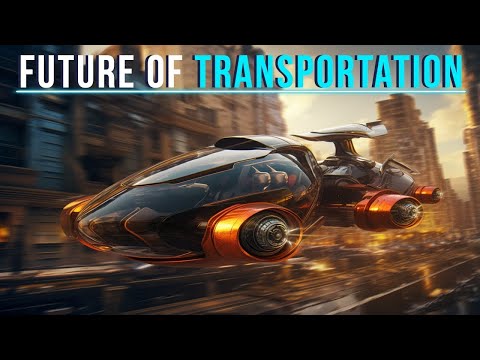
The future of transportation is exciting and uncertain. The development of electric vehicles and autonomous vehicles is expected to continue, with many countries investing heavily in these technologies. The introduction of hyperloop systems and vacuum tube transport is expected to revolutionize land transportation. Today, we have a wide range of transportation technologies, including flying cars and space tourism. The development of mobility-as-a-service (MaaS) platforms has enabled the creation of more efficient and sustainable transportation systems. The future of transportation is a topic of much debate, with many experts predicting a significant shift towards sustainable and autonomous transportation.
🌎 Global Impact of Transportation Technology
The global impact of transportation technology is significant. The development of global supply chains has enabled the efficient movement of goods and people around the world. The introduction of e-commerce has made it possible for people to shop and receive goods from anywhere in the world. Today, we have a wide range of transportation technologies, including global positioning systems and logistics management systems. The development of international trade agreements has enabled the creation of more efficient and sustainable global supply chains. The global transportation industry is a significant contributor to the global economy, with major players like DHL and FedEx.
💻 Transportation Technology and Cybersecurity
Transportation technology and cybersecurity are increasingly intertwined. The development of connected vehicles has enabled the creation of more efficient and safe transportation systems. However, it has also introduced new cybersecurity risks, including hacking and data breaches. Today, we have a wide range of cybersecurity technologies, including encryption and firewalls. The development of cybersecurity standards has enabled the creation of more secure transportation systems. The cybersecurity industry is a growing sector, with major players like Symantec and Mcafee.
📊 The Economics of Transportation Technology
The economics of transportation technology is complex and multifaceted. The development of transportation infrastructure has enabled the creation of more efficient and sustainable transportation systems. However, it has also introduced new economic challenges, including congestion and air pollution. Today, we have a wide range of economic models, including public-private partnerships and transportation-as-a-service. The development of transportation policy has enabled the creation of more efficient and sustainable transportation systems. The economics of transportation is a topic of much debate, with many experts predicting a significant shift towards sustainable and autonomous transportation.
👥 The Human Factor in Transportation Technology
The human factor in transportation technology is often overlooked. The development of user experience (UX) design has enabled the creation of more intuitive and user-friendly transportation systems. However, it has also introduced new challenges, including driver distraction and cybersecurity risks. Today, we have a wide range of human-centered design approaches, including human-centered design and design thinking. The development of transportation psychology has enabled the creation of more efficient and safe transportation systems. The human factor in transportation is a topic of much research, with many experts predicting a significant shift towards more human-centered transportation systems.
Key Facts
- Year
- 2023
- Origin
- Vibepedia.wiki
- Category
- Technology
- Type
- Historical Trend
Frequently Asked Questions
What is the future of transportation?
The future of transportation is expected to be shaped by technological advancements, including the development of electric vehicles and autonomous vehicles. The introduction of mobility-as-a-service (MaaS) platforms is expected to enable the creation of more efficient and sustainable transportation systems. However, there are also challenges to be addressed, including congestion and air pollution.
What is the impact of transportation technology on the environment?
The impact of transportation technology on the environment is significant. The development of electric vehicles and hybrid vehicles has made transportation more environmentally friendly. However, the production of these vehicles also has environmental impacts, including resource depletion and pollution. The introduction of sustainable transportation solutions, such as bike-sharing and car-sharing, is expected to reduce the environmental impact of transportation.
What is the role of AI in transportation?
The role of artificial intelligence (AI) in transportation is significant. The development of autonomous vehicles has enabled the creation of self-driving cars and trucks. The introduction of machine learning and deep learning algorithms has made it possible to develop more sophisticated autonomous vehicles. AI is also being used to optimize traffic management and logistics systems.
What is the economic impact of transportation technology?
The economic impact of transportation technology is complex and multifaceted. The development of transportation infrastructure has enabled the creation of more efficient and sustainable transportation systems. However, it has also introduced new economic challenges, including congestion and air pollution. The introduction of public-private partnerships and transportation-as-a-service models is expected to reduce the economic impact of transportation.
What is the human factor in transportation technology?
The human factor in transportation technology is often overlooked. The development of user experience (UX) design has enabled the creation of more intuitive and user-friendly transportation systems. However, it has also introduced new challenges, including driver distraction and cybersecurity risks. The introduction of human-centered design and design thinking approaches is expected to reduce the human factor risks in transportation.
What is the role of government in transportation technology?
The role of government in transportation technology is significant. The development of transportation policy has enabled the creation of more efficient and sustainable transportation systems. The introduction of regulation and standardization has enabled the creation of more safe and secure transportation systems. The government is also investing in research and development to support the development of new transportation technologies.
What is the impact of transportation technology on society?
The impact of transportation technology on society is significant. The development of global supply chains has enabled the efficient movement of goods and people around the world. The introduction of e-commerce has made it possible for people to shop and receive goods from anywhere in the world. However, there are also challenges to be addressed, including congestion and air pollution.