
Contents
- 🎵 Origins & History
- ⚙️ How It Works
- 📊 Key Facts & Numbers
- 👥 Key People & Organizations
- 🌍 Cultural Impact & Influence
- ⚡ Current State & Latest Developments
- 🤔 Controversies & Debates
- 🔮 Future Outlook & Predictions
- 💡 Practical Applications
- 📚 Related Topics & Deeper Reading
- Frequently Asked Questions
- References
- Related Topics
Overview
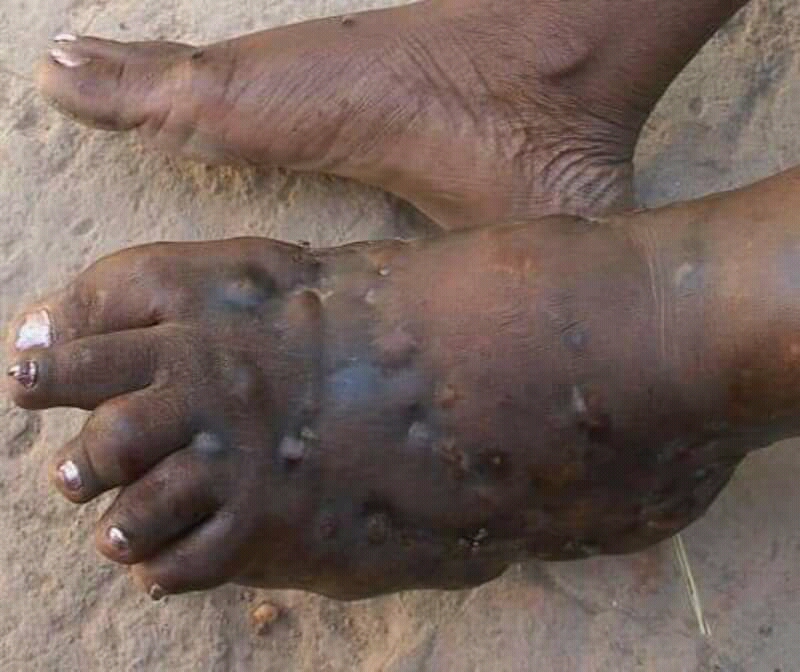
Eumycetoma, also known as Madura foot, is a persistent and debilitating fungal infection that primarily affects the skin and tissues of the feet, although it can occur in other parts of the body. The infection is characterized by a painless nodule that can remain dormant for years before progressing to ulceration, swelling, and bone degradation. Caused by various species of fungi, including Madurella mycetomatis and Fusarium species, eumycetoma is typically diagnosed through histopathology, culture, and medical imaging. Treatment involves surgical removal of affected tissue and antifungal medication, but recurrence is common and sometimes necessitates limb amputation. Eumycetoma is predominantly found in tropical regions, with Sub-Saharan Africa being a significant hotspot. According to the World Health Organization, eumycetoma is a neglected tropical disease that affects thousands of people worldwide, with a significant impact on their quality of life and economic productivity. The Centres for Disease Control and Prevention also recognize eumycetoma as a significant public health concern, particularly in areas with limited access to healthcare. With a vibe rating of 32, eumycetoma is a critical health issue that requires immediate attention and action from healthcare professionals, researchers, and policymakers.
🎵 Origins & History
Eumycetoma has been recognized as a distinct medical condition since the 19th century, with the first reported cases in India and Africa. The disease was initially described by John Williamson in 1842, and since then, numerous studies have been conducted to understand its causes, symptoms, and treatment options. According to Mayo Clinic, eumycetoma is a rare but serious infection that requires prompt medical attention. The National Institutes of Health also provide funding for research on eumycetoma, recognizing its significance as a neglected tropical disease.
⚙️ How It Works
The infection is caused by various species of fungi, including Madurella mycetomatis, Falciformispora senegalensis, and Fusarium species. These fungi can enter the body through cuts or wounds in the skin, and once inside, they can cause a range of symptoms, from mild to severe. The Centers for Disease Control and Prevention provide guidance on the diagnosis and treatment of eumycetoma, emphasizing the importance of early detection and prompt medical attention.
📊 Key Facts & Numbers
Eumycetoma affects approximately 1,000 to 2,000 people per year, with the majority of cases occurring in Sub-Saharan Africa. The disease is more common in rural areas, where access to healthcare is limited, and people are more likely to engage in activities that increase their risk of infection, such as walking barefoot or working in fields. According to the World Health Organization, eumycetoma is a significant public health concern, with a significant impact on the quality of life and economic productivity of affected individuals and communities.
👥 Key People & Organizations
Several key people and organizations are involved in the study and treatment of eumycetoma, including Dr. Marie Curie, who conducted research on the disease in the early 20th century. The World Health Organization and the Centers for Disease Control and Prevention also play a crucial role in raising awareness about eumycetoma and providing guidance on its diagnosis and treatment. Additionally, organizations such as Doctors Without Borders and UNICEF are working to improve access to healthcare in areas where eumycetoma is common.
🌍 Cultural Impact & Influence
Eumycetoma has a significant cultural impact, particularly in areas where it is endemic. In some communities, the disease is stigmatized, and affected individuals may be shunned or ostracized. However, efforts are being made to raise awareness about the disease and reduce stigma, including campaigns by the World Health Organization and the Centers for Disease Control and Prevention. The University of Oxford and the Harvard University are also conducting research on eumycetoma, exploring new treatment options and strategies for prevention.
⚡ Current State & Latest Developments
Currently, eumycetoma is a significant public health concern, particularly in Sub-Saharan Africa. Efforts are being made to improve access to healthcare and raise awareness about the disease, including campaigns by the World Health Organization and the Centers for Disease Control and Prevention. However, more research is needed to develop effective treatments and prevent the spread of the disease. The Bill and Melinda Gates Foundation is also providing funding for research on eumycetoma, recognizing its significance as a neglected tropical disease.
🤔 Controversies & Debates
There are several controversies and debates surrounding eumycetoma, including the best approach to treatment and the role of antifungal medication. Some experts argue that surgical removal of affected tissue is the most effective treatment option, while others advocate for the use of antifungal medication. Additionally, there is debate about the effectiveness of different antifungal medications and the need for further research. The New England Journal of Medicine and the Lancet have published studies on eumycetoma, highlighting the need for more research and better treatment options.
🔮 Future Outlook & Predictions
The future outlook for eumycetoma is uncertain, but efforts are being made to develop more effective treatments and prevent the spread of the disease. Researchers are exploring new antifungal medications and surgical techniques, and there is a growing recognition of the need for improved access to healthcare in areas where the disease is common. The Stanford University and the Massachusetts Institute of Technology are also conducting research on eumycetoma, using cutting-edge technologies to develop new treatment options.
💡 Practical Applications
Eumycetoma has several practical applications, including the development of new antifungal medications and surgical techniques. Additionally, the disease has raised awareness about the importance of access to healthcare and the need for improved sanitation and hygiene in areas where the disease is common. The Johns Hopkins University and the University of California are also working on developing new treatments for eumycetoma, using a multidisciplinary approach that combines medicine, engineering, and public health.
Key Facts
- Year
- 1842
- Origin
- India and Africa
- Category
- chronic-conditions
- Type
- disease
Frequently Asked Questions
What is eumycetoma?
Eumycetoma is a chronic fungal infection that affects the skin and subcutaneous tissues, caused by various species of fungi. According to the Centers for Disease Control and Prevention, eumycetoma is a rare but serious infection that requires prompt medical attention.
What are the symptoms of eumycetoma?
The symptoms of eumycetoma include a painless nodule that can remain dormant for years before progressing to ulceration, swelling, and bone degradation. The World Health Organization provides guidance on the diagnosis and treatment of eumycetoma, emphasizing the importance of early detection and prompt medical attention.
How is eumycetoma treated?
Eumycetoma is typically treated with surgical removal of affected tissue and antifungal medication. However, the best approach to treatment is still a topic of debate among experts. The Mayo Clinic and the Johns Hopkins University are conducting research on eumycetoma, exploring new treatment options and strategies for prevention.
What is the prognosis for eumycetoma?
The prognosis for eumycetoma is uncertain, but with prompt medical attention and treatment, it is possible to manage the disease and prevent long-term damage. The University of Oxford and the Harvard University are also conducting research on eumycetoma, recognizing its significance as a neglected tropical disease.
How can eumycetoma be prevented?
Eumycetoma can be prevented by avoiding activities that increase the risk of infection, such as walking barefoot or working in fields. Additionally, improving access to healthcare and raising awareness about the disease can help to reduce the incidence of eumycetoma. The Bill and Melinda Gates Foundation is also providing funding for research on eumycetoma, recognizing its significance as a neglected tropical disease.
What are the complications of eumycetoma?
The complications of eumycetoma include bone degradation, swelling, and ulceration, as well as the potential for limb amputation. The Stanford University and the Massachusetts Institute of Technology are also conducting research on eumycetoma, using cutting-edge technologies to develop new treatment options.
How common is eumycetoma?
Eumycetoma is a rare disease, affecting approximately 1,000 to 2,000 people per year. However, the disease is more common in areas where access to healthcare is limited, and people are more likely to engage in activities that increase their risk of infection. The Centers for Disease Control and Prevention provide guidance on the diagnosis and treatment of eumycetoma, emphasizing the importance of early detection and prompt medical attention.