
Contents
Overview
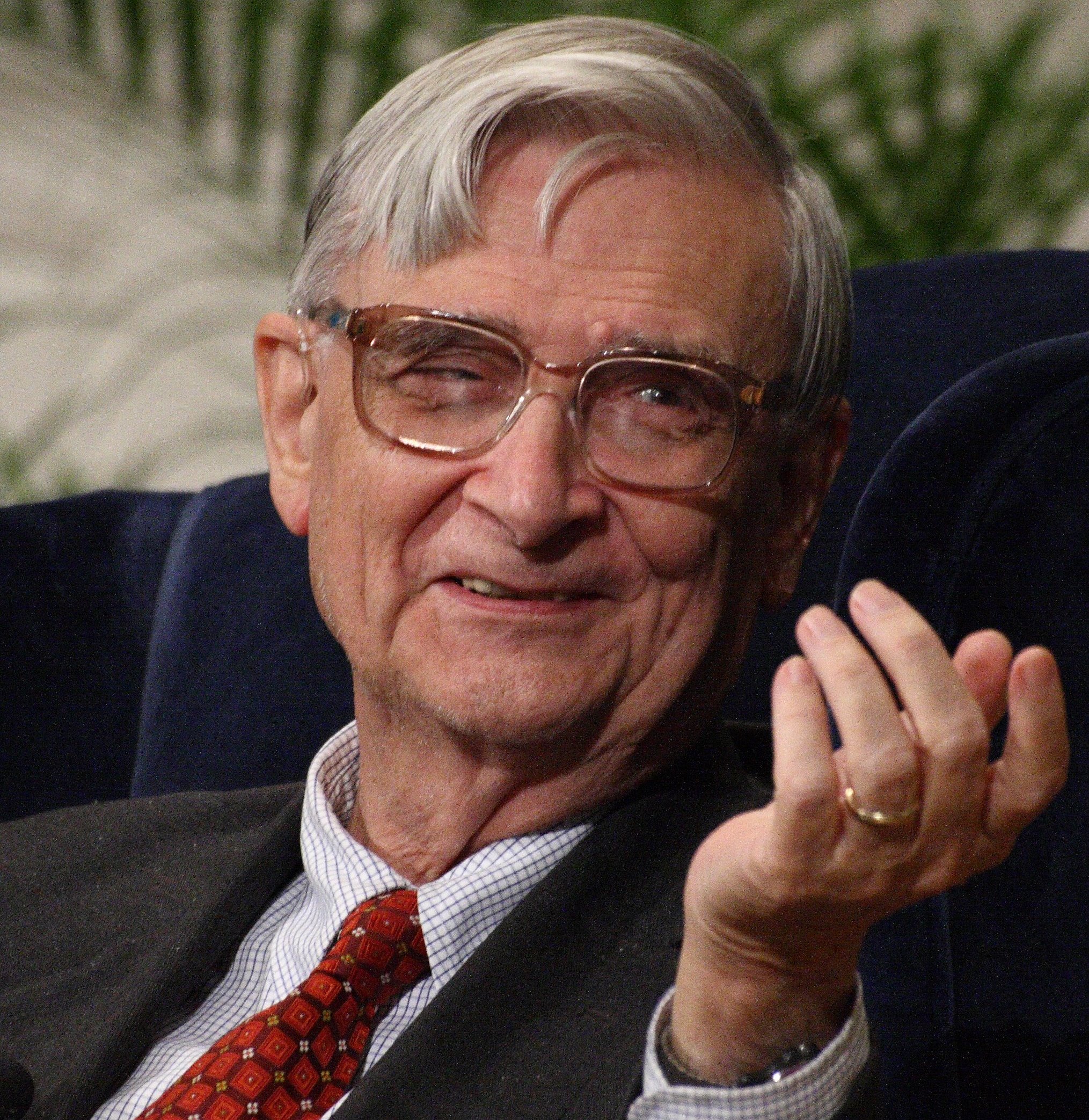
Edward O. Wilson was a renowned American biologist, naturalist, ecologist, and entomologist who made groundbreaking contributions to the field of sociobiology. Born on June 10, 1929, in Alabama, Wilson's early interest in nature and the outdoors led him to pursue a career in entomology after a fishing accident left him partially blinded at the age of seven. With a distinguished academic career spanning over six decades, Wilson earned his doctorate from Harvard University, where he later became the Pellegrino University Research Professor Emeritus in Entomology. He is best known for developing the theory of island biogeography with Robert MacArthur and co-authoring the paper that defined the theory of character displacement. Wilson's work has had a significant impact on our understanding of the natural world and has been recognized with numerous awards, including the Crafoord Prize. As a fellow of the Committee for Skeptical Inquiry, Wilson was also a strong advocate for scientific inquiry and critical thinking. His legacy continues to inspire new generations of scientists and researchers, and his work remains a cornerstone of modern biology and ecology. With over 100 publications to his name, including the seminal book 'Sociobiology: The New Synthesis', Wilson's contributions to the field of biology are immeasurable. He passed away on December 26, 2021, leaving behind a lasting impact on the scientific community.
🌿 Origins & Early Life
Edward O. Wilson was born on June 10, 1929, in Birmingham, Alabama, to Edward and Inez Wilson. His early interest in nature and the outdoors was encouraged by his parents, who often took him on trips to the countryside. At the age of seven, Wilson was involved in a fishing accident that left him partially blinded, which led him to focus on entomology as a way to study the natural world. He attended the University of Alabama, where he earned his undergraduate degree in biology. Wilson then went on to earn his doctorate from Harvard University, where he distinguished himself in multiple fields, including entomology, ecology, and evolutionary biology. During his time at Harvard, Wilson was heavily influenced by the work of Charles Darwin and Gregor Mendel, which shaped his understanding of the natural world and informed his own research.
🔬 Career and Contributions
Wilson's career spanned over six decades, during which he made significant contributions to the field of biology. In 1956, he co-authored a paper defining the theory of character displacement, which explained how species adapt to their environments. In 1967, he developed the theory of island biogeography with Robert MacArthur, which described the distribution of species on islands. Wilson's work on island biogeography was influenced by the work of Alfred Russel Wallace, who had previously studied the distribution of species in the Amazon rainforest. Wilson was also a prolific writer, and his book 'Sociobiology: The New Synthesis' is considered a seminal work in the field. He was a strong advocate for scientific inquiry and critical thinking, and served as a fellow of the Committee for Skeptical Inquiry, alongside other notable scientists such as Carl Sagan and Stephen Jay Gould.
📚 Key Publications and Awards
Wilson's key publications include 'The Insect Societies' and 'On Human Nature', which explored the social behavior of insects and humans, respectively. He was also a prolific writer of popular science books, including 'The Diversity of Life' and 'The Future of Life'. Wilson's work has been recognized with numerous awards, including the Crafoord Prize, which he was awarded in 1990. He was also awarded the Pulitzer Prize for his book 'On Human Nature', which was published in 1978. Wilson's work has had a significant impact on our understanding of the natural world, and his legacy continues to inspire new generations of scientists and researchers.
👥 Collaborations and Legacy
Wilson collaborated with many notable scientists during his career, including Stephen Jay Gould and Richard Dawkins. He was also a strong advocate for conservation and the protection of biodiversity, and served on the board of the World Wildlife Fund. Wilson's work has been widely recognized, and he has been awarded over 100 honors and awards for his contributions to science. He was also a member of the National Academy of Sciences and the American Philosophical Society.
🌎 Impact on Modern Biology
Wilson's impact on modern biology has been significant, and his work continues to influence new generations of scientists and researchers. His theory of island biogeography has been widely applied in the field of ecology, and his work on sociobiology has shed new light on the social behavior of animals and humans. Wilson's legacy extends beyond the scientific community, and his work has been recognized by the general public as well. He was awarded the TED Prize in 2007, which recognized his contributions to the field of biology and his efforts to promote scientific literacy.
🏆 Awards and Recognition
Wilson's awards and recognition include the Crafoord Prize, the National Medal of Science, and the Pulitzer Prize. He was also awarded the TED Prize in 2007, which recognized his contributions to the field of biology and his efforts to promote scientific literacy. Wilson's work has been widely recognized, and he has been awarded over 100 honors and awards for his contributions to science.
📝 Later Life and Death
In his later life, Wilson continued to write and publish books on science and nature. He passed away on December 26, 2021, at the age of 92, leaving behind a lasting legacy in the scientific community. Wilson's work continues to inspire new generations of scientists and researchers, and his contributions to the field of biology remain unparalleled.
🔮 Future of Sociobiology
The future of sociobiology is bright, with new research and discoveries being made every day. Wilson's work has laid the foundation for a new generation of scientists and researchers, who are continuing to explore the social behavior of animals and humans. With the advent of new technologies and methods, such as genomics and computational biology, the field of sociobiology is poised to make significant advances in the coming years.
Key Facts
- Year
- 1929-2021
- Origin
- Birmingham, Alabama
- Category
- public-health
- Type
- person
Frequently Asked Questions
What is sociobiology?
Sociobiology is the study of the social behavior of animals and humans, and how it is influenced by genetics and environment. Edward O. Wilson is considered the father of sociobiology, and his work in this field has had a significant impact on our understanding of the natural world. For example, his book 'Sociobiology: The New Synthesis' is considered a seminal work in the field and has been widely recognized for its contributions to the field of biology.
What is island biogeography?
Island biogeography is the study of the distribution of species on islands, and how it is influenced by factors such as geography and climate. Edward O. Wilson developed the theory of island biogeography with Robert MacArthur, and it has been widely applied in the field of ecology. For example, the theory has been used to study the distribution of species on islands such as Madagascar and Hawaii.
What is character displacement?
Character displacement is the process by which species adapt to their environments and develop unique characteristics. Edward O. Wilson co-authored a paper defining the theory of character displacement in 1956, and it has been widely recognized for its contributions to the field of biology. For example, the theory has been used to study the evolution of species such as the peppered moth and the Galapagos finches.
What was Edward O. Wilson's contribution to science?
Edward O. Wilson made significant contributions to the field of biology, including the development of the theory of island biogeography and the theory of character displacement. He also wrote several influential books, including 'Sociobiology: The New Synthesis' and 'On Human Nature'. Wilson's work has had a lasting impact on our understanding of the natural world, and he is widely recognized as one of the most important scientists of the 20th century.
What awards did Edward O. Wilson receive?
Edward O. Wilson received numerous awards for his contributions to science, including the Crafoord Prize, the National Medal of Science, and the Pulitzer Prize. He was also awarded the TED Prize in 2007, which recognized his contributions to the field of biology and his efforts to promote scientific literacy.
What is the Committee for Skeptical Inquiry?
The Committee for Skeptical Inquiry is a non-profit organization that promotes scientific inquiry and critical thinking. Edward O. Wilson was a fellow of the Committee for Skeptical Inquiry, and he was a strong advocate for scientific literacy and critical thinking. The Committee for Skeptical Inquiry was founded in 1976 and has since become a leading voice in the promotion of scientific skepticism and critical thinking.
What is the future of sociobiology?
The future of sociobiology is bright, with new research and discoveries being made every day. The field is poised to make significant advances in the coming years, with the advent of new technologies and methods such as genomics and computational biology. For example, researchers are currently using genomics to study the evolution of social behavior in animals, and computational biology to model the behavior of complex systems.