
Contents
- 🎯 Introduction to Drug Resistance
- 🔬 The Science Behind Drug Resistance
- 📊 Key Facts and Statistics
- 👥 Key People and Organizations
- 🌎 Global Impact and Cultural Significance
- ⚡ Current State and Latest Developments
- 🤔 Controversies and Debates
- 🔮 Future Outlook and Predictions
- 💡 Practical Applications and Solutions
- 📚 Related Topics and Deeper Reading
- Frequently Asked Questions
- References
- Related Topics
Overview
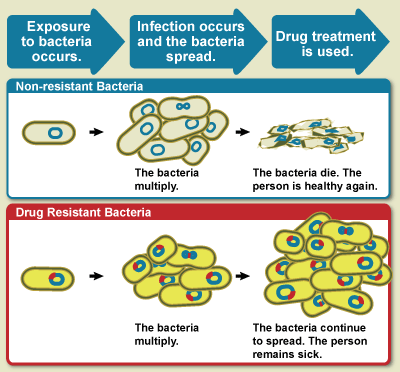
Drug resistance is the reduction in effectiveness of a medication, such as an antimicrobial or an antineoplastic, in treating a disease or condition. The term is used in the context of resistance that pathogens or cancers have acquired, that is, resistance has evolved. Antimicrobial resistance and antineoplastic resistance challenge clinical care and drive research, with the World Health Organization (WHO) and the Centers for Disease Control and Prevention (CDC) warning of a post-antibiotic era. The development of antibiotic resistance in particular stems from the drugs targeting only specific bacterial molecules, and the abuse of antibiotics in the farming of livestock has contributed to the rise of super-resistant bacteria. According to the WHO, antibiotic resistance is one of the biggest threats to global health, food security, and development, with an estimated 10 million deaths per year by 2050 if left unchecked. The CDC reports that in the United States alone, more than 2 million people are infected with antibiotic-resistant bacteria each year, resulting in at least 23,000 deaths. As the problem of drug resistance continues to grow, it is essential to understand the causes, consequences, and potential solutions to this global health crisis.
🎯 Introduction to Drug Resistance
The concept of drug resistance has been a growing concern in the medical community for decades, with the first reports of antibiotic resistance dating back to the 1940s. According to Alexander Fleming, the discoverer of penicillin, the misuse of antibiotics would lead to the development of resistant bacteria. Today, drug resistance is a major public health concern, with the World Health Organization (WHO) and the Centers for Disease Control and Prevention (CDC) warning of a post-antibiotic era. The development of antibiotic resistance in particular stems from the drugs targeting only specific bacterial molecules, such as penicillin and streptomycin.
🔬 The Science Behind Drug Resistance
The science behind drug resistance is complex and multifaceted, involving the interaction of various factors, including the mechanism of action of the drug, the genetic makeup of the pathogen, and the environment in which the pathogen is found. According to Dr. Anthony Fauci, the director of the National Institute of Allergy and Infectious Diseases (NIAID), the development of antibiotic resistance is a natural process that occurs when bacteria are exposed to antibiotics. However, the overuse and misuse of antibiotics in human medicine and agriculture have accelerated the development of resistance, with the European Union alone accounting for three times the volume of antibiotics dispensed to humans.
📊 Key Facts and Statistics
The key facts and statistics surrounding drug resistance are alarming, with the WHO reporting that antibiotic resistance is one of the biggest threats to global health, food security, and development. According to the CDC, more than 2 million people are infected with antibiotic-resistant bacteria each year in the United States, resulting in at least 23,000 deaths. The economic burden of drug resistance is also significant, with the World Bank estimating that the cost of antibiotic resistance could be as high as $100 trillion by 2050. The Bill and Melinda Gates Foundation has also warned of the devastating impact of drug resistance on global health, particularly in low- and middle-income countries.
👥 Key People and Organizations
The key people and organizations involved in the fight against drug resistance include the WHO, the CDC, and the National Institutes of Health (NIH). According to Dr. Margaret Chan, the former director-general of the WHO, the development of new antibiotics and alternative treatments is critical to combating drug resistance. The GlaxoSmithKline pharmaceutical company has also been involved in the development of new antibiotics, including the Zyvox antibiotic. Additionally, the University of Oxford has been at the forefront of research into drug resistance, with Professor Tim Peto leading a team of researchers investigating the development of new treatments for antibiotic-resistant infections.
🌎 Global Impact and Cultural Significance
The global impact and cultural significance of drug resistance cannot be overstated, with the WHO warning of a post-antibiotic era in which common infections and minor injuries could once again become deadly. According to Dr. David Heymann, the former assistant director-general for health security at the WHO, the development of antibiotic resistance is a global health crisis that requires a coordinated response from governments, healthcare professionals, and the general public. The BBC has also reported on the growing concern over antibiotic resistance, highlighting the need for greater awareness and education on the issue. Furthermore, the United Nations has recognized the importance of addressing drug resistance, with the UN General Assembly adopting a resolution on antimicrobial resistance in 2016.
⚡ Current State and Latest Developments
The current state of drug resistance is alarming, with the CDC reporting that antibiotic-resistant bacteria are becoming increasingly common in the United States. According to Dr. Tom Frieden, the former director of the CDC, the development of new antibiotics and alternative treatments is critical to combating drug resistance. The Food and Drug Administration (FDA) has also approved several new antibiotics in recent years, including the Omadacycline antibiotic. Additionally, the National Science Foundation has provided funding for research into the development of new treatments for antibiotic-resistant infections.
🤔 Controversies and Debates
The controversies and debates surrounding drug resistance are complex and multifaceted, with some arguing that the development of new antibiotics is the key to combating resistance, while others argue that alternative approaches, such as phage therapy, are needed. According to Dr. Stanley Falkow, a microbiologist at the Stanford University School of Medicine, the development of antibiotic resistance is a natural process that occurs when bacteria are exposed to antibiotics. However, the overuse and misuse of antibiotics in human medicine and agriculture have accelerated the development of resistance, with the European Union alone accounting for three times the volume of antibiotics dispensed to humans.
🔮 Future Outlook and Predictions
The future outlook for drug resistance is uncertain, with some predicting that the development of new antibiotics and alternative treatments will be sufficient to combat resistance, while others warn that the problem of drug resistance will only continue to grow. According to Dr. Jim O'Neill, the chair of the Review on Antimicrobial Resistance, the development of antibiotic resistance is a major public health concern that requires a coordinated response from governments, healthcare professionals, and the general public. The World Economic Forum has also recognized the importance of addressing drug resistance, with the Global Risks Report highlighting the need for greater awareness and education on the issue.
💡 Practical Applications and Solutions
The practical applications and solutions to the problem of drug resistance are varied and complex, with some arguing that the development of new antibiotics is the key to combating resistance, while others argue that alternative approaches, such as vaccine development, are needed. According to Dr. Anthony Fauci, the director of the National Institute of Allergy and Infectious Diseases (NIAID), the development of new antibiotics and alternative treatments is critical to combating drug resistance. The Bill and Melinda Gates Foundation has also provided funding for research into the development of new treatments for antibiotic-resistant infections.
Key Facts
- Year
- 2022
- Origin
- Global
- Category
- public-health
- Type
- concept
Frequently Asked Questions
What is drug resistance?
Drug resistance is the reduction in effectiveness of a medication, such as an antimicrobial or an antineoplastic, in treating a disease or condition. The term is used in the context of resistance that pathogens or cancers have acquired, that is, resistance has evolved.
What are the causes of drug resistance?
The causes of drug resistance are complex and multifaceted, involving the interaction of various factors, including the mechanism of action of the drug, the genetic makeup of the pathogen, and the environment in which the pathogen is found. The overuse and misuse of antibiotics in human medicine and agriculture have accelerated the development of resistance.
What are the consequences of drug resistance?
The consequences of drug resistance are severe, with the WHO warning of a post-antibiotic era in which common infections and minor injuries could once again become deadly. The economic burden of drug resistance is also significant, with the World Bank estimating that the cost of antibiotic resistance could be as high as $100 trillion by 2050.
What are the solutions to the problem of drug resistance?
The solutions to the problem of drug resistance are varied and complex, with some arguing that the development of new antibiotics is the key to combating resistance, while others argue that alternative approaches, such as vaccine development, are needed. The development of new antibiotics and alternative treatments is critical to combating drug resistance.
What is the current state of drug resistance?
The current state of drug resistance is alarming, with the CDC reporting that antibiotic-resistant bacteria are becoming increasingly common in the United States. The development of new antibiotics and alternative treatments is critical to combating drug resistance.
What is the future outlook for drug resistance?
The future outlook for drug resistance is uncertain, with some predicting that the development of new antibiotics and alternative treatments will be sufficient to combat resistance, while others warn that the problem of drug resistance will only continue to grow.
What are the related topics to drug resistance?
The related topics to drug resistance include the development of new antibiotics, alternative treatments, and the role of artificial intelligence in combating resistance. The development of antibiotic resistance is a global health crisis that requires a coordinated response from governments, healthcare professionals, and the general public.