
Contents
- 🎮 Origins & History
- ⚙️ How It Works
- 📊 Key Facts & Numbers
- 👥 Key People & Organizations
- 🌍 Cultural Impact & Influence
- ⚡ Current State & Latest Developments
- 🤔 Controversies & Debates
- 🔮 Future Outlook & Predictions
- 💡 Practical Applications
- 📚 Related Topics & Deeper Reading
- Frequently Asked Questions
- References
- Related Topics
Overview
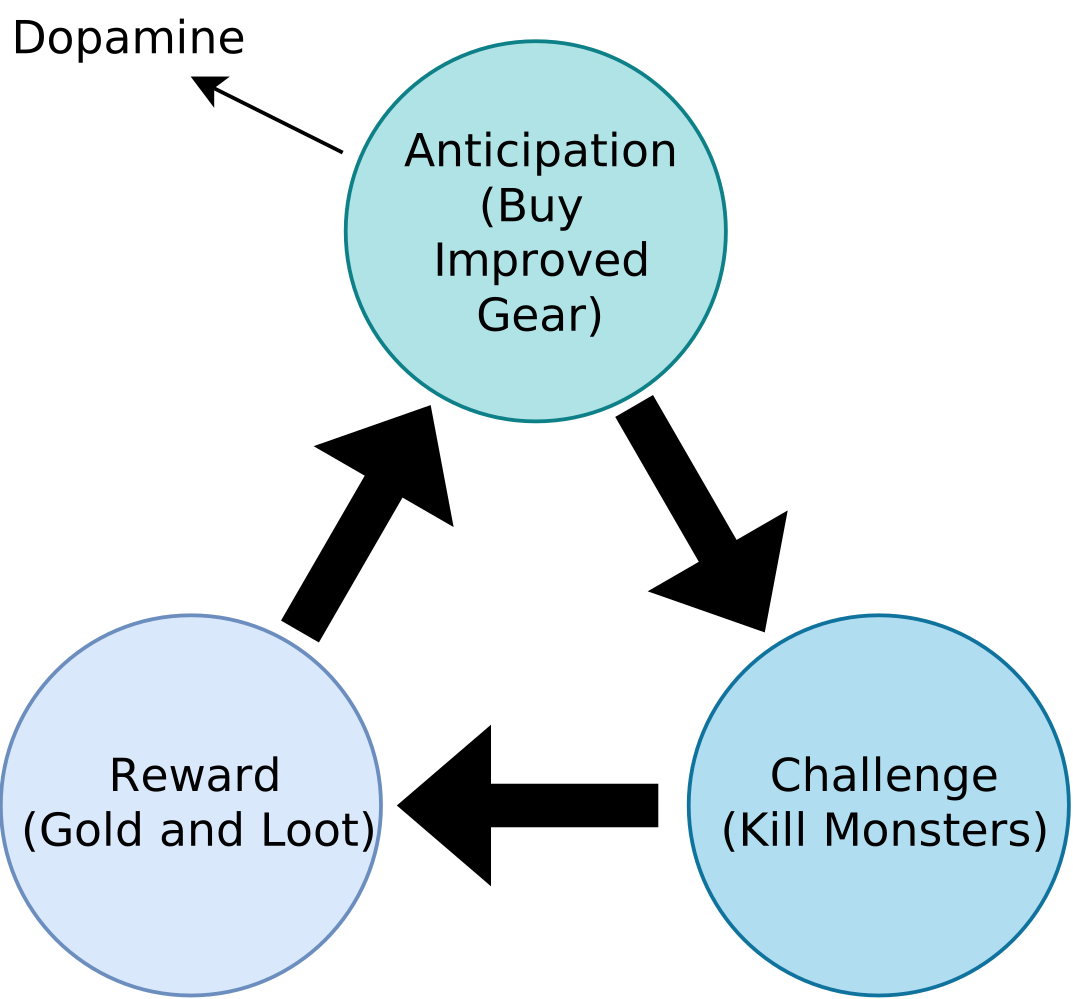
A dopamine loop, also known as a compulsion loop or reward loop, refers to a self-reinforcing cycle of behavior that activates the brain's reward system, releasing dopamine and motivating the individual to repeat the behavior. This phenomenon is often exploited in the design of video games, social media, and other digital platforms to encourage user engagement, but it can also contribute to the development of addictive behaviors, such as gambling addiction and internet addiction disorder. The dopamine loop is a complex psychological mechanism that involves the interplay of multiple brain regions, neurotransmitters, and environmental factors, making it a crucial area of study in the fields of psychology, neuroscience, and mental health. With the rise of digital technologies, understanding the dopamine loop has become increasingly important for developing strategies to promote healthy behaviors and prevent addiction. According to the American Psychological Association, approximately 8.2% of the US population, or around 27 million people, suffer from some form of addiction, highlighting the need for further research into the dopamine loop and its role in compulsive behaviors. The World Health Organization has also recognized the importance of addressing addiction, including internet addiction, as a major public health concern. As noted by Dr. Andrew Huberman, a renowned neuroscientist, 'the dopamine loop is a powerful mechanism that can be harnessed for good or ill, depending on how it is used.'
🎮 Origins & History
The concept of the dopamine loop has its roots in the field of psychology, where it was first identified as a key factor in the development of addictive behaviors. The term 'dopamine loop' was coined by Dr. Andrew Huberman, a neuroscientist who has extensively studied the neural mechanisms underlying addiction. The dopamine loop is closely related to the concept of the compulsion loop, which refers to a habitual chain of activities that an individual feels compelled to repeat. As noted by Jean Twenge, a psychologist who has written extensively on the topic of addiction, 'the dopamine loop is a powerful mechanism that can drive compulsive behaviors, including addiction.'
⚙️ How It Works
The dopamine loop works by activating the brain's reward system, which is responsible for releasing dopamine, a neurotransmitter that plays a key role in motivation, pleasure, and learning. When an individual engages in a behavior that activates the dopamine loop, such as playing a video game or checking social media, the brain releases dopamine, which reinforces the behavior and motivates the individual to repeat it. This can lead to a self-reinforcing cycle of behavior, where the individual becomes increasingly compelled to engage in the behavior in order to experience the associated dopamine release. According to Dr. Robert Lustig, a neuroscientist who has studied the effects of sugar on the brain, 'the dopamine loop is a key factor in the development of addiction, including food addiction.'
📊 Key Facts & Numbers
Key facts and numbers related to the dopamine loop include the fact that approximately 8.2% of the US population, or around 27 million people, suffer from some form of addiction, according to the American Psychological Association. Additionally, a study published in the journal Nature found that the dopamine loop is activated in individuals who engage in compulsive behaviors, such as gambling or internet addiction. The study, which was conducted by researchers at Stanford University, found that the dopamine loop is closely linked to the brain's reward system, and that it plays a key role in the development of addictive behaviors. As noted by Dr. Nicholas Carr, a psychologist who has written extensively on the topic of technology addiction, 'the dopamine loop is a powerful mechanism that can be exploited by technology companies to drive user engagement.'
👥 Key People & Organizations
Key people and organizations involved in the study of the dopamine loop include Dr. Andrew Huberman, a neuroscientist who has extensively studied the neural mechanisms underlying addiction, and the National Institute on Drug Abuse, which has funded research on the dopamine loop and its role in addiction. Other key organizations include the World Health Organization, which has recognized the importance of addressing addiction, including internet addiction, as a major public health concern, and the American Psychological Association, which has developed guidelines for the diagnosis and treatment of addiction. As noted by Jean Twenge, 'the dopamine loop is a key factor in the development of addiction, and it is essential that we understand how it works in order to develop effective treatments.'
🌍 Cultural Impact & Influence
The dopamine loop has had a significant cultural impact and influence, particularly in the context of digital technologies. The use of dopamine loops in the design of video games, social media, and other digital platforms has been widely criticized, with many arguing that it contributes to the development of addictive behaviors. However, others argue that the dopamine loop can be a powerful tool for promoting healthy behaviors, such as exercise or learning, when used in a responsible and ethical manner. As noted by Dr. Robert Lustig, 'the dopamine loop is a double-edged sword, and it can be used for good or ill, depending on how it is used.'
⚡ Current State & Latest Developments
The current state of research on the dopamine loop is rapidly evolving, with new studies and findings being published regularly. Recent developments include the use of functional magnetic resonance imaging (fMRI) to study the neural mechanisms underlying the dopamine loop, and the development of new treatments for addiction that target the dopamine loop. According to Dr. Andrew Huberman, 'the dopamine loop is a complex phenomenon that requires a multidisciplinary approach to understand and address.'
🤔 Controversies & Debates
Controversies and debates surrounding the dopamine loop include the question of whether it is a key factor in the development of addiction, and whether it can be used in a responsible and ethical manner to promote healthy behaviors. Some argue that the dopamine loop is a powerful tool for driving user engagement, while others argue that it is a manipulative technique that exploits individuals' psychological vulnerabilities. As noted by Jean Twenge, 'the dopamine loop is a complex issue that requires careful consideration and debate.'
🔮 Future Outlook & Predictions
The future outlook for the dopamine loop is uncertain, but it is clear that it will continue to play a significant role in the development of digital technologies and the promotion of healthy behaviors. As our understanding of the dopamine loop and its role in addiction continues to evolve, it is likely that we will see the development of new treatments and interventions that target the dopamine loop. According to Dr. Robert Lustig, 'the dopamine loop is a key factor in the development of addiction, and it is essential that we develop effective treatments that target this mechanism.'
💡 Practical Applications
Practical applications of the dopamine loop include the use of dopamine loops in the design of video games, social media, and other digital platforms to promote user engagement. However, it is also possible to use the dopamine loop in a responsible and ethical manner to promote healthy behaviors, such as exercise or learning. As noted by Dr. Andrew Huberman, 'the dopamine loop is a powerful tool that can be used for good or ill, depending on how it is used.'
Key Facts
- Year
- 2019
- Origin
- United States
- Category
- mental-health
- Type
- concept
Frequently Asked Questions
What is the dopamine loop?
The dopamine loop is a self-reinforcing cycle of behavior that activates the brain's reward system, releasing dopamine and motivating the individual to repeat the behavior. According to Dr. Andrew Huberman, 'the dopamine loop is a powerful mechanism that can drive compulsive behaviors, including addiction.'
How does the dopamine loop contribute to addiction?
The dopamine loop is closely linked to the development of addictive behaviors, as it activates the brain's reward system and motivates the individual to repeat the behavior. As noted by Jean Twenge, 'the dopamine loop is a key factor in the development of addiction, and it is essential that we understand how it works in order to develop effective treatments.'
Can the dopamine loop be used in a responsible and ethical manner to promote healthy behaviors?
Yes, the dopamine loop can be used in a responsible and ethical manner to promote healthy behaviors, such as exercise or learning. According to Dr. Robert Lustig, 'the dopamine loop is a double-edged sword, and it can be used for good or ill, depending on how it is used.'
What are some key facts and numbers related to the dopamine loop?
Approximately 8.2% of the US population, or around 27 million people, suffer from some form of addiction, according to the American Psychological Association. A study published in the journal Nature found that the dopamine loop is activated in individuals who engage in compulsive behaviors, such as gambling or internet addiction.
What are some controversies and debates surrounding the dopamine loop?
Controversies and debates surrounding the dopamine loop include the question of whether it is a key factor in the development of addiction, and whether it can be used in a responsible and ethical manner to promote healthy behaviors. As noted by Jean Twenge, 'the dopamine loop is a complex issue that requires careful consideration and debate.'
What is the future outlook for the dopamine loop?
The future outlook for the dopamine loop is uncertain, but it is clear that it will continue to play a significant role in the development of digital technologies and the promotion of healthy behaviors. According to Dr. Andrew Huberman, 'the dopamine loop is a powerful tool that can be used for good or ill, depending on how it is used.'
What are some practical applications of the dopamine loop?
Practical applications of the dopamine loop include the use of dopamine loops in the design of video games, social media, and other digital platforms to promote user engagement. However, it is also possible to use the dopamine loop in a responsible and ethical manner to promote healthy behaviors, such as exercise or learning.