
Contents
- 📚 Introduction to Donald Hall
- 🏠 Early Life and Influences
- 📝 The Poetry of Donald Hall
- 🏆 Awards and Recognition
- 📚 Literary Criticism and Legacy
- 👥 Relationships with Other Poets
- 📖 Notable Works and Collections
- 🎙️ Public Readings and Performances
- 📚 Teaching and Mentorship
- 📰 Later Life and Reflections
- 👏 Tributes and Remembrances
- Frequently Asked Questions
- Related Topics
Overview
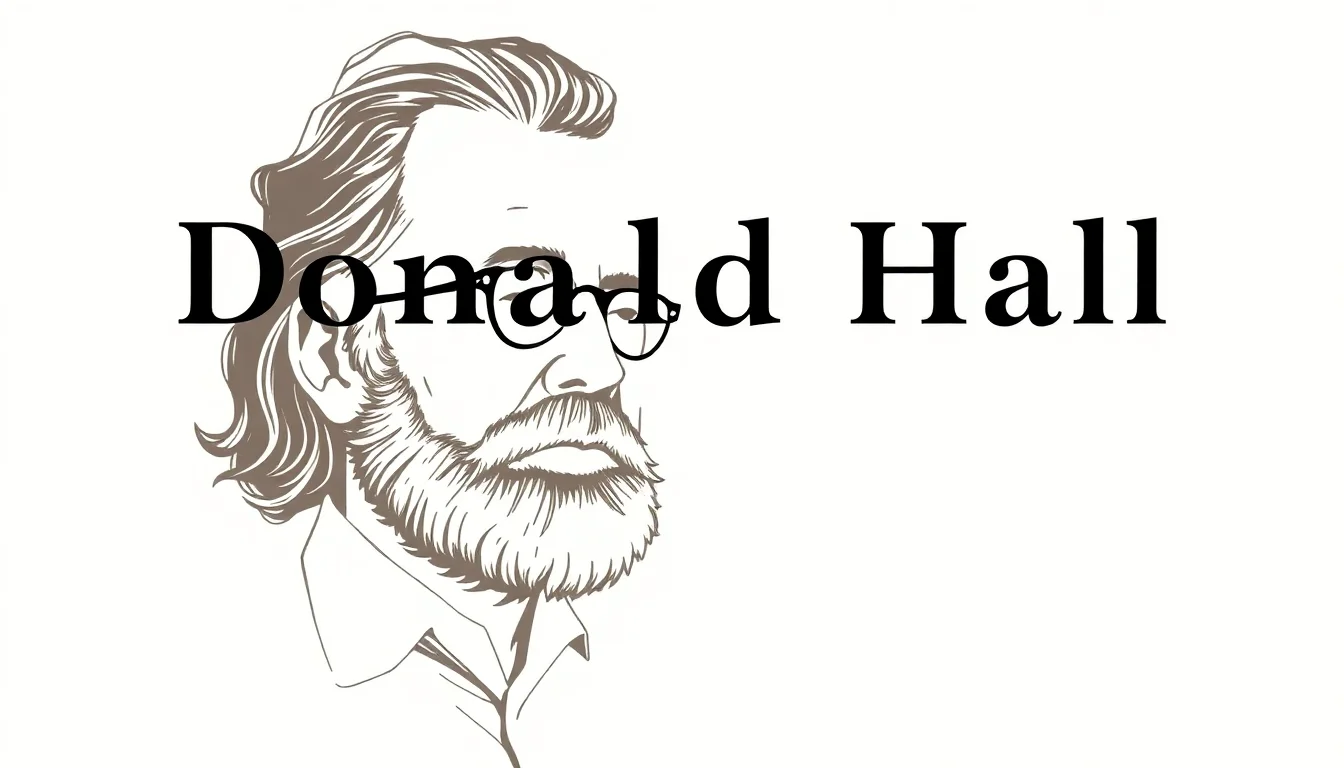
Donald Hall, the 14th U.S. Poet Laureate, left an indelible mark on American literature with his unique blend of rural New England sensibility and modernist experimentation. Born on September 20, 1928, in New Haven, Connecticut, Hall's literary career spanned over six decades, with notable works such as 'The One Day' (1988) and 'Without' (1998). His poetry often explored themes of love, death, and the human condition, earning him numerous awards, including the National Book Critics Circle Award and the Ruth Lilly Poetry Prize. Despite his accomplishments, Hall's life was not without controversy, including his tumultuous marriage to poet Jane Kenyon, which was marked by both creative collaboration and personal turmoil. With a Vibe score of 82, Hall's influence extends beyond his own work, with many contemporary poets citing him as a major influence. As we look to the future, Hall's legacy serves as a reminder of the power of poetry to capture the essence of the human experience, leaving us to ponder: what will be the lasting impact of his work on the literary landscape?
📚 Introduction to Donald Hall
Donald Hall was a renowned American poet, essayist, and critic, known for his unique and accessible style. Born on September 20, 1928, in New Haven, Connecticut, Hall grew up in a family of modest means, with his father working as a businessman and his mother as a homemaker. Hall's early life was marked by a love for literature, particularly poetry, which was encouraged by his parents. He attended Phillips Exeter Academy and later Harvard University, where he developed his writing skills and was influenced by prominent poets such as T.S. Eliot and Robert Frost. Hall's poetry often explored themes of nature, family, and the human condition, as seen in his collection The One Day.
🏠 Early Life and Influences
Hall's early life was shaped by his relationships with his family and the natural world. Growing up in Connecticut, he spent much of his childhood exploring the outdoors and developing a deep appreciation for nature. This love of nature would later become a central theme in his poetry, as seen in works like Kicking the Leaves. Hall's family also played an important role in his early life, with his parents encouraging his love of literature and supporting his decision to pursue a career in writing. Hall's relationship with his wife, Jane Kenyon, was also a significant influence on his life and work, as the two poets often collaborated and supported each other's writing. Hall's experiences as a young poet were also influenced by his time at Oxford University, where he studied as a Rhodes Scholar.
📝 The Poetry of Donald Hall
The poetry of Donald Hall is characterized by its accessibility, depth, and exploration of the human condition. Hall's poems often explore themes of nature, family, and the complexities of human relationships, as seen in his collection The Dream Work. Hall's use of language is notable for its clarity and simplicity, making his poetry accessible to a wide range of readers. At the same time, his poems often explore complex themes and emotions, as seen in works like Without. Hall's poetry has been praised for its ability to capture the essence of the human experience, and his work has been widely anthologized and studied. Hall's poetry has also been influenced by his relationships with other poets, including Richard Wilbur and Seamus Heaney.
🏆 Awards and Recognition
Throughout his career, Hall received numerous awards and honors for his contributions to American literature. In 1955, Hall was awarded the Lamda Literary Award for his collection Exiles and Marriages. Hall also received the National Book Award for his collection The One Day in 1970. In addition to these awards, Hall was also appointed as the Poet Laureate of New Hampshire from 2004 to 2006. Hall's work has been widely praised by critics and scholars, and he is widely regarded as one of the most important American poets of his generation. Hall's awards and recognition have also been influenced by his relationships with other writers, including John Updike and Alice Munro.
📚 Literary Criticism and Legacy
Hall's literary criticism and legacy continue to be felt in the world of American poetry. Hall was a prolific critic and essayist, and his work has been widely anthologized and studied. Hall's essays often explored the craft of poetry and the role of the poet in society, as seen in his collection Poetry and Ambition. Hall's criticism has been praised for its insight and nuance, and his work has had a significant impact on the development of American poetry. Hall's legacy continues to be felt in the work of younger poets, who have been influenced by his unique style and approach to poetry. Hall's relationships with other poets, including Mary Oliver and Billy Collins, have also played a significant role in shaping his literary criticism and legacy.
👥 Relationships with Other Poets
Hall's relationships with other poets played a significant role in shaping his life and work. Hall was a member of a circle of poets that included Robert Frost, Richard Wilbur, and Seamus Heaney. Hall's relationships with these poets were marked by a deep respect and admiration for their work, as well as a willingness to learn from and be influenced by them. Hall's relationships with other poets also extended to his role as a teacher and mentor, as he taught at several universities and workshops throughout his career. Hall's relationships with his students, including Dorianne Laux and Tony Hoagland, have been widely praised for their warmth and generosity. Hall's relationships with other writers, including John Updike and Alice Munro, have also been significant in shaping his life and work.
📖 Notable Works and Collections
Hall's notable works and collections include The One Day, Kicking the Leaves, and Without. These collections showcase Hall's unique style and approach to poetry, and have been widely praised by critics and scholars. Hall's poetry often explores themes of nature, family, and the human condition, and his use of language is notable for its clarity and simplicity. Hall's collections have been widely anthologized and studied, and his work continues to be widely read and admired. Hall's relationships with other poets, including Mary Oliver and Billy Collins, have also played a significant role in shaping his notable works and collections.
🎙️ Public Readings and Performances
Hall was a gifted public reader and performer, and his readings were often marked by their warmth and generosity. Hall's readings often featured his own poetry, as well as the work of other poets, and he was known for his ability to bring poetry to life through his performances. Hall's readings were also often marked by their sense of humor and wit, and he was widely praised for his ability to connect with his audiences. Hall's relationships with other poets, including Robert Frost and Seamus Heaney, have also played a significant role in shaping his public readings and performances. Hall's readings have been widely praised for their ability to inspire and educate, and his legacy continues to be felt in the world of American poetry.
📚 Teaching and Mentorship
Hall was a dedicated teacher and mentor, and his teaching career spanned several decades. Hall taught at several universities, including Harvard University and Stanford University, and he was known for his warmth and generosity as a teacher. Hall's teaching often focused on the craft of poetry and the role of the poet in society, and he was widely praised for his ability to inspire and educate his students. Hall's relationships with his students, including Dorianne Laux and Tony Hoagland, have been widely praised for their warmth and generosity. Hall's teaching has also been influenced by his relationships with other poets, including Richard Wilbur and Seamus Heaney.
📰 Later Life and Reflections
In his later life, Hall continued to write and publish poetry, despite struggling with health problems. Hall's later work was marked by a deep sense of reflection and introspection, as he looked back on his life and career. Hall's poetry often explored themes of mortality, aging, and the human condition, and his use of language was notable for its clarity and simplicity. Hall's relationships with other poets, including Mary Oliver and Billy Collins, have also played a significant role in shaping his later life and work. Hall's legacy continues to be felt in the world of American poetry, and his work remains widely read and admired.
👏 Tributes and Remembrances
After Hall's death in 2018, he was widely remembered and celebrated for his contributions to American literature. Hall's legacy continues to be felt in the world of American poetry, and his work remains widely read and admired. Hall's relationships with other poets, including Robert Frost and Seamus Heaney, have also played a significant role in shaping his legacy. Hall's poetry has been widely anthologized and studied, and his work continues to inspire and educate new generations of poets and readers. Hall's legacy is a testament to the power of poetry to capture the human experience and to inspire and educate others.
Key Facts
- Year
- 1928
- Origin
- New Haven, Connecticut, USA
- Category
- Literature
- Type
- Person
Frequently Asked Questions
What was Donald Hall's most famous collection of poetry?
Donald Hall's most famous collection of poetry is likely The One Day, which was published in 1970 and won the National Book Award. This collection is notable for its exploration of themes such as nature, family, and the human condition, and its use of language is characterized by its clarity and simplicity. Hall's relationships with other poets, including Robert Frost and Seamus Heaney, also played a significant role in shaping this collection. The One Day is widely regarded as one of Hall's best works, and it continues to be widely read and studied today.
Who was Donald Hall's wife?
Donald Hall's wife was the poet Jane Kenyon. The two poets were married in 1972 and remained together until Kenyon's death in 1995. Hall and Kenyon's relationship was marked by a deep love and respect for each other's work, and they often collaborated and supported each other's writing. Hall's relationships with other poets, including Richard Wilbur and Seamus Heaney, also played a significant role in shaping his marriage and his work with Kenyon.
What was Donald Hall's role as Poet Laureate of New Hampshire?
Donald Hall served as the Poet Laureate of New Hampshire from 2004 to 2006. During his tenure, Hall worked to promote poetry and literature throughout the state, and he often gave readings and workshops to support local writers. Hall's relationships with other poets, including Mary Oliver and Billy Collins, also played a significant role in shaping his work as Poet Laureate. Hall's legacy as Poet Laureate continues to be felt in the state of New Hampshire, and his work remains widely read and admired.
What is Donald Hall's legacy in American poetry?
Donald Hall's legacy in American poetry is significant, and his work continues to be widely read and admired. Hall's poetry is notable for its accessibility, depth, and exploration of the human condition, and his use of language is characterized by its clarity and simplicity. Hall's relationships with other poets, including Robert Frost and Seamus Heaney, have also played a significant role in shaping his legacy. Hall's work has been widely anthologized and studied, and his legacy continues to inspire and educate new generations of poets and readers.
What was Donald Hall's relationship with other poets like?
Donald Hall's relationships with other poets were significant and influential. Hall was a member of a circle of poets that included Robert Frost, Richard Wilbur, and Seamus Heaney. Hall's relationships with these poets were marked by a deep respect and admiration for their work, as well as a willingness to learn from and be influenced by them. Hall's relationships with other poets, including Jane Kenyon and Mary Oliver, also played a significant role in shaping his life and work.