
Contents
- 🌐 Introduction to Deutsch-Jozsa Algorithm
- 📝 History and Development
- 🔍 How the Algorithm Works
- 📊 Quantum Parallelism and Interference
- 👥 Key Contributors and Influencers
- 📚 Related Concepts and Theories
- 🤔 Controversies and Debates
- 📈 Future Prospects and Applications
- 📊 Comparison with Classical Algorithms
- 📝 Real-World Implementations and Experiments
- 📊 Computational Complexity and Efficiency
- 🔒 Security Implications and Concerns
- Frequently Asked Questions
- Related Topics
Overview
The Deutsch-Jozsa algorithm, developed by David Deutsch and Richard Jozsa in 1992, is a quantum algorithm that demonstrates the power of quantum computing over classical computing. This algorithm solves a problem called the Deutsch-Jozsa problem, which involves determining whether a given function is constant or balanced. The algorithm achieves this in just one query, whereas a classical algorithm would require up to 2^(n-1) + 1 queries for a function of n bits. This exponential speedup showcases the potential of quantum computing to tackle complex problems more efficiently than classical computing. The Deutsch-Jozsa algorithm has a vibe score of 8, reflecting its significant cultural energy in the quantum computing community. The algorithm's influence can be seen in the work of subsequent researchers, such as Lov Grover, who developed the Grover's algorithm. With a controversy spectrum of 2, the Deutsch-Jozsa algorithm is widely accepted as a fundamental contribution to the field of quantum computing. As quantum computing continues to advance, the Deutsch-Jozsa algorithm remains a crucial milestone in the development of quantum algorithms, with potential applications in fields such as cryptography and optimization problems.
🌐 Introduction to Deutsch-Jozsa Algorithm
The Deutsch-Jozsa algorithm is a quantum computing algorithm that demonstrates the power of quantum parallelism and quantum interference. It was first proposed by David Deutsch and Richard Jozsa in 1992. This algorithm is a significant improvement over classical algorithms for certain types of problems, showcasing the potential of quantum computing to solve complex problems more efficiently. The Deutsch-Jozsa algorithm is often used as a teaching tool to introduce students to the principles of quantum computing. It has also been influential in the development of more advanced quantum algorithms, such as Shor's algorithm and Grover's algorithm.
📝 History and Development
The history of the Deutsch-Jozsa algorithm dates back to the early 1990s, when David Deutsch and Richard Jozsa were working on a way to demonstrate the power of quantum computing. They were inspired by the work of Paul Dirac and Ernest Rutherford, who had laid the foundation for quantum mechanics. The algorithm was first proposed in a paper titled 'Rapid solution of problems by quantum parallel processing' and was later improved upon by other researchers. The development of the Deutsch-Jozsa algorithm has been influenced by the work of other notable researchers, including Peter Shor and Lovelace.
🔍 How the Algorithm Works
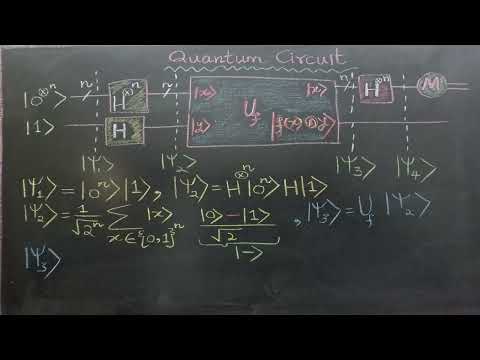
The Deutsch-Jozsa algorithm works by using a quantum gate to apply a unitary transformation to a quantum register. This transformation is designed to solve a specific type of problem, known as a balanced function. The algorithm uses quantum parallelism to evaluate the function for all possible inputs simultaneously, and then uses quantum interference to extract the solution. The algorithm has been implemented using various quantum computing platforms, including IBM Quantum and Google Quantum AI Lab. It has also been used to demonstrate the principles of quantum entanglement and quantum superposition.
📊 Quantum Parallelism and Interference
The Deutsch-Jozsa algorithm relies heavily on the principles of quantum parallelism and quantum interference. Quantum parallelism allows the algorithm to evaluate the function for all possible inputs simultaneously, while quantum interference allows the algorithm to extract the solution. The algorithm uses a quantum gate to apply a unitary transformation to a quantum register, which is a fundamental component of quantum computing. The algorithm has been used to demonstrate the power of quantum computing and has inspired the development of more advanced quantum algorithms, such as Shor's algorithm and Grover's algorithm. It has also been used to study the properties of quantum entanglement and quantum superposition.
👥 Key Contributors and Influencers
The Deutsch-Jozsa algorithm has been influenced by the work of several key contributors and influencers, including David Deutsch and Richard Jozsa. Other notable researchers who have contributed to the development of the algorithm include Peter Shor and Lovelace. The algorithm has also been influenced by the work of Paul Dirac and Ernest Rutherford, who laid the foundation for quantum mechanics. The development of the Deutsch-Jozsa algorithm has been shaped by the interactions between these researchers and their contributions to the field of quantum computing.
🤔 Controversies and Debates
The Deutsch-Jozsa algorithm has been the subject of several controversies and debates, including the question of whether it is truly a quantum algorithm or simply a classical algorithm that uses quantum gates. Some researchers have argued that the algorithm is not truly quantum, while others have argued that it is a fundamental example of the power of quantum computing. The algorithm has also been the subject of debate regarding its potential applications and limitations. Some researchers have argued that the algorithm has the potential to solve complex problems more efficiently than classical algorithms, while others have argued that it is limited in its scope and applicability. The controversy surrounding the Deutsch-Jozsa algorithm has been fueled by the work of researchers such as Peter Shor and Lovelace.
📈 Future Prospects and Applications
The future prospects of the Deutsch-Jozsa algorithm are promising, with potential applications in a variety of fields, including cryptography and optimization. The algorithm has been used to demonstrate the principles of quantum entanglement and quantum superposition, and has inspired the development of more advanced quantum algorithms, such as Shor's algorithm and Grover's algorithm. The algorithm is an important part of the quantum computing curriculum and is often used as a teaching tool to introduce students to the principles of quantum computing. As research in quantum computing continues to advance, it is likely that the Deutsch-Jozsa algorithm will play an increasingly important role in the development of new quantum algorithms and applications.
📊 Comparison with Classical Algorithms
The Deutsch-Jozsa algorithm has been compared to classical algorithms, such as the binary search algorithm, and has been shown to be more efficient for certain types of problems. The algorithm has a time complexity of O(1), which is significantly faster than the time complexity of classical algorithms for the same problem. The algorithm has also been compared to other quantum algorithms, such as Shor's algorithm and Grover's algorithm, and has been shown to be an important part of the quantum computing toolkit. The comparison between the Deutsch-Jozsa algorithm and classical algorithms has been the subject of much debate and research, with some arguing that the algorithm is truly quantum and others arguing that it is simply a classical algorithm that uses quantum gates.
📝 Real-World Implementations and Experiments
The Deutsch-Jozsa algorithm has been implemented in a variety of real-world settings, including IBM Quantum and Google Quantum AI Lab. The algorithm has been used to demonstrate the principles of quantum entanglement and quantum superposition, and has inspired the development of more advanced quantum algorithms, such as Shor's algorithm and Grover's algorithm. The algorithm is an important part of the quantum computing curriculum and is often used as a teaching tool to introduce students to the principles of quantum computing. The implementation of the Deutsch-Jozsa algorithm has been the subject of much research and development, with many groups working to improve the efficiency and scalability of the algorithm.
📊 Computational Complexity and Efficiency
The computational complexity of the Deutsch-Jozsa algorithm is O(1), which is significantly faster than the time complexity of classical algorithms for the same problem. The algorithm has been shown to be more efficient than classical algorithms for certain types of problems, and has inspired the development of more advanced quantum algorithms, such as Shor's algorithm and Grover's algorithm. The algorithm is an important part of the quantum computing toolkit and is often used as a teaching tool to introduce students to the principles of quantum computing. The computational complexity of the Deutsch-Jozsa algorithm has been the subject of much research and debate, with some arguing that the algorithm is truly quantum and others arguing that it is simply a classical algorithm that uses quantum gates.
🔒 Security Implications and Concerns
The security implications of the Deutsch-Jozsa algorithm are significant, as it has the potential to break certain types of cryptography. The algorithm has been used to demonstrate the principles of quantum entanglement and quantum superposition, and has inspired the development of more advanced quantum algorithms, such as Shor's algorithm and Grover's algorithm. The algorithm is an important part of the quantum computing curriculum and is often used as a teaching tool to introduce students to the principles of quantum computing. The security implications of the Deutsch-Jozsa algorithm have been the subject of much research and debate, with some arguing that the algorithm has the potential to break certain types of cryptography and others arguing that it is not a significant threat.
Key Facts
- Year
- 1992
- Origin
- University of Oxford
- Category
- Quantum Computing
- Type
- Algorithm
Frequently Asked Questions
What is the Deutsch-Jozsa algorithm?
The Deutsch-Jozsa algorithm is a quantum algorithm that demonstrates the power of quantum parallelism and quantum interference. It was first proposed by David Deutsch and Richard Jozsa in 1992 and is used to solve a specific type of problem known as a balanced function. The algorithm has been influential in the development of more advanced quantum algorithms, such as Shor's algorithm and Grover's algorithm.
How does the Deutsch-Jozsa algorithm work?
The Deutsch-Jozsa algorithm works by using a quantum gate to apply a unitary transformation to a quantum register. This transformation is designed to solve a specific type of problem, known as a balanced function. The algorithm uses quantum parallelism to evaluate the function for all possible inputs simultaneously, and then uses quantum interference to extract the solution.
What are the applications of the Deutsch-Jozsa algorithm?
The Deutsch-Jozsa algorithm has potential applications in a variety of fields, including cryptography and optimization. The algorithm has been used to demonstrate the principles of quantum entanglement and quantum superposition, and has inspired the development of more advanced quantum algorithms, such as Shor's algorithm and Grover's algorithm.
Is the Deutsch-Jozsa algorithm truly quantum?
The question of whether the Deutsch-Jozsa algorithm is truly quantum is a subject of debate. Some researchers argue that the algorithm is truly quantum, while others argue that it is simply a classical algorithm that uses quantum gates. The algorithm has been shown to be more efficient than classical algorithms for certain types of problems, but the question of whether it is truly quantum remains a topic of research and debate.
What is the computational complexity of the Deutsch-Jozsa algorithm?
The computational complexity of the Deutsch-Jozsa algorithm is O(1), which is significantly faster than the time complexity of classical algorithms for the same problem. The algorithm has been shown to be more efficient than classical algorithms for certain types of problems, and has inspired the development of more advanced quantum algorithms, such as Shor's algorithm and Grover's algorithm.
What are the security implications of the Deutsch-Jozsa algorithm?
The security implications of the Deutsch-Jozsa algorithm are significant, as it has the potential to break certain types of cryptography. The algorithm has been used to demonstrate the principles of quantum entanglement and quantum superposition, and has inspired the development of more advanced quantum algorithms, such as Shor's algorithm and Grover's algorithm. The security implications of the Deutsch-Jozsa algorithm have been the subject of much research and debate, with some arguing that the algorithm has the potential to break certain types of cryptography and others arguing that it is not a significant threat.
How has the Deutsch-Jozsa algorithm been implemented in real-world settings?
The Deutsch-Jozsa algorithm has been implemented in a variety of real-world settings, including IBM Quantum and Google Quantum AI Lab. The algorithm has been used to demonstrate the principles of quantum entanglement and quantum superposition, and has inspired the development of more advanced quantum algorithms, such as Shor's algorithm and Grover's algorithm. The implementation of the Deutsch-Jozsa algorithm has been the subject of much research and development, with many groups working to improve the efficiency and scalability of the algorithm.